RK Goit, Lecturer
Department of Physiology
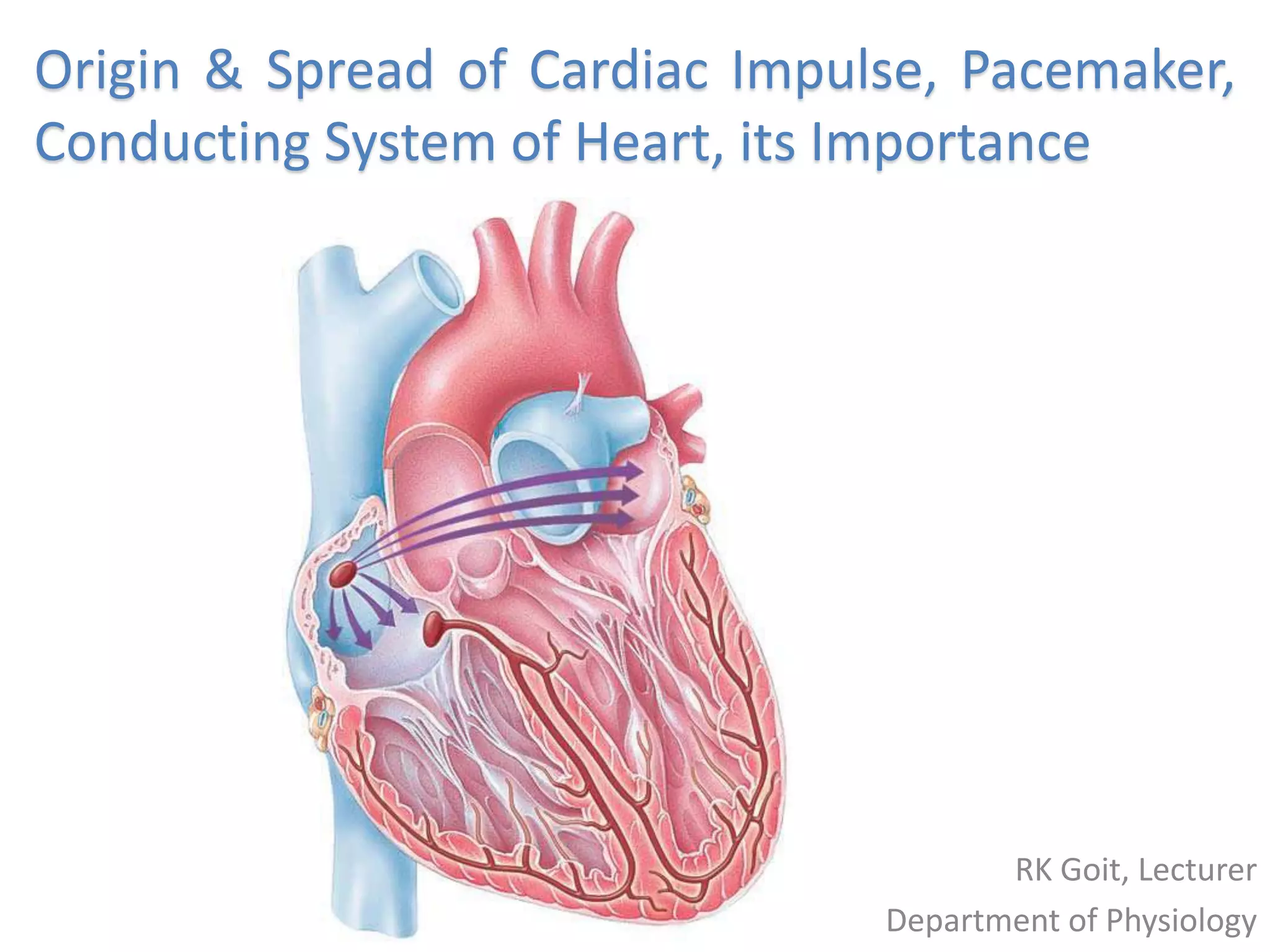
Origin & Spread of Cardiac Impulse, Pacemaker,
Conducting System of Heart, its Importance
• parts of the heart normally beat in orderly sequence
• contraction of the atria (atrial systole) is followed by
contraction of the ventricles (ventricular systole)
• during diastole all four chambers are relaxed
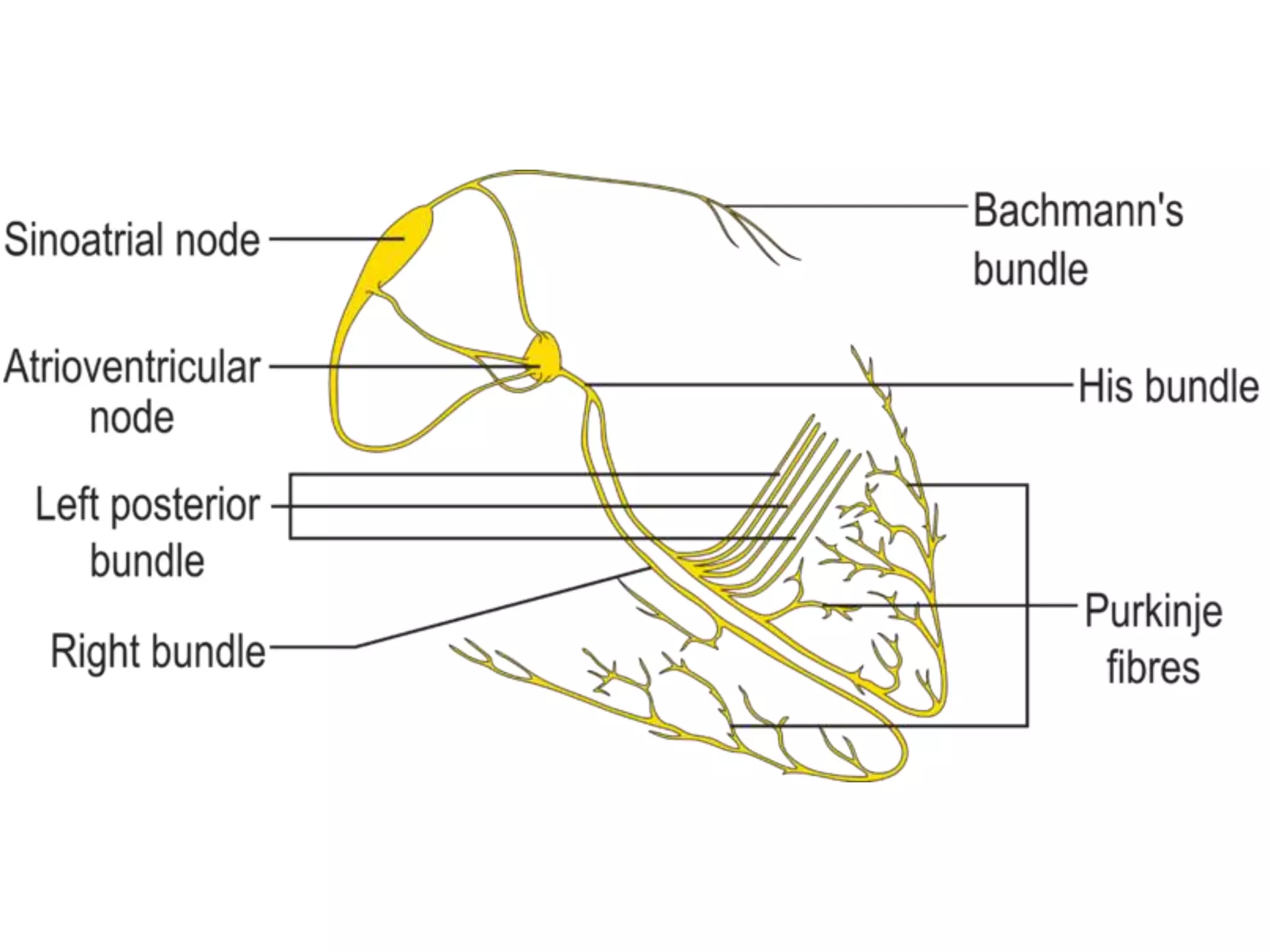
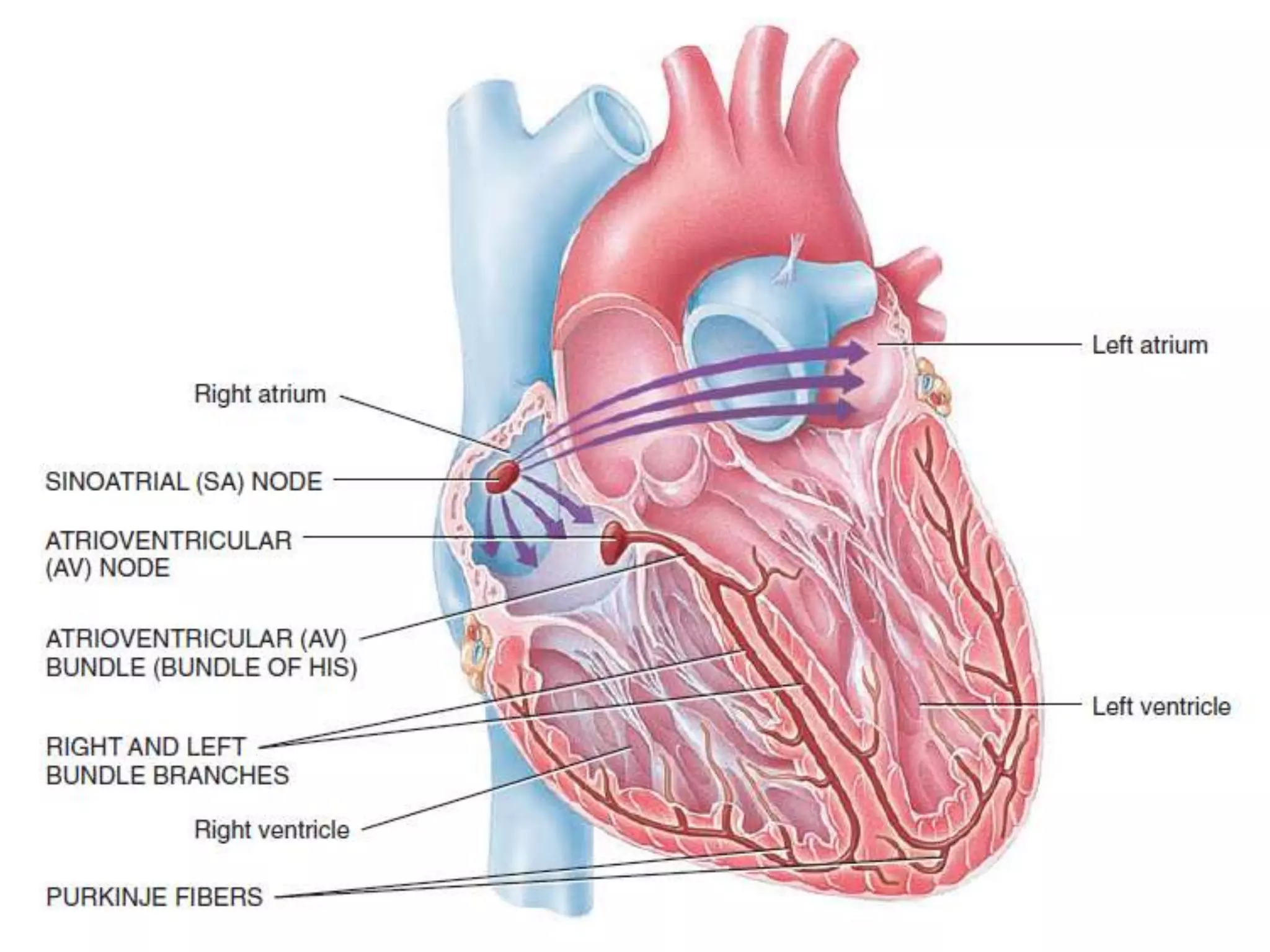
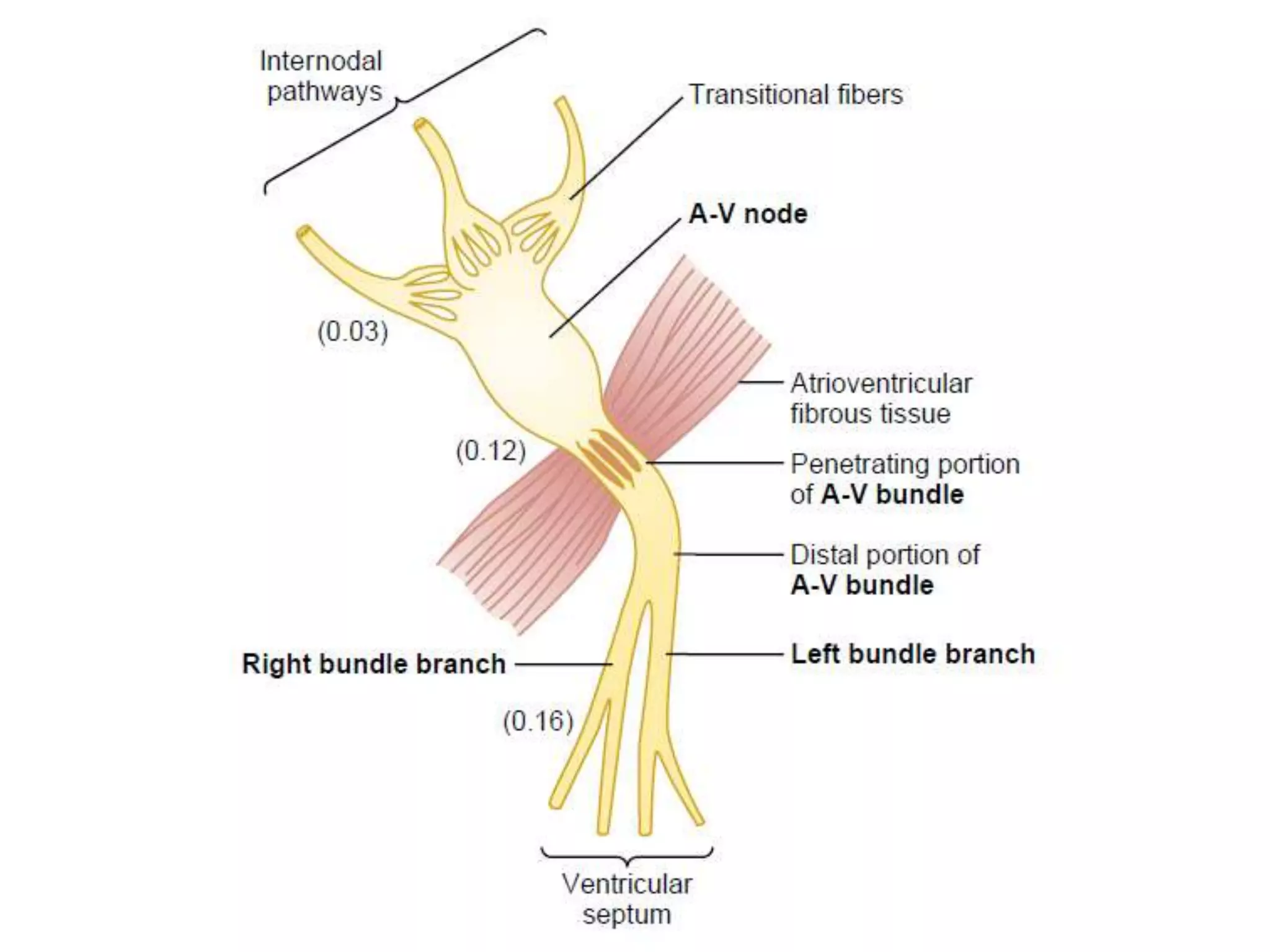
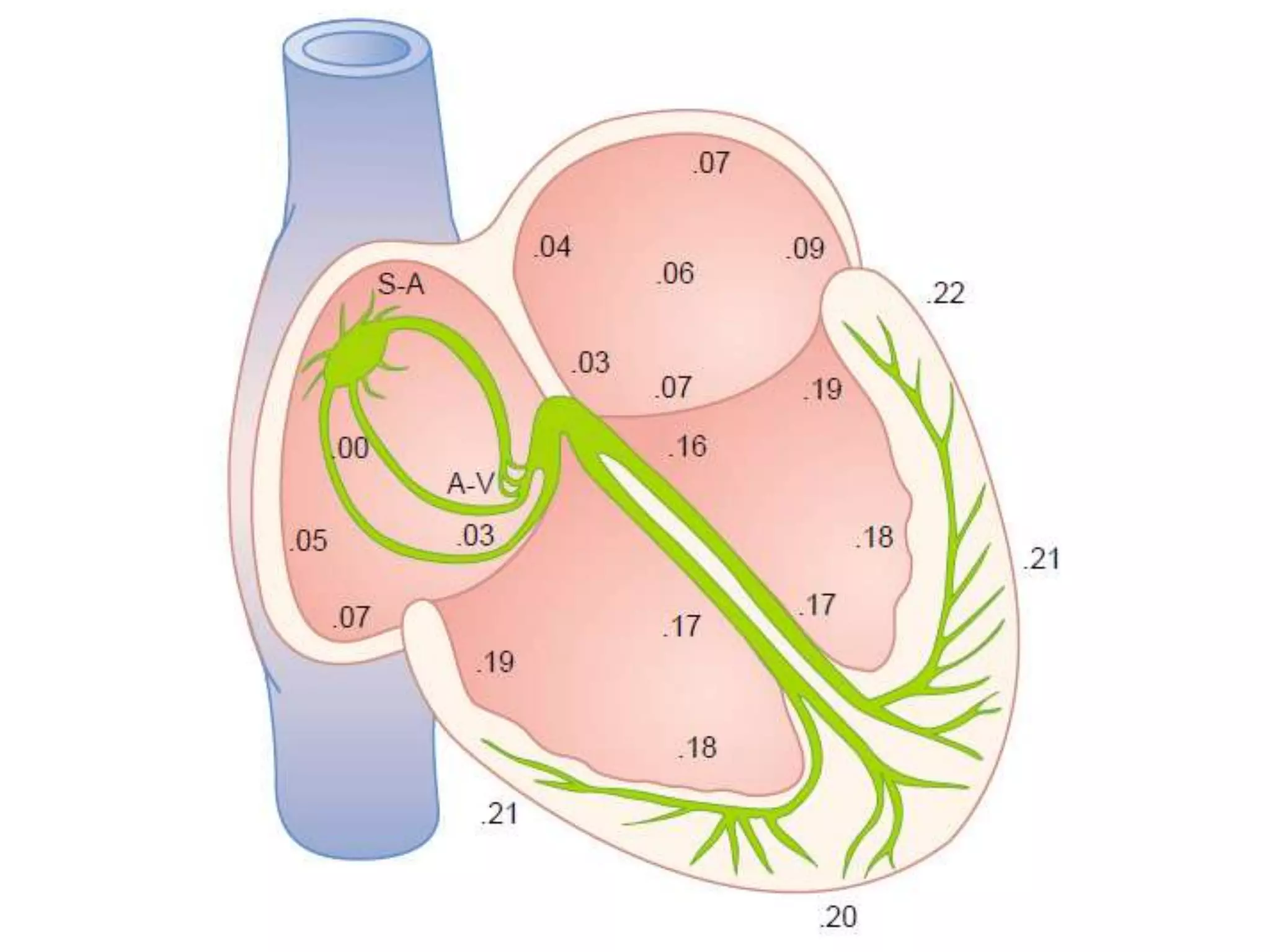
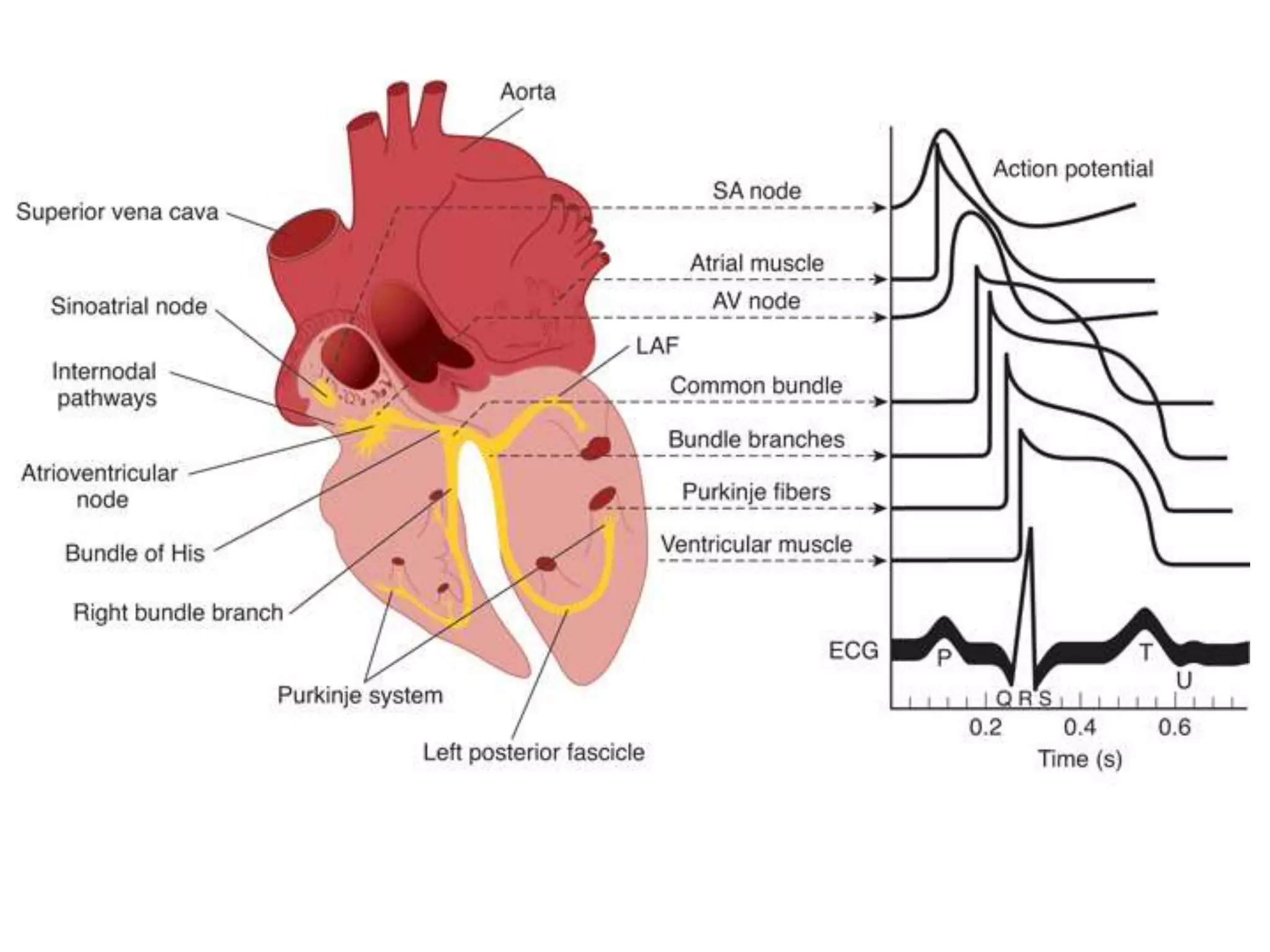
• heartbeat originates in a specialized cardiac conduction
system & spreads via this system to all parts of the
myocardium
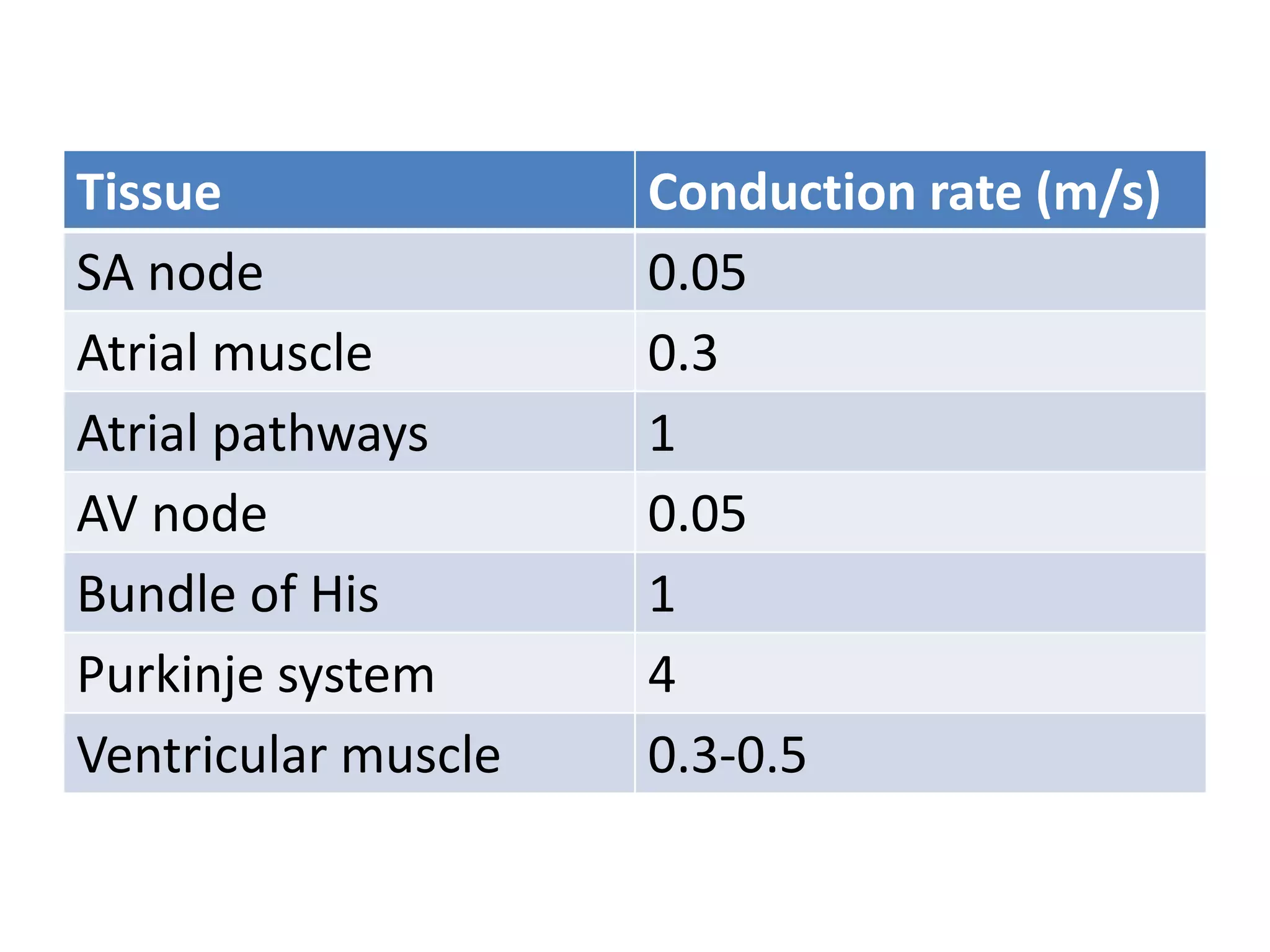
Tissue Conduction rate (m/s)
SA node 0.05
Atrial muscle 0.3
Atrial pathways 1
AV node 0.05
Bundle of His 1
Purkinje system 4
Ventricular muscle 0.3-0.5
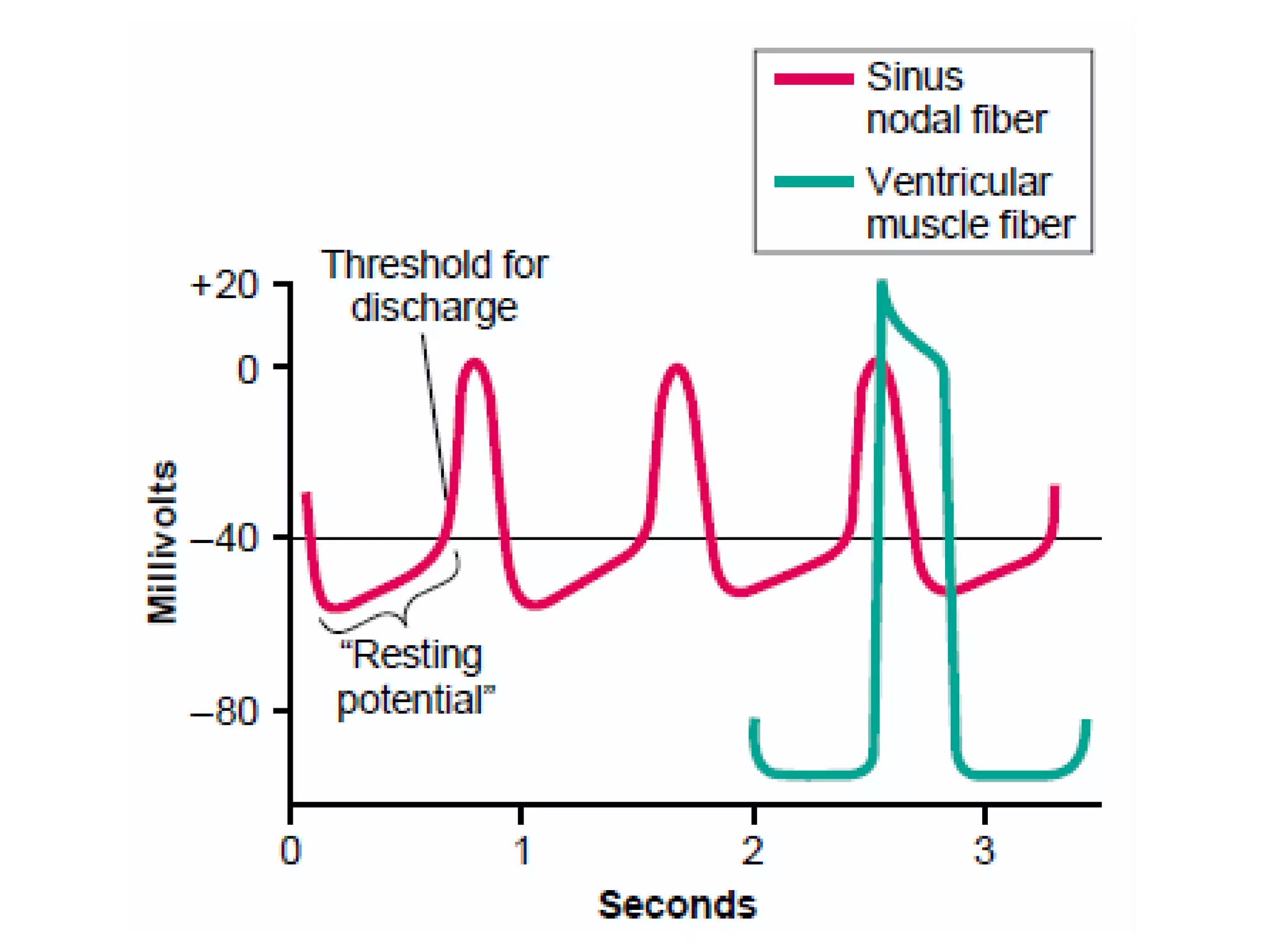
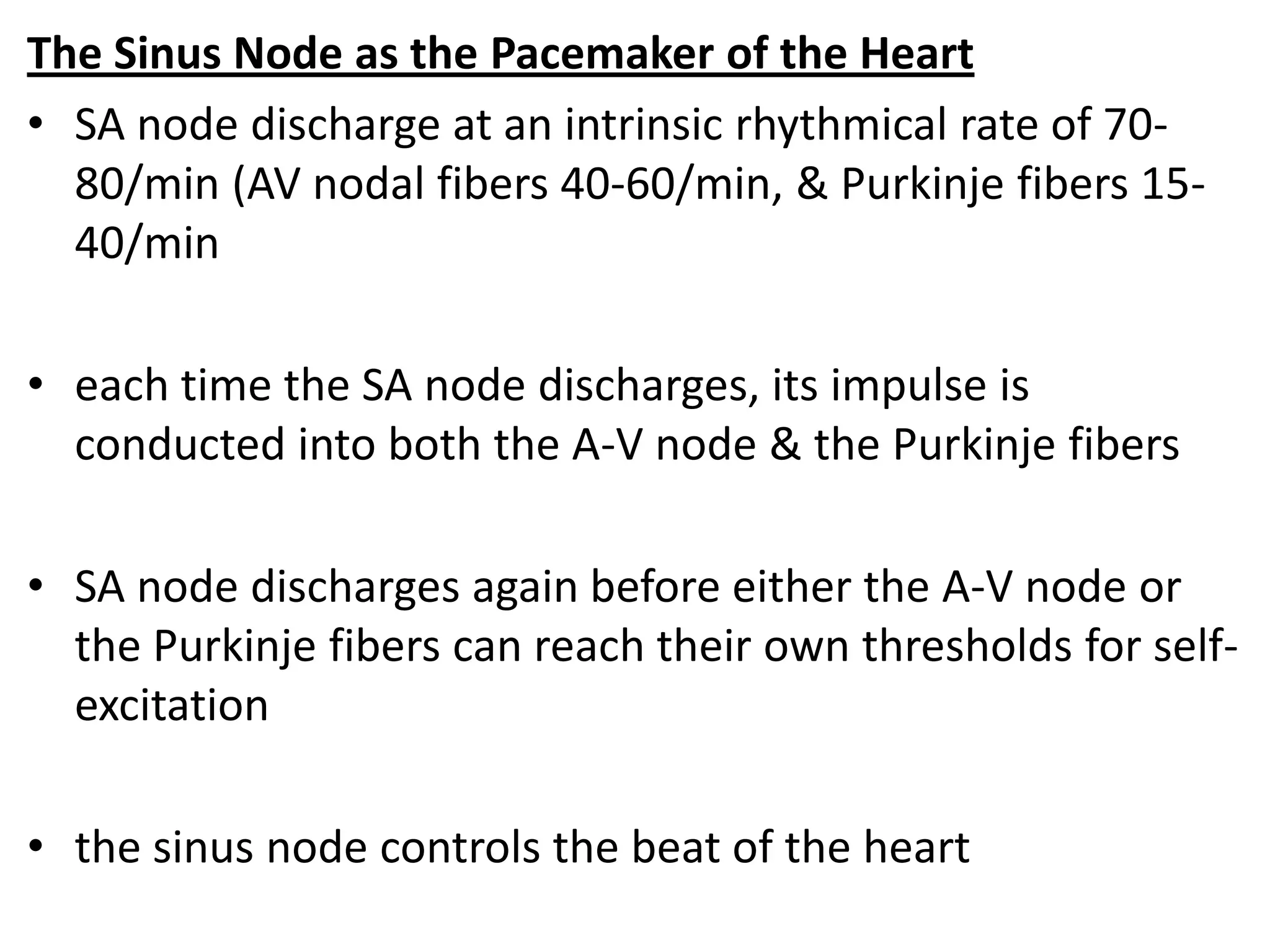
The Sinus Node as the Pacemaker of the Heart
• SA node discharge at an intrinsic rhythmical rate of 70-
80/min (AV nodal fibers 40-60/min, & Purkinje fibers 15-
40/min
• each time the SA node discharges, its impulse is
conducted into both the A-V node & the Purkinje fibers
• SA node discharges again before either the A-V node or
the Purkinje fibers can reach their own thresholds for self-
excitation
• the sinus node controls the beat of the heart
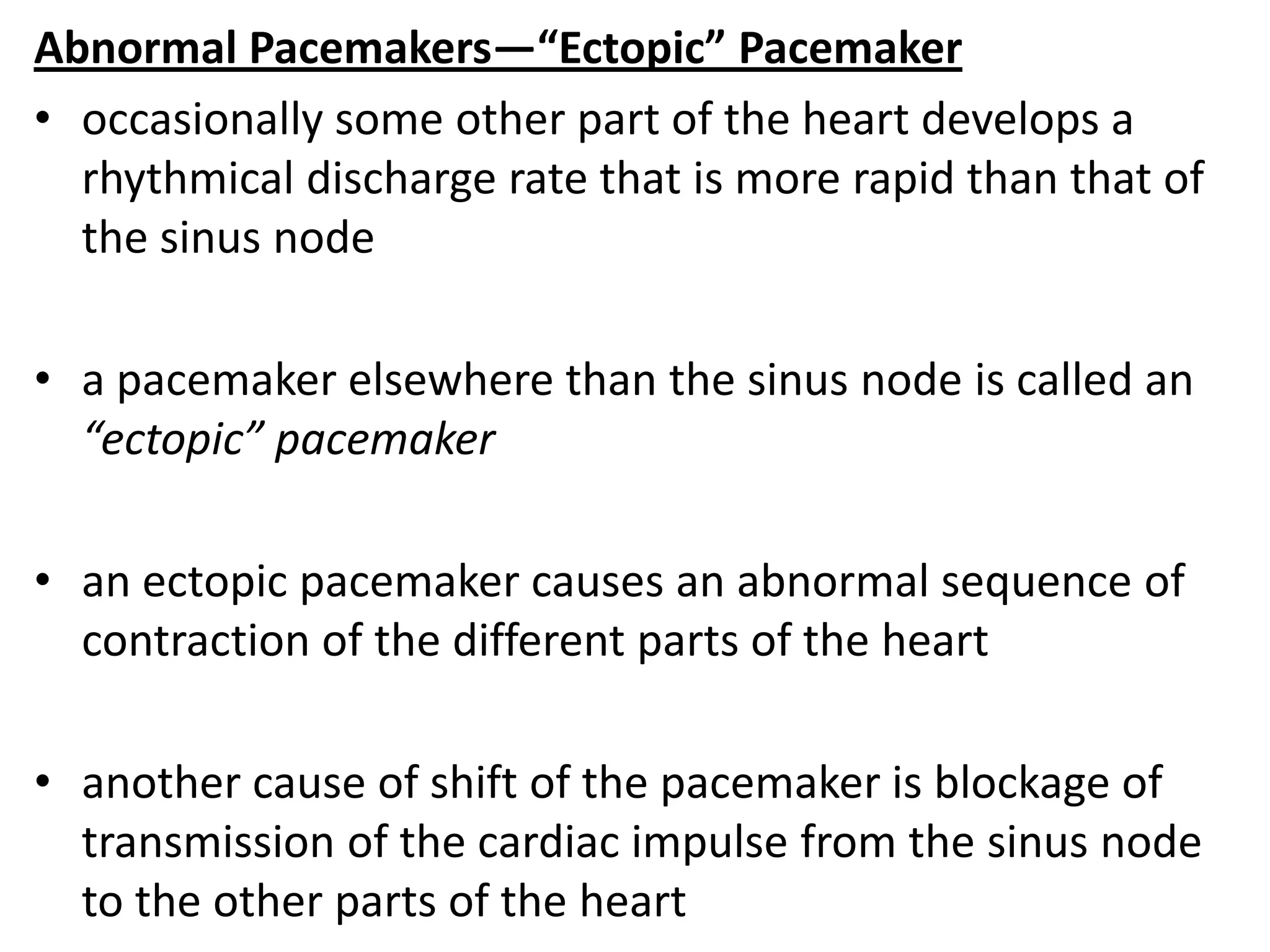
Abnormal Pacemakers—“Ectopic” Pacemaker
• occasionally some other part of the heart develops a
rhythmical discharge rate that is more rapid than that of
the sinus node
• a pacemaker elsewhere than the sinus node is called an
“ectopic” pacemaker
• an ectopic pacemaker causes an abnormal sequence of
contraction of the different parts of the heart
• another cause of shift of the pacemaker is blockage of
transmission of the cardiac impulse from the sinus node
to the other parts of the heart
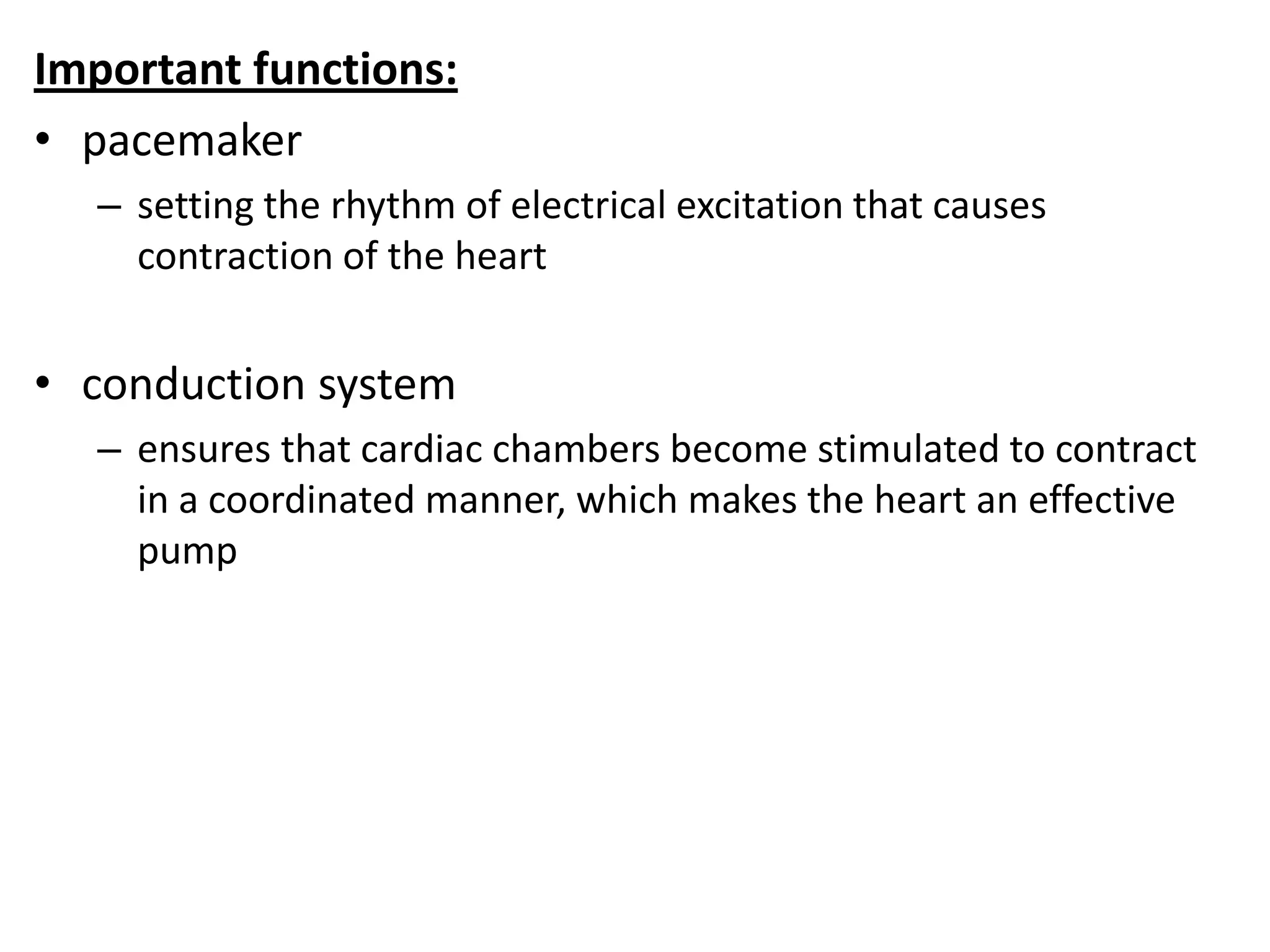
Important functions:
• pacemaker
– setting the rhythm of electrical excitation that causes
contraction of the heart
• conduction system
– ensures that cardiac chambers become stimulated to contract
in a coordinated manner, which makes the heart an effective
pump
References
• Ganong Review of Medical Physiology, 23/E
• Textbook of Medical Physiology, 12/E Guyton & Hall
• Understanding Medical Physiology, 4/E Bijlani &
Manjunatha
Thank You

Origin and spread of cardiac impulse, pacemaker, conducting system of heart, its importance

  • 1.
    RK Goit, Lecturer Departmentof Physiology Origin & Spread of Cardiac Impulse, Pacemaker, Conducting System of Heart, its Importance
  • 2.
    • parts ofthe heart normally beat in orderly sequence • contraction of the atria (atrial systole) is followed by contraction of the ventricles (ventricular systole) • during diastole all four chambers are relaxed • heartbeat originates in a specialized cardiac conduction system & spreads via this system to all parts of the myocardium
  • 9.
    Tissue Conduction rate(m/s) SA node 0.05 Atrial muscle 0.3 Atrial pathways 1 AV node 0.05 Bundle of His 1 Purkinje system 4 Ventricular muscle 0.3-0.5
  • 10.
    The Sinus Nodeas the Pacemaker of the Heart • SA node discharge at an intrinsic rhythmical rate of 70- 80/min (AV nodal fibers 40-60/min, & Purkinje fibers 15- 40/min • each time the SA node discharges, its impulse is conducted into both the A-V node & the Purkinje fibers • SA node discharges again before either the A-V node or the Purkinje fibers can reach their own thresholds for self- excitation • the sinus node controls the beat of the heart
  • 11.
    Abnormal Pacemakers—“Ectopic” Pacemaker •occasionally some other part of the heart develops a rhythmical discharge rate that is more rapid than that of the sinus node • a pacemaker elsewhere than the sinus node is called an “ectopic” pacemaker • an ectopic pacemaker causes an abnormal sequence of contraction of the different parts of the heart • another cause of shift of the pacemaker is blockage of transmission of the cardiac impulse from the sinus node to the other parts of the heart
  • 12.
    Important functions: • pacemaker –setting the rhythm of electrical excitation that causes contraction of the heart • conduction system – ensures that cardiac chambers become stimulated to contract in a coordinated manner, which makes the heart an effective pump
  • 13.
    References • Ganong Reviewof Medical Physiology, 23/E • Textbook of Medical Physiology, 12/E Guyton & Hall • Understanding Medical Physiology, 4/E Bijlani & Manjunatha
  • 14.