Department of Life Sciences
University of Calicut
Kerala, India 673 635
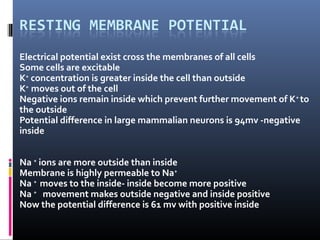
Electrical potential exist cross the membranes of all cells
Some cells are excitable
K+
concentration is greater inside the cell than outside
K+
moves out of the cell
Negative ions remain inside which prevent further movement of K+
to
the outside
Potential difference in large mammalian neurons is 94mv -negative
inside
Na +
ions are more outside than inside
Membrane is highly permeable to Na+
Na +
moves to the inside- inside become more positive
Na +
movement makes outside negative and inside positive
Now the potential difference is 61 mv with positive inside
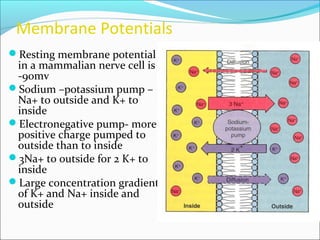
Membrane Potentials
Resting membrane potential
in a mammalian nerve cell is
-90mv
Sodium –potassium pump –
Na+ to outside and K+ to
inside
Electronegative pump- more
positive charge pumped to
outside than to inside
3Na+ to outside for 2 K+ to
inside
Large concentration gradient
of K+ and Na+ inside and
outside
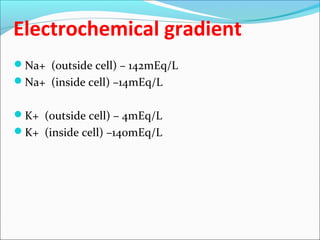
Electrochemical gradient
Na+ (outside cell) – 142mEq/L
Na+ (inside cell) –14mEq/L
K+ (outside cell) – 4mEq/L
K+ (inside cell) –140mEq/L
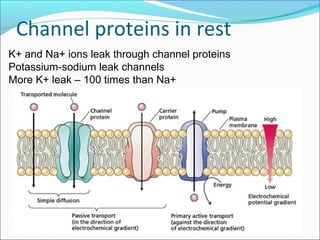
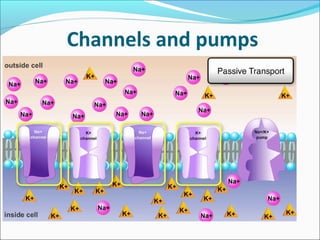
Channel proteins in rest
K+ and Na+ ions leak through channel proteins
Potassium-sodium leak channels
More K+ leak – 100 times than Na+
Channels and pumps
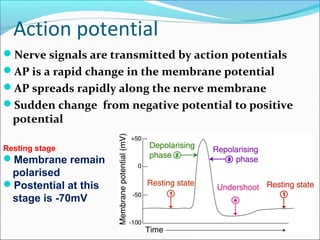
Action potential
Nerve signals are transmitted by action potentials
AP is a rapid change in the membrane potential
AP spreads rapidly along the nerve membrane
Sudden change from negative potential to positive
potential
Resting stage
Membrane remain
polarised
Postential at this
stage is -70mV
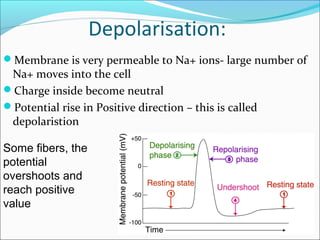
Depolarisation:
Membrane is very permeable to Na+ ions- large number of
Na+ moves into the cell
Charge inside become neutral
Potential rise in Positive direction – this is called
depolaristion
Some fibers, the
potential
overshoots and
reach positive
value
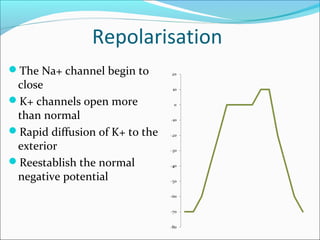
Repolarisation
The Na+ channel begin to
close
K+ channels open more
than normal
Rapid diffusion of K+ to the
exterior
Reestablish the normal
negative potential
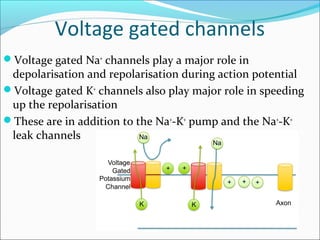
Voltage gated channels
Voltage gated Na+
channels play a major role in
depolarisation and repolarisation during action potential
Voltage gated K+
channels also play major role in speeding
up the repolarisation
These are in addition to the Na+
-K+
pump and the Na+
-K+
leak channels
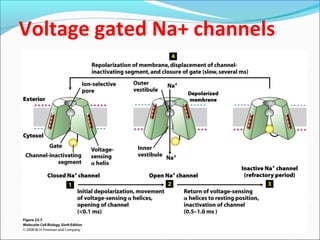
Voltage gated Na+ channels
Voltage gated Na+ channel –activation-
inactivation
AS voltage reach between -70 and -50- sudden
conformational change in activation gate
Gate opens
This is activated state of the gate
Na+
flow into the cell
 Na+
permeability increase 500-5000 fold
After a few 10,000ths of a second the inactivation gate closes
Na+
can not move into the cell
Repolarisation starts
 channels can open only after reaching resting potential
stage
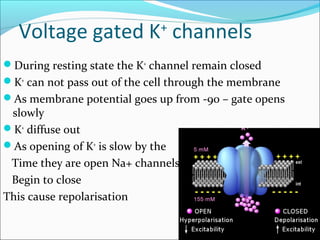
Voltage gated K+
channels
During resting state the K+
channel remain closed
K+
can not pass out of the cell through the membrane
As membrane potential goes up from -90 – gate opens
slowly
K+
diffuse out
As opening of K+
is slow by the
Time they are open Na+ channels
Begin to close
This cause repolarisation
Action Potentials
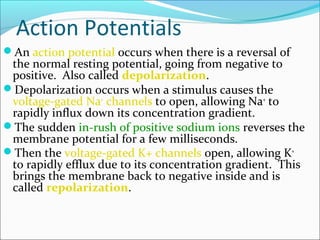
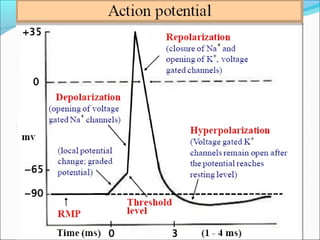
An action potential occurs when there is a reversal of
the normal resting potential, going from negative to
positive. Also called depolarization.
Depolarization occurs when a stimulus causes the
voltage-gated Na+
channels to open, allowing Na+
to
rapidly influx down its concentration gradient.
The sudden in-rush of positive sodium ions reverses the
membrane potential for a few milliseconds.
Then the voltage-gated K+ channels open, allowing K+
to rapidly efflux due to its concentration gradient. This
brings the membrane back to negative inside and is
called repolarization.
Action Potentials
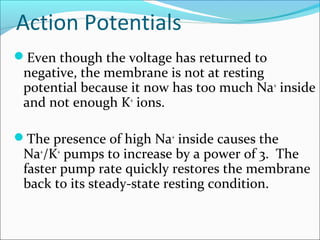
Even though the voltage has returned to
negative, the membrane is not at resting
potential because it now has too much Na+
inside
and not enough K+
ions.
The presence of high Na+
inside causes the
Na+
/K+
pumps to increase by a power of 3. The
faster pump rate quickly restores the membrane
back to its steady-state resting condition.
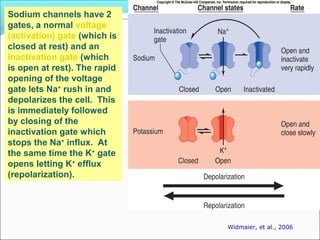
Sodium channels have 2
gates, a normal voltage
(activation) gate (which is
closed at rest) and an
inactivation gate (which
is open at rest). The rapid
opening of the voltage
gate lets Na+
rush in and
depolarizes the cell. This
is immediately followed
by closing of the
inactivation gate which
stops the Na+
influx. At
the same time the K+
gate
opens letting K+
efflux
(repolarization).
Widmaier, et al., 2006

Resting membranepotential

  • 1.
    Department of LifeSciences University of Calicut Kerala, India 673 635
  • 2.
    Electrical potential existcross the membranes of all cells Some cells are excitable K+ concentration is greater inside the cell than outside K+ moves out of the cell Negative ions remain inside which prevent further movement of K+ to the outside Potential difference in large mammalian neurons is 94mv -negative inside Na + ions are more outside than inside Membrane is highly permeable to Na+ Na + moves to the inside- inside become more positive Na + movement makes outside negative and inside positive Now the potential difference is 61 mv with positive inside
  • 3.
    Membrane Potentials Resting membranepotential in a mammalian nerve cell is -90mv Sodium –potassium pump – Na+ to outside and K+ to inside Electronegative pump- more positive charge pumped to outside than to inside 3Na+ to outside for 2 K+ to inside Large concentration gradient of K+ and Na+ inside and outside
  • 4.
    Electrochemical gradient Na+ (outsidecell) – 142mEq/L Na+ (inside cell) –14mEq/L K+ (outside cell) – 4mEq/L K+ (inside cell) –140mEq/L
  • 5.
    Channel proteins inrest K+ and Na+ ions leak through channel proteins Potassium-sodium leak channels More K+ leak – 100 times than Na+
  • 6.
  • 7.
    Action potential Nerve signalsare transmitted by action potentials AP is a rapid change in the membrane potential AP spreads rapidly along the nerve membrane Sudden change from negative potential to positive potential Resting stage Membrane remain polarised Postential at this stage is -70mV
  • 8.
    Depolarisation: Membrane is verypermeable to Na+ ions- large number of Na+ moves into the cell Charge inside become neutral Potential rise in Positive direction – this is called depolaristion Some fibers, the potential overshoots and reach positive value
  • 9.
    Repolarisation The Na+ channelbegin to close K+ channels open more than normal Rapid diffusion of K+ to the exterior Reestablish the normal negative potential
  • 10.
    Voltage gated channels Voltagegated Na+ channels play a major role in depolarisation and repolarisation during action potential Voltage gated K+ channels also play major role in speeding up the repolarisation These are in addition to the Na+ -K+ pump and the Na+ -K+ leak channels
  • 11.
  • 12.
    Voltage gated Na+channel –activation- inactivation AS voltage reach between -70 and -50- sudden conformational change in activation gate Gate opens This is activated state of the gate Na+ flow into the cell  Na+ permeability increase 500-5000 fold After a few 10,000ths of a second the inactivation gate closes Na+ can not move into the cell Repolarisation starts  channels can open only after reaching resting potential stage
  • 13.
    Voltage gated K+ channels Duringresting state the K+ channel remain closed K+ can not pass out of the cell through the membrane As membrane potential goes up from -90 – gate opens slowly K+ diffuse out As opening of K+ is slow by the Time they are open Na+ channels Begin to close This cause repolarisation
  • 14.
    Action Potentials An actionpotential occurs when there is a reversal of the normal resting potential, going from negative to positive. Also called depolarization. Depolarization occurs when a stimulus causes the voltage-gated Na+ channels to open, allowing Na+ to rapidly influx down its concentration gradient. The sudden in-rush of positive sodium ions reverses the membrane potential for a few milliseconds. Then the voltage-gated K+ channels open, allowing K+ to rapidly efflux due to its concentration gradient. This brings the membrane back to negative inside and is called repolarization.
  • 16.
    Action Potentials Even thoughthe voltage has returned to negative, the membrane is not at resting potential because it now has too much Na+ inside and not enough K+ ions. The presence of high Na+ inside causes the Na+ /K+ pumps to increase by a power of 3. The faster pump rate quickly restores the membrane back to its steady-state resting condition.
  • 17.
    Sodium channels have2 gates, a normal voltage (activation) gate (which is closed at rest) and an inactivation gate (which is open at rest). The rapid opening of the voltage gate lets Na+ rush in and depolarizes the cell. This is immediately followed by closing of the inactivation gate which stops the Na+ influx. At the same time the K+ gate opens letting K+ efflux (repolarization). Widmaier, et al., 2006