Abrasive Machining General Manufacturing Processes Engr.-20.2710 Instructor - Sam Chiappone
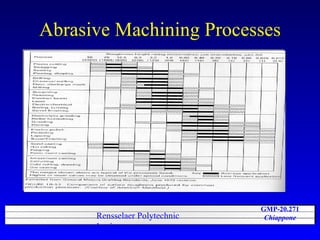
Abrasive Machining Processes Abrasive machining is one of the oldest forms of metal removal.  It is also one of the most important.  Abrasive machining can produce surface finishes ranging from rough to extremely fine.  Abrasive machining is a process where chips are formed by small cutting edges on abrasive particles.
Abrasive Machining Processes
Applications Manufactured products which are candidates for abrasive machining include: Hard to machine metals such as super alloys or heat treated tool steels Parts which have closes tolerances Size (+/- .0005) Parallelism Flatness Sheet type products such as: Plywood, thin stainless steels, and decorative plaque material
Process Characteristics Abrasive machining has two unique characteristics: “Small” cutting edges cut simultaneously. The abrasives used are very hard and capable of cutting materials in the range of Rc45 and above
Abrasives Abrasives can be natural or manmade. Natural include: Sand stone Emery Diamond Garnet Quartz
Abrasives Manmade (1891 time frame most commonly used today) Silicon Carbide Aluminum Oxide Cubic Boron Nitride
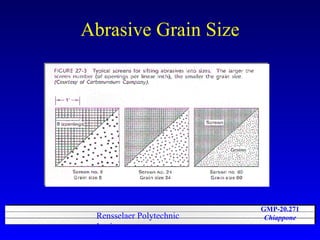
Abrasive Grain Size Grains are separated by mechanical sieving machines.  The number of openings per linear inch in the sieve(or screen) through which the particles can pass determines the grain size. Typical classifications: Course, medium, and fine Silicon Carbides range from 2-240 in size Aluminum Oxides range from 4-240 in size 600 range are generally used in honing or lapping operations
Abrasive Grain Size
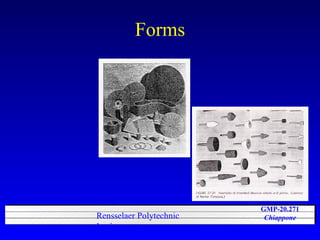
Forms Abrasive particles can be: A Free slurry Adhered to resin on a belt Close packed into wheels or stones held together by a bonding agent.
Forms
The Grinding Process One process, which utilizes abrasive machining, is the grinding process.  A machining process where the abrasives used are bonded together into a wheel.  The grinding wheel is the cutting tool in this process.  In grinding, high precision and tight tolerances are possible.  Typical tolerances associated with this process are +/- .0001.”  Product examples include bearings, machining fixtures, shafts, and precision measurement gauges.
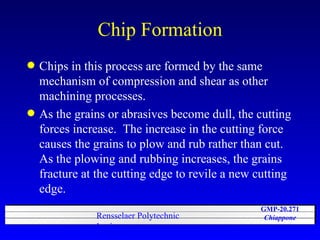
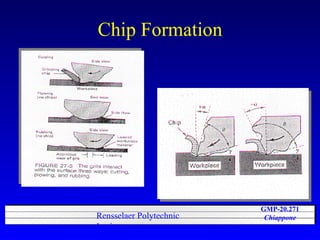
Chip Formation Chips in this process are formed by the same mechanism of compression and shear as other machining processes.  As the grains or abrasives become dull, the cutting forces increase.  The increase in the cutting force causes the grains to plow and rub rather than cut.  As the plowing and rubbing increases, the grains fracture at the cutting edge to revile a new cutting edge.
Chip Formation
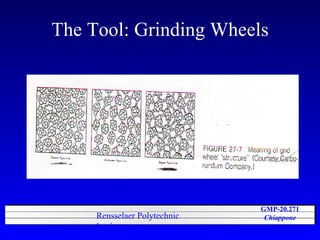
The Tool: Grinding Wheels The spacing of particles with respect to one another is called the structure of the wheel.  Wheel structure can be open, medium, or dense. “Dense structure is used for hard materials, for high speed grinding operations, and also for producing fine finishes and tight tolerances.” “Open structure is used for high contact area, grinding of tough materials, and high stock removal rates.” Hardness - resistance to penetration Toughness - ability of a metal to absorb energy without failure.
The Tool: Grinding Wheels
Wheel Bonding Agents Vitrified - composed of clay and other ceramic substances.  Abrasive particles are mixed with wheel material then pressed together and fired in a kiln.  Resiniod or phonolic - Plastic compound wheels designed for a wide variety of applications.  This is a bit more flexible than other wheels.
Wheel Bonding Agents Silicate - This bond uses silicate of soda as the bonding agent.  Wheels are formed then baked at 500F for a day or longer.  They are not as strong as vitrified-bonded wheels.  Because they are not as strong, abrasive grains fracture more easily.  This results in lower operating temperatures which can be a positive factor depending on the application of the wheel.
Wheel Bonding Agents Shellac - Abrasives are mixed with shellac, heated (330 F) and pressed or rolled into the desired shape.  These wheels are thin, elastic, and strong. Rubber - High speed wheels with a considerable amount of flexibility.  Typically these wheels will operate at speeds of up to 16,000 ft/min.
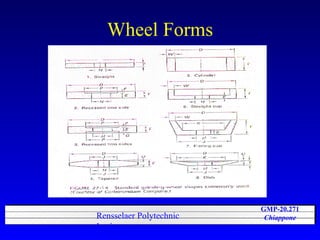
Wheel Forms
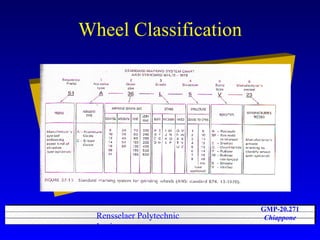
Wheel Classification
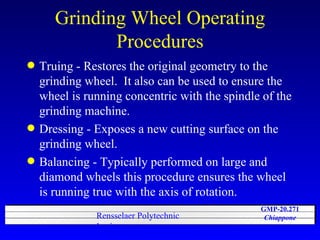
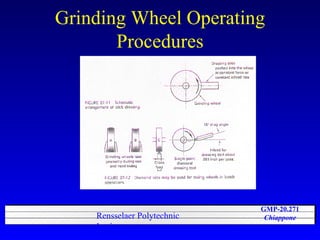
Grinding Wheel Operating Procedures Truing - Restores the original geometry to the grinding wheel.  It also can be used to ensure the wheel is running concentric with the spindle of the grinding machine. Dressing - Exposes a new cutting surface on the grinding wheel. Balancing - Typically performed on large and diamond wheels this procedure ensures the wheel is running true with the axis of rotation.
Grinding Wheel Operating Procedures
Cutting Fluid Cutting fluid is an important factor in the grinding process.  It assists in: Washing away chips, Keeping the wheel from becoming clogged,  Reduces operating temperatures.
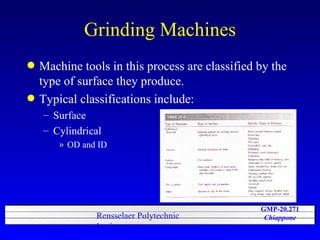
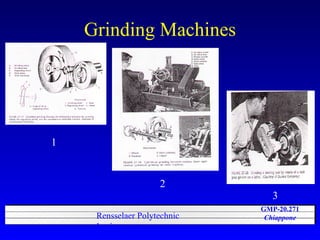
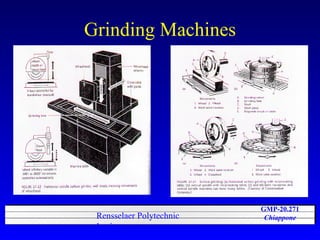
Grinding Machines Machine tools in this process are classified by the type of surface they produce. Typical classifications include: Surface Cylindrical OD and ID
Grinding Machines 1 2 3
Grinding Machines
Grinding Operations Operations include: Cutting off - Slicing or slotting Cylindrical between cntrs. - OD of cylindrical parts Cylindrical centerless - OD of cylindrical parts with a regulating wheel Internal - Bores and large holes Snagging - Large amounts of material no surface finish requirements Surface - Flat workpieces Tool grinding - Grinding cutting edges on tools Off-hand grinding - tool or work held by hand
Grinding Machines Grinding operation on all machines can be accomplished in three ways: In-feed - moving the wheel into the work Cross feed - traversing the wheel across the work Plunge feed - wheel is forced in on the radius of the work.  This is similar to form turning on a lathe.

Abrasive

  • 1.
    Abrasive Machining GeneralManufacturing Processes Engr.-20.2710 Instructor - Sam Chiappone
  • 2.
    Abrasive Machining ProcessesAbrasive machining is one of the oldest forms of metal removal. It is also one of the most important. Abrasive machining can produce surface finishes ranging from rough to extremely fine. Abrasive machining is a process where chips are formed by small cutting edges on abrasive particles.
  • 3.
  • 4.
    Applications Manufactured productswhich are candidates for abrasive machining include: Hard to machine metals such as super alloys or heat treated tool steels Parts which have closes tolerances Size (+/- .0005) Parallelism Flatness Sheet type products such as: Plywood, thin stainless steels, and decorative plaque material
  • 5.
    Process Characteristics Abrasivemachining has two unique characteristics: “Small” cutting edges cut simultaneously. The abrasives used are very hard and capable of cutting materials in the range of Rc45 and above
  • 6.
    Abrasives Abrasives canbe natural or manmade. Natural include: Sand stone Emery Diamond Garnet Quartz
  • 7.
    Abrasives Manmade (1891time frame most commonly used today) Silicon Carbide Aluminum Oxide Cubic Boron Nitride
  • 8.
    Abrasive Grain SizeGrains are separated by mechanical sieving machines. The number of openings per linear inch in the sieve(or screen) through which the particles can pass determines the grain size. Typical classifications: Course, medium, and fine Silicon Carbides range from 2-240 in size Aluminum Oxides range from 4-240 in size 600 range are generally used in honing or lapping operations
  • 9.
  • 10.
    Forms Abrasive particlescan be: A Free slurry Adhered to resin on a belt Close packed into wheels or stones held together by a bonding agent.
  • 11.
  • 12.
    The Grinding ProcessOne process, which utilizes abrasive machining, is the grinding process. A machining process where the abrasives used are bonded together into a wheel. The grinding wheel is the cutting tool in this process. In grinding, high precision and tight tolerances are possible. Typical tolerances associated with this process are +/- .0001.” Product examples include bearings, machining fixtures, shafts, and precision measurement gauges.
  • 13.
    Chip Formation Chipsin this process are formed by the same mechanism of compression and shear as other machining processes. As the grains or abrasives become dull, the cutting forces increase. The increase in the cutting force causes the grains to plow and rub rather than cut. As the plowing and rubbing increases, the grains fracture at the cutting edge to revile a new cutting edge.
  • 14.
  • 15.
    The Tool: GrindingWheels The spacing of particles with respect to one another is called the structure of the wheel. Wheel structure can be open, medium, or dense. “Dense structure is used for hard materials, for high speed grinding operations, and also for producing fine finishes and tight tolerances.” “Open structure is used for high contact area, grinding of tough materials, and high stock removal rates.” Hardness - resistance to penetration Toughness - ability of a metal to absorb energy without failure.
  • 16.
  • 17.
    Wheel Bonding AgentsVitrified - composed of clay and other ceramic substances. Abrasive particles are mixed with wheel material then pressed together and fired in a kiln. Resiniod or phonolic - Plastic compound wheels designed for a wide variety of applications. This is a bit more flexible than other wheels.
  • 18.
    Wheel Bonding AgentsSilicate - This bond uses silicate of soda as the bonding agent. Wheels are formed then baked at 500F for a day or longer. They are not as strong as vitrified-bonded wheels. Because they are not as strong, abrasive grains fracture more easily. This results in lower operating temperatures which can be a positive factor depending on the application of the wheel.
  • 19.
    Wheel Bonding AgentsShellac - Abrasives are mixed with shellac, heated (330 F) and pressed or rolled into the desired shape. These wheels are thin, elastic, and strong. Rubber - High speed wheels with a considerable amount of flexibility. Typically these wheels will operate at speeds of up to 16,000 ft/min.
  • 20.
  • 21.
  • 22.
    Grinding Wheel OperatingProcedures Truing - Restores the original geometry to the grinding wheel. It also can be used to ensure the wheel is running concentric with the spindle of the grinding machine. Dressing - Exposes a new cutting surface on the grinding wheel. Balancing - Typically performed on large and diamond wheels this procedure ensures the wheel is running true with the axis of rotation.
  • 23.
  • 24.
    Cutting Fluid Cuttingfluid is an important factor in the grinding process. It assists in: Washing away chips, Keeping the wheel from becoming clogged, Reduces operating temperatures.
  • 25.
    Grinding Machines Machinetools in this process are classified by the type of surface they produce. Typical classifications include: Surface Cylindrical OD and ID
  • 26.
  • 27.
  • 28.
    Grinding Operations Operationsinclude: Cutting off - Slicing or slotting Cylindrical between cntrs. - OD of cylindrical parts Cylindrical centerless - OD of cylindrical parts with a regulating wheel Internal - Bores and large holes Snagging - Large amounts of material no surface finish requirements Surface - Flat workpieces Tool grinding - Grinding cutting edges on tools Off-hand grinding - tool or work held by hand
  • 29.
    Grinding Machines Grindingoperation on all machines can be accomplished in three ways: In-feed - moving the wheel into the work Cross feed - traversing the wheel across the work Plunge feed - wheel is forced in on the radius of the work. This is similar to form turning on a lathe.