CASTING FURNACES 
Melting is an equally important parameter 
for obtaining a quality castings. A number of 
furnaces can be used for melting the metal, 
to be used, to make a metal casting. The 
choice of furnace depends on the type of 
metal to be melted.
THE FURNACES USED IN METAL CASTING 
ARE AS FOLLOWING:. 
Crucible Furnaces 
Cupola 
Induction Furnace 
Reverberatory Furnace
CRUCIBLE FURNACES 
 These furnaces melt the metal without direct 
contact with a burning fuel mixture. For this reason, 
they are sometimes called indirect fuel-fired 
furnaces. 
 Crucible furnaces are mostly used for melting non 
ferrous metals and alloys. The metal is melted in a 
crucible which is a refractory vessel made of silicon 
carbide, Graphite or some other refractory material.
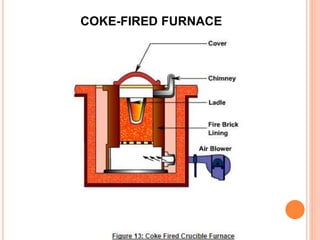
COKE-FIRED FURNACE
• Primarily used for non-ferrous metals 
• Furnace is of a cylindrical shape 
• Also known as pit furnace 
• Preparation involves: first to make a deep bed of coke in 
the furnace 
• Burn the coke till it attains the state of maximum 
combustion 
• Insert the crucible in the coke bed 
• Remove the crucible when the melt reaches to desired 
temperature
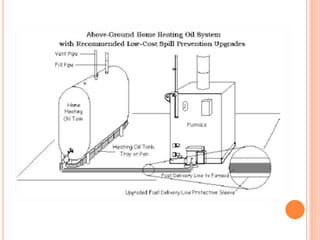
Oil-Fired Furnace. 
• Primarily used for non-ferrous metals 
• Furnace is of a cylindrical shape 
• Advantages include: no wastage of fuel 
• Less contamination of the metal 
• Absorption of water vapor is least as the metal melts 
inside the closed metallic furnace
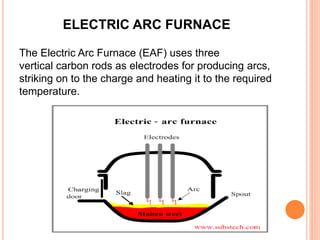
ELECTRIC ARC FURNACE 
The Electric Arc Furnace (EAF) uses three 
vertical carbon rods as electrodes for producing arcs, 
striking on to the charge and heating it to the required 
temperature.
CUPOLA 
Cupola furnaces are tall, cylindrical furnaces used to 
melt iron and ferrous alloys in foundry operations. 
Alternating layers of metal and ferrous alloys, coke, 
and limestone are fed into the furnace from the top.
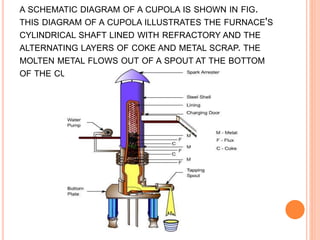
A SCHEMATIC DIAGRAM OF A CUPOLA IS SHOWN IN FIG. 
THIS DIAGRAM OF A CUPOLA ILLUSTRATES THE FURNACE'S 
CYLINDRICAL SHAFT LINED WITH REFRACTORY AND THE 
ALTERNATING LAYERS OF COKE AND METAL SCRAP. THE 
MOLTEN METAL FLOWS OUT OF A SPOUT AT THE BOTTOM 
OF THE CUPOLA.
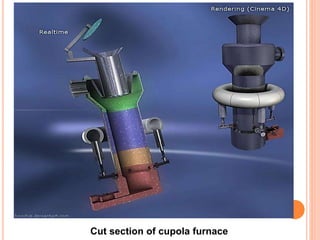
Cut section of cupola furnace
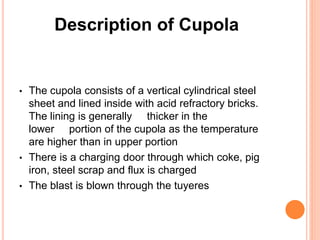
Description of Cupola 
• The cupola consists of a vertical cylindrical steel 
sheet and lined inside with acid refractory bricks. 
The lining is generally thicker in the 
lower portion of the cupola as the temperature 
are higher than in upper portion 
• There is a charging door through which coke, pig 
iron, steel scrap and flux is charged 
• The blast is blown through the tuyeres
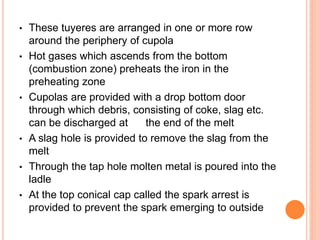
• These tuyeres are arranged in one or more row 
around the periphery of cupola 
• Hot gases which ascends from the bottom 
(combustion zone) preheats the iron in the 
preheating zone 
• Cupolas are provided with a drop bottom door 
through which debris, consisting of coke, slag etc. 
can be discharged at the end of the melt 
• A slag hole is provided to remove the slag from the 
melt 
• Through the tap hole molten metal is poured into the 
ladle 
• At the top conical cap called the spark arrest is 
provided to prevent the spark emerging to outside

Casting furnaces

  • 1.
    CASTING FURNACES Meltingis an equally important parameter for obtaining a quality castings. A number of furnaces can be used for melting the metal, to be used, to make a metal casting. The choice of furnace depends on the type of metal to be melted.
  • 2.
    THE FURNACES USEDIN METAL CASTING ARE AS FOLLOWING:. Crucible Furnaces Cupola Induction Furnace Reverberatory Furnace
  • 3.
    CRUCIBLE FURNACES These furnaces melt the metal without direct contact with a burning fuel mixture. For this reason, they are sometimes called indirect fuel-fired furnaces.  Crucible furnaces are mostly used for melting non ferrous metals and alloys. The metal is melted in a crucible which is a refractory vessel made of silicon carbide, Graphite or some other refractory material.
  • 4.
  • 5.
    • Primarily usedfor non-ferrous metals • Furnace is of a cylindrical shape • Also known as pit furnace • Preparation involves: first to make a deep bed of coke in the furnace • Burn the coke till it attains the state of maximum combustion • Insert the crucible in the coke bed • Remove the crucible when the melt reaches to desired temperature
  • 6.
    Oil-Fired Furnace. •Primarily used for non-ferrous metals • Furnace is of a cylindrical shape • Advantages include: no wastage of fuel • Less contamination of the metal • Absorption of water vapor is least as the metal melts inside the closed metallic furnace
  • 8.
    ELECTRIC ARC FURNACE The Electric Arc Furnace (EAF) uses three vertical carbon rods as electrodes for producing arcs, striking on to the charge and heating it to the required temperature.
  • 9.
    CUPOLA Cupola furnacesare tall, cylindrical furnaces used to melt iron and ferrous alloys in foundry operations. Alternating layers of metal and ferrous alloys, coke, and limestone are fed into the furnace from the top.
  • 10.
    A SCHEMATIC DIAGRAMOF A CUPOLA IS SHOWN IN FIG. THIS DIAGRAM OF A CUPOLA ILLUSTRATES THE FURNACE'S CYLINDRICAL SHAFT LINED WITH REFRACTORY AND THE ALTERNATING LAYERS OF COKE AND METAL SCRAP. THE MOLTEN METAL FLOWS OUT OF A SPOUT AT THE BOTTOM OF THE CUPOLA.
  • 11.
    Cut section ofcupola furnace
  • 12.
    Description of Cupola • The cupola consists of a vertical cylindrical steel sheet and lined inside with acid refractory bricks. The lining is generally thicker in the lower portion of the cupola as the temperature are higher than in upper portion • There is a charging door through which coke, pig iron, steel scrap and flux is charged • The blast is blown through the tuyeres
  • 13.
    • These tuyeresare arranged in one or more row around the periphery of cupola • Hot gases which ascends from the bottom (combustion zone) preheats the iron in the preheating zone • Cupolas are provided with a drop bottom door through which debris, consisting of coke, slag etc. can be discharged at the end of the melt • A slag hole is provided to remove the slag from the melt • Through the tap hole molten metal is poured into the ladle • At the top conical cap called the spark arrest is provided to prevent the spark emerging to outside