PRESENTATION BY :
CONTENTS
 Surface Hardening
 Case Hardening
 Carburising
 Nitriding
 Carbonitriding
 Cyaniding
 Selective Surface Hardening
 INDUCTION HARDENING
Surface Hardening
 Many engineering must be very hard to resist surface indentation or
wear and yet posses adequate toughness to resist impact damage
 Surface Hardening is a process by which a steel is given a hard, wear
resistant surface, while retaining a ductile but tougher interior
 Surface hardening is usually done for the following reasons:
-To improve wear resistance
-To improve resistance to high contact stresses
-To improve fracture toughness
-To improve fatigue resistance, and, sometimes,
-To improve corrosion resistance
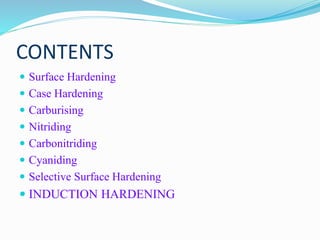
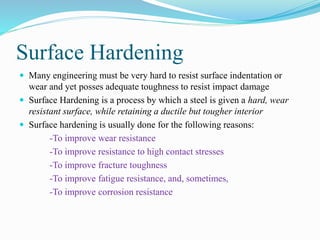
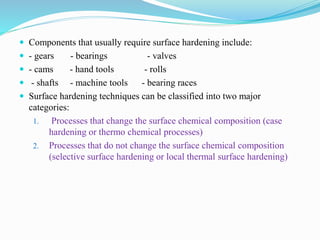
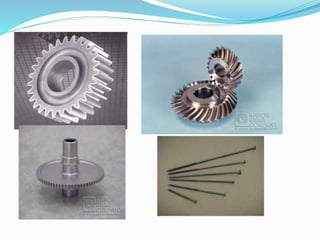
 Components that usually require surface hardening include:
 - gears - bearings - valves
 - cams - hand tools - rolls
 - shafts - machine tools - bearing races
 Surface hardening techniques can be classified into two major
categories:
1. Processes that change the surface chemical composition (case
hardening or thermo chemical processes)
2. Processes that do not change the surface chemical composition
(selective surface hardening or local thermal surface hardening)
1. Case Hardening
 Case hardening methods include:
1. Carburising
2. Nitriding
3. Carbo-nitriding
4. Cyaniding
Carburising
 Carburising is a hardening process in which carbon is
introduced into the surface layer of the steel
1. The steel is heated in contact with a substance that has
a high carbon content
2. The steel is held at a temperature above the UCT (850
–950 oC) for a suitable period of time
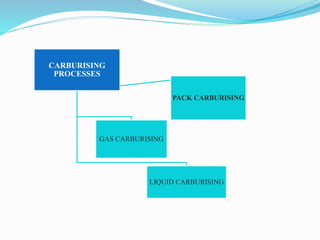
CARBURISING
PROCESSES
PACK CARBURISING
GAS CARBURISING
LIQUID CARBURISING
Nitriding
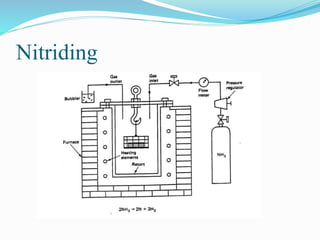
 Another process by which a case of hardened steel can be achieved
 In nitriding, the steel piece is heated in a furnace between 500 – 600 oC
and at the same time is exposed to ammonia gas (NH3)
 The heat from the furnace causes the ammonia to decompose into
hydrogen (H2) and nitrogen (N2)
 Nitriding times range between 1–100 hours depending on steel
composition and depth of hardening desired
Nitriding
Carbonitriding
 This process involves both the diffusion of C and N into the steel
surface
 Carbonitriding is performed at temperatures above the UCT (700 –
800oC)
 Quenching is done in a gas which is not as severe as water quench
 (the result is less distortion on the material to be treated).
Carbonitriding
Cyaniding
 This process also involves both the diffusion of C and N
into the surface layers of the steel
 In cyaniding, the steel is heated in a liquid bath of
cyanide – carbonate – chloride salts and then quenched in
brine, water or oil
Selective Surface Hardening
 These processes are also called localised heat treatment because only
the surface is austenitised and quenched to produce martensite
 Selective surface hardening are classified according to the heating
source into:
1. Flame hardening
2. Induction hardening
3. Laser hardening
4. Electron-beam heat-treating
INDUCTION HARDENING
Process:
•Induced current.
•Metal will be
surrounded in a
quickly changing
magnetic field.
•Heating temperature:
750OC – 850OC
•Quench in water.
 Advantages:
No scaling effect.
Reduce distortion.
Consistent surface texture.
Disadvantages:
High cost
 Applications:
Crankshafts.
Gears.
Automotive components
which require high core
strength.
THANK YOU

Surface hardening

  • 1.
  • 2.
    CONTENTS  Surface Hardening Case Hardening  Carburising  Nitriding  Carbonitriding  Cyaniding  Selective Surface Hardening  INDUCTION HARDENING
  • 3.
    Surface Hardening  Manyengineering must be very hard to resist surface indentation or wear and yet posses adequate toughness to resist impact damage  Surface Hardening is a process by which a steel is given a hard, wear resistant surface, while retaining a ductile but tougher interior  Surface hardening is usually done for the following reasons: -To improve wear resistance -To improve resistance to high contact stresses -To improve fracture toughness -To improve fatigue resistance, and, sometimes, -To improve corrosion resistance
  • 4.
     Components thatusually require surface hardening include:  - gears - bearings - valves  - cams - hand tools - rolls  - shafts - machine tools - bearing races  Surface hardening techniques can be classified into two major categories: 1. Processes that change the surface chemical composition (case hardening or thermo chemical processes) 2. Processes that do not change the surface chemical composition (selective surface hardening or local thermal surface hardening)
  • 6.
    1. Case Hardening Case hardening methods include: 1. Carburising 2. Nitriding 3. Carbo-nitriding 4. Cyaniding
  • 7.
    Carburising  Carburising isa hardening process in which carbon is introduced into the surface layer of the steel 1. The steel is heated in contact with a substance that has a high carbon content 2. The steel is held at a temperature above the UCT (850 –950 oC) for a suitable period of time
  • 8.
  • 9.
    Nitriding  Another processby which a case of hardened steel can be achieved  In nitriding, the steel piece is heated in a furnace between 500 – 600 oC and at the same time is exposed to ammonia gas (NH3)  The heat from the furnace causes the ammonia to decompose into hydrogen (H2) and nitrogen (N2)  Nitriding times range between 1–100 hours depending on steel composition and depth of hardening desired
  • 10.
  • 11.
    Carbonitriding  This processinvolves both the diffusion of C and N into the steel surface  Carbonitriding is performed at temperatures above the UCT (700 – 800oC)  Quenching is done in a gas which is not as severe as water quench  (the result is less distortion on the material to be treated).
  • 12.
  • 13.
    Cyaniding  This processalso involves both the diffusion of C and N into the surface layers of the steel  In cyaniding, the steel is heated in a liquid bath of cyanide – carbonate – chloride salts and then quenched in brine, water or oil
  • 14.
    Selective Surface Hardening These processes are also called localised heat treatment because only the surface is austenitised and quenched to produce martensite  Selective surface hardening are classified according to the heating source into: 1. Flame hardening 2. Induction hardening 3. Laser hardening 4. Electron-beam heat-treating
  • 15.
    INDUCTION HARDENING Process: •Induced current. •Metalwill be surrounded in a quickly changing magnetic field. •Heating temperature: 750OC – 850OC •Quench in water.  Advantages: No scaling effect. Reduce distortion. Consistent surface texture. Disadvantages: High cost  Applications: Crankshafts. Gears. Automotive components which require high core strength.
  • 16.