ABG ANALYSIS
DEPARTMENT
OF
MEDICAL SURGICAL NURSING
Learning Objectives
At the end of this lecturer, students should be able
to:
• define ABG analysis
• enlist the purpose of ABG analysis
• explain the terms related to acid and base analysis.
• describe the respiratory and metabolic, acidosis
and alkalosis.
DEFINITION
Measurements of blood pH and of
arterial oxygen and carbondioxide tensions are
obtained when managing patients with
respiratory problems and in adjusting oxygen
therapy as needed.
• The arterial oxygen tension (PaO2) indicates
• the degree of oxygenation of the blood,
• and the arterial carbon dioxide
tension(PaCO2) indicates the adequacy of
alveolar ventilation.
Patients need ABG analysis
• Patient with severe blood loss/ hemorrage
• Respiratory failure/arrest
• COPD, ARDS, shock
• Asthama
• Patient is on VENTILATORY support
• Kidney failure
• Cardiac arrest
• Any drugs overdoses etc.
Purpose of ABG Analysis
• Aids in establishing a diagnosis
• Helps guide treatment plan
• Aids in ventilator management
• Improvement in acid/base management
• Acid/base status may alter electrolyte
levels critical to patient status/care.
From where we obtain blood
• Arterial blood gas levels are obtained
through an arterial puncture at the
• radial,
• brachial,
• femoral artery
• through an indwelling arterial catheter
Technical Errors
• Excessive Heparin
• Ideally : Pre-heparinised ABG syringes
• Syringe FLUSHED with 0.5ml 1:1000 Heparin
& emptied
• Do Not Leave Excessive Heparin In The
Syringe Heparin Dilutional Hco3 - Effect Pco2
Technical Errors
• Risk of alteration of results with:
1) size of syringe/needle
2) vol of sample
3) Syringes must have > 50% blood
4) Use only 3ml or less syringe
5) 25% lower values if 1 ml sample taken in 10
ml syringe (0.25 ml heparin in needle)
• Air Bubbles
1. pO2 150 mm Hg & pCO2 0 mm Hg
2. Contact with AIR BUBBLES
3. Seal syringe immediately after sampling
• Body Temperature
1. Affects values of pCO2 and HCO3 - only
2. ABG Analyser controlled for Normal Body
temperatures
• WBC Counts
• 0.01 ml O2 consumed/dL/min
• Marked increase in high TLC/plt counts : pO2
• Chilling / immediate analysis
ABG component
• pH: measures hydrogen ion concentration in the
blood, it shows blood’ acidity or alkalinity
• PCO2 : It is the partial pressure of CO2 that is
carried by the blood for excretion by the lungs,
known as respiratory parameter
• PO2: It is the partial pressure of O2 that is
dissolved in the blood , it reflects the body ability
to pick up oxygen from the lungs
• HCO3 : known as the metabolic parameter, it
reflects the kidney’s ability to retain and excrete
bicarbonate
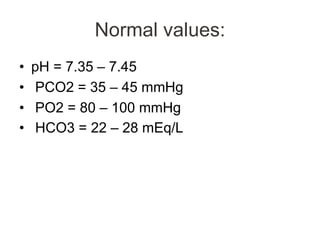
Normal values:
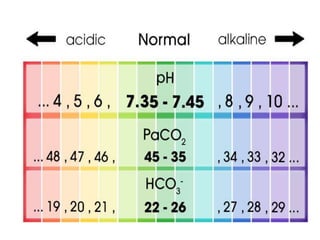
• pH = 7.35 – 7.45
• PCO2 = 35 – 45 mmHg
• PO2 = 80 – 100 mmHg
• HCO3 = 22 – 28 mEq/L
THE TERMS:
• ACIDS
Academia
Acidosis
• Respiratory : CO2
• Metabolic: HCO3
• BASES
– Alkalemia
– Alkalosis
• Respiratory: CO2
• Metabolic: HCO3
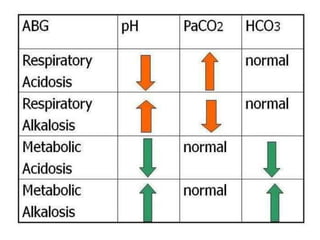
RESPIRATORY ACIDOSIS:
• ph, CO2, Ventilation
• Causes
– CNS depression
– Pleural disease
– COPD/ARDS
– Musculoskeletal disorders
RESPIRATORY ALKALOSIS:
• pH, CO2, Ventilation
•  CO2  HCO3 (Cl to balance charges
hyperchloremia)
• Causes
– Intracerebral hemorrhage
– Salicylate and Progesterone drug usage
• Anxiety, lung compliance
• Cirrhosis of the liver
METABOLIC ACIDOSIS:
• PH, HCO3
Causes:
• diarrhea, lower intestinal fistulas,
ureterostomies, and use of diuretics; early
renal insufficiency; excessive administration of
chloride; and the
• administration of parenteral nutrition without
bicarbonate or bicarbonate-producing solutes
(e.g., lactate).
Summary
• So far we have discussed about Definition,
purpose, terms of ABG analysis.
Bibliography
• Lewis et al, Medical Surgical Nursing, Mosby
Elsevier,7th edition.
• Joyce.M.Black et al, Medical Surgical
Nursing, Saunders publication.
• Brunner and Siddhartha, Medical Surgical
Nursing, Lippincott Williams and Wilkins.
Thank You

Abg analysis

  • 1.
  • 2.
    Learning Objectives At theend of this lecturer, students should be able to: • define ABG analysis • enlist the purpose of ABG analysis • explain the terms related to acid and base analysis. • describe the respiratory and metabolic, acidosis and alkalosis.
  • 3.
    DEFINITION Measurements of bloodpH and of arterial oxygen and carbondioxide tensions are obtained when managing patients with respiratory problems and in adjusting oxygen therapy as needed.
  • 4.
    • The arterialoxygen tension (PaO2) indicates • the degree of oxygenation of the blood, • and the arterial carbon dioxide tension(PaCO2) indicates the adequacy of alveolar ventilation.
  • 5.
    Patients need ABGanalysis • Patient with severe blood loss/ hemorrage • Respiratory failure/arrest • COPD, ARDS, shock • Asthama • Patient is on VENTILATORY support • Kidney failure • Cardiac arrest • Any drugs overdoses etc.
  • 6.
    Purpose of ABGAnalysis • Aids in establishing a diagnosis • Helps guide treatment plan • Aids in ventilator management • Improvement in acid/base management • Acid/base status may alter electrolyte levels critical to patient status/care.
  • 7.
    From where weobtain blood • Arterial blood gas levels are obtained through an arterial puncture at the • radial, • brachial, • femoral artery • through an indwelling arterial catheter
  • 8.
    Technical Errors • ExcessiveHeparin • Ideally : Pre-heparinised ABG syringes • Syringe FLUSHED with 0.5ml 1:1000 Heparin & emptied • Do Not Leave Excessive Heparin In The Syringe Heparin Dilutional Hco3 - Effect Pco2
  • 9.
    Technical Errors • Riskof alteration of results with: 1) size of syringe/needle 2) vol of sample 3) Syringes must have > 50% blood 4) Use only 3ml or less syringe 5) 25% lower values if 1 ml sample taken in 10 ml syringe (0.25 ml heparin in needle)
  • 10.
    • Air Bubbles 1.pO2 150 mm Hg & pCO2 0 mm Hg 2. Contact with AIR BUBBLES 3. Seal syringe immediately after sampling • Body Temperature 1. Affects values of pCO2 and HCO3 - only 2. ABG Analyser controlled for Normal Body temperatures
  • 11.
    • WBC Counts •0.01 ml O2 consumed/dL/min • Marked increase in high TLC/plt counts : pO2 • Chilling / immediate analysis
  • 12.
    ABG component • pH:measures hydrogen ion concentration in the blood, it shows blood’ acidity or alkalinity • PCO2 : It is the partial pressure of CO2 that is carried by the blood for excretion by the lungs, known as respiratory parameter • PO2: It is the partial pressure of O2 that is dissolved in the blood , it reflects the body ability to pick up oxygen from the lungs • HCO3 : known as the metabolic parameter, it reflects the kidney’s ability to retain and excrete bicarbonate
  • 13.
    Normal values: • pH= 7.35 – 7.45 • PCO2 = 35 – 45 mmHg • PO2 = 80 – 100 mmHg • HCO3 = 22 – 28 mEq/L
  • 15.
    THE TERMS: • ACIDS Academia Acidosis •Respiratory : CO2 • Metabolic: HCO3
  • 16.
    • BASES – Alkalemia –Alkalosis • Respiratory: CO2 • Metabolic: HCO3
  • 17.
    RESPIRATORY ACIDOSIS: • ph,CO2, Ventilation • Causes – CNS depression – Pleural disease – COPD/ARDS – Musculoskeletal disorders
  • 18.
    RESPIRATORY ALKALOSIS: • pH,CO2, Ventilation •  CO2  HCO3 (Cl to balance charges hyperchloremia) • Causes – Intracerebral hemorrhage – Salicylate and Progesterone drug usage
  • 19.
    • Anxiety, lungcompliance • Cirrhosis of the liver
  • 20.
    METABOLIC ACIDOSIS: • PH,HCO3 Causes: • diarrhea, lower intestinal fistulas, ureterostomies, and use of diuretics; early renal insufficiency; excessive administration of chloride; and the
  • 21.
    • administration ofparenteral nutrition without bicarbonate or bicarbonate-producing solutes (e.g., lactate).
  • 23.
    Summary • So farwe have discussed about Definition, purpose, terms of ABG analysis.
  • 24.
    Bibliography • Lewis etal, Medical Surgical Nursing, Mosby Elsevier,7th edition. • Joyce.M.Black et al, Medical Surgical Nursing, Saunders publication. • Brunner and Siddhartha, Medical Surgical Nursing, Lippincott Williams and Wilkins.
  • 25.