
PRESENTED BY
PRAGYANSHREE NANDA
MEDICAL-SURGICAL NURSING
PG 1ST YR
INTRODUCTION
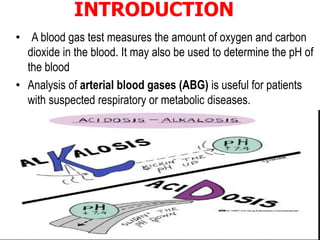
• A blood gas test measures the amount of oxygen and carbon
dioxide in the blood. It may also be used to determine the pH of
the blood
• Analysis of arterial blood gases (ABG) is useful for patients
with suspected respiratory or metabolic diseases.
DEFINITION
Arterial blood gas (ABG): The sampling of the blood levels of
oxygen and carbon dioxide within the arteries, as opposed to
the levels of oxygen and carbon dioxide in venous blood.
Typically the acidity, or pH, of the blood is measured
simultaneously with the gas levels in ABG
ARTERIAL BLOOD GAS
(ABG)
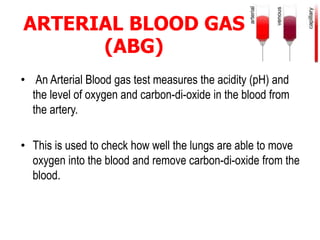
• An Arterial Blood gas test measures the acidity (pH) and
the level of oxygen and carbon-di-oxide in the blood from
the artery.
• This is used to check how well the lungs are able to move
oxygen into the blood and remove carbon-di-oxide from the
blood.
COMPONENTS OF BLOOD
GAS
• Oxygen- pao2, sao2,
• ventilator- pco2
• acid-base- pH, HCO3 – BE
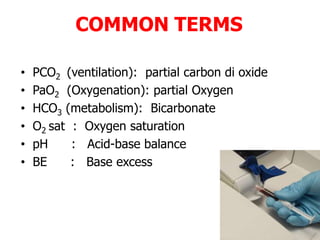
COMMON TERMS
• PCO2 (ventilation): partial carbon di oxide
• PaO2 (Oxygenation): partial Oxygen
• HCO3 (metabolism): Bicarbonate
• O2 sat : Oxygen saturation
• pH : Acid-base balance
• BE : Base excess
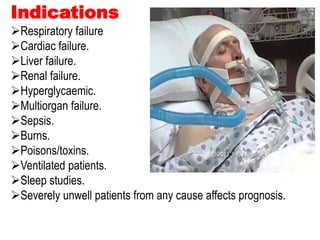
Indications
Respiratory failure
Cardiac failure.
Liver failure.
Renal failure.
Hyperglycaemic.
Multiorgan failure.
Sepsis.
Burns.
Poisons/toxins.
Ventilated patients.
Sleep studies.
Severely unwell patients from any cause affects prognosis.
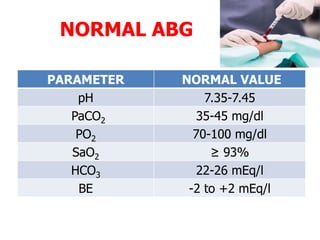
NORMAL ABG
PARAMETER NORMAL VALUE
pH 7.35-7.45
PaCO2 35-45 mg/dl
PO2 70-100 mg/dl
SaO2 ≥ 93%
HCO3 22-26 mEq/l
BE -2 to +2 mEq/l
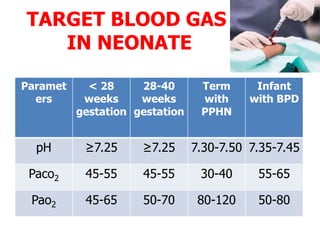
TARGET BLOOD GAS
IN NEONATE
Paramet
ers
< 28
weeks
gestation
28-40
weeks
gestation
Term
with
PPHN
Infant
with BPD
pH ≥7.25 ≥7.25 7.30-7.50 7.35-7.45
Paco2 45-55 45-55 30-40 55-65
Pao2 45-65 50-70 80-120 50-80
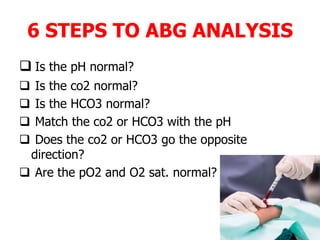
6 STEPS TO ABG ANALYSIS
 Is the pH normal?
 Is the co2 normal?
 Is the HCO3 normal?
 Match the co2 or HCO3 with the pH
 Does the co2 or HCO3 go the opposite
direction?
 Are the pO2 and O2 sat. normal?
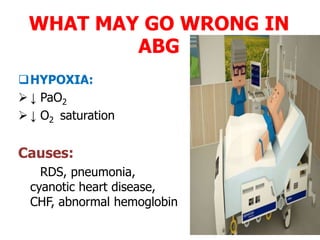
WHAT MAY GO WRONG IN
ABG
HYPOXIA:
 ↓ PaO2
 ↓ O2 saturation
Causes:
RDS, pneumonia,
cyanotic heart disease,
CHF, abnormal hemoglobin
CONT...
ACID-BASE DISORDERS:
Primary acid base disorder
 Respiratory acidosis
 Respiratory alkalosis
 Metabolic acidosis
 Metabolic alkalosis
Compensation
Mixed acid base disorder
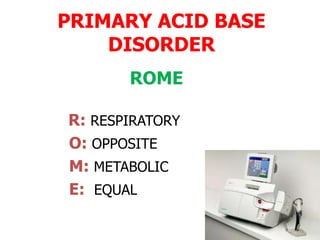
PRIMARY ACID BASE
DISORDER
ROME
R: RESPIRATORY
O: OPPOSITE
M: METABOLIC
E: EQUAL
CONT...
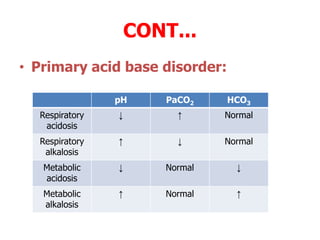
• Primary acid base disorder:
pH PaCO2 HCO3
Respiratory
acidosis
↓ ↑ Normal
Respiratory
alkalosis
↑ ↓ Normal
Metabolic
acidosis
↓ Normal ↓
Metabolic
alkalosis
↑ Normal ↑
PARTIALLY COMPENSATED
ACID- BASE DISORDERS
pH PaCO2 HCO3
Respiratory
acidosis
↓ ↑ ↑
Respiratory
alkalosis
↑ ↓ ↓
Metabolic
acidosis
↓ ↓ ↓
Metabolic
alkalosis
↑ ↑ ↑
COMPLICATIONS
• Hematoma
• Thrombosis and embolism
• Infection
• Inaccurate blood gas result
Excessive heparin may result in a false pH and
paco2
Air bubbles may falsely elevate the pao2 and
falsely lower the paco2
SUMMARY
Quick quiz - 1
• A 17-year-old patient presents to A&E complaining of a tight
feeling in their chest, shortness of breath, some tingling in their
fingers and around their mouth. An ABG is performed on the
patient whilst they’re breathing room air and the results are
shown below…
pH= 7.8, Pco2= 34mg/dl, po2=70mg/dl, HCO3 = 29 mEq/l
• Interprete above blood gas
a. Metabolic acidosis
b. Respiratory acidosis
c. Metabolic alkalosis
d. Respiratory alkalosis
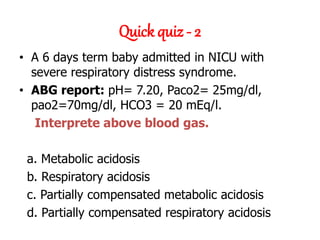
Quick quiz - 2
• A 6 days term baby admitted in NICU with
severe respiratory distress syndrome.
• ABG report: pH= 7.20, Paco2= 25mg/dl,
pao2=70mg/dl, HCO3 = 20 mEq/l.
Interprete above blood gas.
a. Metabolic acidosis
b. Respiratory acidosis
c. Partially compensated metabolic acidosis
d. Partially compensated respiratory acidosis
conclusion
ABG

ABG

  • 1.
  • 3.
    INTRODUCTION • A bloodgas test measures the amount of oxygen and carbon dioxide in the blood. It may also be used to determine the pH of the blood • Analysis of arterial blood gases (ABG) is useful for patients with suspected respiratory or metabolic diseases.
  • 4.
    DEFINITION Arterial blood gas(ABG): The sampling of the blood levels of oxygen and carbon dioxide within the arteries, as opposed to the levels of oxygen and carbon dioxide in venous blood. Typically the acidity, or pH, of the blood is measured simultaneously with the gas levels in ABG
  • 5.
    ARTERIAL BLOOD GAS (ABG) •An Arterial Blood gas test measures the acidity (pH) and the level of oxygen and carbon-di-oxide in the blood from the artery. • This is used to check how well the lungs are able to move oxygen into the blood and remove carbon-di-oxide from the blood.
  • 6.
    COMPONENTS OF BLOOD GAS •Oxygen- pao2, sao2, • ventilator- pco2 • acid-base- pH, HCO3 – BE
  • 7.
    COMMON TERMS • PCO2(ventilation): partial carbon di oxide • PaO2 (Oxygenation): partial Oxygen • HCO3 (metabolism): Bicarbonate • O2 sat : Oxygen saturation • pH : Acid-base balance • BE : Base excess
  • 8.
    Indications Respiratory failure Cardiac failure. Liverfailure. Renal failure. Hyperglycaemic. Multiorgan failure. Sepsis. Burns. Poisons/toxins. Ventilated patients. Sleep studies. Severely unwell patients from any cause affects prognosis.
  • 10.
    NORMAL ABG PARAMETER NORMALVALUE pH 7.35-7.45 PaCO2 35-45 mg/dl PO2 70-100 mg/dl SaO2 ≥ 93% HCO3 22-26 mEq/l BE -2 to +2 mEq/l
  • 11.
    TARGET BLOOD GAS INNEONATE Paramet ers < 28 weeks gestation 28-40 weeks gestation Term with PPHN Infant with BPD pH ≥7.25 ≥7.25 7.30-7.50 7.35-7.45 Paco2 45-55 45-55 30-40 55-65 Pao2 45-65 50-70 80-120 50-80
  • 12.
    6 STEPS TOABG ANALYSIS  Is the pH normal?  Is the co2 normal?  Is the HCO3 normal?  Match the co2 or HCO3 with the pH  Does the co2 or HCO3 go the opposite direction?  Are the pO2 and O2 sat. normal?
  • 13.
    WHAT MAY GOWRONG IN ABG HYPOXIA:  ↓ PaO2  ↓ O2 saturation Causes: RDS, pneumonia, cyanotic heart disease, CHF, abnormal hemoglobin
  • 14.
    CONT... ACID-BASE DISORDERS: Primary acidbase disorder  Respiratory acidosis  Respiratory alkalosis  Metabolic acidosis  Metabolic alkalosis Compensation Mixed acid base disorder
  • 15.
    PRIMARY ACID BASE DISORDER ROME R:RESPIRATORY O: OPPOSITE M: METABOLIC E: EQUAL
  • 16.
    CONT... • Primary acidbase disorder: pH PaCO2 HCO3 Respiratory acidosis ↓ ↑ Normal Respiratory alkalosis ↑ ↓ Normal Metabolic acidosis ↓ Normal ↓ Metabolic alkalosis ↑ Normal ↑
  • 17.
    PARTIALLY COMPENSATED ACID- BASEDISORDERS pH PaCO2 HCO3 Respiratory acidosis ↓ ↑ ↑ Respiratory alkalosis ↑ ↓ ↓ Metabolic acidosis ↓ ↓ ↓ Metabolic alkalosis ↑ ↑ ↑
  • 18.
    COMPLICATIONS • Hematoma • Thrombosisand embolism • Infection • Inaccurate blood gas result Excessive heparin may result in a false pH and paco2 Air bubbles may falsely elevate the pao2 and falsely lower the paco2
  • 19.
  • 21.
    Quick quiz -1 • A 17-year-old patient presents to A&E complaining of a tight feeling in their chest, shortness of breath, some tingling in their fingers and around their mouth. An ABG is performed on the patient whilst they’re breathing room air and the results are shown below… pH= 7.8, Pco2= 34mg/dl, po2=70mg/dl, HCO3 = 29 mEq/l • Interprete above blood gas a. Metabolic acidosis b. Respiratory acidosis c. Metabolic alkalosis d. Respiratory alkalosis
  • 22.
    Quick quiz -2 • A 6 days term baby admitted in NICU with severe respiratory distress syndrome. • ABG report: pH= 7.20, Paco2= 25mg/dl, pao2=70mg/dl, HCO3 = 20 mEq/l. Interprete above blood gas. a. Metabolic acidosis b. Respiratory acidosis c. Partially compensated metabolic acidosis d. Partially compensated respiratory acidosis
  • 23.