
R.PUSHPAKALAMBIGA,
M.SC(NURSING) 1ST YEAR,
DEPT OF CHN,
MTPG&RIHS.
 Basic life support(BLS) refers to the care
healthcare providers and public safety
professionals provide to patients who are
experiencing respiratory arrest, cardiac arrest
or airway obstruction.
 Ensure safety
 Check for response
 Activate EMS
 Chest compressions
 Check airway and ventilate
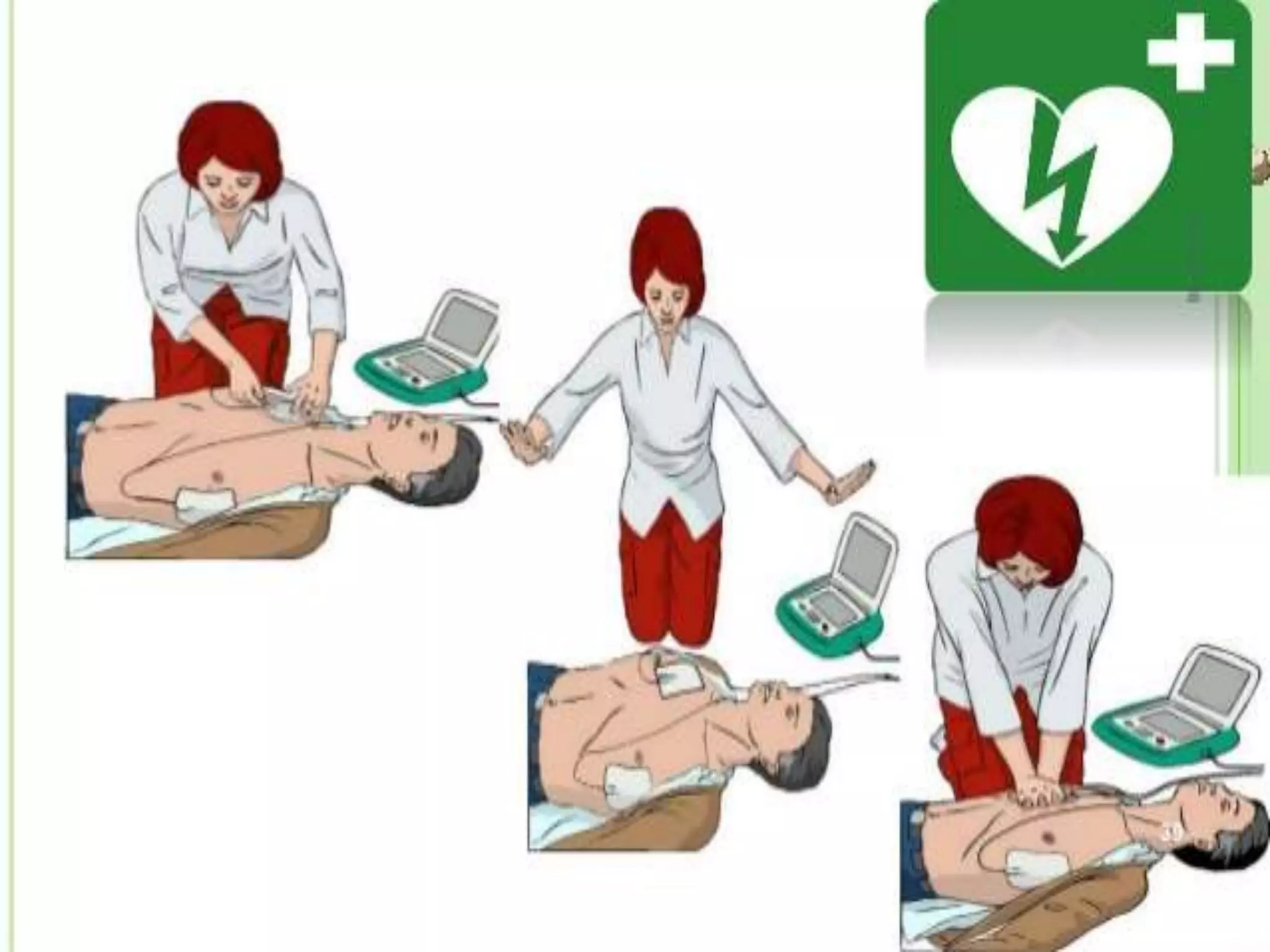
 defibrillate
 Check for danger(hazards/risks/safety)
 to you
 To others
 To casualty
 Use the COWS method
 C- can you hear me?
 O- open your eyes?
 W- what is your name?
 S- squeeze my hand
 Call 108 or
 Call 112 to reach emergency services virtually
anywhere in the world.
 Check pulse .
 If pulse is not definitely felt within 10
seconds proceed with chest compressions.
 Firm surface (backboard or floor)
 Kneel beside persons chest
 Heel of one hand on inter mammary line
(which is the lower half of the sternum)
 Heel of other hand on top of the first so that
the hands are overlapped and parallel
 Lock elbows
 Push hard push fast
 Depth – 2 inches (5cm) not more than 2.5
inches
 Compression: ventilation ratio of 30:2
 Jaw thrust maneuver
 Head tilt and chin lift
 Look
 Listen
 Feel
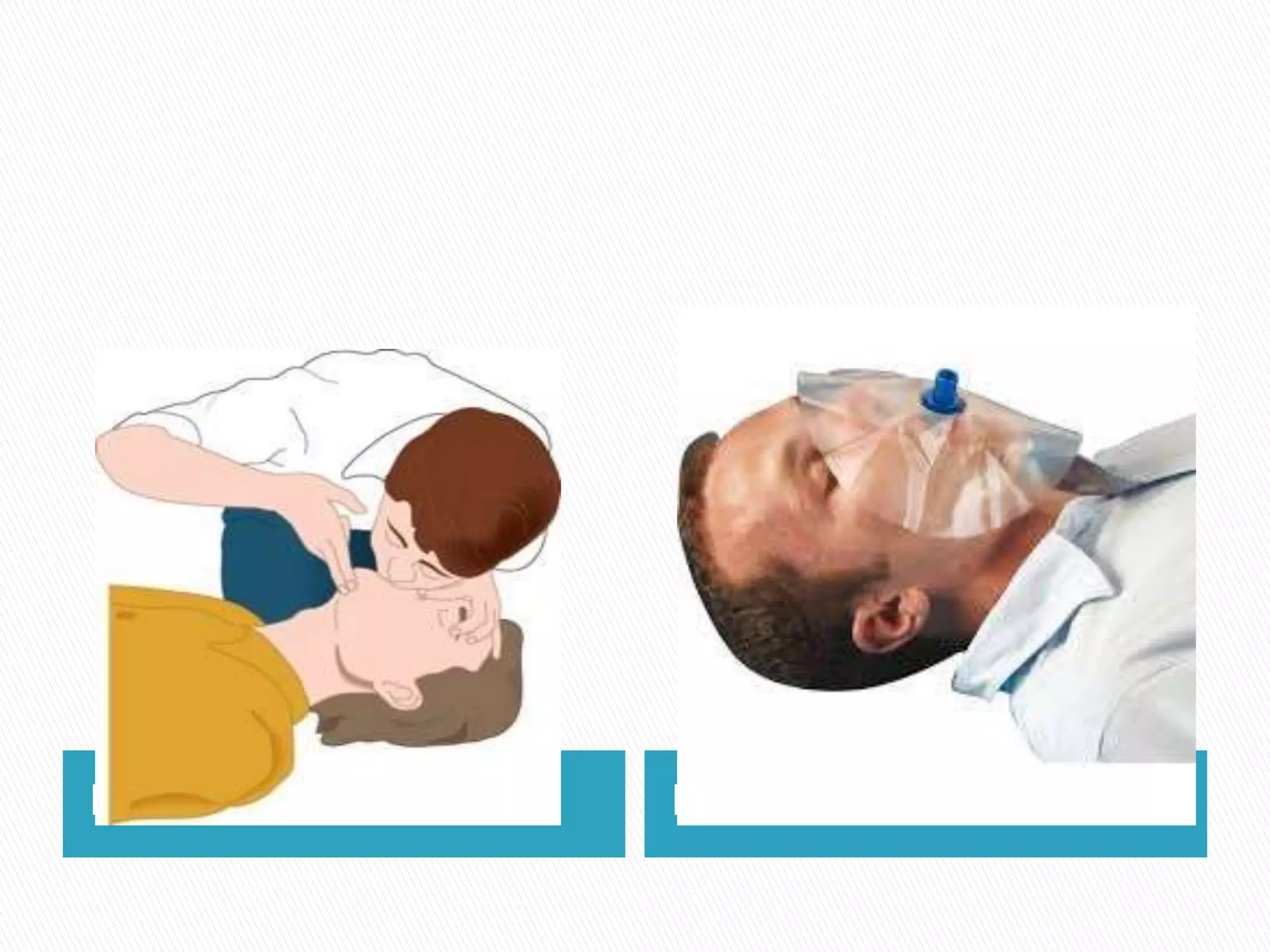
 Mouth to mouth rescue breathing
 Mouth to barrier device breathing
 Mouth to nose and mouth to stoma
ventilation
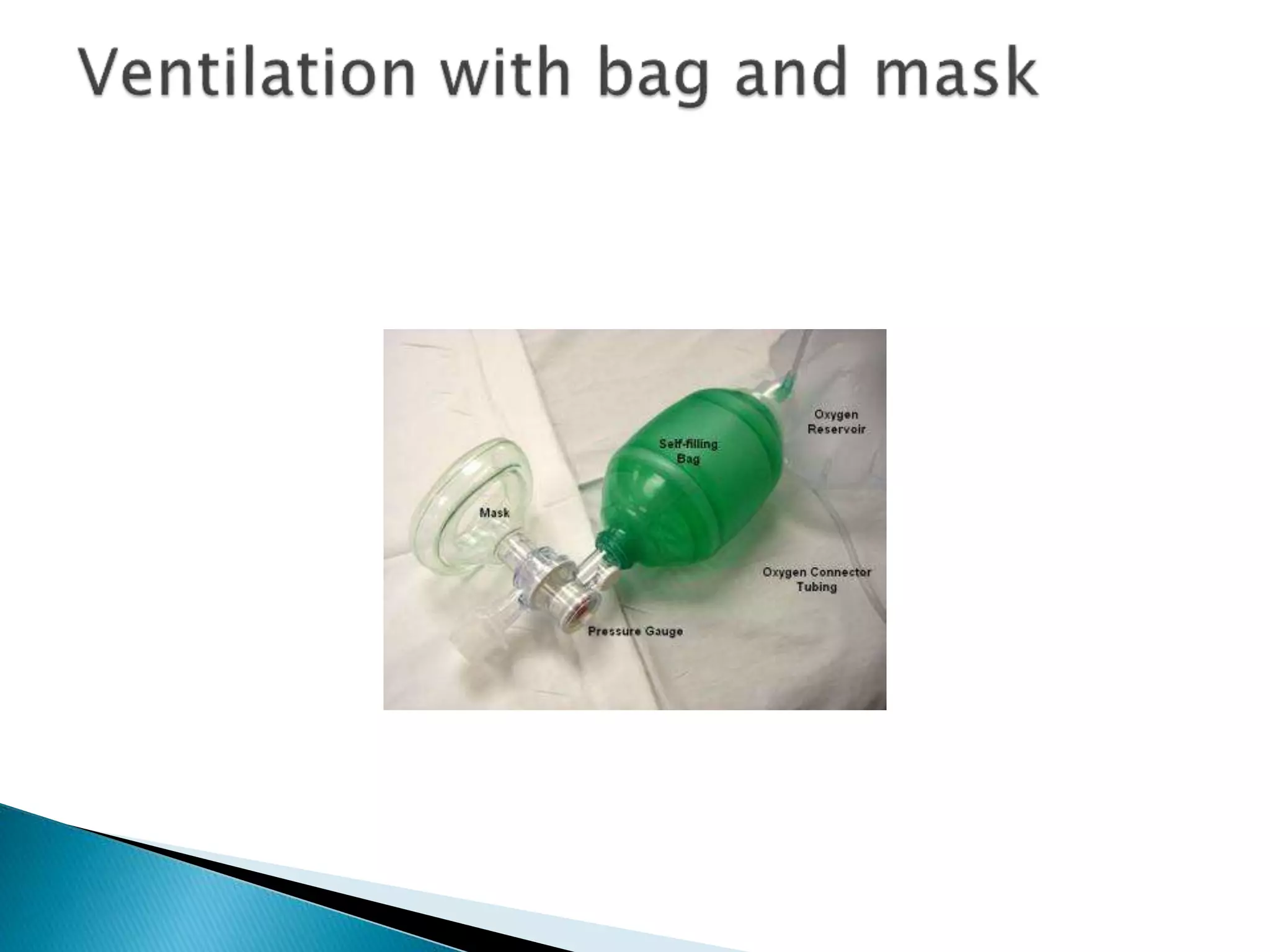
 Ventilation with bag and mask
 Ventilation with an advanced airway
Mouth to mouth Mouth to barrier device
 On/off switch
 Plug with flashing light near it
 Shock delivery button
 Speaker and volume control for voice prompt
 Battery
 Give one shock each time AED advices
“SHOCK”
 Resume CPR immediately- 5 cycles (2 min)
starting with chest compression.
 After 2 min AED will automatically start
analyzing again and prompt accordingly.
 Compression depth for adults
a) 1-1.5 inches
b) 2-2.5 inches
c) 3-3.5 inches
d) < 2 inch
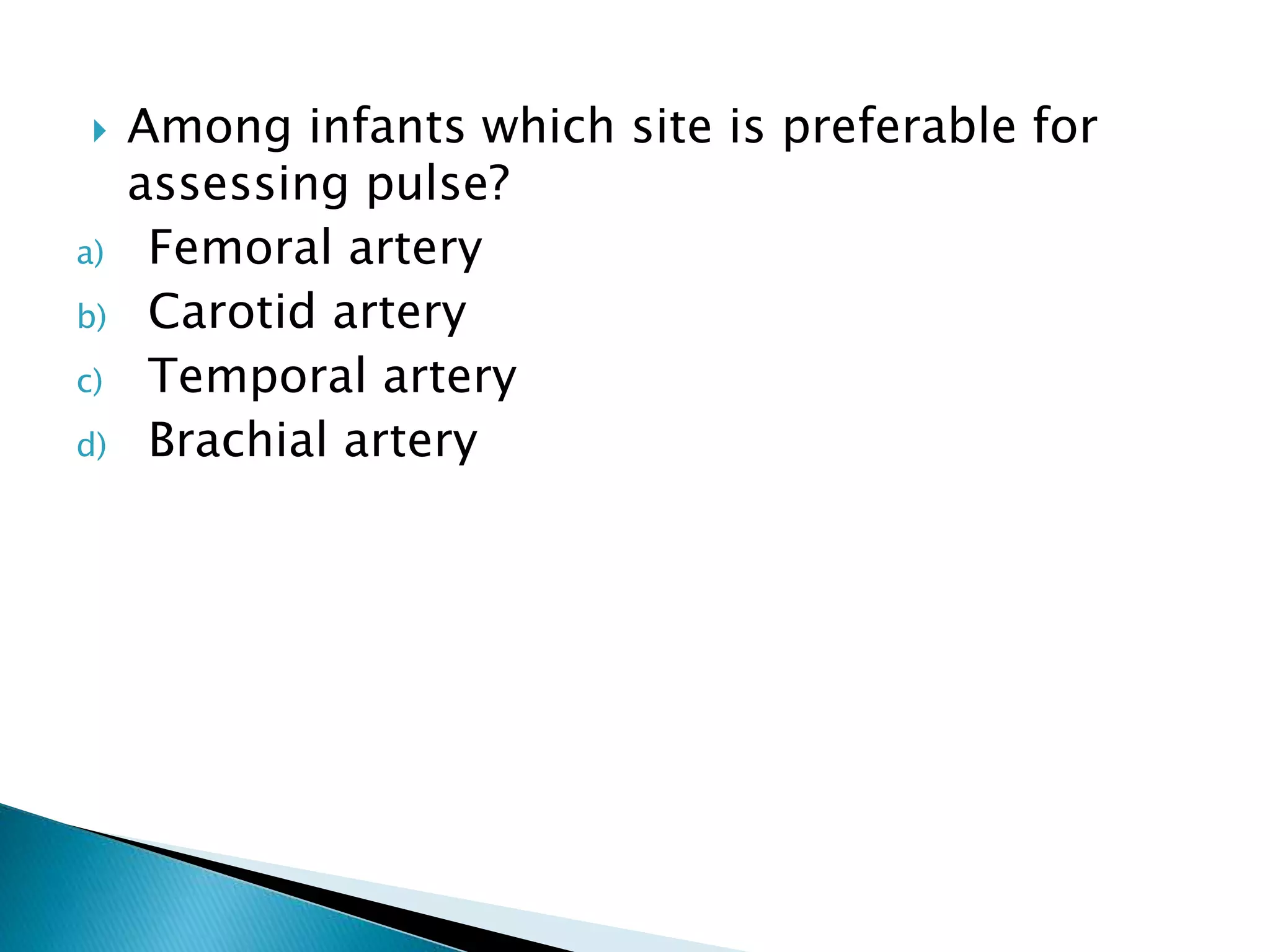
 Among infants which site is preferable for
assessing pulse?
a) Femoral artery
b) Carotid artery
c) Temporal artery
d) Brachial artery
Bcls

Bcls

  • 1.
  • 4.
     Basic lifesupport(BLS) refers to the care healthcare providers and public safety professionals provide to patients who are experiencing respiratory arrest, cardiac arrest or airway obstruction.
  • 5.
     Ensure safety Check for response  Activate EMS  Chest compressions  Check airway and ventilate  defibrillate
  • 7.
     Check fordanger(hazards/risks/safety)  to you  To others  To casualty
  • 8.
     Use theCOWS method  C- can you hear me?  O- open your eyes?  W- what is your name?  S- squeeze my hand
  • 9.
     Call 108or  Call 112 to reach emergency services virtually anywhere in the world.
  • 10.
     Check pulse.  If pulse is not definitely felt within 10 seconds proceed with chest compressions.
  • 11.
     Firm surface(backboard or floor)  Kneel beside persons chest  Heel of one hand on inter mammary line (which is the lower half of the sternum)  Heel of other hand on top of the first so that the hands are overlapped and parallel  Lock elbows
  • 12.
     Push hardpush fast  Depth – 2 inches (5cm) not more than 2.5 inches  Compression: ventilation ratio of 30:2
  • 13.
     Jaw thrustmaneuver  Head tilt and chin lift
  • 15.
  • 16.
     Mouth tomouth rescue breathing  Mouth to barrier device breathing  Mouth to nose and mouth to stoma ventilation  Ventilation with bag and mask  Ventilation with an advanced airway
  • 17.
    Mouth to mouthMouth to barrier device
  • 19.
     On/off switch Plug with flashing light near it  Shock delivery button  Speaker and volume control for voice prompt  Battery
  • 21.
     Give oneshock each time AED advices “SHOCK”  Resume CPR immediately- 5 cycles (2 min) starting with chest compression.  After 2 min AED will automatically start analyzing again and prompt accordingly.
  • 24.
     Compression depthfor adults a) 1-1.5 inches b) 2-2.5 inches c) 3-3.5 inches d) < 2 inch
  • 25.
     Among infantswhich site is preferable for assessing pulse? a) Femoral artery b) Carotid artery c) Temporal artery d) Brachial artery