CATHETERIZATION PROCEDURE
- MS. KHYATI CHAUDHARI
INTRODUCTION
 In urinary catheterization or urinary elimination is a procedure in which a
latex, polyurethane, or silicone tube known as a urinary catheter is inserted
into a patient's bladder via the urethra.
 Catheterization allows the patient's urine to drain freely from the bladder for
collection. It may be used to inject liquids used for treatment or diagnosis of
bladder conditions.
DEFINITION
 Introducing catheter into the urinary bladder through urethra using aseptic
technique for the purpose of emptying the bladder.
TYPE OF CATHETERIZATION
 Intermittent catheterization
 Indwelling catheterization
TYPES OF CATHETERS
1. Simple rubber catheter
2. Simple plastic catheter
3. Self retaining catheter
4. Condom catheter
5. Foley's catheter
a. Two way
b. Three way
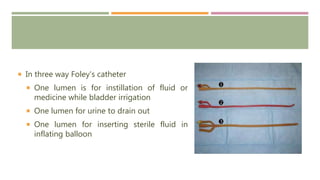
 In three way Foley's catheter
 One lumen is for instillation of fluid or
medicine while bladder irrigation
 One lumen for urine to drain out
 One lumen for inserting sterile fluid in
inflating balloon
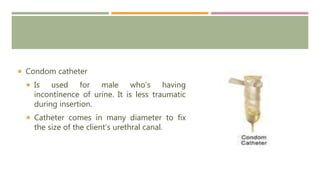
 Condom catheter
 Is used for male who’s having
incontinence of urine. It is less traumatic
during insertion.
 Catheter comes in many diameter to fix
the size of the client’s urethral canal.
 The unit for size of catheter is French gauze (FG).
 In children, usually requires 8-10 FG.
 In women, requires 14-16 FG.
 In men, requires 16-18 FG.
INDICATIONS
 Retention of urine
 Incontinence of urine
 Obtain sterile specimen
 Assess presence of residual urine
 Client undergone surgeries
 Client following childbirth
 Bladder irrigation
 Perineal surgery
 Patient having urinary obstruction
 Oliguria/polyuria
 Unconscious patient
 Terminally ill patient
ARTICLES
 A sterile tray with:
 Sterile catheter
 Small bowel to take antiseptic
solution
 One bowel with cotton swabs &
gauze piece
 One pair of sterile gloves
 Sponge holding forceps
 Sterile specimen bottle
 Kidney tray
ARTICLES
 A clean tray containing :
 Lubricant jell
 Operation towel or drape
 Disposable gloves
 Kidney tray
 Adhesive tap & scissors
 10 ml syringe
 Sterile water
 Green/pink needle
 Pint to measure urine
 Mackintosh & draw sheet
PROCEDURE
 Introduce yourself to the patient.
 Verbal confirmation of the patient.
 Check the file and confirm.
 Explain the procedure to the patient
 Provide privacy
 Raise the bed to appropriate working level.
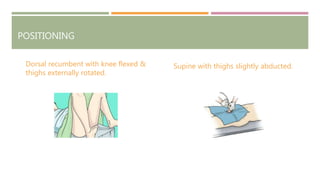
POSITIONING
Dorsal recumbent with knee flexed &
thighs externally rotated.
Supine with thighs slightly abducted.
PROCEDURE
 Spread mackintosh & draw sheet under the patient’s buttocks.
 Place sterile kidney tray between patient legs.
 Wash hands.
 Place operation towel/drape in such a way so only perineum area will expose.
 Don sterile gloving.
 Clean perineum with cotton balls dipped in antiseptic solution using sponge
holding forceps.
PROCEDURE
 Clean the perineal area as per perineal care procedure.
 Open the sterile packaging of the catheter
 Apply the xylocaine jelly on the tip to 4cms
 Hands holding 7.5 cm up from tip & place distal end in the sterile kidney tray.
So, urine will flow into kidney tray.
PROCEDURE OF INSERTION
Female Male
PROCEDURE OF INSERTION
 Female
 Insert the catheter approximately 5-6cms. Once urine has started draining
insert a further 3-5cms.
 Inflate the balloon with 10 ml Sterile water
 Male
 Insert catheter until urine has started to drain, then insert a further 5cm or
almost up to the bifurcation.
 Inflate the balloon with 10 ml sterile water
PROCEDURE
 Measure the amount of urine
 Assess the patient is comfortable and the genital area
AFTER CARE
 On completion of procedure remove and dispose of PPE and the articles.
 Remove drapes and help patient to put on clothe
 Give comfortable position.
 Documentation & report.

Catheterization

  • 1.
  • 2.
    INTRODUCTION  In urinarycatheterization or urinary elimination is a procedure in which a latex, polyurethane, or silicone tube known as a urinary catheter is inserted into a patient's bladder via the urethra.  Catheterization allows the patient's urine to drain freely from the bladder for collection. It may be used to inject liquids used for treatment or diagnosis of bladder conditions.
  • 3.
    DEFINITION  Introducing catheterinto the urinary bladder through urethra using aseptic technique for the purpose of emptying the bladder.
  • 4.
    TYPE OF CATHETERIZATION Intermittent catheterization  Indwelling catheterization
  • 5.
    TYPES OF CATHETERS 1.Simple rubber catheter 2. Simple plastic catheter 3. Self retaining catheter 4. Condom catheter 5. Foley's catheter a. Two way b. Three way
  • 6.
     In threeway Foley's catheter  One lumen is for instillation of fluid or medicine while bladder irrigation  One lumen for urine to drain out  One lumen for inserting sterile fluid in inflating balloon
  • 7.
     Condom catheter Is used for male who’s having incontinence of urine. It is less traumatic during insertion.  Catheter comes in many diameter to fix the size of the client’s urethral canal.
  • 8.
     The unitfor size of catheter is French gauze (FG).  In children, usually requires 8-10 FG.  In women, requires 14-16 FG.  In men, requires 16-18 FG.
  • 9.
    INDICATIONS  Retention ofurine  Incontinence of urine  Obtain sterile specimen  Assess presence of residual urine  Client undergone surgeries  Client following childbirth  Bladder irrigation  Perineal surgery  Patient having urinary obstruction  Oliguria/polyuria  Unconscious patient  Terminally ill patient
  • 10.
    ARTICLES  A steriletray with:  Sterile catheter  Small bowel to take antiseptic solution  One bowel with cotton swabs & gauze piece  One pair of sterile gloves  Sponge holding forceps  Sterile specimen bottle  Kidney tray
  • 11.
    ARTICLES  A cleantray containing :  Lubricant jell  Operation towel or drape  Disposable gloves  Kidney tray  Adhesive tap & scissors  10 ml syringe  Sterile water  Green/pink needle  Pint to measure urine  Mackintosh & draw sheet
  • 12.
    PROCEDURE  Introduce yourselfto the patient.  Verbal confirmation of the patient.  Check the file and confirm.  Explain the procedure to the patient  Provide privacy  Raise the bed to appropriate working level.
  • 13.
    POSITIONING Dorsal recumbent withknee flexed & thighs externally rotated. Supine with thighs slightly abducted.
  • 14.
    PROCEDURE  Spread mackintosh& draw sheet under the patient’s buttocks.  Place sterile kidney tray between patient legs.  Wash hands.  Place operation towel/drape in such a way so only perineum area will expose.  Don sterile gloving.  Clean perineum with cotton balls dipped in antiseptic solution using sponge holding forceps.
  • 15.
    PROCEDURE  Clean theperineal area as per perineal care procedure.  Open the sterile packaging of the catheter  Apply the xylocaine jelly on the tip to 4cms  Hands holding 7.5 cm up from tip & place distal end in the sterile kidney tray. So, urine will flow into kidney tray.
  • 16.
  • 17.
  • 18.
    PROCEDURE OF INSERTION Female  Insert the catheter approximately 5-6cms. Once urine has started draining insert a further 3-5cms.  Inflate the balloon with 10 ml Sterile water  Male  Insert catheter until urine has started to drain, then insert a further 5cm or almost up to the bifurcation.  Inflate the balloon with 10 ml sterile water
  • 19.
    PROCEDURE  Measure theamount of urine  Assess the patient is comfortable and the genital area
  • 20.
    AFTER CARE  Oncompletion of procedure remove and dispose of PPE and the articles.  Remove drapes and help patient to put on clothe  Give comfortable position.  Documentation & report.