ANTI EMBOLIC
STOCKING
APPLICATION
NCM103 SKILLS
Prepared by: dmArgel,RN
Anti embolism stockings are elastic
stockings which are used to prevent
the pooling of blood on the legs.
Purpose of embolic stocking:
1.Promote supplementing the action of
muscle contraction by venous return from
the legs
2.Prevent deep vein thrombosis in the
immobile client
CONTRAINDICATIONS OF ANTI EMBOLIC STOCKING
It is contraindicated to patients who have:
1. suspected or proven peripheral arterial disease
2. peripheral arterial bypass grafting
3. any local conditions in which stockings may cause damage, for example
fragile tissue paper skin dermatitis, gangrene or recent skin graft
4. known allergy to material of manufacture
5. cardiac failure
6. severe leg oedema or pulmonary oedema from congestive heart failure
7. unusual leg size or shape
8. major limb deformity preventing correct fit.
Assessment
1. Identify clients at high risk for deep
vein thrombosis (e.g., long-term bed
rest, cardiovascular disease).
2. Obtain physician order.
Equipment
A.Stockings (available in knee-high
and thigh-high lengths)
B.Measuring tape to assess correct
size of stocking
C.Baby powder or talcum powder
D.Towel or waterproof pad if
applying powder
PROCEDURE STEP RATIONALE
1.Position client in supine position for a
half-hour before applying stockings.
Veins should not be distended with blood
when stockings are applied.
2.Provide for the client's privacy and
explain the purpose of the antiembolic
stockings.
Adequate knowledge increases client's
participation and compliance.
3.Measure for proper fit before first
application. Measure length (heel to groin)
and width (calf and thigh) and compare to
manufacturer's printed material to ensure
proper fit
Stockings that are too tight can lead to
venous occlusion, and stockings that are
too loose do not promote venous return.
Estimating size rather than measuring
often results in errors.
4.Make sure legs are dry or apply a light
dusting of powder
Dry legs ease application.
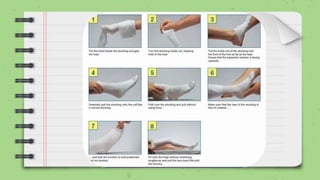
5.Turn the stocking inside out, tucking the
foot inside
Inside-out method allows for easier
application of stocking because stocking
is not bunched up.
PROCEDURE STEP RATIONALE
6.Ease foot section over the client's toe
and heel, adjusting as necessary for
proper smooth fit
Minimize wrinkles that impede circulation.
7.Gently pull the stocking over the leg,
removing all wrinkles
Irregularities in fit may cause pressure
areas
8.Assess toes for circulation and warmth.
Check area at top of stocking for binding
Constriction and rolling down of stockings
during wear are the result of poor fit and
can impede circulation and cause
thrombosis.
9.sAnti embolic stocking should be
removed at least twice daily
Wash skin and assess for edema or
irritation
Things to remember:
� Patient can remove the stockings for up to 30 minutes every day to
check the skin and wash legs. Stockings should then be put back on.
� The stockings can be changed and washed every two to three days or
sooner if they become dirty, and a fresh pair applied.
� Patient should do leg exercises to encourage improved blood flow.
When using thigh length stockings, the stitch change (change in fabric
sheerness) should fall 1-2 inches below the bend in the knee
� Do not wear the stockings without slippers or shoes as the stockings
can be slippery on hard floors.
� Do not allow the stockings to roll down as this will create a tight band
around the leg which may affect the blood flow. (it would be potentially
constricting the blood vessels in the lower extremities)
� Do not use greasy ointments or oils on your skin as these damages the
stockings’ elastic and stops them from working properly.
� Do not massage the legs
Washing instructions of the stocking
⮚ The stockings can be washed with a mixed load of white garments on a
standard 40° wash cycle.
⮚ The use of bleach should be avoided.
⮚ Stockings may be spun in a short spin cycle, but should not be wrung
out by hand as this can damage the elastic fibres.
⮚ Dry at room temperature or tumble dry at a low to moderate heat.
⮚ The stockings should not be hung over the radiator to dry.
⮚ With correct care, stockings should last two to three months
END

ANTI EMBOLIC STOCKING APPLICATION.pptx

  • 1.
  • 2.
    Anti embolism stockingsare elastic stockings which are used to prevent the pooling of blood on the legs.
  • 3.
    Purpose of embolicstocking: 1.Promote supplementing the action of muscle contraction by venous return from the legs 2.Prevent deep vein thrombosis in the immobile client
  • 4.
    CONTRAINDICATIONS OF ANTIEMBOLIC STOCKING It is contraindicated to patients who have: 1. suspected or proven peripheral arterial disease 2. peripheral arterial bypass grafting 3. any local conditions in which stockings may cause damage, for example fragile tissue paper skin dermatitis, gangrene or recent skin graft 4. known allergy to material of manufacture 5. cardiac failure 6. severe leg oedema or pulmonary oedema from congestive heart failure 7. unusual leg size or shape 8. major limb deformity preventing correct fit.
  • 5.
    Assessment 1. Identify clientsat high risk for deep vein thrombosis (e.g., long-term bed rest, cardiovascular disease). 2. Obtain physician order. Equipment A.Stockings (available in knee-high and thigh-high lengths) B.Measuring tape to assess correct size of stocking C.Baby powder or talcum powder D.Towel or waterproof pad if applying powder
  • 6.
    PROCEDURE STEP RATIONALE 1.Positionclient in supine position for a half-hour before applying stockings. Veins should not be distended with blood when stockings are applied. 2.Provide for the client's privacy and explain the purpose of the antiembolic stockings. Adequate knowledge increases client's participation and compliance. 3.Measure for proper fit before first application. Measure length (heel to groin) and width (calf and thigh) and compare to manufacturer's printed material to ensure proper fit Stockings that are too tight can lead to venous occlusion, and stockings that are too loose do not promote venous return. Estimating size rather than measuring often results in errors. 4.Make sure legs are dry or apply a light dusting of powder Dry legs ease application. 5.Turn the stocking inside out, tucking the foot inside Inside-out method allows for easier application of stocking because stocking is not bunched up.
  • 7.
    PROCEDURE STEP RATIONALE 6.Easefoot section over the client's toe and heel, adjusting as necessary for proper smooth fit Minimize wrinkles that impede circulation. 7.Gently pull the stocking over the leg, removing all wrinkles Irregularities in fit may cause pressure areas 8.Assess toes for circulation and warmth. Check area at top of stocking for binding Constriction and rolling down of stockings during wear are the result of poor fit and can impede circulation and cause thrombosis. 9.sAnti embolic stocking should be removed at least twice daily Wash skin and assess for edema or irritation
  • 9.
    Things to remember: �Patient can remove the stockings for up to 30 minutes every day to check the skin and wash legs. Stockings should then be put back on. � The stockings can be changed and washed every two to three days or sooner if they become dirty, and a fresh pair applied. � Patient should do leg exercises to encourage improved blood flow. When using thigh length stockings, the stitch change (change in fabric sheerness) should fall 1-2 inches below the bend in the knee � Do not wear the stockings without slippers or shoes as the stockings can be slippery on hard floors. � Do not allow the stockings to roll down as this will create a tight band around the leg which may affect the blood flow. (it would be potentially constricting the blood vessels in the lower extremities) � Do not use greasy ointments or oils on your skin as these damages the stockings’ elastic and stops them from working properly. � Do not massage the legs
  • 10.
    Washing instructions ofthe stocking ⮚ The stockings can be washed with a mixed load of white garments on a standard 40° wash cycle. ⮚ The use of bleach should be avoided. ⮚ Stockings may be spun in a short spin cycle, but should not be wrung out by hand as this can damage the elastic fibres. ⮚ Dry at room temperature or tumble dry at a low to moderate heat. ⮚ The stockings should not be hung over the radiator to dry. ⮚ With correct care, stockings should last two to three months
  • 11.