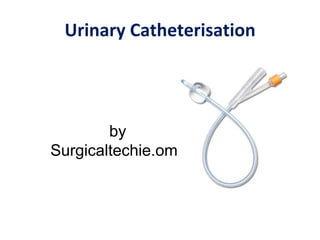

Urinary Catheterisation
by
Surgicaltechie.om
Synopsis
❖Definition
❖Indication
❖Types of catheter
❖Precaution
❖Needful for the Procedures
❖Catheterisation Procedure
❖Male urinary catheterisation
❖Female urinary catheterisation
❖Complication
❖Main concerns to be followed
❖Catheterisation
❖Decatheterisation
Definition
Definition in dictionary
Passage of passage tube or tube like material
into a body channel or cavity.
Surgical definition
Introduction of a catheter via the urethra into the urinary
bladder is called Urinary catheterisation.
Indication
Diagnostic Purpose
• Monitoring of urine output (bedside and long surgical procedure )
• Imaging purpose(KUB)
Therapeutic indications
▪ Acute urinary retention
▪ Chronic urinary retention(hematuria)
▪ Initiation of continuous bladder irrigation
▪ Intermittent decompression of bladder
▪ Prolonged Immobilization
▪ UTI(Urinary Track Infection)
Surgical indication
➢ Prostate surgery
➢ Bladder surgery
➢ urology surgery & gynaecology surgeries
➢ Removal of kidney stone
➢ Long surgical procedure
➢ Hip fracture & lumbar spine fracture
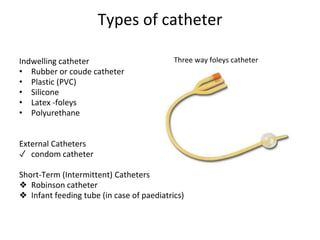
Types of catheter
Indwelling catheter
• Rubber or coude catheter
• Plastic (PVC)
• Silicone
• Latex -foleys
• Polyurethane
External Catheters
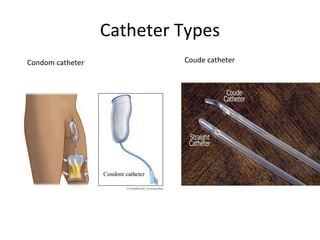
✓ condom catheter
Short-Term (Intermittent) Catheters
❖ Robinson catheter
❖ Infant feeding tube (in case of paediatrics)
Three way foleys catheter
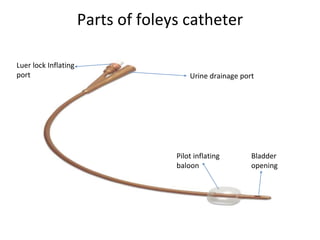
Parts of foleys catheter
Urine drainage port
Luer lock Inflating
port
Pilot inflating
baloon
Bladder
opening
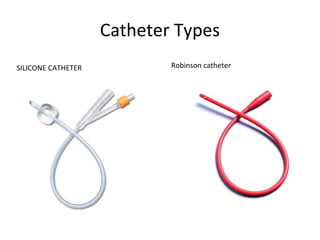
Catheter Types
SILICONE CATHETER Robinson catheter
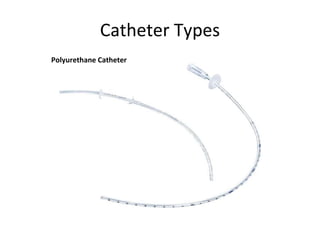
Catheter Types
Polyurethane Catheter
Catheter Types
Condom catheter Coude catheter
Precaution
• Before the procedure Health professional
must clear about the anatomy of urethra
other organ related to that .
• Procedure and steps to be followed during
urinary catheterisation.
• They must know the about patient history and
complication .
Needful for the Procedures
• Sterile Gauze with sponge holder in a bowl
• Painting solution either Povidine Iodine or other Disinfectant .
• Catheter(surgeon choice).
• Synringe (5 or 10 ml) syringe of appropriate size and sterile water
or saline for the bulb.
• Sterile water .
• Sterile drape (center hole towel).
• Lubricating gel (2%lignocaine) incase of paediatric use sterile
liquid paraffin .
• Urobag or urometer.
• Sterile gloves.
• Securing tape or cathsecure
Catheterisation Procedure
For both male and female catherization is differ by
anatomy .
Follow the steps as follow
a) Clean and position
b) Find the urethral opening
c) Lubricate and Insert the catheter
d) Inflate the catheter in pilot valve
e) Confirm the catheter is in position by syringe
f) Secure the catheter with plaster or cathsecure
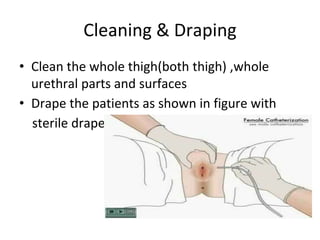
Cleaning & Draping
• Clean the whole thigh(both thigh) ,whole
urethral parts and surfaces
• Drape the patients as shown in figure with
sterile drape
Position of the Patients
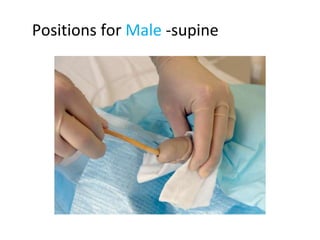
Male
For male supine
Female
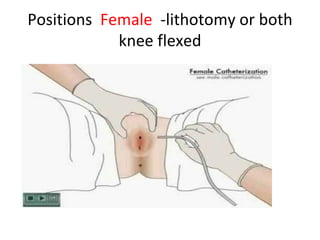
• For female lithotomy or both knee flexed and
knee are supported at the both side .
• For female one must hold on the knee during
the procedure.
Positions Female -lithotomy or both
knee flexed
Positions for Male -supine
Scrubbing
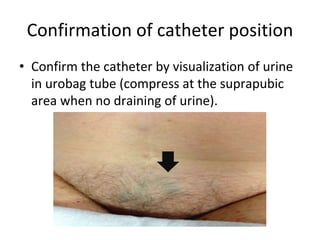
Confirmation of catheter position
• Confirm the catheter by visualization of urine
in urobag tube (compress at the suprapubic
area when no draining of urine).
Confirmation of catheter position
conti,,,,.
• Try to aspirate with the sterile syringe in the
urine outlet valve .
• In some case radiographic lined catheter is
used intraoperatively (confirmation is by
fluoroscorcopy(c-arm))
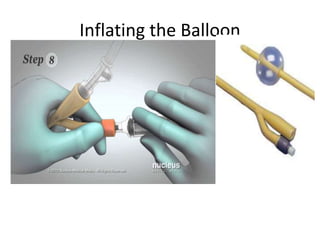
Inflating the Balloon
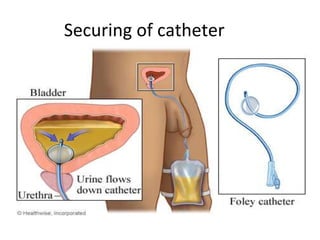
Securing of catheter
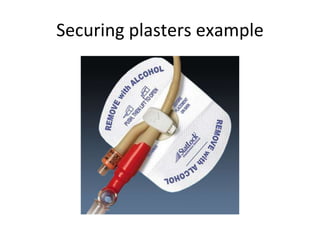
• Secure the catheter using dynaplaster (elasto
plaster) or cathsecure.
• Secure the catheter on the thigh without any
discomfort to the patients.
• Check for the connection of urine colloection
is connected properly.
• Please ensure the urine bag is closed and has
the air inside the bag.
Securing of catheter
Securing plasters example
Decatheterisation of catheter
• Catheter must be changed average of within 15 days
of catheterisation
• Silicone catheter – I month
• Foleys -15 days
• Decatheterisation is done when is there is no need of
catheter for the patients or patients discomforts .
• Insert the empty syringe into pilot valve where we
have injected the sterile water.
• Aspirate the liquids inside the baloon.
• Remove the catheter slowly out of the urethra.
Complication
• Catheter block & leak
• UTI (urinary track infection).
• Infection and sepsis.
• Hematuria.
• Urethral Injury.
• Asymptomatic bacteriuria.
• Cystitis.
• Urethritis.
• Prostatitis.
• Vesicoureteric reflux.
• Bacteraemia.
• KUB (Kidney Ureter urinary Bladder )Infection.
• Bladder stones.
Main concern to look after
Things to followed and Checked
1.check the catheter position and
confirm that.
2.Ensure that catheter is connected to
the urobag.
3.Close the urine bag drain cap ,if it’s
open it may have chance of infection in whole
air inside the room(Nosocomial infection ).

Urinary catheterization Procedure

  • 1.
  • 2.
    Synopsis ❖Definition ❖Indication ❖Types of catheter ❖Precaution ❖Needfulfor the Procedures ❖Catheterisation Procedure ❖Male urinary catheterisation ❖Female urinary catheterisation ❖Complication ❖Main concerns to be followed ❖Catheterisation ❖Decatheterisation
  • 3.
    Definition Definition in dictionary Passageof passage tube or tube like material into a body channel or cavity. Surgical definition Introduction of a catheter via the urethra into the urinary bladder is called Urinary catheterisation.
  • 4.
    Indication Diagnostic Purpose • Monitoringof urine output (bedside and long surgical procedure ) • Imaging purpose(KUB) Therapeutic indications ▪ Acute urinary retention ▪ Chronic urinary retention(hematuria) ▪ Initiation of continuous bladder irrigation ▪ Intermittent decompression of bladder ▪ Prolonged Immobilization ▪ UTI(Urinary Track Infection) Surgical indication ➢ Prostate surgery ➢ Bladder surgery ➢ urology surgery & gynaecology surgeries ➢ Removal of kidney stone ➢ Long surgical procedure ➢ Hip fracture & lumbar spine fracture
  • 5.
    Types of catheter Indwellingcatheter • Rubber or coude catheter • Plastic (PVC) • Silicone • Latex -foleys • Polyurethane External Catheters ✓ condom catheter Short-Term (Intermittent) Catheters ❖ Robinson catheter ❖ Infant feeding tube (in case of paediatrics) Three way foleys catheter
  • 6.
    Parts of foleyscatheter Urine drainage port Luer lock Inflating port Pilot inflating baloon Bladder opening
  • 7.
  • 8.
  • 9.
  • 10.
    Precaution • Before theprocedure Health professional must clear about the anatomy of urethra other organ related to that . • Procedure and steps to be followed during urinary catheterisation. • They must know the about patient history and complication .
  • 11.
    Needful for theProcedures • Sterile Gauze with sponge holder in a bowl • Painting solution either Povidine Iodine or other Disinfectant . • Catheter(surgeon choice). • Synringe (5 or 10 ml) syringe of appropriate size and sterile water or saline for the bulb. • Sterile water . • Sterile drape (center hole towel). • Lubricating gel (2%lignocaine) incase of paediatric use sterile liquid paraffin . • Urobag or urometer. • Sterile gloves. • Securing tape or cathsecure
  • 12.
    Catheterisation Procedure For bothmale and female catherization is differ by anatomy . Follow the steps as follow a) Clean and position b) Find the urethral opening c) Lubricate and Insert the catheter d) Inflate the catheter in pilot valve e) Confirm the catheter is in position by syringe f) Secure the catheter with plaster or cathsecure
  • 13.
    Cleaning & Draping •Clean the whole thigh(both thigh) ,whole urethral parts and surfaces • Drape the patients as shown in figure with sterile drape
  • 14.
    Position of thePatients Male For male supine Female • For female lithotomy or both knee flexed and knee are supported at the both side . • For female one must hold on the knee during the procedure.
  • 15.
    Positions Female -lithotomyor both knee flexed
  • 16.
  • 17.
  • 18.
    Confirmation of catheterposition • Confirm the catheter by visualization of urine in urobag tube (compress at the suprapubic area when no draining of urine).
  • 19.
    Confirmation of catheterposition conti,,,,. • Try to aspirate with the sterile syringe in the urine outlet valve . • In some case radiographic lined catheter is used intraoperatively (confirmation is by fluoroscorcopy(c-arm))
  • 20.
  • 21.
    Securing of catheter •Secure the catheter using dynaplaster (elasto plaster) or cathsecure. • Secure the catheter on the thigh without any discomfort to the patients. • Check for the connection of urine colloection is connected properly. • Please ensure the urine bag is closed and has the air inside the bag.
  • 22.
  • 23.
  • 24.
    Decatheterisation of catheter •Catheter must be changed average of within 15 days of catheterisation • Silicone catheter – I month • Foleys -15 days • Decatheterisation is done when is there is no need of catheter for the patients or patients discomforts . • Insert the empty syringe into pilot valve where we have injected the sterile water. • Aspirate the liquids inside the baloon. • Remove the catheter slowly out of the urethra.
  • 25.
    Complication • Catheter block& leak • UTI (urinary track infection). • Infection and sepsis. • Hematuria. • Urethral Injury. • Asymptomatic bacteriuria. • Cystitis. • Urethritis. • Prostatitis. • Vesicoureteric reflux. • Bacteraemia. • KUB (Kidney Ureter urinary Bladder )Infection. • Bladder stones.
  • 26.
    Main concern tolook after Things to followed and Checked 1.check the catheter position and confirm that. 2.Ensure that catheter is connected to the urobag. 3.Close the urine bag drain cap ,if it’s open it may have chance of infection in whole air inside the room(Nosocomial infection ).