





Acute leukemia
- Dr Dinesh Bhurani, DM, FRCPA
Senior bone marrow transplant physician
Rajiv Gandhi Cancer Inst & RC, Delhi
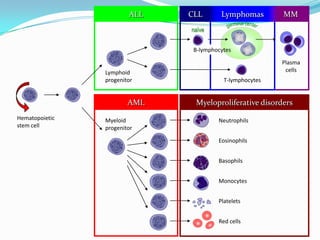
ALL MMCLL Lymphomas
Hematopoietic
stem cell
Neutrophils
Eosinophils
Basophils
Monocytes
Platelets
Red cells
Myeloid
progenitor
Myeloproliferative disordersAML
Lymphoid
progenitor T-lymphocytes
Plasma
cells
B-lymphocytes
naïve
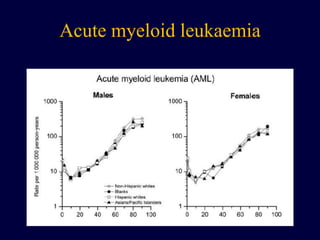
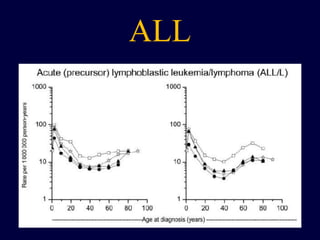
Incidence
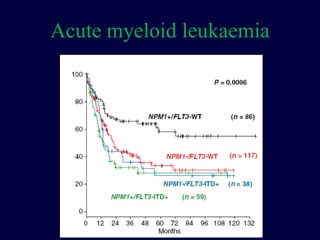
Acute myeloid leukaemia
ALL
Cytopenia
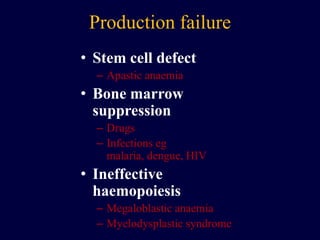
Production failure
• Stem cell defect
– Apastic anaemia
• Bone marrow
suppression
– Drugs
– Infections eg
malaria, dengue, HIV
• Ineffective
haemopoiesis
– Megaloblastic anaemia
– Myelodysplastic syndrome
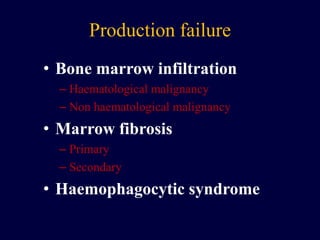
Production failure
• Bone marrow infiltration
– Haematological malignancy
– Non haematological malignancy
• Marrow fibrosis
– Primary
– Secondary
• Haemophagocytic syndrome
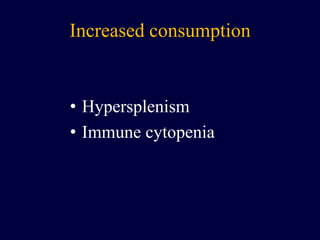
Increased consumption
• Hypersplenism
• Immune cytopenia
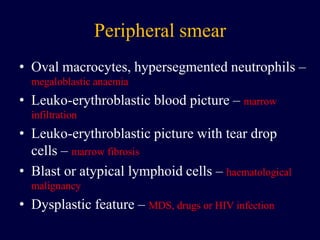
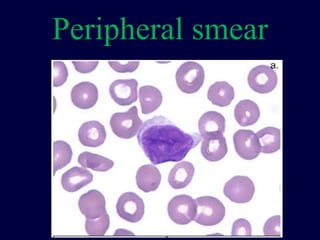
Peripheral smear
• Oval macrocytes, hypersegmented neutrophils –
megaloblastic anaemia
• Leuko-erythroblastic blood picture – marrow
infiltration
• Leuko-erythroblastic picture with tear drop
cells – marrow fibrosis
• Blast or atypical lymphoid cells – haematological
malignancy
• Dysplastic feature – MDS, drugs or HIV infection
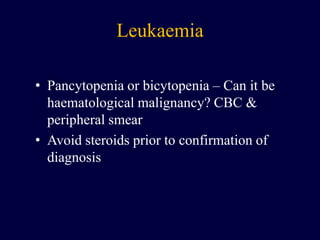
Leukaemia
• Pancytopenia or bicytopenia – Can it be
haematological malignancy? CBC &
peripheral smear
• Avoid steroids prior to confirmation of
diagnosis
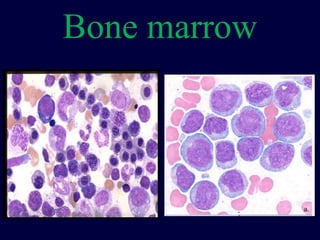
Bone marrow aspirate and
biopsy both are essential.
Acute Leukaemia
• Comprises approximately 30 percent of all childhood
malignancies
• An incidence of 2.8 cases per 100,000
• The peak incidence 2-5 Yrs
• Studies of the relationship between childhood ALL,
urban/rural status and population density, as well as
other possible etiologic factors (eg, environmental exposures,
abnormal immune response to common infections) have yielded
inconsistent results
Acute leukaemia
• Persistent or progressive lymphadenopathy
that does not respond to antibiotic therapy
suggests the need for more extensive
evaluation.
Differential diagnosis
• Juvenile idiopathic arthritis
• Osteomyelitis
• Epstein-Barr virus
• Idiopathic thrombocytopenic purpura
• Pertussis, parapertussis
• Aplastic anemia
• Acute infectious lymphocytosis
• Other malignancies with bone marrow involvement
(eg, neuroblastoma, retinoblastoma, rhabdomyosarcoma, and Ewing sarcoma
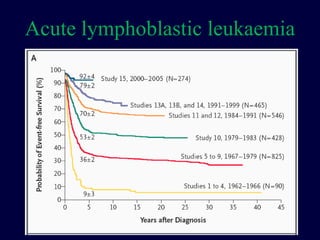
Acute lymphoblastic leukaemia
Etiology
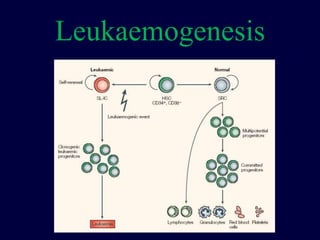
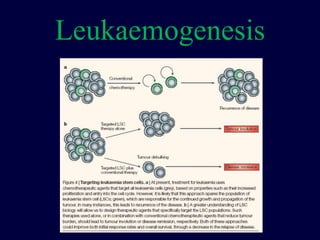
Leukaemogenesis
Leukaemogenesis
Classification
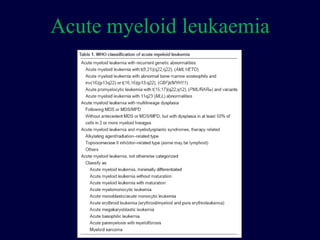
Acute myeloid leukaemia
Diagnosis
Peripheral smear
Bone marrow
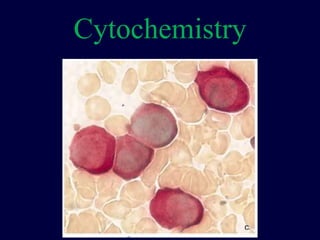
Cytochemistry
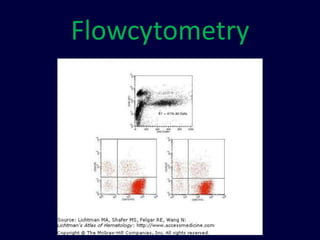
Flowcytometry
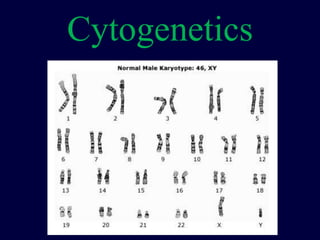
Cytogenetics
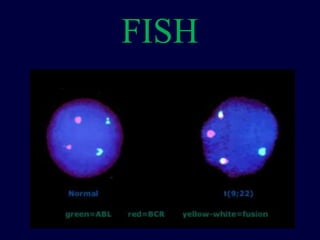
FISH
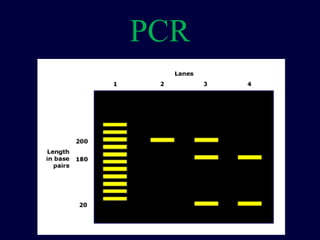
PCR
Prognosis
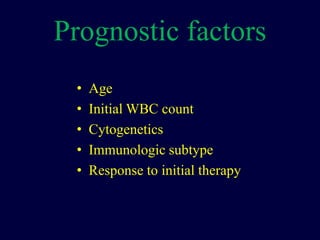
Prognostic factors
• Age
• Initial WBC count
• Cytogenetics
• Immunologic subtype
• Response to initial therapy
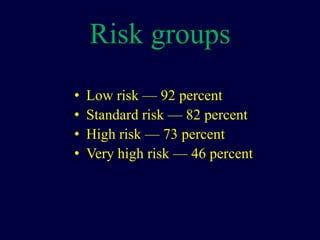
Risk groups
• Low risk — 92 percent
• Standard risk — 82 percent
• High risk — 73 percent
• Very high risk — 46 percent
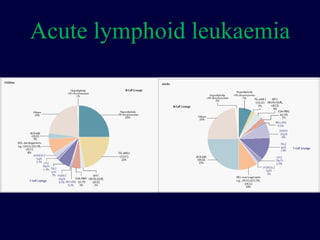
Acute lymphoid leukaemia
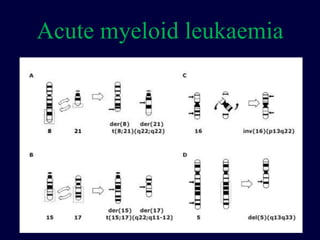
Acute myeloid leukaemia
Treatment
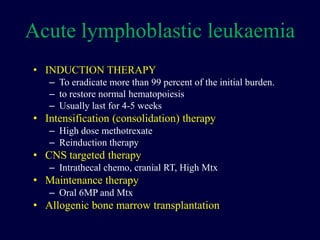
Acute lymphoblastic leukaemia
• INDUCTION THERAPY
– To eradicate more than 99 percent of the initial burden.
– to restore normal hematopoiesis
– Usually last for 4-5 weeks
• Intensification (consolidation) therapy
– High dose methotrexate
– Reinduction therapy
• CNS targeted therapy
– Intrathecal chemo, cranial RT, High Mtx
• Maintenance therapy
– Oral 6MP and Mtx
• Allogenic bone marrow transplantation
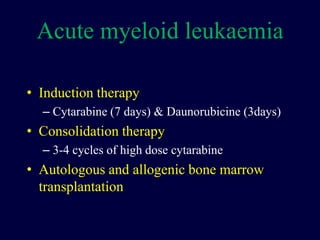
Acute myeloid leukaemia
• Induction therapy
– Cytarabine (7 days) & Daunorubicine (3days)
• Consolidation therapy
– 3-4 cycles of high dose cytarabine
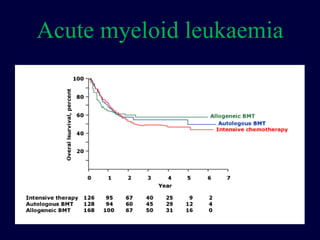
• Autologous and allogenic bone marrow
transplantation
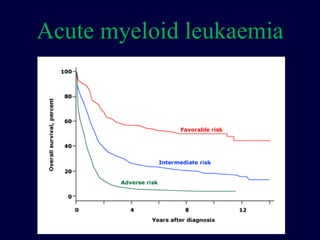
Acute myeloid leukaemia
Future
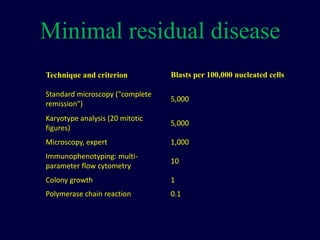
Minimal residual disease
Technique and criterion Blasts per 100,000 nucleated cells
Standard microscopy ("complete
remission")
5,000
Karyotype analysis (20 mitotic
figures)
5,000
Microscopy, expert 1,000
Immunophenotyping: multi-
parameter flow cytometry
10
Colony growth 1
Polymerase chain reaction 0.1

Slidecast