Industrial Revolution
1_Introduction_to_the_American_Revolution_1min12
By early 1900s, US world’s leading 
industrial nation. 
Fueled by: 
Abundant supply of natural resources 
Improved transportation 
 transcontinental railroad moving resources 
and people 
 Increase in labor force 
 1860-1910 population tripled 
 Greater demand for consumer goods 
 Large workforce
Gov’t supported industrialization: 
 Helped industries with loans & minimal 
regulation 
 Railroad construction subsidized by gov’t 
 Loans and land grants 
Maintained laissez-faire approach 
 Imposed few regulations 
 Viewed labor organizations with suspicion 
 High tariffs on imports to protect domestic 
industry 
 Contradicted laissez-faire 
 Caused foreign nations to raise tariffs 
 Increased cost of American goods
The Men who Built America- 
History Channel Series 
 Traits of a “TITAN”  PREVIEW 
 2 pages of 
handwritten notes 
over 1 episode = 2 
FREE 100s 
 5 different episodes 
 Rockefeller 
 Carnegie 
 JP Morgan/Edison 
 Ford 
 Vanderbuilt
3_Steel_Industry_2min8
Steel… 
 Affected technological change more 
than any other product 
 Allowed for cheaper building materials 
Bessemer Process 
 Cold air pressure method of transforming 
iron ore into steel 
 Andrew Carnegie- Steel Tycoon 
 Believed in SOCIAL GOSPEL movement-financed 
Public Libraries 
 GOSPEL OF WEALTH: Believed it was 
wealthy’ s obligation to contribute to society 
(part of the social gospel movement) 
 Philanthropist
4_Oil_Industry_2min51
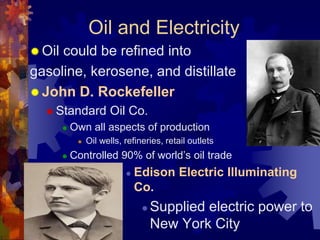
Oil and Electricity 
 Oil could be refined into 
gasoline, kerosene, and distillate 
John D. Rockefeller 
 Standard Oil Co. 
 Own all aspects of production 
 Oil wells, refineries, retail outlets 
 Controlled 90% of world’s oil trade 
 Edison Electric Illuminating 
Co. 
 Supplied electric power to 
New York City
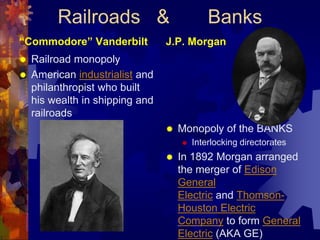
Railroads & Banks 
“Commodore” Vanderbilt 
 Railroad monopoly 
 American industrialist and 
philanthropist who built 
his wealth in shipping and 
railroads 
J.P. Morgan 
 Monopoly of the BANKS 
 Interlocking directorates 
 In 1892 Morgan arranged 
the merger of Edison 
General 
Electric and Thomson- 
Houston Electric 
Company to form General 
Electric (AKA GE)
The Assembly Line 
 Henry Ford popularized use in 
manufacturing 
 Combined sub-assembly lines into one 
continuous moving line 
 Divided operation into simple tasks 
 Workers performed same task repeatedly 
 Unskilled workers could perform tasks 
 Allowed for faster production 
 Reduced cost of automobile 
 Efficiency!!!!
Railroads 
 Pacific Railway Act provided for 
construction of transcontinental RR 
 Transcontinental Railroad 
 Gov’t gave land along right-of-way to 
encourage rapid construction 
 Sold land to pay for costs 
 Union Pacific RR-built East to West from 
Omaha, NE 
 Central Pacific RR-built West to East from 
Sacramento, CA 
 Hired workers from China 
 Joined May 10, 1869 near Ogden Utah
Big Business cont’d. 
Competition creates lower prices 
 Without competition, monopolies form 
 Vertical integration (Carnegie) 
 One company owns all other businesses it 
takes to make finished product 
 Chair Co = Cloth Co + Frame Co + Shipping Co 
 Horizontal integration (Rockefeller/J.P. 
Morgan) 
 One large company owns several smaller 
companies doing the same type business 
 Mega Convenience Store = Allsups + Pak-a-Sak 
+ Toot-n-Totum
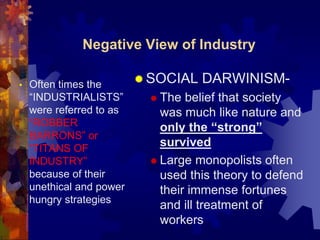
Negative View of Industry 
SOCIAL DARWINISM- 
 The belief that society 
was much like nature and 
only the “strong” 
survived 
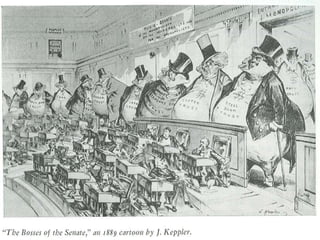
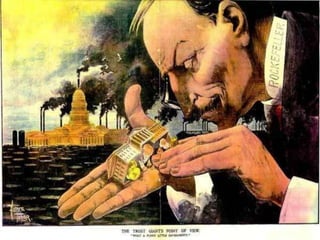
 Large monopolists often 
used this theory to defend 
their immense fortunes 
and ill treatment of 
workers 
• Often times the 
“INDUSTRIALISTS” 
were referred to as 
“ROBBER 
BARRONS” or 
“TITANS OF 
INDUSTRY” 
because of their 
unethical and power 
hungry strategies
5_The_Urban_Transformation_7min15
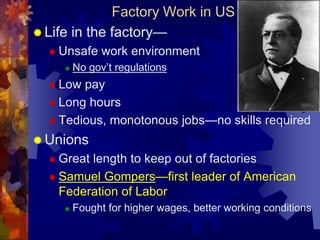
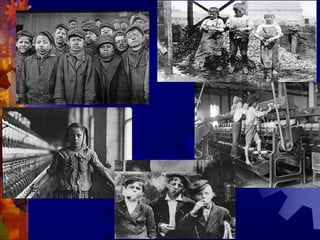
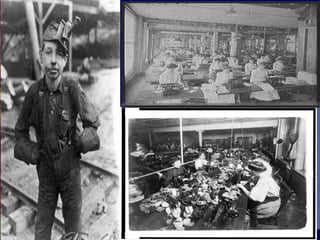
Factory Work in US 
 Life in the factory— 
 Unsafe work environment 
 No gov’t regulations 
 Low pay 
 Long hours 
 Tedious, monotonous jobs—no skills required 
 Unions 
 Great length to keep out of factories 
 Samuel Gompers—first leader of American 
Federation of Labor 
 Fought for higher wages, better working conditions
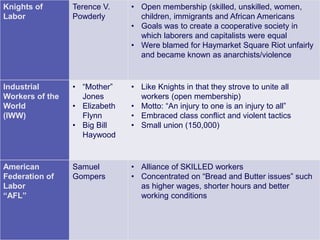
Knights of 
Labor 
Terence V. 
Powderly 
• Open membership (skilled, unskilled, women, 
children, immigrants and African Americans 
• Goals was to create a cooperative society in 
which laborers and capitalists were equal 
• Were blamed for Haymarket Square Riot unfairly 
and became known as anarchists/violence 
Industrial 
Workers of the 
World 
(IWW) 
• “Mother” 
Jones 
• Elizabeth 
Flynn 
• Big Bill 
Haywood 
• Like Knights in that they strove to unite all 
workers (open membership) 
• Motto: “An injury to one is an injury to all” 
• Embraced class conflict and violent tactics 
• Small union (150,000) 
American 
Federation of 
Labor 
“AFL” 
Samuel 
Gompers 
• Alliance of SKILLED workers 
• Concentrated on “Bread and Butter issues” such 
as higher wages, shorter hours and better 
working conditions
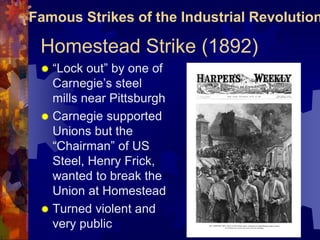
Famous Strikes of the Industrial Revolution 
Homestead Strike (1892) 
 “Lock out” by one of 
Carnegie’s steel 
mills near Pittsburgh 
 Carnegie supported 
Unions but the 
“Chairman” of US 
Steel, Henry Frick, 
wanted to break the 
Union at Homestead 
 Turned violent and 
very public
Famous Strikes of the Industrial 
Revolution 
Haymarket Riot 
 Nationwide Strike to 
support an 8-hour 
workday 
 A clash between strikers 
and police leaves one 
dead in Chicago’s 
Haymarket Square 
 Bomb thrown by 
strikers…Police open 
fired 
 7 police dead 
 4 workers killed 
The Pullman Strike 
 Pullman Palace Rail Car 
Co. had to cut wages 
because of hard 
economic times 
 Workers had unionized 
under the ARU (American 
Railway Union 
 Leader: Eugene V. Debs 
 ARU boycotts Pullman 
Railcars 
 Entire US’s rails are shut 
down 
 President Cleveland has to 
send it troops to stop 
boycott
The Great Railroad Strike of 
1877 
Panic of 1873 (recession) forces 
companies to cut wages 
 This causes 1st NATIONWIDE Labor 
protest 
 Rail workers walked off job, blocked 
tracks and destroyed Rail Co. property 
 President Hayes ends up sending 
troops in to put to order and stop 
violence
The Impact of Industry 
Industrial Revolution at first not 
benefit everyone equally 
National wealth and personal 
income grew significantly by 
1920s 
Cheaper consumer goods on 
market
7_Impact_of_an_Era_1min18

9 industrial revolution

  • 1.
  • 2.
  • 3.
    By early 1900s,US world’s leading industrial nation. Fueled by: Abundant supply of natural resources Improved transportation  transcontinental railroad moving resources and people  Increase in labor force  1860-1910 population tripled  Greater demand for consumer goods  Large workforce
  • 4.
    Gov’t supported industrialization:  Helped industries with loans & minimal regulation  Railroad construction subsidized by gov’t  Loans and land grants Maintained laissez-faire approach  Imposed few regulations  Viewed labor organizations with suspicion  High tariffs on imports to protect domestic industry  Contradicted laissez-faire  Caused foreign nations to raise tariffs  Increased cost of American goods
  • 5.
    The Men whoBuilt America- History Channel Series  Traits of a “TITAN”  PREVIEW  2 pages of handwritten notes over 1 episode = 2 FREE 100s  5 different episodes  Rockefeller  Carnegie  JP Morgan/Edison  Ford  Vanderbuilt
  • 6.
  • 7.
    Steel…  Affectedtechnological change more than any other product  Allowed for cheaper building materials Bessemer Process  Cold air pressure method of transforming iron ore into steel  Andrew Carnegie- Steel Tycoon  Believed in SOCIAL GOSPEL movement-financed Public Libraries  GOSPEL OF WEALTH: Believed it was wealthy’ s obligation to contribute to society (part of the social gospel movement)  Philanthropist
  • 8.
  • 9.
    Oil and Electricity  Oil could be refined into gasoline, kerosene, and distillate John D. Rockefeller  Standard Oil Co.  Own all aspects of production  Oil wells, refineries, retail outlets  Controlled 90% of world’s oil trade  Edison Electric Illuminating Co.  Supplied electric power to New York City
  • 10.
    Railroads & Banks “Commodore” Vanderbilt  Railroad monopoly  American industrialist and philanthropist who built his wealth in shipping and railroads J.P. Morgan  Monopoly of the BANKS  Interlocking directorates  In 1892 Morgan arranged the merger of Edison General Electric and Thomson- Houston Electric Company to form General Electric (AKA GE)
  • 11.
    The Assembly Line  Henry Ford popularized use in manufacturing  Combined sub-assembly lines into one continuous moving line  Divided operation into simple tasks  Workers performed same task repeatedly  Unskilled workers could perform tasks  Allowed for faster production  Reduced cost of automobile  Efficiency!!!!
  • 12.
    Railroads  PacificRailway Act provided for construction of transcontinental RR  Transcontinental Railroad  Gov’t gave land along right-of-way to encourage rapid construction  Sold land to pay for costs  Union Pacific RR-built East to West from Omaha, NE  Central Pacific RR-built West to East from Sacramento, CA  Hired workers from China  Joined May 10, 1869 near Ogden Utah
  • 13.
    Big Business cont’d. Competition creates lower prices  Without competition, monopolies form  Vertical integration (Carnegie)  One company owns all other businesses it takes to make finished product  Chair Co = Cloth Co + Frame Co + Shipping Co  Horizontal integration (Rockefeller/J.P. Morgan)  One large company owns several smaller companies doing the same type business  Mega Convenience Store = Allsups + Pak-a-Sak + Toot-n-Totum
  • 14.
    Negative View ofIndustry SOCIAL DARWINISM-  The belief that society was much like nature and only the “strong” survived  Large monopolists often used this theory to defend their immense fortunes and ill treatment of workers • Often times the “INDUSTRIALISTS” were referred to as “ROBBER BARRONS” or “TITANS OF INDUSTRY” because of their unethical and power hungry strategies
  • 17.
  • 18.
    Factory Work inUS  Life in the factory—  Unsafe work environment  No gov’t regulations  Low pay  Long hours  Tedious, monotonous jobs—no skills required  Unions  Great length to keep out of factories  Samuel Gompers—first leader of American Federation of Labor  Fought for higher wages, better working conditions
  • 19.
    Knights of Labor Terence V. Powderly • Open membership (skilled, unskilled, women, children, immigrants and African Americans • Goals was to create a cooperative society in which laborers and capitalists were equal • Were blamed for Haymarket Square Riot unfairly and became known as anarchists/violence Industrial Workers of the World (IWW) • “Mother” Jones • Elizabeth Flynn • Big Bill Haywood • Like Knights in that they strove to unite all workers (open membership) • Motto: “An injury to one is an injury to all” • Embraced class conflict and violent tactics • Small union (150,000) American Federation of Labor “AFL” Samuel Gompers • Alliance of SKILLED workers • Concentrated on “Bread and Butter issues” such as higher wages, shorter hours and better working conditions
  • 22.
    Famous Strikes ofthe Industrial Revolution Homestead Strike (1892)  “Lock out” by one of Carnegie’s steel mills near Pittsburgh  Carnegie supported Unions but the “Chairman” of US Steel, Henry Frick, wanted to break the Union at Homestead  Turned violent and very public
  • 23.
    Famous Strikes ofthe Industrial Revolution Haymarket Riot  Nationwide Strike to support an 8-hour workday  A clash between strikers and police leaves one dead in Chicago’s Haymarket Square  Bomb thrown by strikers…Police open fired  7 police dead  4 workers killed The Pullman Strike  Pullman Palace Rail Car Co. had to cut wages because of hard economic times  Workers had unionized under the ARU (American Railway Union  Leader: Eugene V. Debs  ARU boycotts Pullman Railcars  Entire US’s rails are shut down  President Cleveland has to send it troops to stop boycott
  • 24.
    The Great RailroadStrike of 1877 Panic of 1873 (recession) forces companies to cut wages  This causes 1st NATIONWIDE Labor protest  Rail workers walked off job, blocked tracks and destroyed Rail Co. property  President Hayes ends up sending troops in to put to order and stop violence
  • 25.
    The Impact ofIndustry Industrial Revolution at first not benefit everyone equally National wealth and personal income grew significantly by 1920s Cheaper consumer goods on market
  • 26.