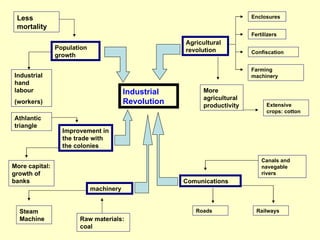
Less mortality   Population growth Agricultural revolution Enclosures Fertilizers Confiscation Farming machinery Comunications Roads Canals and navegable rivers   Improvement in the trade with the colonies Athlantic triangle Industrial hand labour  (workers)   More capital: growth of banks More agricultural productivity Extensive crops: cotton Industrial Revolution Railways machinery Steam Machine Raw materials: coal
 
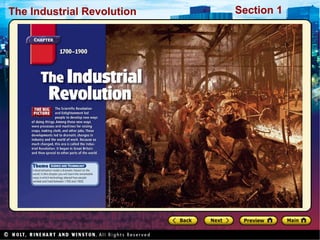
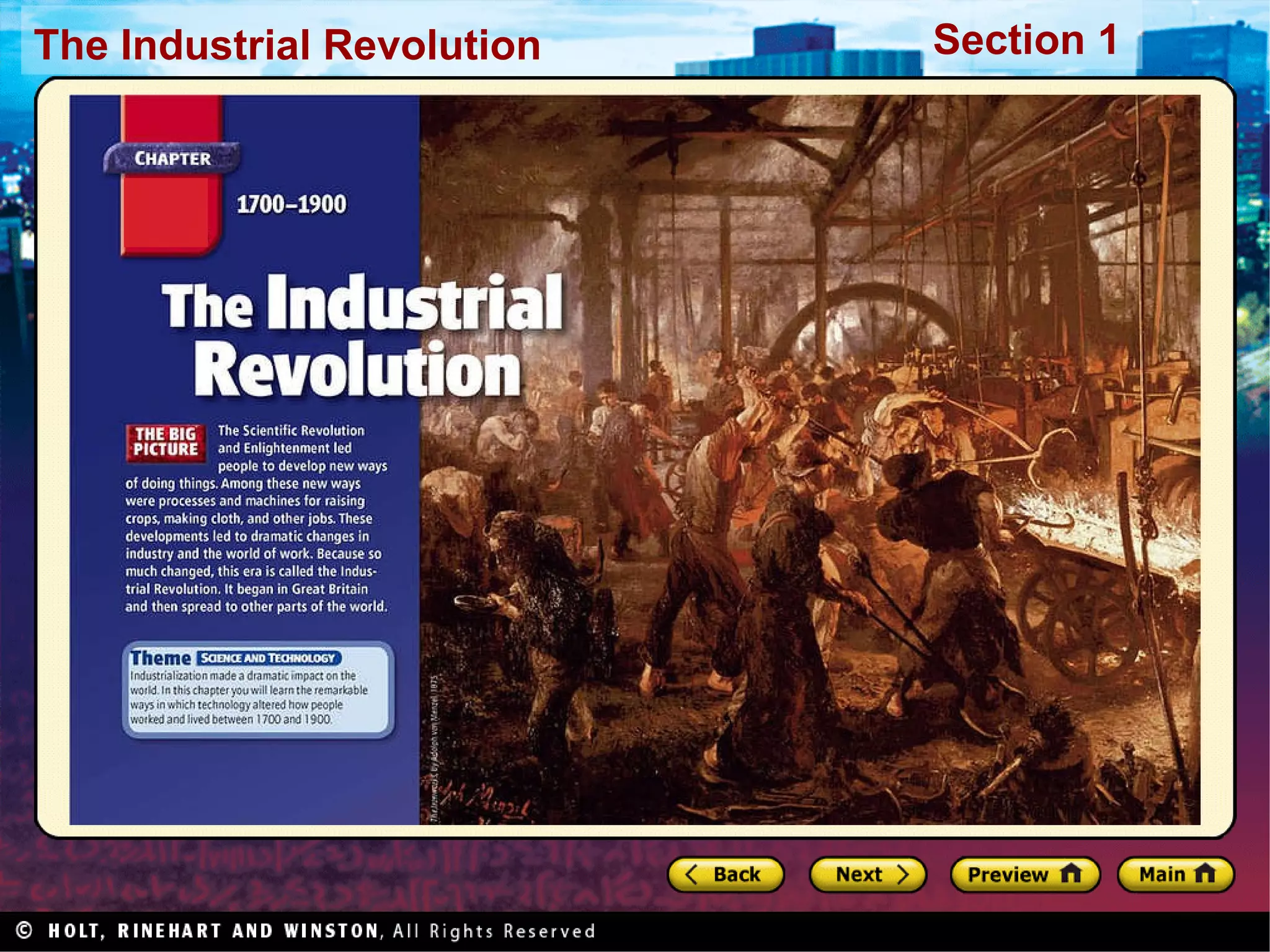
Reading Focus Why did the Industrial Revolution begin in Great Britain? How? How did industrialization cause a revolution in the production of textiles? How did steam power the Industrial Revolution? Where did industrialization spread beyond Great Britain? Main Idea In the 1700 conditions in Great Britain led to the rapid growth of the textile industry, which in turn led to huge changes in many other industries. A New Kind of Revolution
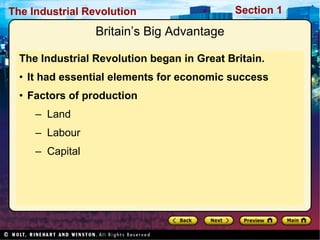
The Industrial Revolution began in Great Britain.  It had essential elements for economic success Factors of production Land Labour  Capital  Britain’s Big Advantage
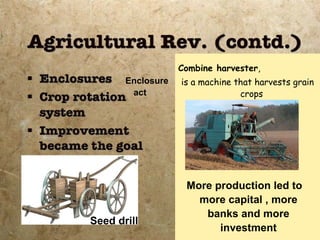
Agricultural revolution Factors for Success Exploration and colonialism: raw materials Seapower Political stability Government support Growth of private investment Research and development on farms Jethro Tull ,  seed drill Improved livestock breeding Better varieties of food crops Increased production Population grew Enclosure movement:  specialization and productivity Less workers needed in rural areas.
Seed drill gg Combine harvester ,  is a machine that harvests grain crops More production led to more   capital , more banks and more investment Enclosure act
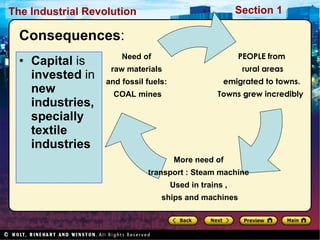
Consequences : Capital  is  invested  in  new   industries,   specially   textile   industries PEOPLE from rural areas emigrated to towns.  Towns grew incredibly  More need of  transport : Steam machine  Used in trains ,  ships and machines Need of  raw materials  and fossil fuels:  COAL mines
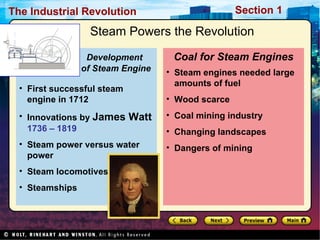
Steam Powers the Revolution Steam engines needed large amounts of fuel Wood scarce Coal mining industry Changing landscapes Dangers of mining  Coal for Steam Engines First successful steam engine in 1712  Innovations by  James Watt   1736 – 1819 Steam power versus water power Steam locomotives Steamships  Development    of Steam Engine
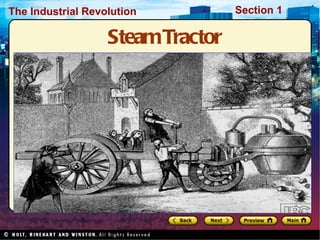
Steam Tractor
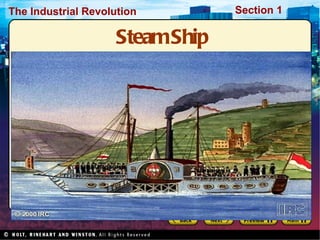
Steam Ship
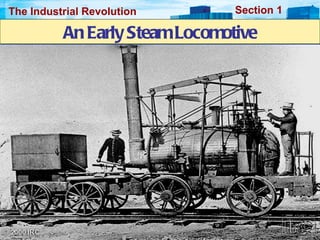
An Early Steam Locomotive
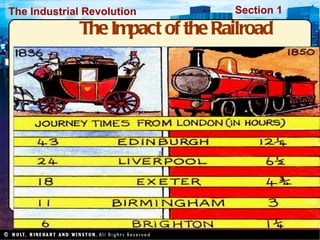
The Impact of the Railroad
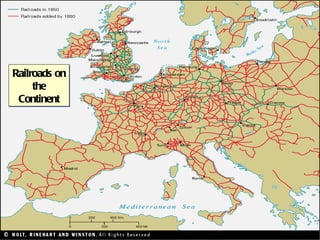
Railroads on the Continent
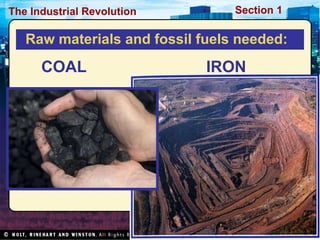
Raw materials and fossil fuels needed:   COAL  IRON
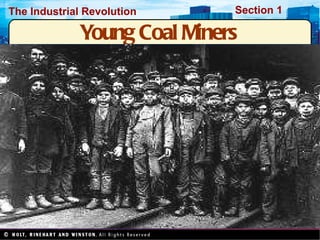
Young Coal Miners
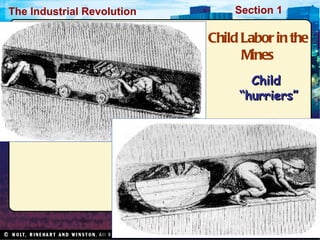
Child Labor in the Mines Child  “hurriers”
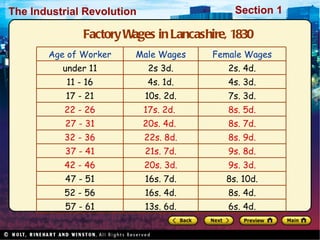
Factory Wages in Lancashire, 1830 Age of Worker Male Wages Female Wages under 11 2s 3d. 2s. 4d. 11 - 16 4s. 1d. 4s. 3d. 17 - 21 10s. 2d. 7s. 3d. 22 - 26 17s. 2d.  8s. 5d. 27 - 31 20s. 4d.  8s. 7d. 32 - 36 22s. 8d. 8s. 9d. 37 - 41 21s. 7d. 9s. 8d. 42 - 46 20s. 3d. 9s. 3d. 47 - 51 16s. 7d. 8s. 10d. 52 - 56 16s. 4d. 8s. 4d. 57 - 61 13s. 6d. 6s. 4d.
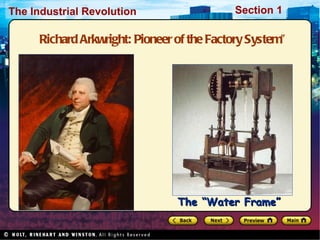
Richard Arkwright: Pioneer of the Factory System” The “Water Frame”
Factory Production Concentrates production in one place [raw materials, labor and machinery]. Located near sources of power  Requires a lot of capital investment [factory, machines, etc.]
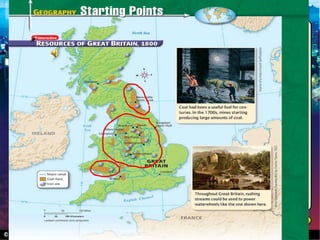
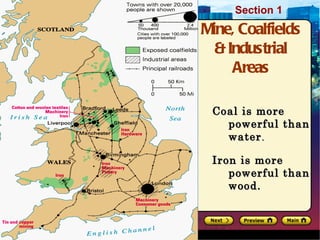
Mine, Coalfields & Industrial Areas Coal is more powerful than water . Iron is more powerful than wood.
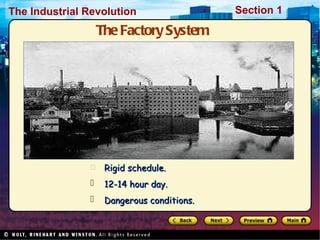
The Factory System Rigid schedule. 12-14 hour day. Dangerous conditions.
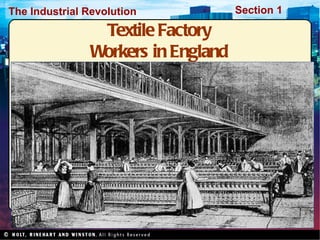
Textile Factory Workers in England
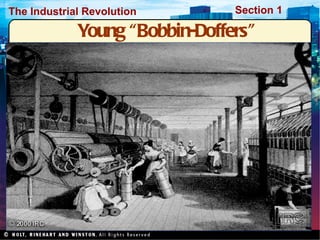
Young “Bobbin-Doffers”
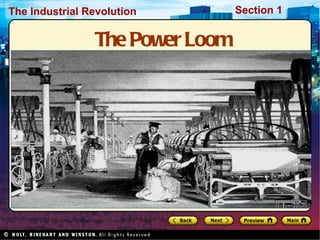
The Power Loom
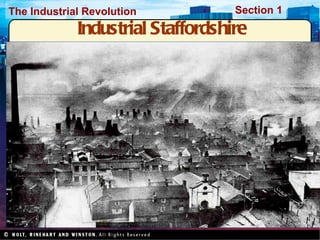
Industrial Staffordshire
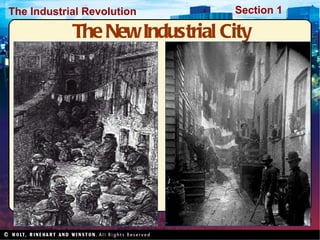
The New Industrial City
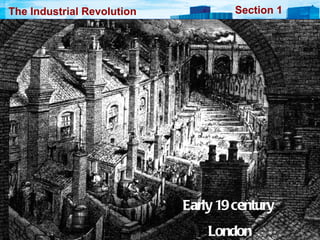
Early 19 century London
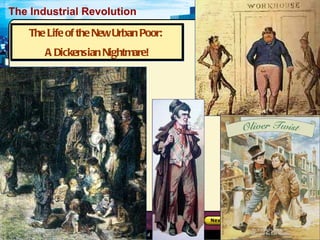
The Life of the New Urban Poor:  A Dickensian Nightmare!
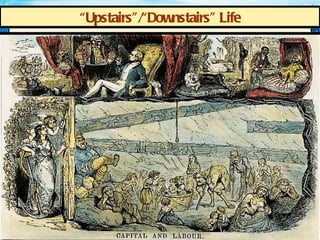
“ Upstairs”/“Downstairs” Life
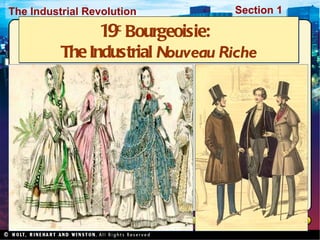
19 c  Bourgeoisie:  The Industrial  Nouveau Riche
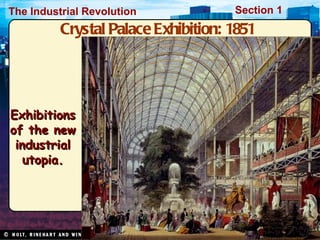
Crystal Palace Exhibition: 1851 Exhibitions of the new industrial utopia.
Less mortality   Population growth Agricultural revolution Enclosures Fertilizers Confiscation Farming machinery Comunications Roads Canals and navegable rivers   Improvement in the trade with the colonies Athlantic triangle Industrial hand labour  (workers)   More capital: growth of banks More agricultural productivity Extensive crops: cotton Industrial Revolution Railways machinery Steam Machine Raw materials: coal
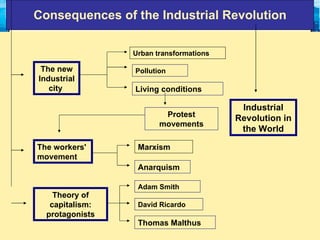
Consequences of the Industrial Revolution The new Industrial city  Urban transformations Pollution Living conditions Protest movements The workers' movement Marxism Anarquism Theory of capitalism: protagonists David Ricardo Adam Smith Thomas Malthus Industrial Revolution in the World
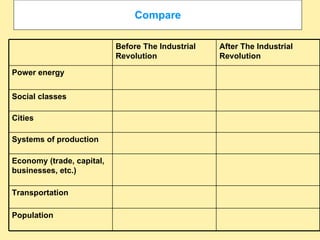
Compare Before The Industrial Revolution After The Industrial Revolution Power energy Social classes Cities Systems of production Economy (trade, capital, businesses, etc.) Transportation Population

Industrial revolution

  • 1.
  • 2.
    Less mortality Population growth Agricultural revolution Enclosures Fertilizers Confiscation Farming machinery Comunications Roads Canals and navegable rivers Improvement in the trade with the colonies Athlantic triangle Industrial hand labour (workers) More capital: growth of banks More agricultural productivity Extensive crops: cotton Industrial Revolution Railways machinery Steam Machine Raw materials: coal
  • 3.
  • 4.
    Reading Focus Whydid the Industrial Revolution begin in Great Britain? How? How did industrialization cause a revolution in the production of textiles? How did steam power the Industrial Revolution? Where did industrialization spread beyond Great Britain? Main Idea In the 1700 conditions in Great Britain led to the rapid growth of the textile industry, which in turn led to huge changes in many other industries. A New Kind of Revolution
  • 5.
    The Industrial Revolutionbegan in Great Britain. It had essential elements for economic success Factors of production Land Labour Capital Britain’s Big Advantage
  • 6.
    Agricultural revolution Factorsfor Success Exploration and colonialism: raw materials Seapower Political stability Government support Growth of private investment Research and development on farms Jethro Tull , seed drill Improved livestock breeding Better varieties of food crops Increased production Population grew Enclosure movement: specialization and productivity Less workers needed in rural areas.
  • 7.
    Seed drill ggCombine harvester , is a machine that harvests grain crops More production led to more capital , more banks and more investment Enclosure act
  • 8.
    Consequences : Capital is invested in new industries, specially textile industries PEOPLE from rural areas emigrated to towns. Towns grew incredibly More need of transport : Steam machine Used in trains , ships and machines Need of raw materials and fossil fuels: COAL mines
  • 9.
    Steam Powers theRevolution Steam engines needed large amounts of fuel Wood scarce Coal mining industry Changing landscapes Dangers of mining Coal for Steam Engines First successful steam engine in 1712 Innovations by James Watt 1736 – 1819 Steam power versus water power Steam locomotives Steamships Development of Steam Engine
  • 10.
  • 11.
  • 12.
    An Early SteamLocomotive
  • 13.
    The Impact ofthe Railroad
  • 14.
  • 15.
    Raw materials andfossil fuels needed: COAL IRON
  • 16.
  • 17.
    Child Labor inthe Mines Child “hurriers”
  • 18.
    Factory Wages inLancashire, 1830 Age of Worker Male Wages Female Wages under 11 2s 3d. 2s. 4d. 11 - 16 4s. 1d. 4s. 3d. 17 - 21 10s. 2d. 7s. 3d. 22 - 26 17s. 2d. 8s. 5d. 27 - 31 20s. 4d. 8s. 7d. 32 - 36 22s. 8d. 8s. 9d. 37 - 41 21s. 7d. 9s. 8d. 42 - 46 20s. 3d. 9s. 3d. 47 - 51 16s. 7d. 8s. 10d. 52 - 56 16s. 4d. 8s. 4d. 57 - 61 13s. 6d. 6s. 4d.
  • 19.
    Richard Arkwright: Pioneerof the Factory System” The “Water Frame”
  • 20.
    Factory Production Concentratesproduction in one place [raw materials, labor and machinery]. Located near sources of power Requires a lot of capital investment [factory, machines, etc.]
  • 21.
    Mine, Coalfields &Industrial Areas Coal is more powerful than water . Iron is more powerful than wood.
  • 22.
    The Factory SystemRigid schedule. 12-14 hour day. Dangerous conditions.
  • 23.
  • 24.
  • 25.
  • 26.
  • 27.
  • 28.
  • 29.
    The Life ofthe New Urban Poor: A Dickensian Nightmare!
  • 30.
  • 31.
    19 c Bourgeoisie: The Industrial Nouveau Riche
  • 32.
    Crystal Palace Exhibition:1851 Exhibitions of the new industrial utopia.
  • 33.
    Less mortality Population growth Agricultural revolution Enclosures Fertilizers Confiscation Farming machinery Comunications Roads Canals and navegable rivers Improvement in the trade with the colonies Athlantic triangle Industrial hand labour (workers) More capital: growth of banks More agricultural productivity Extensive crops: cotton Industrial Revolution Railways machinery Steam Machine Raw materials: coal
  • 34.
    Consequences of theIndustrial Revolution The new Industrial city Urban transformations Pollution Living conditions Protest movements The workers' movement Marxism Anarquism Theory of capitalism: protagonists David Ricardo Adam Smith Thomas Malthus Industrial Revolution in the World
  • 35.
    Compare Before TheIndustrial Revolution After The Industrial Revolution Power energy Social classes Cities Systems of production Economy (trade, capital, businesses, etc.) Transportation Population