The Industrial Revolution
          brings
change to Colonial Victoria
              Marion Littlejohn
  Education Officer, Sovereign Hill Museum
  HTAV Middle Years Conference, October, 2011.
Year 9    The Making of the Modern World

Depth Study 1 Making a Better World?

Choose ONE

1 The Industrial Revolution (1750 – 1914)

2 Movements of Peoples (c. 1757 – 1914)

3 Progressive Ideas and Movements (1750 – 1914)
Making a Better World ? (1750 – 1914)

Content description
Students investigate …the experiences of men, women and children during the
Industrial Revolution, and their changing way of life

The Industrial Revolution (1750 – 1914)
The technological innovations that led to the Industrial Revolution, and other
conditions that influenced the industrialisation of Britain (the agricultural
revolution, access to raw materials, wealthy middle class, cheap labour, transport
system, and expanding empire) and of Australia

Elaborations
•the impact of steam, gas and electricity on people’s way of life
•The experiences of men, women and children during the Industrial Revolution
•The population movements and changing settlement patterns
•changes to the cities and landscape in European countries and Australia as the
Industrial Revolution continued to develop, using photos
•The short and long-term impacts of the Industrial Revolution, including global changes
in landscapes, transport and communication
                                                            The Australian Curriculum; Year 9 - History
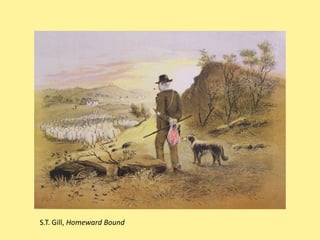
S.T. Gill, Homeward Bound
Pierre Edouard Frere, Washing Day
                                                       c. 1837
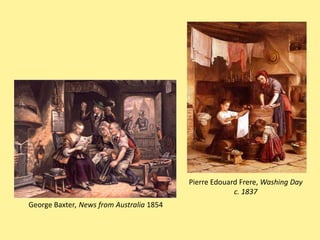
George Baxter, News from Australia 1854
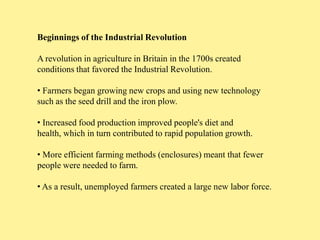
Beginnings of the Industrial Revolution

A revolution in agriculture in Britain in the 1700s created
conditions that favored the Industrial Revolution.

• Farmers began growing new crops and using new technology
such as the seed drill and the iron plow.

• Increased food production improved people's diet and
health, which in turn contributed to rapid population growth.

• More efficient farming methods (enclosures) meant that fewer
people were needed to farm.

• As a result, unemployed farmers created a large new labor force.
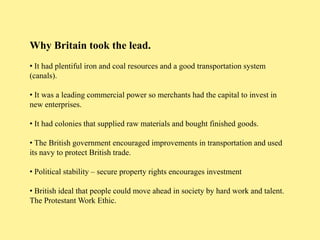
Why Britain took the lead.
• It had plentiful iron and coal resources and a good transportation system
(canals).

• It was a leading commercial power so merchants had the capital to invest in
new enterprises.

• It had colonies that supplied raw materials and bought finished goods.

• The British government encouraged improvements in transportation and used
its navy to protect British trade.

• Political stability – secure property rights encourages investment

• British ideal that people could move ahead in society by hard work and talent.
The Protestant Work Ethic.
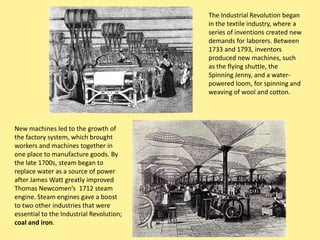
The Industrial Revolution began
                                          in the textile industry, where a
                                          series of inventions created new
                                          demands for laborers. Between
                                          1733 and 1793, inventors
                                          produced new machines, such
                                          as the flying shuttle, the
                                          Spinning Jenny, and a water-
                                          powered loom, for spinning and
                                          weaving of wool and cotton.


New machines led to the growth of
the factory system, which brought
workers and machines together in
one place to manufacture goods. By
the late 1700s, steam began to
replace water as a source of power
after James Watt greatly improved
Thomas Newcomen’s 1712 steam
engine. Steam engines gave a boost
to two other industries that were
essential to the Industrial Revolution;
coal and iron.
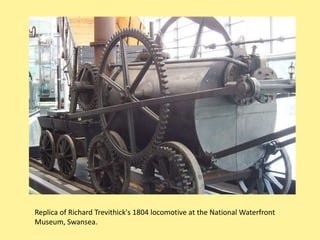
Replica of Richard Trevithick's 1804 locomotive at the National Waterfront
Museum, Swansea.
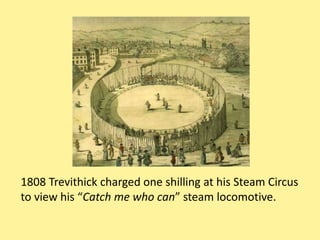
1808 Trevithick charged one shilling at his Steam Circus
to view his “Catch me who can” steam locomotive.
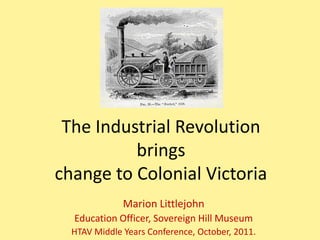
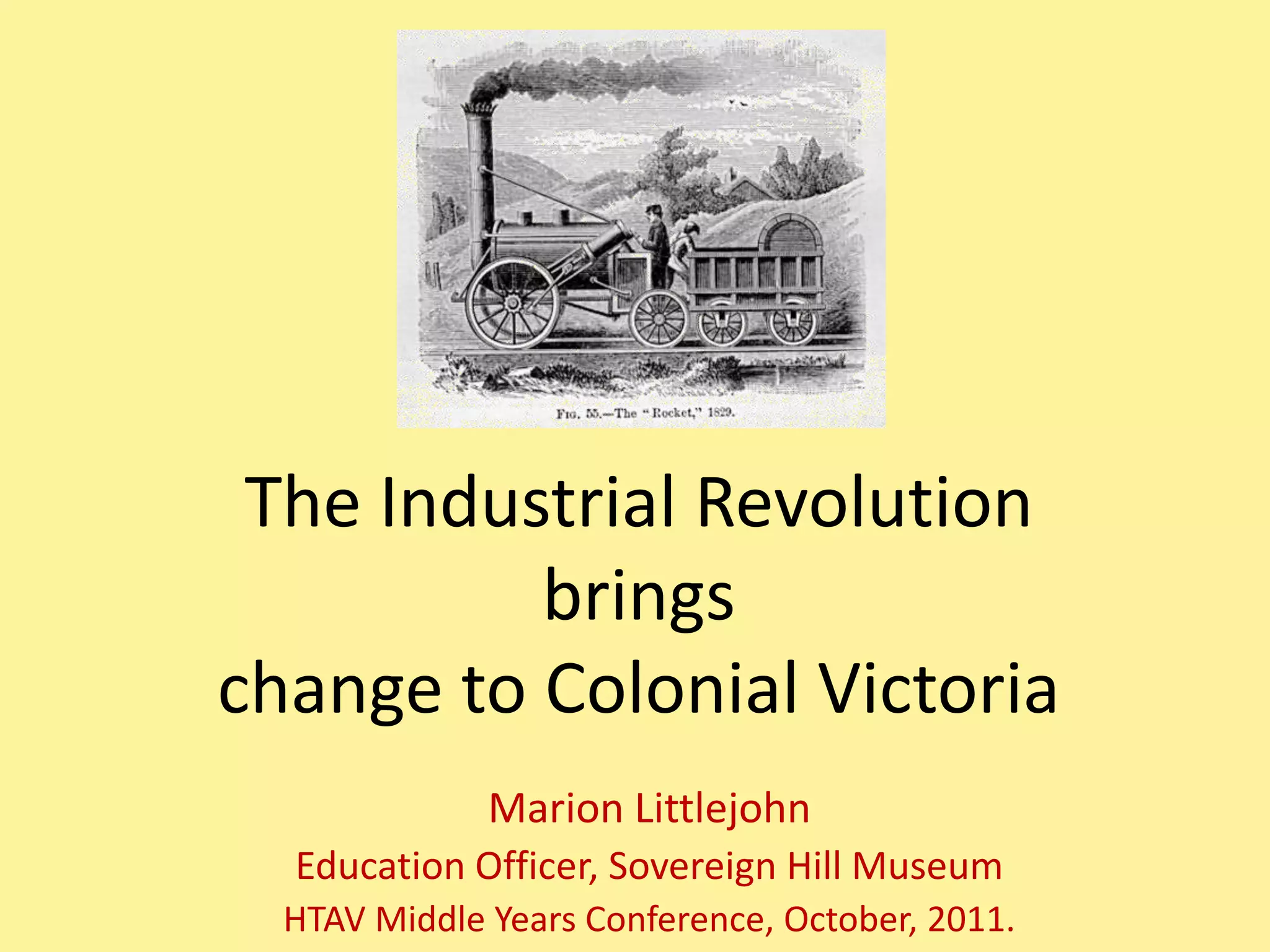
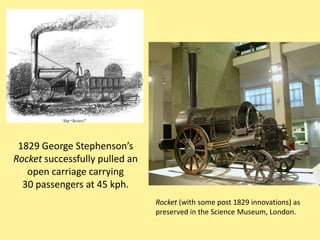
1829 George Stephenson’s
Rocket successfully pulled an
   open carriage carrying
  30 passengers at 45 kph.
                                Rocket (with some post 1829 innovations) as
                                preserved in the Science Museum, London.
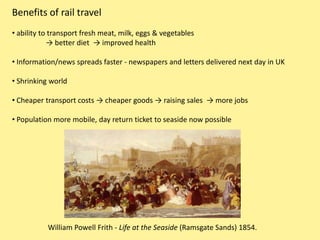
Benefits of rail travel
• ability to transport fresh meat, milk, eggs & vegetables
            → better diet → improved health

• Information/news spreads faster - newspapers and letters delivered next day in UK

• Shrinking world

• Cheaper transport costs → cheaper goods → raising sales → more jobs

• Population more mobile, day return ticket to seaside now possible


           William Powell Frith - Life at the Seaside (Ramsgate Sands) 1854.
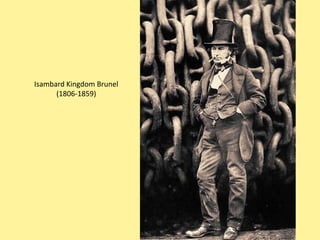
Isambard Kingdom Brunel
      (1806-1859)
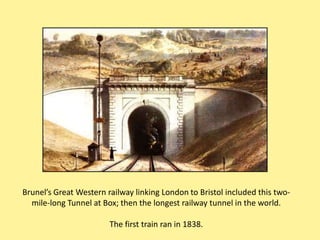
Brunel’s Great Western railway linking London to Bristol included this two-
  mile-long Tunnel at Box; then the longest railway tunnel in the world.

                        The first train ran in 1838.
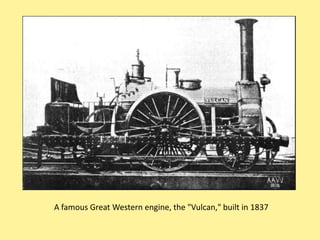
A famous Great Western engine, the "Vulcan," built in 1837
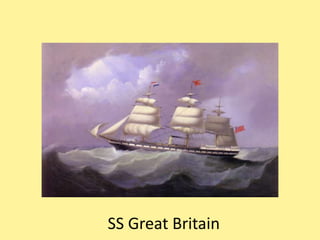
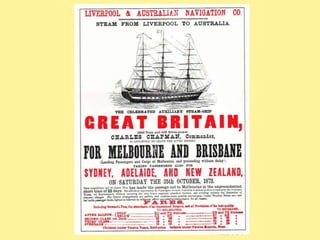
SS Great Britain
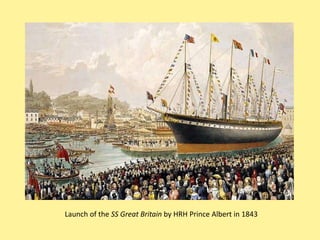
Launch of the SS Great Britain by HRH Prince Albert in 1843
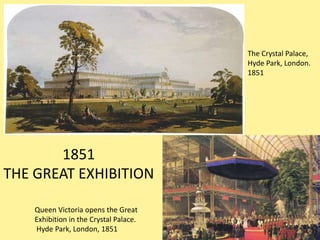
The Crystal Palace,
                                        Hyde Park, London.
                                        1851


       1851
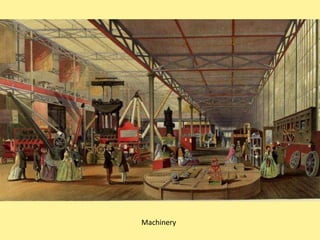
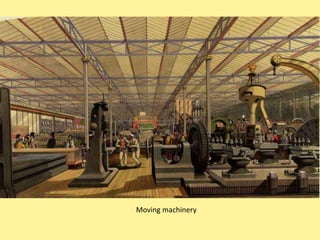
THE GREAT EXHIBITION

    Queen Victoria opens the Great
    Exhibition in the Crystal Palace.
    Hyde Park, London, 1851
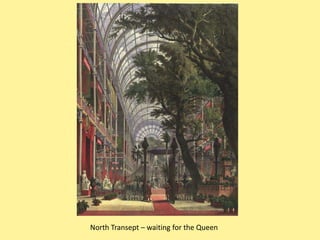
North Transept – waiting for the Queen
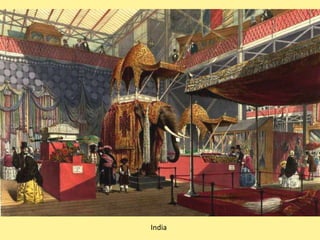
India
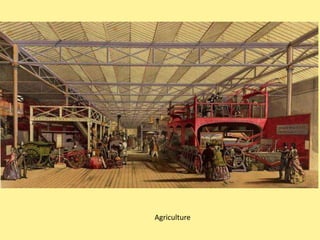
Agriculture
Machinery
Moving machinery
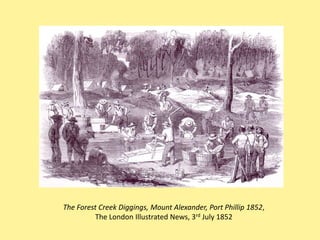
The Forest Creek Diggings, Mount Alexander, Port Phillip 1852,
         The London Illustrated News, 3rd July 1852
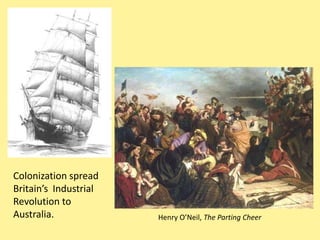
Colonization spread
Britain’s Industrial
Revolution to
Australia.             Henry O’Neil, The Parting Cheer
Between 1852 and 1875
    the ss Great Britain made
    32 round trips to Australia
   bringing 15,000 passengers.

    2% of present day Australians are
descended from a Great Britain passenger.
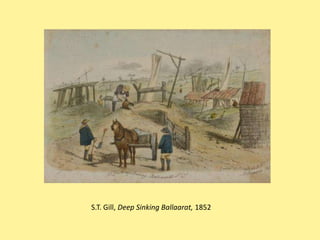
S.T. Gill, Deep Sinking Ballaarat, 1852
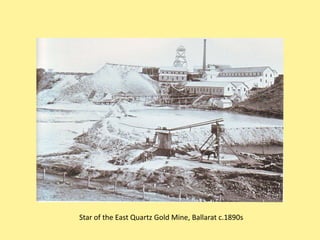
Star of the East Quartz Gold Mine, Ballarat c.1890s
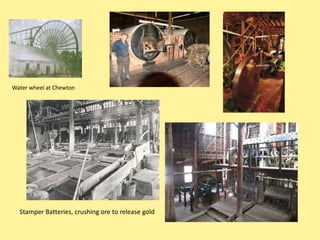
Water wheel at Chewton


  Stamper Batteries, crushing ore to release gold
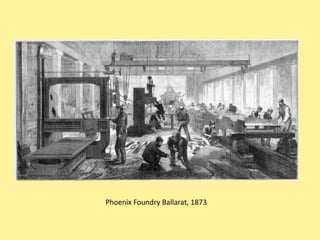
Phoenix Foundry Ballarat, 1873
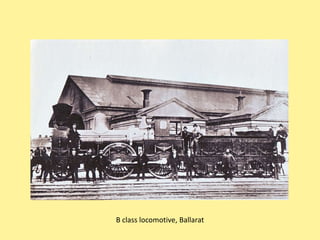
B class locomotive, Ballarat
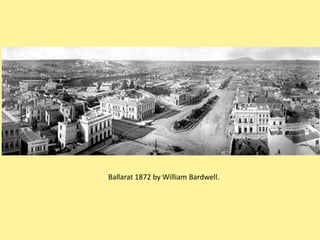
Ballarat 1872 by William Bardwell.
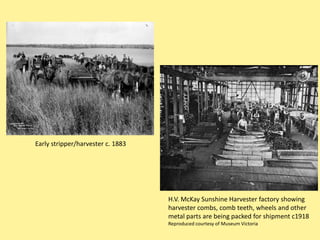
Early stripper/harvester c. 1883


                                   H.V. McKay Sunshine Harvester factory showing
                                   harvester combs, comb teeth, wheels and other
                                   metal parts are being packed for shipment c1918
                                   Reproduced courtesy of Museum Victoria
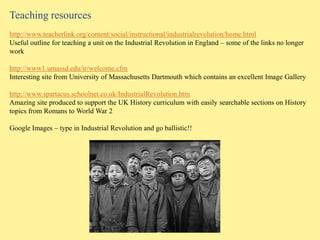
Teaching resources
http://www.teacherlink.org/content/social/instructional/industrialrevolution/home.html
Useful outline for teaching a unit on the Industrial Revolution in England – some of the links no longer
work

http://www1.umassd.edu/ir/welcome.cfm
Interesting site from University of Massachusetts Dartmouth which contains an excellent Image Gallery

http://www.spartacus.schoolnet.co.uk/IndustrialRevolution.htm
Amazing site produced to support the UK History curriculum with easily searchable sections on History
topics from Romans to World War 2

Google Images – type in Industrial Revolution and go ballistic!!

Industrial revolution htav 2011

  • 1.
    The Industrial Revolution brings change to Colonial Victoria Marion Littlejohn Education Officer, Sovereign Hill Museum HTAV Middle Years Conference, October, 2011.
  • 2.
    Year 9 The Making of the Modern World Depth Study 1 Making a Better World? Choose ONE 1 The Industrial Revolution (1750 – 1914) 2 Movements of Peoples (c. 1757 – 1914) 3 Progressive Ideas and Movements (1750 – 1914)
  • 3.
    Making a BetterWorld ? (1750 – 1914) Content description Students investigate …the experiences of men, women and children during the Industrial Revolution, and their changing way of life The Industrial Revolution (1750 – 1914) The technological innovations that led to the Industrial Revolution, and other conditions that influenced the industrialisation of Britain (the agricultural revolution, access to raw materials, wealthy middle class, cheap labour, transport system, and expanding empire) and of Australia Elaborations •the impact of steam, gas and electricity on people’s way of life •The experiences of men, women and children during the Industrial Revolution •The population movements and changing settlement patterns •changes to the cities and landscape in European countries and Australia as the Industrial Revolution continued to develop, using photos •The short and long-term impacts of the Industrial Revolution, including global changes in landscapes, transport and communication The Australian Curriculum; Year 9 - History
  • 4.
  • 5.
    Pierre Edouard Frere,Washing Day c. 1837 George Baxter, News from Australia 1854
  • 6.
    Beginnings of theIndustrial Revolution A revolution in agriculture in Britain in the 1700s created conditions that favored the Industrial Revolution. • Farmers began growing new crops and using new technology such as the seed drill and the iron plow. • Increased food production improved people's diet and health, which in turn contributed to rapid population growth. • More efficient farming methods (enclosures) meant that fewer people were needed to farm. • As a result, unemployed farmers created a large new labor force.
  • 7.
    Why Britain tookthe lead. • It had plentiful iron and coal resources and a good transportation system (canals). • It was a leading commercial power so merchants had the capital to invest in new enterprises. • It had colonies that supplied raw materials and bought finished goods. • The British government encouraged improvements in transportation and used its navy to protect British trade. • Political stability – secure property rights encourages investment • British ideal that people could move ahead in society by hard work and talent. The Protestant Work Ethic.
  • 8.
    The Industrial Revolutionbegan in the textile industry, where a series of inventions created new demands for laborers. Between 1733 and 1793, inventors produced new machines, such as the flying shuttle, the Spinning Jenny, and a water- powered loom, for spinning and weaving of wool and cotton. New machines led to the growth of the factory system, which brought workers and machines together in one place to manufacture goods. By the late 1700s, steam began to replace water as a source of power after James Watt greatly improved Thomas Newcomen’s 1712 steam engine. Steam engines gave a boost to two other industries that were essential to the Industrial Revolution; coal and iron.
  • 9.
    Replica of RichardTrevithick's 1804 locomotive at the National Waterfront Museum, Swansea.
  • 10.
    1808 Trevithick chargedone shilling at his Steam Circus to view his “Catch me who can” steam locomotive.
  • 11.
    1829 George Stephenson’s Rocketsuccessfully pulled an open carriage carrying 30 passengers at 45 kph. Rocket (with some post 1829 innovations) as preserved in the Science Museum, London.
  • 12.
    Benefits of railtravel • ability to transport fresh meat, milk, eggs & vegetables → better diet → improved health • Information/news spreads faster - newspapers and letters delivered next day in UK • Shrinking world • Cheaper transport costs → cheaper goods → raising sales → more jobs • Population more mobile, day return ticket to seaside now possible William Powell Frith - Life at the Seaside (Ramsgate Sands) 1854.
  • 13.
  • 14.
    Brunel’s Great Westernrailway linking London to Bristol included this two- mile-long Tunnel at Box; then the longest railway tunnel in the world. The first train ran in 1838.
  • 15.
    A famous GreatWestern engine, the "Vulcan," built in 1837
  • 16.
  • 17.
    Launch of theSS Great Britain by HRH Prince Albert in 1843
  • 20.
    The Crystal Palace, Hyde Park, London. 1851 1851 THE GREAT EXHIBITION Queen Victoria opens the Great Exhibition in the Crystal Palace. Hyde Park, London, 1851
  • 21.
    North Transept –waiting for the Queen
  • 22.
  • 23.
  • 24.
  • 25.
  • 26.
    The Forest CreekDiggings, Mount Alexander, Port Phillip 1852, The London Illustrated News, 3rd July 1852
  • 27.
    Colonization spread Britain’s Industrial Revolutionto Australia. Henry O’Neil, The Parting Cheer
  • 29.
    Between 1852 and1875 the ss Great Britain made 32 round trips to Australia bringing 15,000 passengers. 2% of present day Australians are descended from a Great Britain passenger.
  • 30.
    S.T. Gill, DeepSinking Ballaarat, 1852
  • 31.
    Star of theEast Quartz Gold Mine, Ballarat c.1890s
  • 32.
    Water wheel atChewton Stamper Batteries, crushing ore to release gold
  • 33.
  • 35.
  • 37.
    Ballarat 1872 byWilliam Bardwell.
  • 38.
    Early stripper/harvester c.1883 H.V. McKay Sunshine Harvester factory showing harvester combs, comb teeth, wheels and other metal parts are being packed for shipment c1918 Reproduced courtesy of Museum Victoria
  • 39.
    Teaching resources http://www.teacherlink.org/content/social/instructional/industrialrevolution/home.html Useful outlinefor teaching a unit on the Industrial Revolution in England – some of the links no longer work http://www1.umassd.edu/ir/welcome.cfm Interesting site from University of Massachusetts Dartmouth which contains an excellent Image Gallery http://www.spartacus.schoolnet.co.uk/IndustrialRevolution.htm Amazing site produced to support the UK History curriculum with easily searchable sections on History topics from Romans to World War 2 Google Images – type in Industrial Revolution and go ballistic!!

Editor's Notes

  • #3 http://www.australiancurriculum.edu.au/History/Curriculum/F-10?y=9&s=HKU&s=HS&layout=1
  • #4 The Industrial Revolution is one of the choices for the first Depth Study in year 9http://www.australiancurriculum.edu.au/History/Curriculum/F-10?y=9&s=HKU&s=HS&layout=1
  • #5 Pre industrial society was based on agriculture
  • #6 Note spinning wheel from pre-industrial times but letters possible after the introduction of the penny post in 1848. This family is living in a rapidly changing world.Domestic technology largely unchanged by Industrial Revolution
  • #7 Background information teachers will need to cover
  • #9 Spend a little time on inventions
  • #10 The rapid spread of rail transport transforms peoples lives and would be a good feature to focus on in greater depth.
  • #12 The Rocket was the most advanced steam engine of its day. It was built for the Rainhill Trials held by the Liverpool & Manchester Railway in 1829 to choose the best and most competent design. It set the standard for a hundred and fifty years of steam locomotive power. Though the Rocket was not the first steam locomotive, its claim to fame is that it was the first to bring together several innovations to produce the most advanced locomotive of its day, and the template for most steam locomotives since. In fact, the standard steam locomotive design is often called the "Stephensonian" locomotive.Rocket had two cylinders set at 35 degrees from the horizontal, with the pistons driving a pair of 4 ft 8 in (1.42 m) diameter wheels. Most previous designs had the cylinders positioned vertically, which gave the engines an uneven swaying motion as they progressed along the track. Subsequently Rocket was modified so that the cylinders were set horizontally, a layout used on nearly all designs that followed. The second pair of wheels was 2 ft 6 in (0.76 m) in diameter, and uncoupled from the driving wheels, giving an 0-2-2 wheel arrangement. The firebox was separate from the boiler and was double thickness, being surrounded with water. Copper pipes led the heated water into the boiler.
  • #13 Improvements in transportation and communication. During the Industrial Revolution, advances were made in transportation and communication. In Britain, roads made of longer-lasting surfaces and canals connected all parts of the nation. A mining engineer, George Stephenson, developed the first steam-powered locomotive, opening the way for the building of railroads. Railroads and steam-powered ships improved transportation around the world. In 1837, an American inventor, Samuel F.B. Morse, devised the telegraph, which revolutionized communications.
  • #14 Isambard Kingdom Brunel (1806-1859)A key figure teachers might choose to focus on especially as his revolutionary ship the SS Great Britain is involved in carrying migrants to Melbourne during the Gold Rushes.
  • #16 A famous Great Western engine, the "Vulcan," built in 1837, and entered as Locomotive No. 2 in the books of the Company. The "Vulcan" had a single pair of 8ft. driving wheels and two cylinders 14 in. diameter by 16 in. stroke.
  • #17 Between 1852 and 1875 the Great Britain made 32 round trips to Australia bringing 15,000 passengers.2% of present day Australians are descended from a Great Britain passenger.
  • #18 Painting by Joseph WalterThe launch of the Great Britain on 19 July 1843 by HRH Prince Albert, who is standing on the podium just forward of the bows. Launch at the Great Western Dockyard, Bristol100 meters long, steel hull auxiliary steam ship (able to use sails or steam)
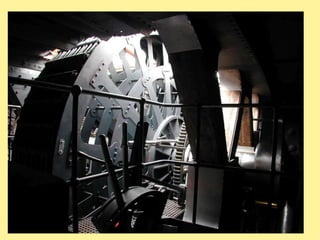
  • #19 Engine room on ss Great Britain
  • #21 The exhibition – masterminded by Prince Albert – showcased the developments of the Industrial Age from many countries.
  • #22 Images of the Great Exhibition commissioned by Queen Victoria for Prince Alberthttp://www.archive.org/stream/Dickinsonscompr1#page/n149/mode/2up
  • #27 When gold is discovered in Victoria in 1851 a massive movement of people and ideas occurs from Britain to Australia.
  • #31 In the early years of the Gold Rushes miners were able to find surface or shallow alluvial gold using simple technology.
  • #32 As the search for gold went deeper following the quartz reefs more sophisticated machinery was needed. The miners used the developments of the Industrial age to harness the power of steam and adapt machinery to drill through basalt, reach depths of up to a kilometre and crush tonnes of quartz to extract gold.
  • #33 Examples of restored working steam powered machines can be seen at Sovereign Hill in Ballarat.
  • #34 New processes were developed to produce stronger iron. In the mid-1800s, Henry Bessemer developed a process to improve the production of steel, a mixture of iron and other materials. Steel triggered the growth of still other industries. The Phoenix foundry in Ballarat was one of many which developed to cater for the needs of the mines.Established in 1854, by 1861 it employed 96 men, in 1884 it employed 350.
  • #35 Appalling conditions on Victoria’s roads led to public demands for improved transport
  • #36 The government responded by creating a state-wide rail system. In 1861 the Ballarat line opened – only 10 years after the discovery of gold.B class locomotives were used after 1863, they were originally imported thenbuilt in Victoria from British patterns. Note spark arrester on front funnel added to cope with Australian conditions. Centre dome was polished brass, train green. Carriage in right rear of photo shows the two containers on the roof which held the whale oil for the lamps.
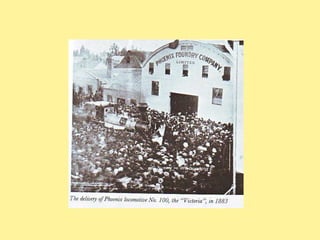
  • #37 The Ballarat foundries, originally set up to cater for the needs of the mines, were able to adapt to provide the rolling stock for the new railways. In 1883 the Phoenix foundry in Ballarat (where Target is today) rolled out its 100th engine.Phoenix Foundry began in 1854 supplying needs of mines. In 1861 it employed 96 men. In 1871 it tendered for its first locomotive. 1883 – 100th locomotive employing 350 men. 1887 – 200th locomotive. Over 30 years the foundry produced 352 locomotives.
  • #38 Note the railway station back left and the rapid development in only 21 years.
  • #39 Industrial development was not restricted to trains.