Download to read offline

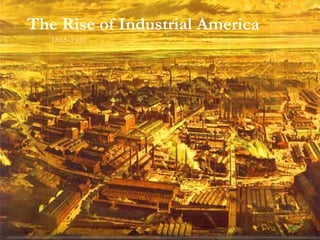

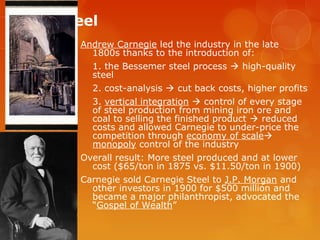
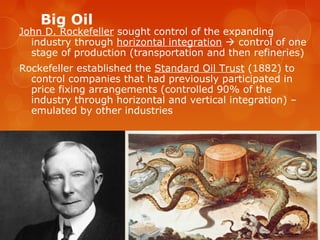


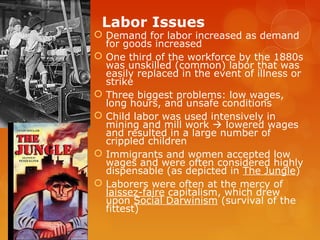


The document summarizes key developments in industrial America between 1865-1900. It describes how the expansion of railroads, exploitation of coal and other resources, technological innovations, and huge demand for labor fueled America's Second Industrial Revolution. Major industries like steel, oil, and railroads consolidated through trusts and monopolies that controlled entire production processes. In response, Congress passed antitrust laws though enforcement was limited. Unions emerged to advocate for workers facing dangerous conditions, low pay, and child labor. However, strikes were often met with violence as industrialists and the government supported laissez-faire policies.


![American Industrial Revolution[2]](https://cdn.slidesharecdn.com/ss_thumbnails/americanindustrialrevolution2-1227208285351785-9-thumbnail.jpg?width=640&height=640&fit=bounds)


