Today we are learning how the world was effected by the
       inventions of the Industrial Revolution.
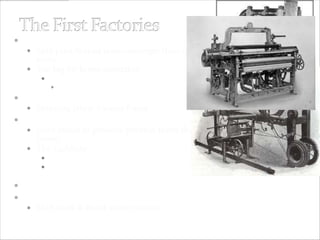
 Arkwright’s water frame
   Spin yarn/thread faster/stronger than spinning
    jenny
   Too big for home operation
       Need for special buildings near water
         Need for worker in area
 Crompton’s spinning mule
   Spinning jenny + water frame
 Cartwright’s power loom
   Used steam to produce product faster than man
    power
   The Luddites
       Disgruntled workers feared job loss or lower wages
       Australia bound

 What does this lead to?
 New labor system
   Shift work & Rural worker issues
 Mid 18th century- Eng – no forest
   Man/horse power – too slow
 Coal = answer
   Problem- Mines filled w/ water
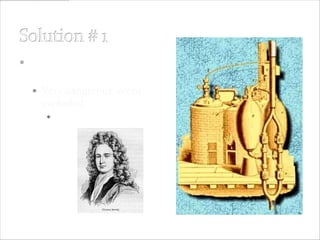
 Thomas Savery’s steam-
 powered pump
   Very dangerous, often
    exploded
      – no movable parts
 Thomas Newcomen’s true steam-powered engine
   Boiler, piston, & cylinder
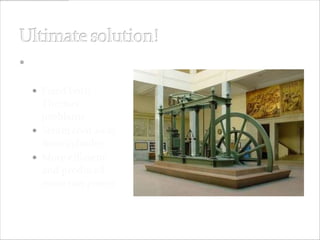
 James Watt’s
 engine
   Fixed both
    Thomas’
    problems
   Steam cool away
    from cylinder
   More efficient
    and produced
    more raw power
 Before 18th century no change from Middle Ages in
 Iron production.

 Henry Cort’s puddling furnace
   Allowed pig(raw) iron to be refined w/coke(coal-H2O)
   Produced stronger iron

  Iron Production Stats:

        1740       1780s (after Cort’s invention)       1852
     17,000 tons            70,000 tons             3 million tons

    What does this lead to?
 Iron Industry
    Henry Cort, puddling (produces high quality iron)
    Stronger iron allows for new machines, esp. trains
 Railroad
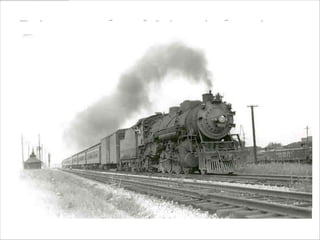
    Richard Trevithick, steam-powered locomotive
    George Stephenson, Rocket, 1830
 Ripple effect
    Prices of goods fall; markets grow larger; increased
    sales mean more factories and machinery; thus, self-
    sustaining
 The Industrial Factory
   Workers in shifts
   Workers come from rural areas
   Regulations
 Population Growth and Urbanization
   European population 1750 -140 million
                     1850 - 266 million
   Decline of death rate
      Less war
      Less disease
      More food
   Growth of cities
      Poor living conditions
      Sanitation poor
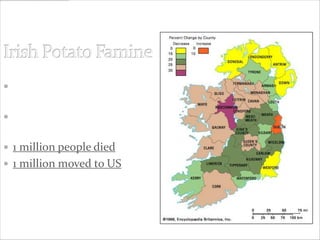
 Potato crop infested
  w/fungus
 1/3 of population depends
  on potato to survive
 1 million people died
 1 million moved to US
 New Social Classes: The Industrial Middle Class
   New bourgeoisie/New elite
   Constructed the factories, purchased the machines,
    figured out where the markets were
   Reduce the barriers between themselves and the landed
    elite
 New Social Classes: The Industrial Working Class
   Poor working conditions
       12-16 hours per day, 6 days a week
    Women and children
       Paid ½ of what men get
       Factory Act of 1833 – minimum age to work - 9
 Efforts at Change
    Socialism – society (govt) owns factors of production
    Utopian socialists – all fail
Today we are learning about working conditions during the
                  Industrial Revolution
 Not until the 1820s
 Why work in a factory?
 Cottages works – step backwards
   No more setting own schedule
 Machinery
   Very dangerous
 Entire families hired
   All worked in home, so all worked in factories
 Men
   Hardest labor
 Women
   Operated machines
 Children
   Swept
   Picked up scraps
   Worked on machines

Industrial Revolution

  • 1.
    Today we arelearning how the world was effected by the inventions of the Industrial Revolution.
  • 2.
     Arkwright’s waterframe  Spin yarn/thread faster/stronger than spinning jenny  Too big for home operation  Need for special buildings near water  Need for worker in area  Crompton’s spinning mule  Spinning jenny + water frame  Cartwright’s power loom  Used steam to produce product faster than man power  The Luddites  Disgruntled workers feared job loss or lower wages  Australia bound  What does this lead to?  New labor system  Shift work & Rural worker issues
  • 3.
     Mid 18thcentury- Eng – no forest  Man/horse power – too slow  Coal = answer  Problem- Mines filled w/ water
  • 4.
     Thomas Savery’ssteam- powered pump  Very dangerous, often exploded  – no movable parts
  • 5.
     Thomas Newcomen’strue steam-powered engine  Boiler, piston, & cylinder
  • 6.
     James Watt’s engine  Fixed both Thomas’ problems  Steam cool away from cylinder  More efficient and produced more raw power
  • 7.
     Before 18thcentury no change from Middle Ages in Iron production.  Henry Cort’s puddling furnace  Allowed pig(raw) iron to be refined w/coke(coal-H2O)  Produced stronger iron Iron Production Stats: 1740 1780s (after Cort’s invention) 1852 17,000 tons 70,000 tons 3 million tons What does this lead to?
  • 8.
     Iron Industry  Henry Cort, puddling (produces high quality iron)  Stronger iron allows for new machines, esp. trains  Railroad  Richard Trevithick, steam-powered locomotive  George Stephenson, Rocket, 1830  Ripple effect  Prices of goods fall; markets grow larger; increased sales mean more factories and machinery; thus, self- sustaining  The Industrial Factory  Workers in shifts  Workers come from rural areas  Regulations
  • 9.
     Population Growthand Urbanization  European population 1750 -140 million 1850 - 266 million  Decline of death rate  Less war  Less disease  More food  Growth of cities  Poor living conditions  Sanitation poor
  • 10.
     Potato cropinfested w/fungus  1/3 of population depends on potato to survive  1 million people died  1 million moved to US
  • 11.
     New SocialClasses: The Industrial Middle Class  New bourgeoisie/New elite  Constructed the factories, purchased the machines, figured out where the markets were  Reduce the barriers between themselves and the landed elite  New Social Classes: The Industrial Working Class  Poor working conditions  12-16 hours per day, 6 days a week  Women and children  Paid ½ of what men get  Factory Act of 1833 – minimum age to work - 9  Efforts at Change  Socialism – society (govt) owns factors of production  Utopian socialists – all fail
  • 12.
    Today we arelearning about working conditions during the Industrial Revolution
  • 13.
     Not untilthe 1820s  Why work in a factory?  Cottages works – step backwards  No more setting own schedule  Machinery  Very dangerous
  • 14.
     Entire familieshired  All worked in home, so all worked in factories  Men  Hardest labor  Women  Operated machines  Children  Swept  Picked up scraps  Worked on machines

Editor's Notes

  • #3 As you now know about the inventions that were created during the Ind. Rev, now let’s take a closer look at the first factories.