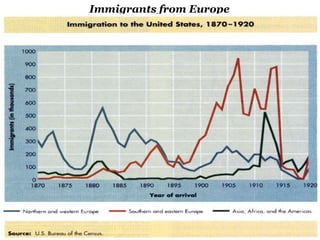
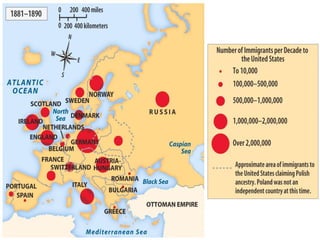
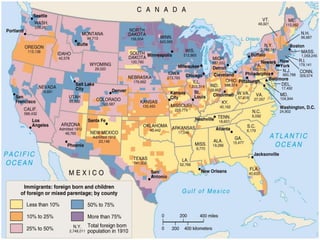
Immigrants from Europe
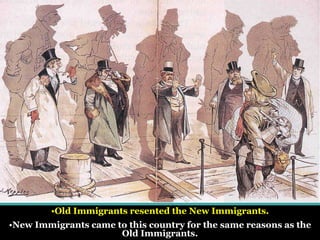
•Old Immigrants resented the New Immigrants. 
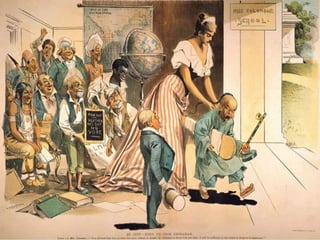
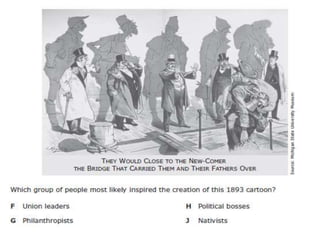
Cartoon: Immigration 
•New Immigrants came to this country for the same reasons as the 
Old Immigrants.
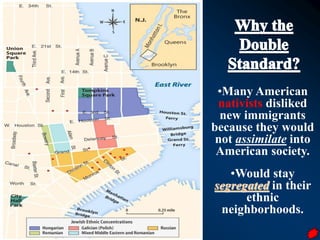
•Many American 
nativists disliked 
new immigrants 
because they would 
not assimilate into 
American society. 
•Would stay 
segregated in their 
ethnic 
neighborhoods.
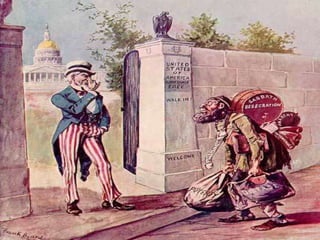
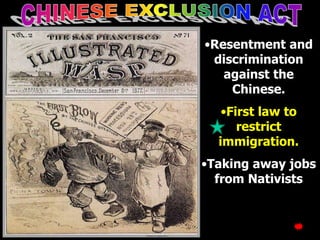
•Resentment and 
discrimination 
against the 
Chinese. 
•First law to 
restrict 
immigration. 
•Taking away jobs 
from Nativists 
Chinese Exclusion Act 1
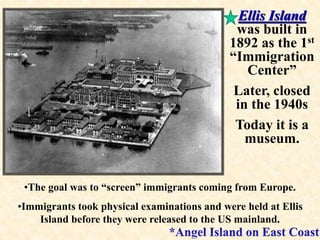
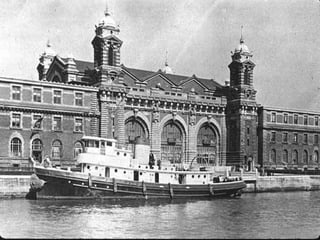
Ellis Island 
was built in 
1892 as the 1st 
“Immigration 
Center” 
Later, closed 
in the 1940s 
Today it is a 
museum. 
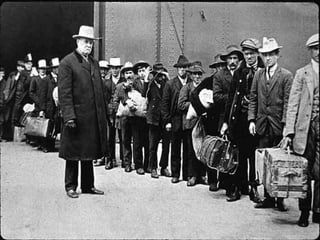
•The goal was to “screen” immigrants coming from Europe. 
•Immigrants took physical examinations and were held at Ellis 
Island before they were released to the US mainland.
Phrase penned by Mark Twain 
as satire for the way America 
had become. It revealed the 
“best and worst” of America. 
The Gilded Age suggests that there 
was a glittering layer of prosperity that 
covered the poverty and corruption that 
existed in much of society. 
Theme: The Coming of America 
It needed reform.
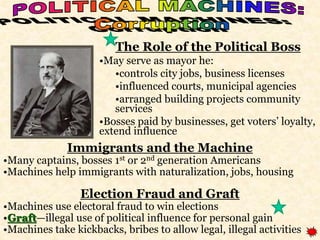
The Role of the Political Boss 
•May serve as mayor he: 
•controls city jobs, business licenses 
•influenced courts, municipal agencies 
•arranged building projects community 
services 
•Bosses paid by businesses, get voters’ loyalty, 
extend influence 
Immigrants and the Machine 
•Many captains, bosses 1st or 2nd generation Americans 
•Machines help immigrants with naturalization, jobs, housing 
Election Fraud and Graft 
•Machines use electoral fraud to win elections 
•Graft—illegal use of political influence for personal gain 
•Machines take kickbacks, bribes to allow legal, illegal activities
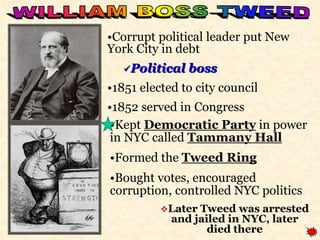
•Corrupt political leader put New 
York City in debt 
Political boss 
•1851 elected to city council 
•1852 served in Congress 
•Kept Democratic Party in power 
in NYC called Tammany Hall 
•Formed the Tweed Ring 
•Bought votes, encouraged 
corruption, controlled NYC politics 
Later Tweed was arrested 
and jailed in NYC, later 
died there
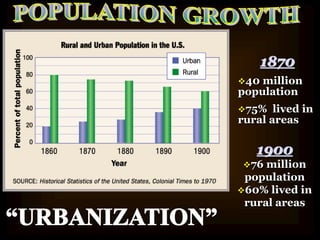
1870 
40 million 
population 
75% lived in 
rural areas 
1900 
76 million 
population 
60% lived in 
rural areas
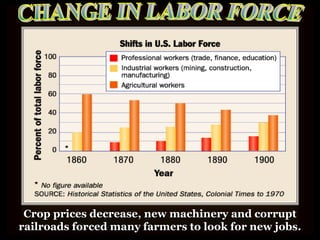
Crop prices decrease, new machinery and corrupt 
railroads forced many farmers to look for new jobs.
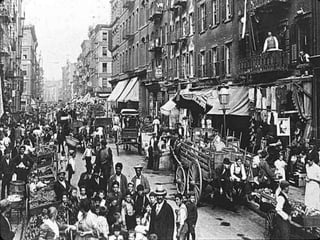
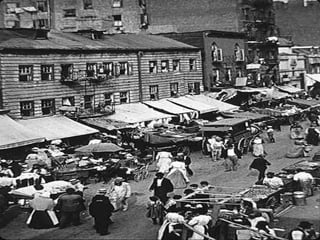
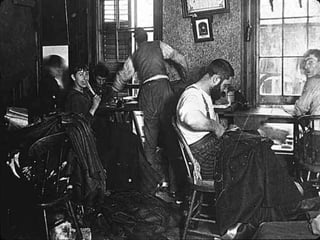
Immigrants Settle in Cities 
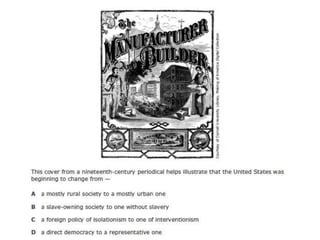
 Industrialization leads to urbanization, or growth of 
cities 
 Most immigrants settle in cities; get cheap housing, 
factory jobs 
 Americanization—assimilate people into main culture 
 Schools, voluntary groups teach citizenship skills 
 English, American history, cooking, etiquette 
 Ethnic communities provide social support
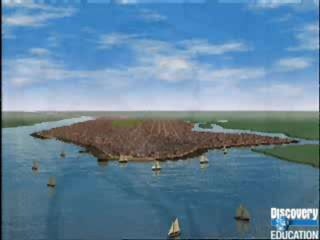
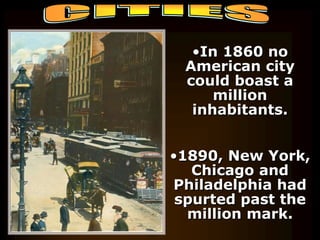
•In 1860 no 
American city 
could boast a 
million 
inhabitants. 
•1890, New York, 
Chicago and 
Philadelphia had 
spurted past the 
million mark. 
Cities
Cities provided opportunities 
•Machine-made jobs 
•high wages 
•ended monotony of the 
farm. 
Cities
Job opportunities for Women 
•School teaching 
•Domestic service 
•Women doctors 
•Lawyers, typists, telephone girls, 
librarians, journalists and social 
workers.
Water 
 1860s cities have inadequate or no piped water, indoor 
plumbing rare 
 Filtration introduced 1870s, chlorination in 1908 
Sanitation 
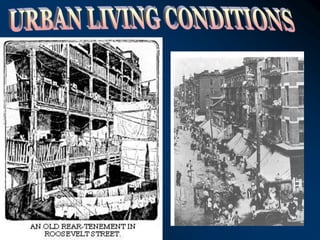
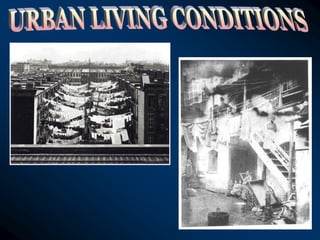
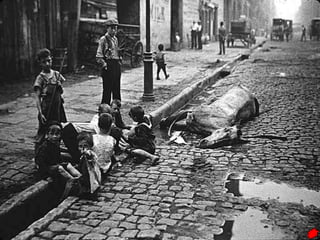
 Streets: manure, open gutters, factory smoke, poor 
trash collection 
 Contractors hired to sweep streets, collect garbage, 
clean outhouses-------often do not do job properly 
 By 1900, cities develop sewer lines, create sanitation 
departments
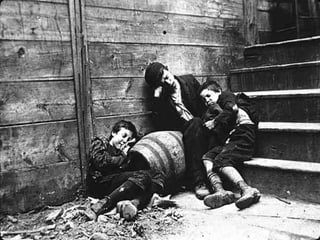
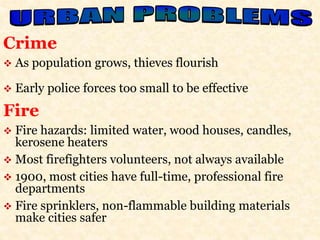
Crime 
 As population grows, thieves flourish 
 Early police forces too small to be effective 
Fire 
 Fire hazards: limited water, wood houses, candles, 
kerosene heaters 
 Most firefighters volunteers, not always available 
 1900, most cities have full-time, professional fire 
departments 
 Fire sprinklers, non-flammable building materials 
make cities safer
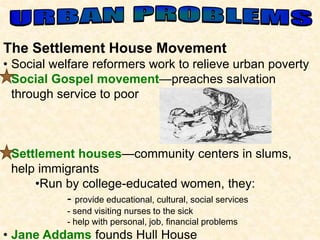
The Settlement House Movement 
• Social welfare reformers work to relieve urban poverty 
• Social Gospel movement—preaches salvation 
through service to poor 
• Settlement houses—community centers in slums, 
help immigrants 
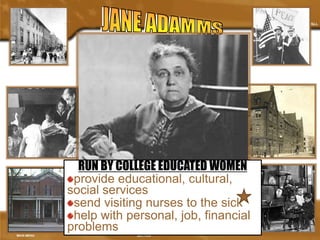
•Run by college-educated women, they: 
- provide educational, cultural, social services 
- send visiting nurses to the sick 
- help with personal, job, financial problems 
• Jane Addams founds Hull House
•To provide a center for 
higher civic and social 
life; to institute and 
maintain educational 
and philanthropic 
enterprises. 
RUN BY •To COLLEGE investigate EDUCATED and 
WOMEN 
provide improve educational, the conditions 
cultural, 
social services 
in the industrial 
send visiting districts nurses of Chicago. 
to the sick 
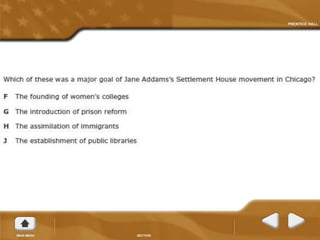
help •with To help personal, assimilate job, financial 
the 
problems 
immigrant population
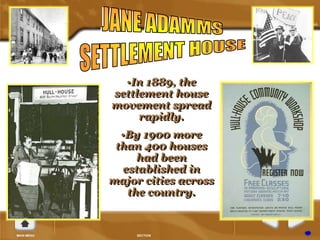
•In 1889, the 
settlement house 
movement spread 
rapidly. 
•By 1900 more 
than 400 houses 
had been 
established in 
major cities across 
the country.
10 urban imm gilded age

10 urban imm gilded age

  • 2.
  • 5.
    •Old Immigrants resentedthe New Immigrants. Cartoon: Immigration •New Immigrants came to this country for the same reasons as the Old Immigrants.
  • 6.
    •Many American nativistsdisliked new immigrants because they would not assimilate into American society. •Would stay segregated in their ethnic neighborhoods.
  • 9.
    •Resentment and discrimination against the Chinese. •First law to restrict immigration. •Taking away jobs from Nativists Chinese Exclusion Act 1
  • 11.
    Ellis Island wasbuilt in 1892 as the 1st “Immigration Center” Later, closed in the 1940s Today it is a museum. •The goal was to “screen” immigrants coming from Europe. •Immigrants took physical examinations and were held at Ellis Island before they were released to the US mainland.
  • 15.
    Phrase penned byMark Twain as satire for the way America had become. It revealed the “best and worst” of America. The Gilded Age suggests that there was a glittering layer of prosperity that covered the poverty and corruption that existed in much of society. Theme: The Coming of America It needed reform.
  • 16.
    The Role ofthe Political Boss •May serve as mayor he: •controls city jobs, business licenses •influenced courts, municipal agencies •arranged building projects community services •Bosses paid by businesses, get voters’ loyalty, extend influence Immigrants and the Machine •Many captains, bosses 1st or 2nd generation Americans •Machines help immigrants with naturalization, jobs, housing Election Fraud and Graft •Machines use electoral fraud to win elections •Graft—illegal use of political influence for personal gain •Machines take kickbacks, bribes to allow legal, illegal activities
  • 17.
    •Corrupt political leaderput New York City in debt Political boss •1851 elected to city council •1852 served in Congress •Kept Democratic Party in power in NYC called Tammany Hall •Formed the Tweed Ring •Bought votes, encouraged corruption, controlled NYC politics Later Tweed was arrested and jailed in NYC, later died there
  • 19.
    1870 40 million population 75% lived in rural areas 1900 76 million population 60% lived in rural areas
  • 20.
    Crop prices decrease,new machinery and corrupt railroads forced many farmers to look for new jobs.
  • 21.
    Immigrants Settle inCities  Industrialization leads to urbanization, or growth of cities  Most immigrants settle in cities; get cheap housing, factory jobs  Americanization—assimilate people into main culture  Schools, voluntary groups teach citizenship skills  English, American history, cooking, etiquette  Ethnic communities provide social support
  • 25.
    •In 1860 no American city could boast a million inhabitants. •1890, New York, Chicago and Philadelphia had spurted past the million mark. Cities
  • 26.
    Cities provided opportunities •Machine-made jobs •high wages •ended monotony of the farm. Cities
  • 27.
    Job opportunities forWomen •School teaching •Domestic service •Women doctors •Lawyers, typists, telephone girls, librarians, journalists and social workers.
  • 29.
    Water  1860scities have inadequate or no piped water, indoor plumbing rare  Filtration introduced 1870s, chlorination in 1908 Sanitation  Streets: manure, open gutters, factory smoke, poor trash collection  Contractors hired to sweep streets, collect garbage, clean outhouses-------often do not do job properly  By 1900, cities develop sewer lines, create sanitation departments
  • 33.
    Crime  Aspopulation grows, thieves flourish  Early police forces too small to be effective Fire  Fire hazards: limited water, wood houses, candles, kerosene heaters  Most firefighters volunteers, not always available  1900, most cities have full-time, professional fire departments  Fire sprinklers, non-flammable building materials make cities safer
  • 37.
    The Settlement HouseMovement • Social welfare reformers work to relieve urban poverty • Social Gospel movement—preaches salvation through service to poor • Settlement houses—community centers in slums, help immigrants •Run by college-educated women, they: - provide educational, cultural, social services - send visiting nurses to the sick - help with personal, job, financial problems • Jane Addams founds Hull House
  • 38.
    •To provide acenter for higher civic and social life; to institute and maintain educational and philanthropic enterprises. RUN BY •To COLLEGE investigate EDUCATED and WOMEN provide improve educational, the conditions cultural, social services in the industrial send visiting districts nurses of Chicago. to the sick help •with To help personal, assimilate job, financial the problems immigrant population
  • 39.
    •In 1889, the settlement house movement spread rapidly. •By 1900 more than 400 houses had been established in major cities across the country.