EFFECTIVE LISTENING
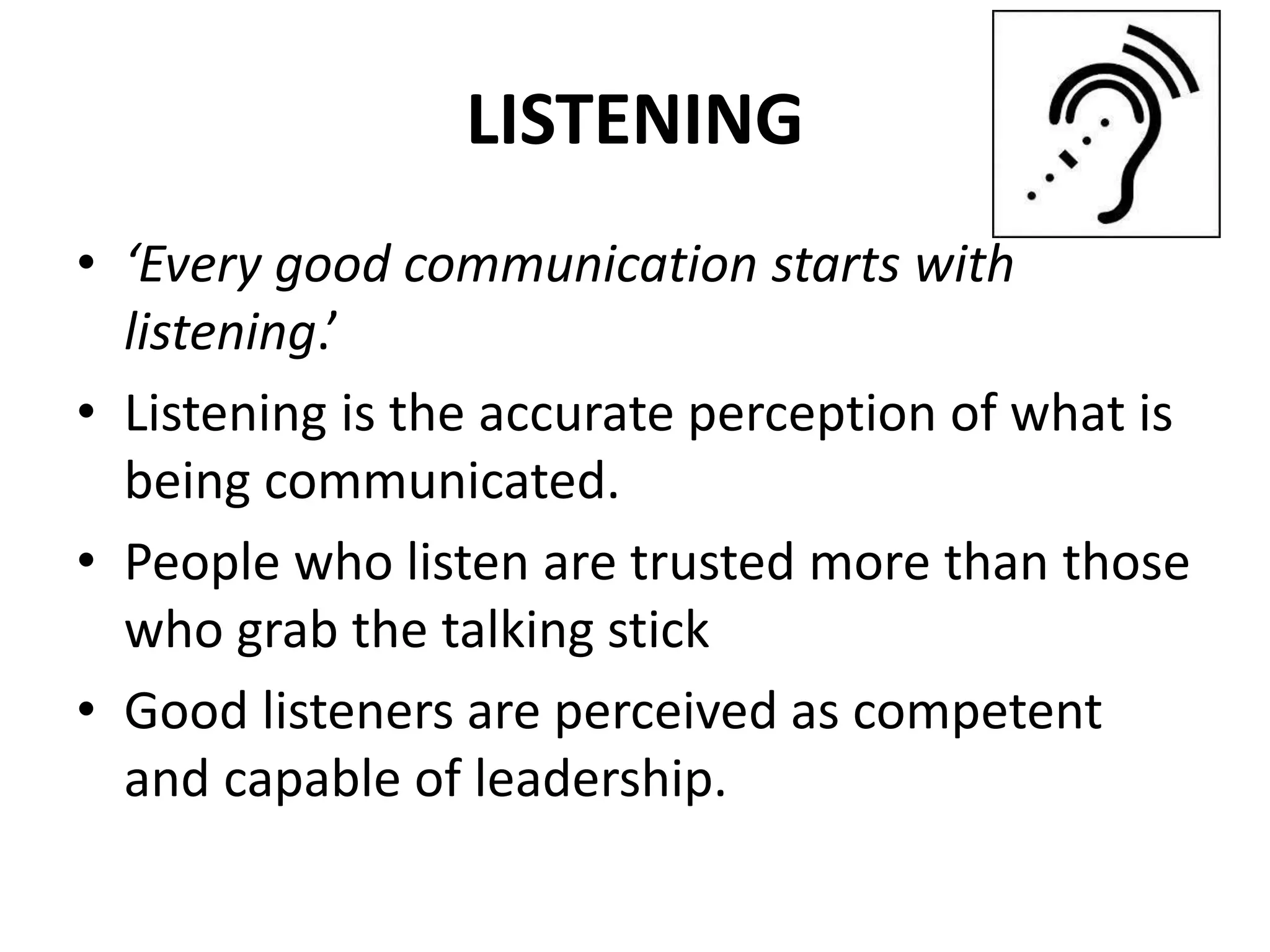
LISTENING
• ‘Every good communication starts with
listening.’
• Listening is the accurate perception of what is
being communicated.
• People who listen are trusted more than those
who grab the talking stick
• Good listeners are perceived as competent
and capable of leadership.
Types of listening
• Active
• Passive
• Content listening
• Critical / Evaluative listening
• Empathic listening
Listening process
• Receiving
• Interpreting
• Remembering
• Evaluating
• Responding
IMPROVING YOUR LISTENING
SKILLS
• Look beyond the speakers style
– Don’t judge the message by the speaker but by
the argument
– Ask yourself what the speaker knows and you
don’t
– Decrease the emotional impact of what is being
said.
• Fight distractions
– Close doors
– Turn off radios or televisions
– Move closer to the speaker
– Don’t interrupt
– Hold your rebuttal until you’ve heard the entire
message.
• Provide feedback
– Let the speaker know that you are paying
attention.
– Maintaining eye contact
– Offer appropriate facial expressions
– Paraphrase what you’ve heard.
– Keep all the criticism and feedback positive.
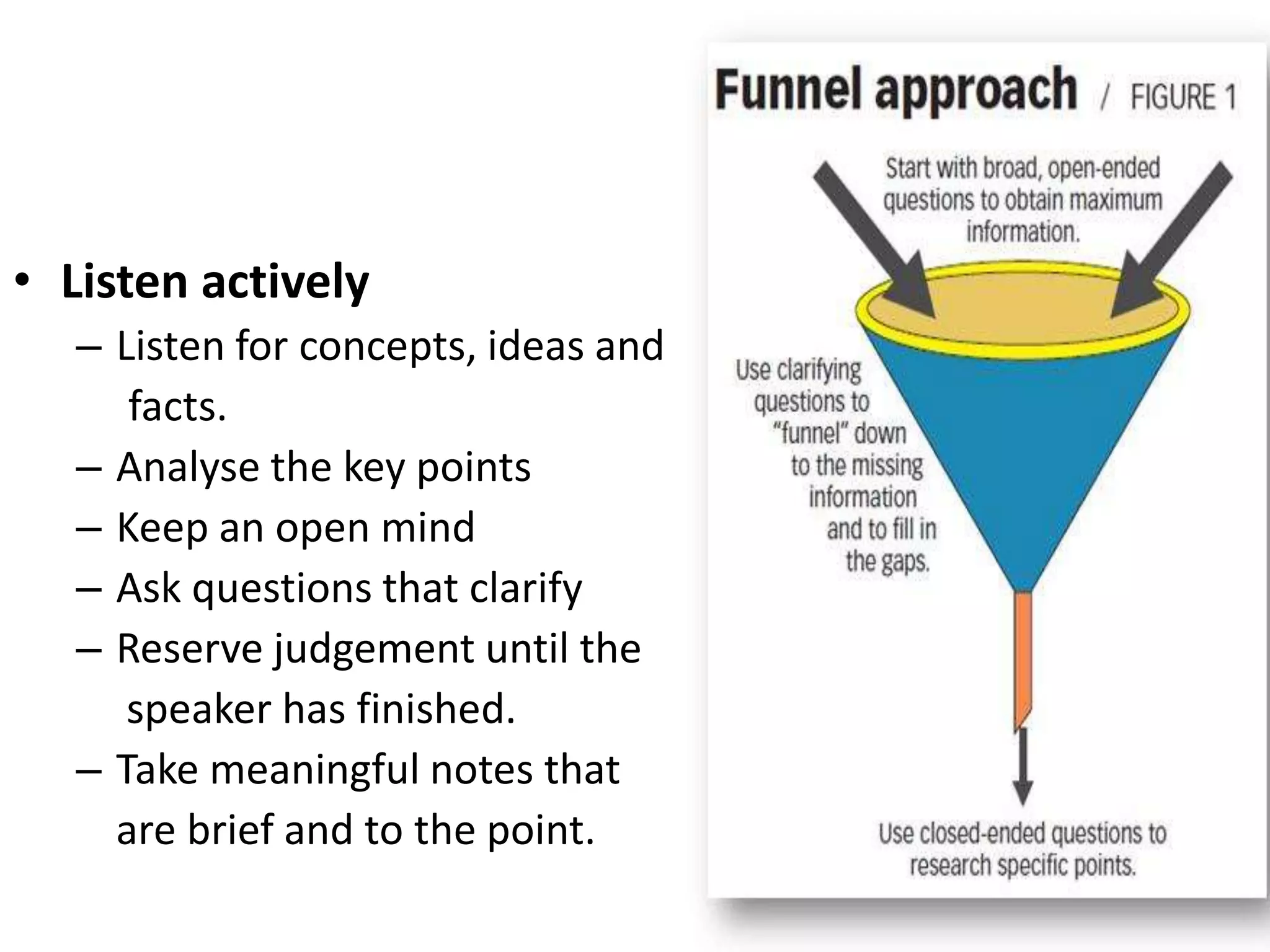
• Listen actively
– Listen for concepts, ideas and
facts.
– Analyse the key points
– Keep an open mind
– Ask questions that clarify
– Reserve judgement until the
speaker has finished.
– Take meaningful notes that
are brief and to the point.

7. effective listening

  • 1.
  • 2.
    LISTENING • ‘Every goodcommunication starts with listening.’ • Listening is the accurate perception of what is being communicated. • People who listen are trusted more than those who grab the talking stick • Good listeners are perceived as competent and capable of leadership.
  • 3.
    Types of listening •Active • Passive • Content listening • Critical / Evaluative listening • Empathic listening
  • 4.
    Listening process • Receiving •Interpreting • Remembering • Evaluating • Responding
  • 5.
    IMPROVING YOUR LISTENING SKILLS •Look beyond the speakers style – Don’t judge the message by the speaker but by the argument – Ask yourself what the speaker knows and you don’t – Decrease the emotional impact of what is being said.
  • 6.
    • Fight distractions –Close doors – Turn off radios or televisions – Move closer to the speaker – Don’t interrupt – Hold your rebuttal until you’ve heard the entire message.
  • 7.
    • Provide feedback –Let the speaker know that you are paying attention. – Maintaining eye contact – Offer appropriate facial expressions – Paraphrase what you’ve heard. – Keep all the criticism and feedback positive.
  • 8.
    • Listen actively –Listen for concepts, ideas and facts. – Analyse the key points – Keep an open mind – Ask questions that clarify – Reserve judgement until the speaker has finished. – Take meaningful notes that are brief and to the point.