Active Listening
1
Listening is not the same as Hearing
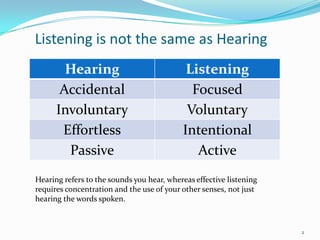
Hearing
Accidental
Involuntary
Effortless
Passive

Listening
Focused
Voluntary
Intentional
Active

Hearing refers to the sounds you hear, whereas effective listening
requires concentration and the use of your other senses, not just
hearing the words spoken.

2
We Spend a lot of Time Listening
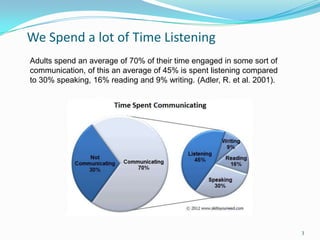
Adults spend an average of 70% of their time engaged in some sort of
communication, of this an average of 45% is spent listening compared
to 30% speaking, 16% reading and 9% writing. (Adler, R. et al. 2001).

3
Reasons for Listening
 We listen to obtain information

 We listen to understand
 We listen for enjoyment
 We listen to learn

Research on listening suggests that we remember between 25%
and 50% of what we hear. Listening is a skill we can all benefit
from improving.

4
Active Listening
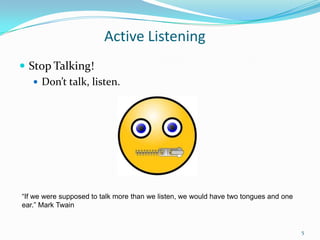
 Stop Talking!
 Don’t talk, listen.

“If we were supposed to talk more than we listen, we would have two tongues and one
ear.” Mark Twain

5
Active Listening
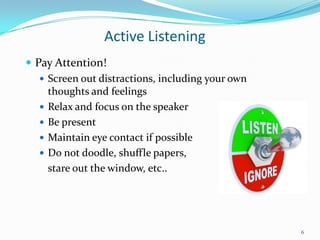
 Pay Attention!
 Screen out distractions, including your own
thoughts and feelings
 Relax and focus on the speaker
 Be present
 Maintain eye contact if possible
 Do not doodle, shuffle papers,
stare out the window, etc..

6
Active Listening
 Visualize to understand
 Concentrate on what is being said
 Create a mental model of the information
 Remember key words and phrases
 Keep an open mind
 Defer Judgment

7
Active Listening
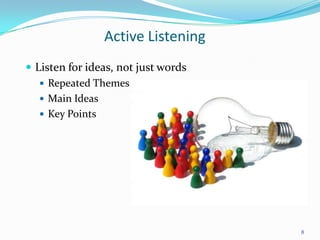
 Listen for ideas, not just words
 Repeated Themes
 Main Ideas
 Key Points

8
Active Listening
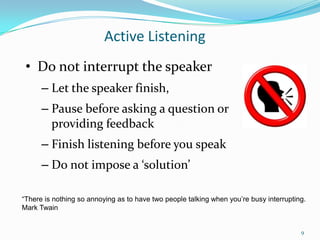
• Do not interrupt the speaker
– Let the speaker finish,
– Pause before asking a question or
providing feedback

– Finish listening before you speak
– Do not impose a ‘solution’
“There is nothing so annoying as to have two people talking when you’re busy interrupting.
Mark Twain

9
Active Listening
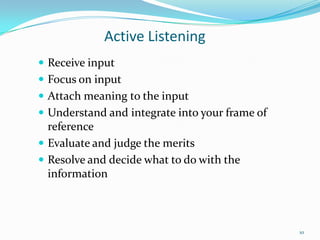
 Receive input
 Focus on input
 Attach meaning to the input
 Understand and integrate into your frame of

reference
 Evaluate and judge the merits
 Resolve and decide what to do with the
information

10
11
Active listening

Active listening

  • 1.
  • 2.
    Listening is notthe same as Hearing Hearing Accidental Involuntary Effortless Passive Listening Focused Voluntary Intentional Active Hearing refers to the sounds you hear, whereas effective listening requires concentration and the use of your other senses, not just hearing the words spoken. 2
  • 3.
    We Spend alot of Time Listening Adults spend an average of 70% of their time engaged in some sort of communication, of this an average of 45% is spent listening compared to 30% speaking, 16% reading and 9% writing. (Adler, R. et al. 2001). 3
  • 4.
    Reasons for Listening We listen to obtain information  We listen to understand  We listen for enjoyment  We listen to learn Research on listening suggests that we remember between 25% and 50% of what we hear. Listening is a skill we can all benefit from improving. 4
  • 5.
    Active Listening  StopTalking!  Don’t talk, listen. “If we were supposed to talk more than we listen, we would have two tongues and one ear.” Mark Twain 5
  • 6.
    Active Listening  PayAttention!  Screen out distractions, including your own thoughts and feelings  Relax and focus on the speaker  Be present  Maintain eye contact if possible  Do not doodle, shuffle papers, stare out the window, etc.. 6
  • 7.
    Active Listening  Visualizeto understand  Concentrate on what is being said  Create a mental model of the information  Remember key words and phrases  Keep an open mind  Defer Judgment 7
  • 8.
    Active Listening  Listenfor ideas, not just words  Repeated Themes  Main Ideas  Key Points 8
  • 9.
    Active Listening • Donot interrupt the speaker – Let the speaker finish, – Pause before asking a question or providing feedback – Finish listening before you speak – Do not impose a ‘solution’ “There is nothing so annoying as to have two people talking when you’re busy interrupting. Mark Twain 9
  • 10.
    Active Listening  Receiveinput  Focus on input  Attach meaning to the input  Understand and integrate into your frame of reference  Evaluate and judge the merits  Resolve and decide what to do with the information 10
  • 11.