Meaning
 A type of analytical report.
 A document written to persuade the reader to follow a plan or
course of action that you believe will solve a problem or fulfil a
need.
 Proposals are used to get products, plans or projects accepted by
others.
 A well written proposal
 analyses the audience’s needs or a problem,
 presents the solution to the problem,
 persuades the audience that the solution provided is the best.
Types of proposals
According to target
audience
According to their source
 Internal
 External
 Solicited
 unsolicited
According to target audience
INTERNAL EXTERNAL
 Submitted to internal
decision makers in the
organisation for
 Seeking approval for a
project or course of action.
 For requesting additional
resources.
 Submitted to decision makers
outside the organisation such
as potential clients and
government officials
soliciting approval for
projects or funds.
*External proposals are legally binding
*They compete for clients business.
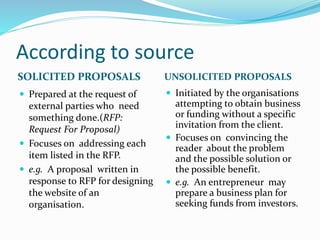
According to source
SOLICITED PROPOSALS UNSOLICITED PROPOSALS
 Prepared at the request of
external parties who need
something done.(RFP:
Request For Proposal)
 Focuses on addressing each
item listed in the RFP.
 e.g. A proposal written in
response to RFP for designing
the website of an
organisation.
 Initiated by the organisations
attempting to obtain business
or funding without a specific
invitation from the client.
 Focuses on convincing the
reader about the problem
and the possible solution or
the possible benefit.
 e.g. An entrepreneur may
prepare a business plan for
seeking funds from investors.
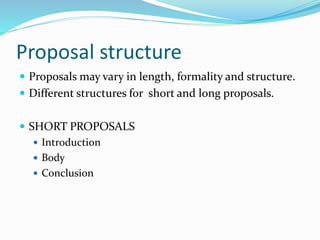
Proposal structure
 Proposals may vary in length, formality and structure.
 Different structures for short and long proposals.
 SHORT PROPOSALS
 Introduction
 Body
 Conclusion
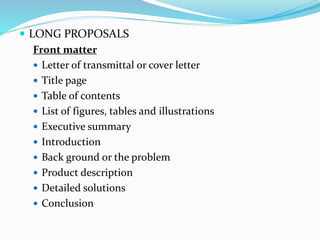
 LONG PROPOSALS
Front matter
 Letter of transmittal or cover letter
 Title page
 Table of contents
 List of figures, tables and illustrations
 Executive summary
 Introduction
 Back ground or the problem
 Product description
 Detailed solutions
 Conclusion
 Back Matter
 Glossary
 Appendix
 Bibliography

14.proposal writing

  • 2.
    Meaning  A typeof analytical report.  A document written to persuade the reader to follow a plan or course of action that you believe will solve a problem or fulfil a need.  Proposals are used to get products, plans or projects accepted by others.  A well written proposal  analyses the audience’s needs or a problem,  presents the solution to the problem,  persuades the audience that the solution provided is the best.
  • 3.
    Types of proposals Accordingto target audience According to their source  Internal  External  Solicited  unsolicited
  • 4.
    According to targetaudience INTERNAL EXTERNAL  Submitted to internal decision makers in the organisation for  Seeking approval for a project or course of action.  For requesting additional resources.  Submitted to decision makers outside the organisation such as potential clients and government officials soliciting approval for projects or funds. *External proposals are legally binding *They compete for clients business.
  • 5.
    According to source SOLICITEDPROPOSALS UNSOLICITED PROPOSALS  Prepared at the request of external parties who need something done.(RFP: Request For Proposal)  Focuses on addressing each item listed in the RFP.  e.g. A proposal written in response to RFP for designing the website of an organisation.  Initiated by the organisations attempting to obtain business or funding without a specific invitation from the client.  Focuses on convincing the reader about the problem and the possible solution or the possible benefit.  e.g. An entrepreneur may prepare a business plan for seeking funds from investors.
  • 6.
    Proposal structure  Proposalsmay vary in length, formality and structure.  Different structures for short and long proposals.  SHORT PROPOSALS  Introduction  Body  Conclusion
  • 7.
     LONG PROPOSALS Frontmatter  Letter of transmittal or cover letter  Title page  Table of contents  List of figures, tables and illustrations  Executive summary  Introduction  Back ground or the problem  Product description  Detailed solutions  Conclusion
  • 8.
     Back Matter Glossary  Appendix  Bibliography