Nonverbal
Communication
We speak only with our mouths,
but we communicate with our
whole bodies.
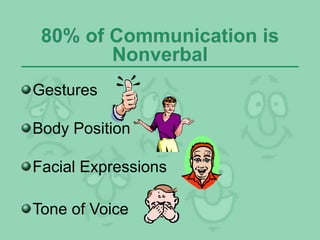
80% of Communication is
Nonverbal
Gestures
Body Position
Facial Expressions
Tone of Voice
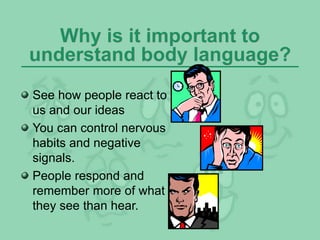
Why is it important to
understand body language?
See how people react to
us and our ideas
You can control nervous
habits and negative
signals.
People respond and
remember more of what
they see than hear.
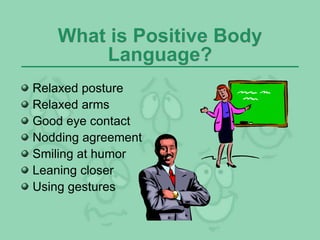
What is Positive Body
Language?
Relaxed posture
Relaxed arms
Good eye contact
Nodding agreement
Smiling at humor
Leaning closer
Using gestures
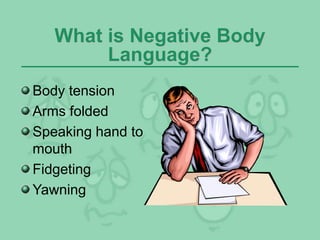
What is Negative Body
Language?
Body tension
Arms folded
Speaking hand to
mouth
Fidgeting
Yawning
Interpreting
Nonverbal Messages
Don't just look - see
Consider person's
normal physical behavior
Look for clusters of
signals, not just one
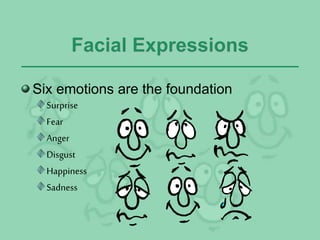
Facial Expressions
Six emotions are the foundation
Surprise
Fear
Anger
Disgust
Happiness
Sadness
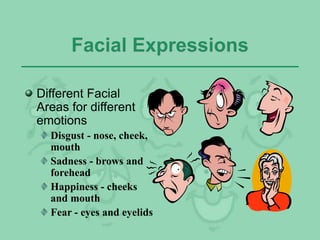
Facial Expressions
Different Facial
Areas for different
emotions
Disgust - nose, cheek,
mouth
Sadness - brows and
forehead
Happiness - cheeks
and mouth
Fear - eyes and eyelids
Tone of Voice
The pitch and timbre (distinctive tone) show the
true feelings
“Oh” can mean…
"You surprised me."
"I made a mistake."
"You're a pain in the neck!"
"You made me so happy!"
"I'm bored."
"I'm fascinated."
"I don't understand."
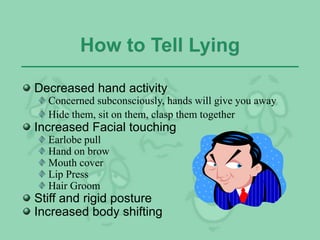
How to Tell Lying
Decreased hand activity
Concerned subconsciously, hands will give you away
Hide them, sit on them, clasp them together
Increased Facial touching
Earlobe pull
Hand on brow
Mouth cover
Lip Press
Hair Groom
Stiff and rigid posture
Increased body shifting
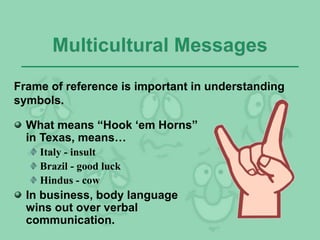
Multicultural Messages
What means “Hook ‘em Horns”
in Texas, means…
Italy - insult
Brazil - good luck
Hindus - cow
In business, body language
wins out over verbal
communication.
Frame of reference is important in understanding
symbols.
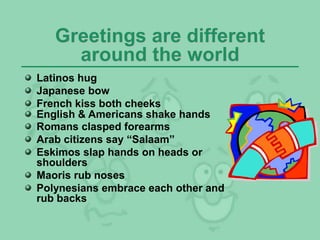
Greetings are different
around the world
Latinos hug
Japanese bow
French kiss both cheeks
English & Americans shake hands
Romans clasped forearms
Arab citizens say “Salaam”
Eskimos slap hands on heads or
shoulders
Maoris rub noses
Polynesians embrace each other and
rub backs
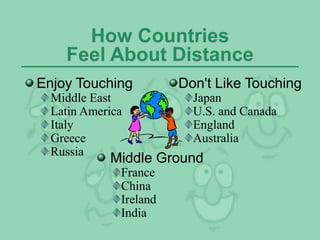
How Countries
Feel About Distance
Enjoy Touching
Middle East
Latin America
Italy
Greece
Russia
Don't Like Touching
Japan
U.S. and Canada
England
Australia
Middle Ground
France
China
Ireland
India
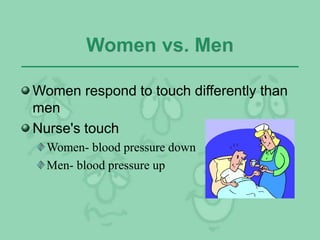
Women vs. Men
Women respond to touch differently than
men
Nurse's touch
Women- blood pressure down
Men- blood pressure up
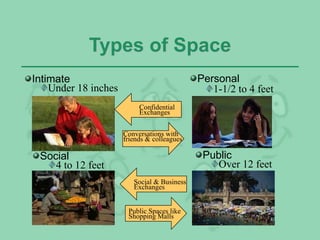
Types of Space
Personal
1-1/2 to 4 feet
Social
4 to 12 feet
Intimate
Under 18 inches
Public
Over 12 feet
Confidential
Exchanges
Conversations with
friends & colleagues
Social & Business
Exchanges
Public Spaces like
Shopping Malls
Nonverbal Communication
in the Workplace
"We talk with our vocal
chords, but we
communicate with our facial
expressions, our tone of
voice, our whole body,”
Psychologist Paul Ekman
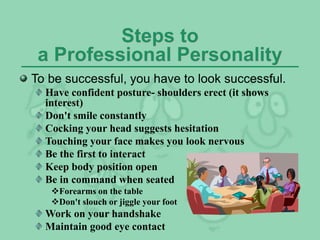
Steps to
a Professional Personality
To be successful, you have to look successful.
Have confident posture- shoulders erect (it shows
interest)
Don't smile constantly
Cocking your head suggests hesitation
Touching your face makes you look nervous
Be the first to interact
Keep body position open
Be in command when seated
Forearms on the table
Don't slouch or jiggle your foot
Work on your handshake
Maintain good eye contact
Recalling the Facts
What type of communication can you only get in
face-to-face meetings?
Which are you likely to believe–what you see or
hear?
Is body language the same worldwide?
How does space define the type of communication?
What type of nonverbal communication is the most
easily controlled?
How can you tell when someone is lying?
Are you always aware of your body language?
Should you always smile in business situations?
Look Back on Page 136 of textbook
Vocabulary
Nonverbal message
Body language
Tone of voice
Gesture
Personal space
Intimate distance
Personal distance
Social distance
Eye contact
List on Page 113 of textbook

Chapter 5 Nonverbal Communication

  • 1.
    Nonverbal Communication We speak onlywith our mouths, but we communicate with our whole bodies.
  • 2.
    80% of Communicationis Nonverbal Gestures Body Position Facial Expressions Tone of Voice
  • 3.
    Why is itimportant to understand body language? See how people react to us and our ideas You can control nervous habits and negative signals. People respond and remember more of what they see than hear.
  • 4.
    What is PositiveBody Language? Relaxed posture Relaxed arms Good eye contact Nodding agreement Smiling at humor Leaning closer Using gestures
  • 5.
    What is NegativeBody Language? Body tension Arms folded Speaking hand to mouth Fidgeting Yawning
  • 6.
    Interpreting Nonverbal Messages Don't justlook - see Consider person's normal physical behavior Look for clusters of signals, not just one
  • 7.
    Facial Expressions Six emotionsare the foundation Surprise Fear Anger Disgust Happiness Sadness
  • 8.
    Facial Expressions Different Facial Areasfor different emotions Disgust - nose, cheek, mouth Sadness - brows and forehead Happiness - cheeks and mouth Fear - eyes and eyelids
  • 9.
    Tone of Voice Thepitch and timbre (distinctive tone) show the true feelings “Oh” can mean… "You surprised me." "I made a mistake." "You're a pain in the neck!" "You made me so happy!" "I'm bored." "I'm fascinated." "I don't understand."
  • 10.
    How to TellLying Decreased hand activity Concerned subconsciously, hands will give you away Hide them, sit on them, clasp them together Increased Facial touching Earlobe pull Hand on brow Mouth cover Lip Press Hair Groom Stiff and rigid posture Increased body shifting
  • 11.
    Multicultural Messages What means“Hook ‘em Horns” in Texas, means… Italy - insult Brazil - good luck Hindus - cow In business, body language wins out over verbal communication. Frame of reference is important in understanding symbols.
  • 12.
    Greetings are different aroundthe world Latinos hug Japanese bow French kiss both cheeks English & Americans shake hands Romans clasped forearms Arab citizens say “Salaam” Eskimos slap hands on heads or shoulders Maoris rub noses Polynesians embrace each other and rub backs
  • 13.
    How Countries Feel AboutDistance Enjoy Touching Middle East Latin America Italy Greece Russia Don't Like Touching Japan U.S. and Canada England Australia Middle Ground France China Ireland India
  • 14.
    Women vs. Men Womenrespond to touch differently than men Nurse's touch Women- blood pressure down Men- blood pressure up
  • 15.
    Types of Space Personal 1-1/2to 4 feet Social 4 to 12 feet Intimate Under 18 inches Public Over 12 feet Confidential Exchanges Conversations with friends & colleagues Social & Business Exchanges Public Spaces like Shopping Malls
  • 16.
    Nonverbal Communication in theWorkplace "We talk with our vocal chords, but we communicate with our facial expressions, our tone of voice, our whole body,” Psychologist Paul Ekman
  • 17.
    Steps to a ProfessionalPersonality To be successful, you have to look successful. Have confident posture- shoulders erect (it shows interest) Don't smile constantly Cocking your head suggests hesitation Touching your face makes you look nervous Be the first to interact Keep body position open Be in command when seated Forearms on the table Don't slouch or jiggle your foot Work on your handshake Maintain good eye contact
  • 18.
    Recalling the Facts Whattype of communication can you only get in face-to-face meetings? Which are you likely to believe–what you see or hear? Is body language the same worldwide? How does space define the type of communication? What type of nonverbal communication is the most easily controlled? How can you tell when someone is lying? Are you always aware of your body language? Should you always smile in business situations? Look Back on Page 136 of textbook
  • 19.
    Vocabulary Nonverbal message Body language Toneof voice Gesture Personal space Intimate distance Personal distance Social distance Eye contact List on Page 113 of textbook