Faculty Induction Program
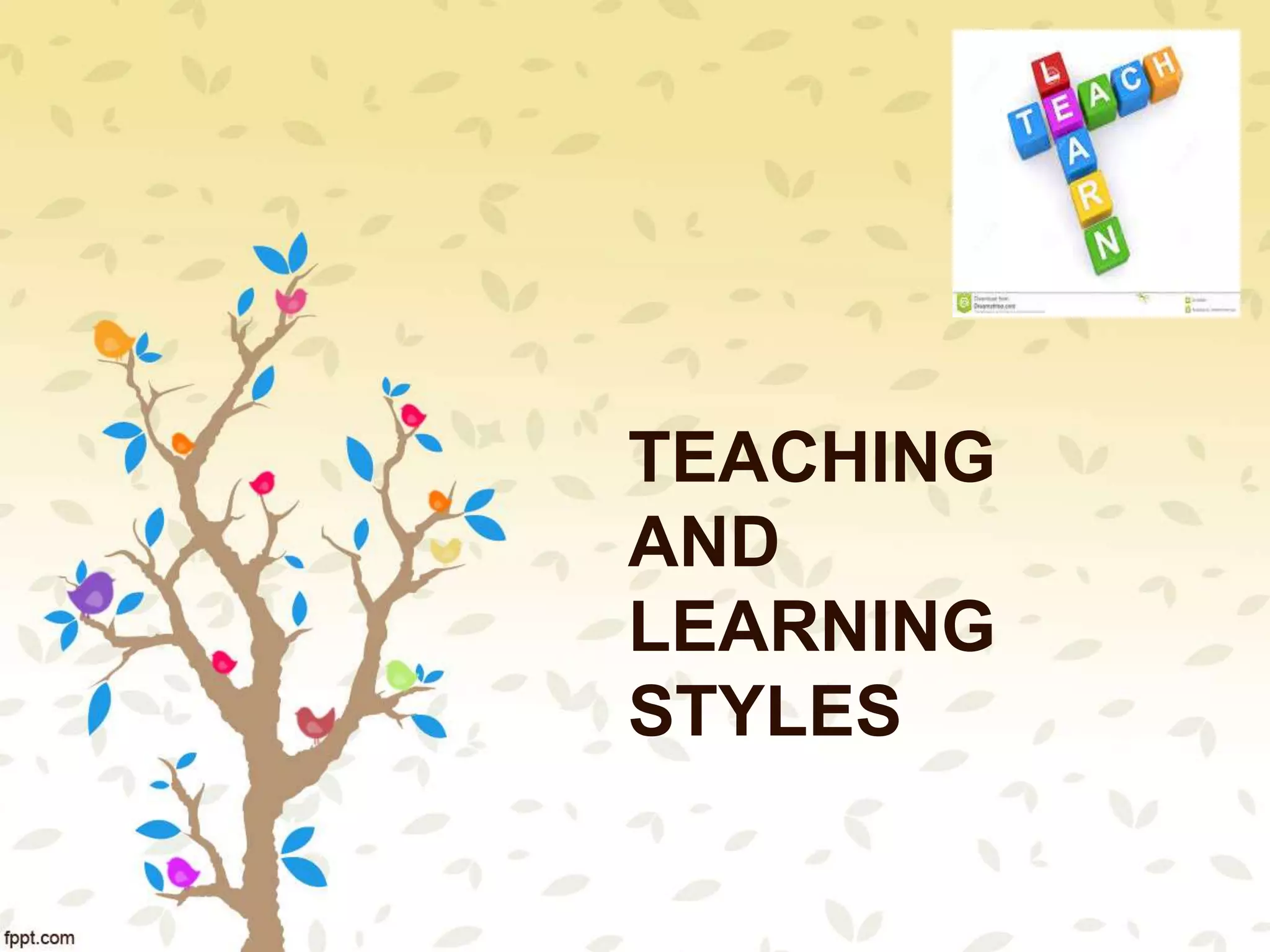
TEACHING
AND
LEARNING
STYLES
Objectives of the session
We all will-
• Understand Teaching Styles.
• Understand Learning Styles.
• Discuss why students have difficulty in
learning.
• Learn about matching teaching and
learning.
We are aware-
• No two teachers are alike, their style of teaching
is uniquely their own.
• An effective teaching style engages students in
the learning process and helps them develop
critical thinking skills.
What are Teaching Styles?
• A set of teaching tactics
-(Galton et al, 1980)
• Instructional format
-(Siedentop, 1991).
• the general pattern created by using a
particular set of strategies
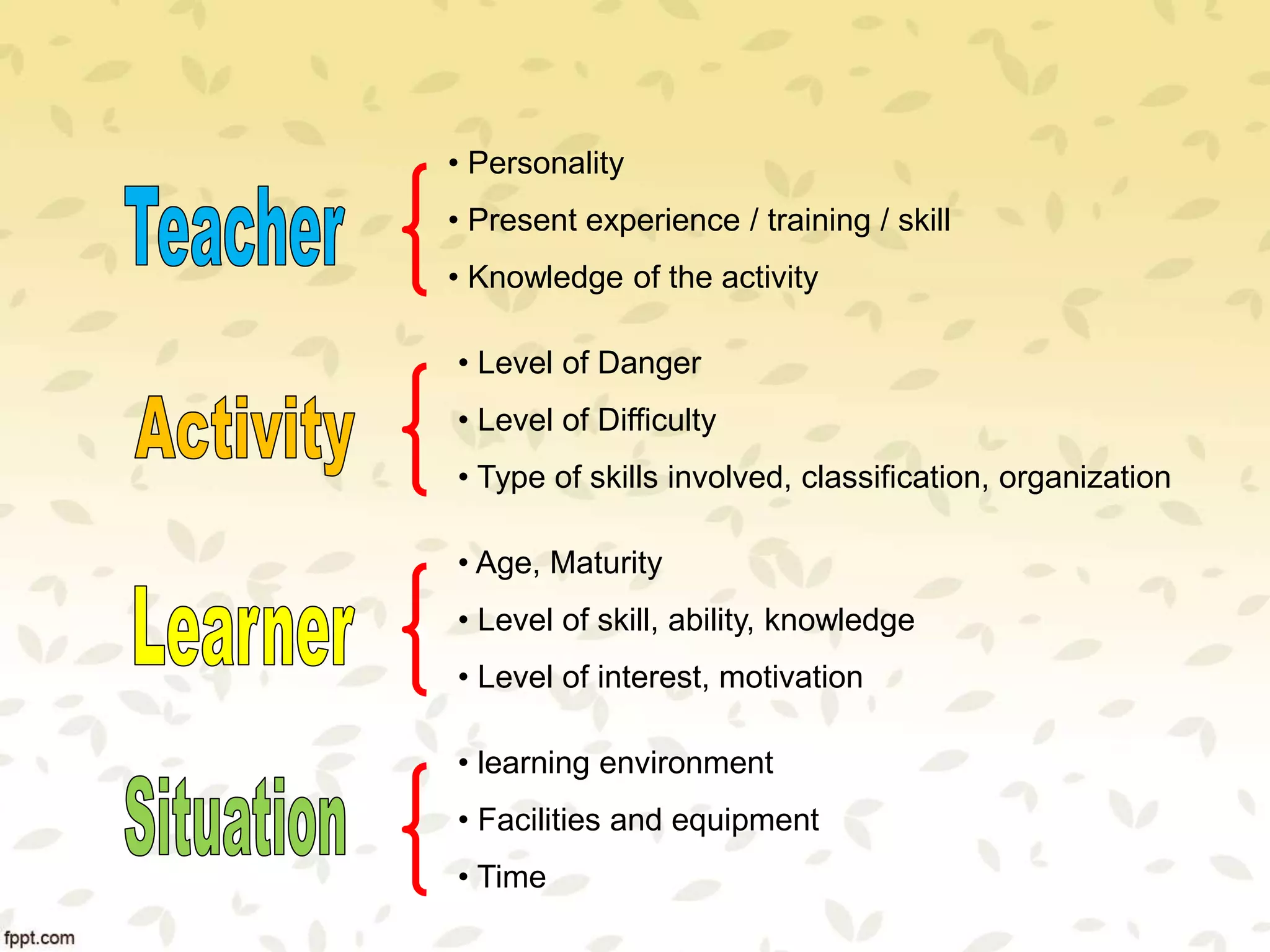
• Personality
• Present experience / training / skill
• Knowledge of the activity
• Level of Danger
• Level of Difficulty
• Type of skills involved, classification, organization
• Age, Maturity
• Level of skill, ability, knowledge
• Level of interest, motivation
• learning environment
• Facilities and equipment
• Time
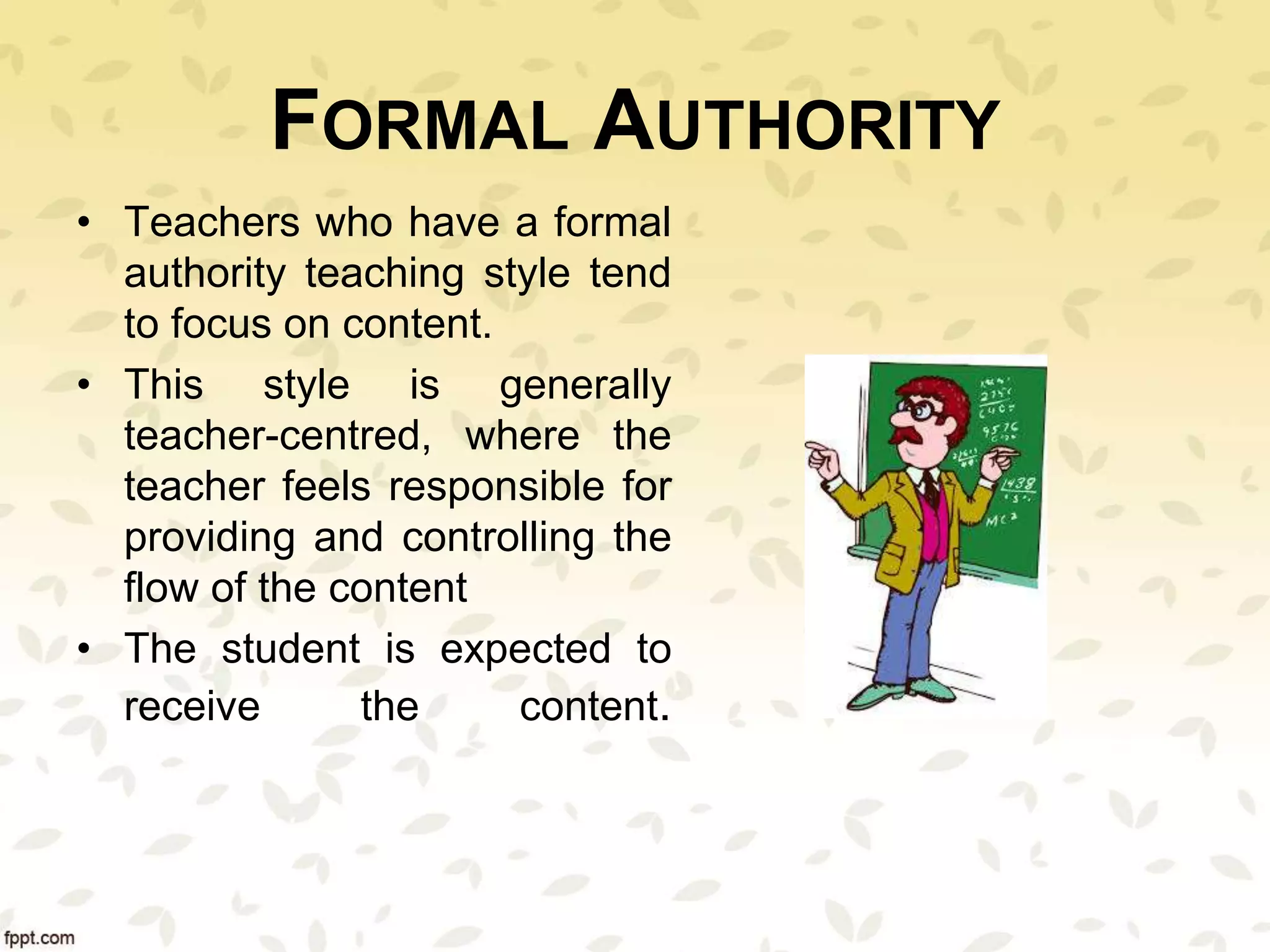
FORMAL AUTHORITY
• Teachers who have a formal
authority teaching style tend
to focus on content.
• This style is generally
teacher-centred, where the
teacher feels responsible for
providing and controlling the
flow of the content
• The student is expected to
receive the content.
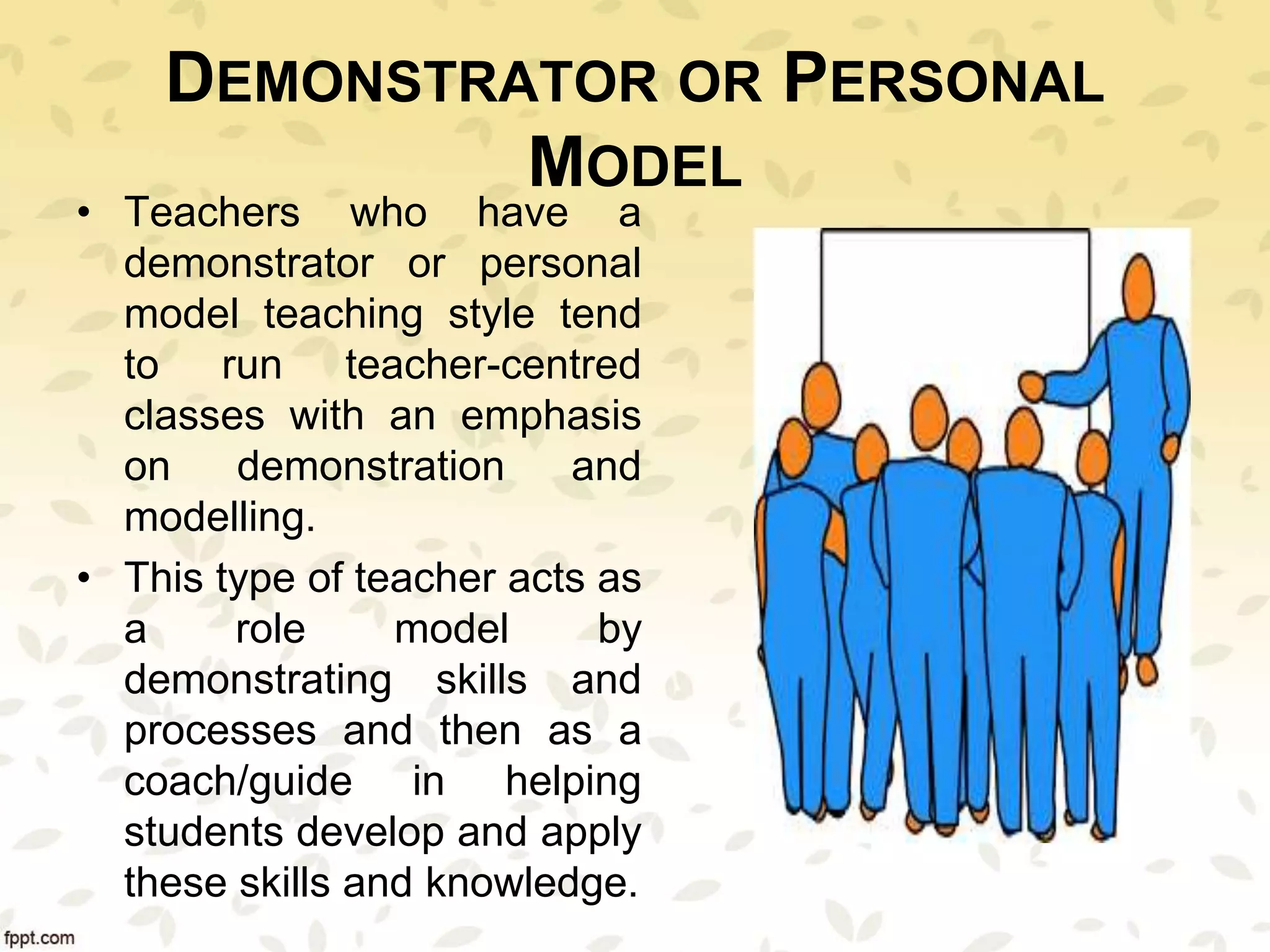
DEMONSTRATOR OR PERSONAL
MODEL
• Teachers who have a
demonstrator or personal
model teaching style tend
to run teacher-centred
classes with an emphasis
on demonstration and
modelling.
• This type of teacher acts as
a role model by
demonstrating skills and
processes and then as a
coach/guide in helping
students develop and apply
these skills and knowledge.
FACILITATOR
• Teachers who have a facilitator model
teaching style tend to focus on activities.
• This teaching style emphasizes student-
centred learning and there is much more
responsibility placed on the students to
take the initiative for meeting the demands
of various learning tasks.
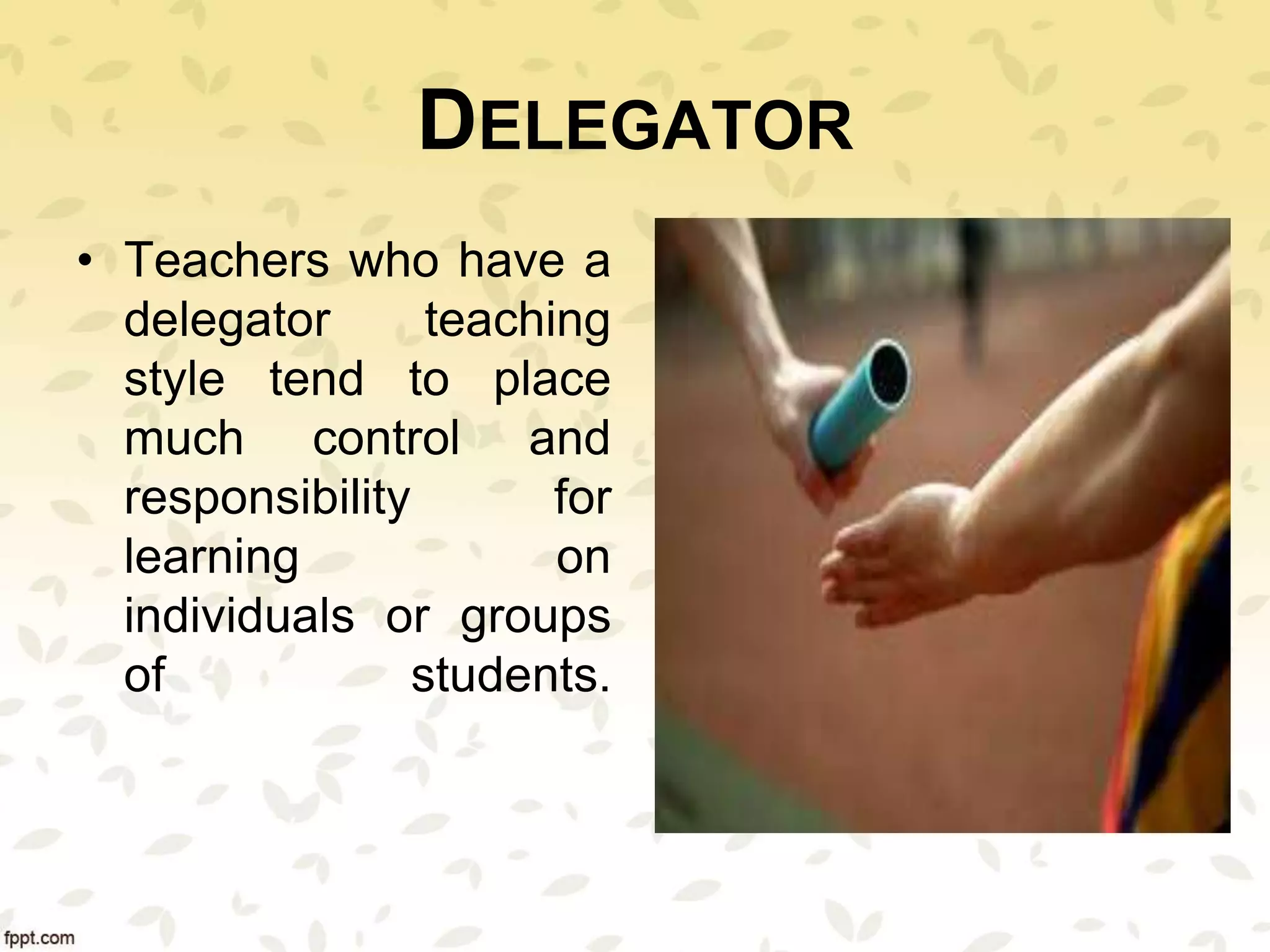
DELEGATOR
• Teachers who have a
delegator teaching
style tend to place
much control and
responsibility for
learning on
individuals or groups
of students.
• Learning is a process of acquiring knowledge or
skills through study, experience or teaching.
-www.wikipedia.org
• A change in neural function as a consequence
of experience is learning.
-www.medaus.com
What is a Learning Style?
• A preference to grasp the things.
• It is the way we perceive and process
things the best.
• We all have our own preferred method of
learning and that is our learning style.
Learning styles
• It refer to a range of competing and
contested theories that aim to account for
differences in individuals' learning.
• These theories propose that all people can
be classified according to their 'style' of
learning, although the various theories
present differing views on how the styles
should be defined and categorised.
• A common concept is that individuals differ
in how they learn.
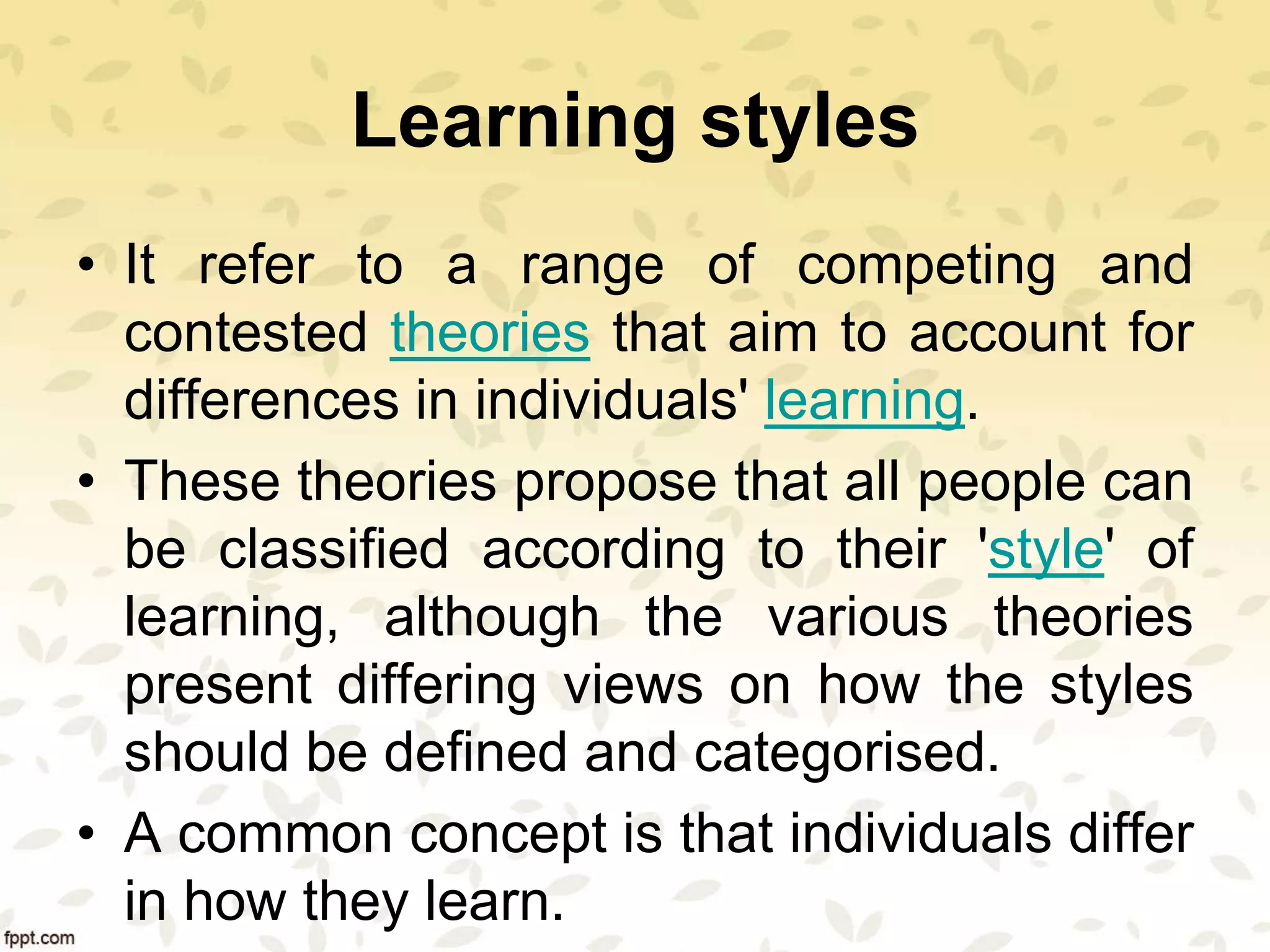
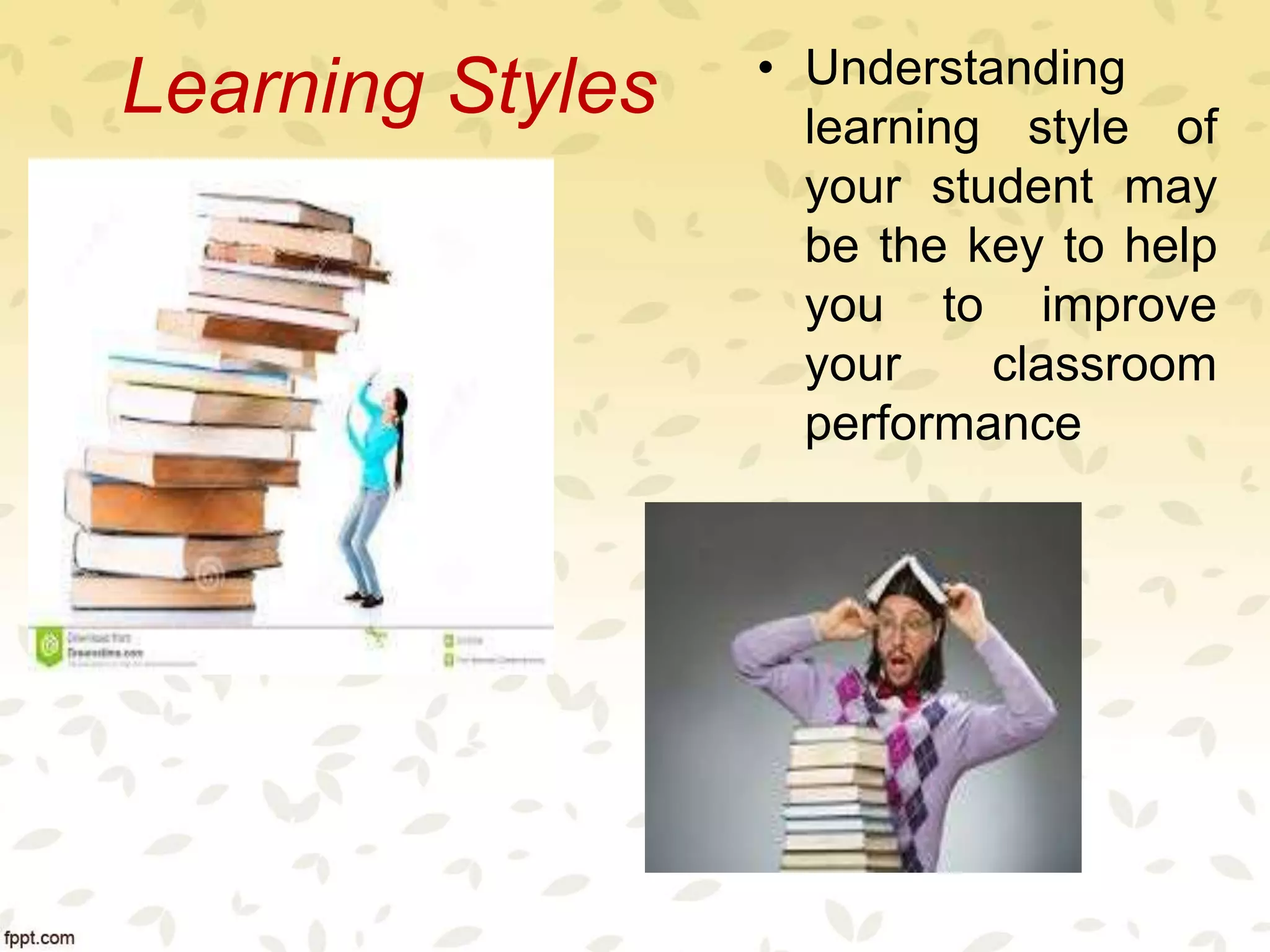
Learning Styles • Understanding
learning style of
your student may
be the key to help
you to improve
your classroom
performance
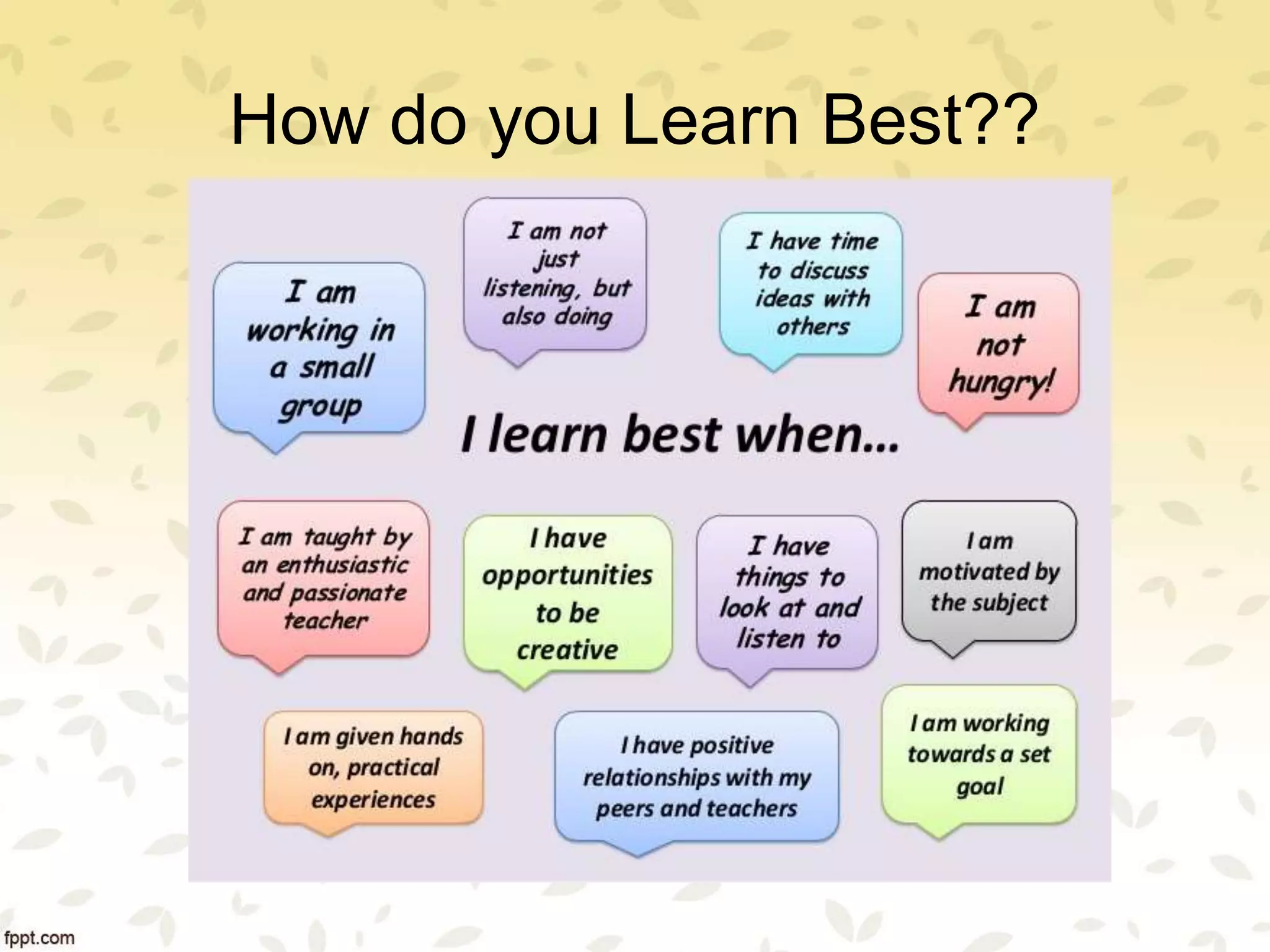
How do you Learn Best??
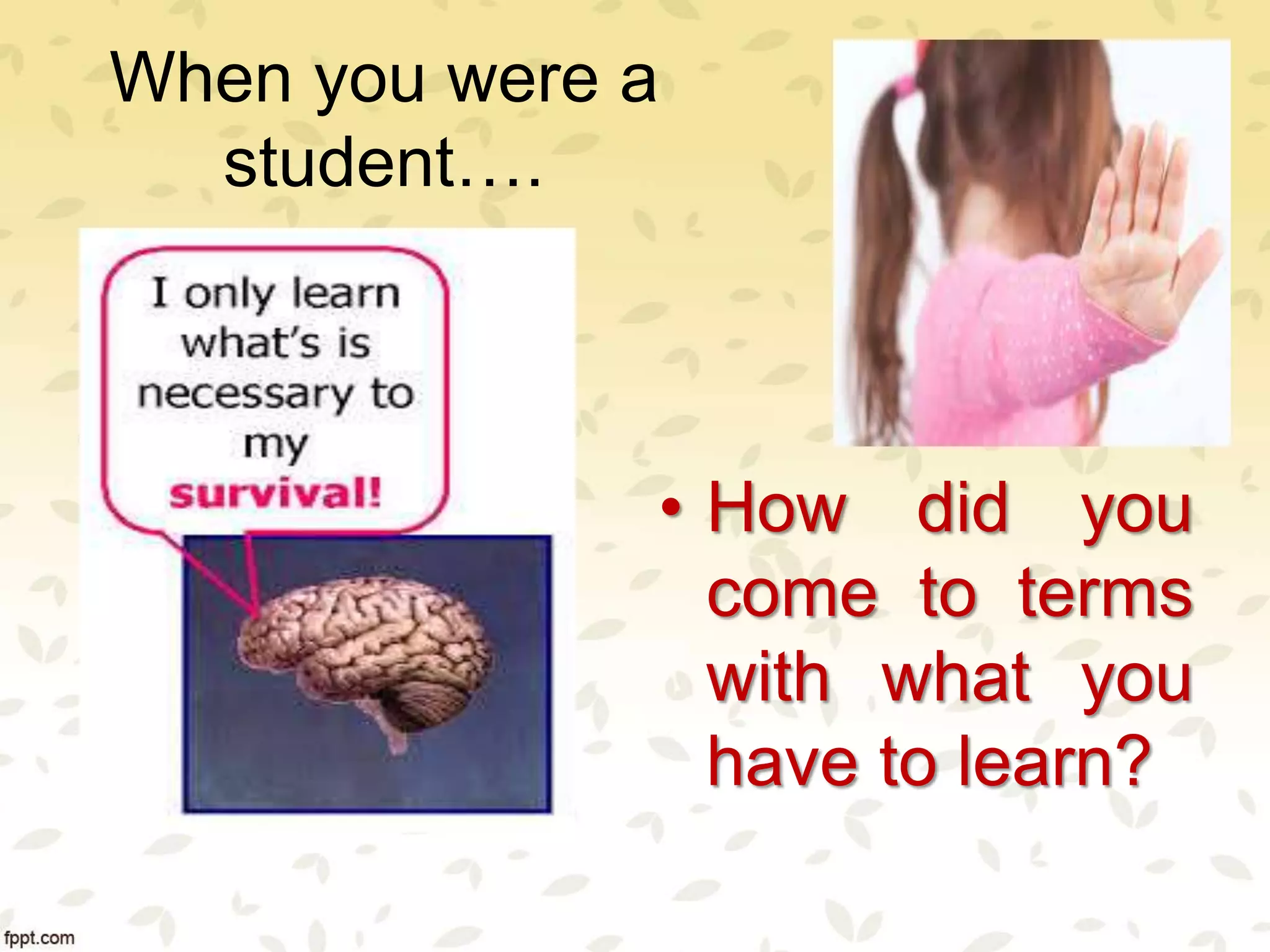
When you were a
student….
• How did you
come to terms
with what you
have to learn?
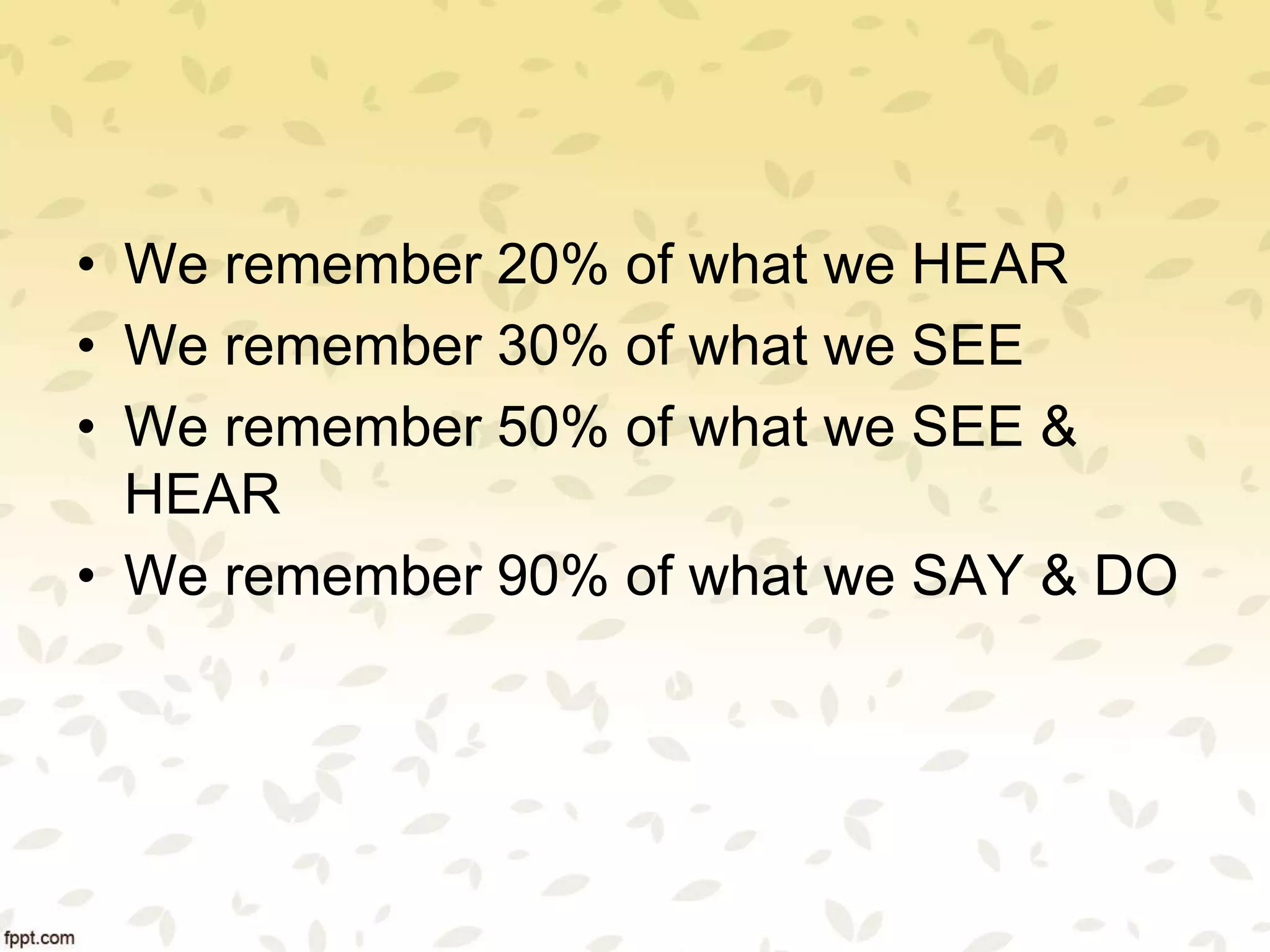
• We remember 20% of what we HEAR
• We remember 30% of what we SEE
• We remember 50% of what we SEE &
HEAR
• We remember 90% of what we SAY & DO
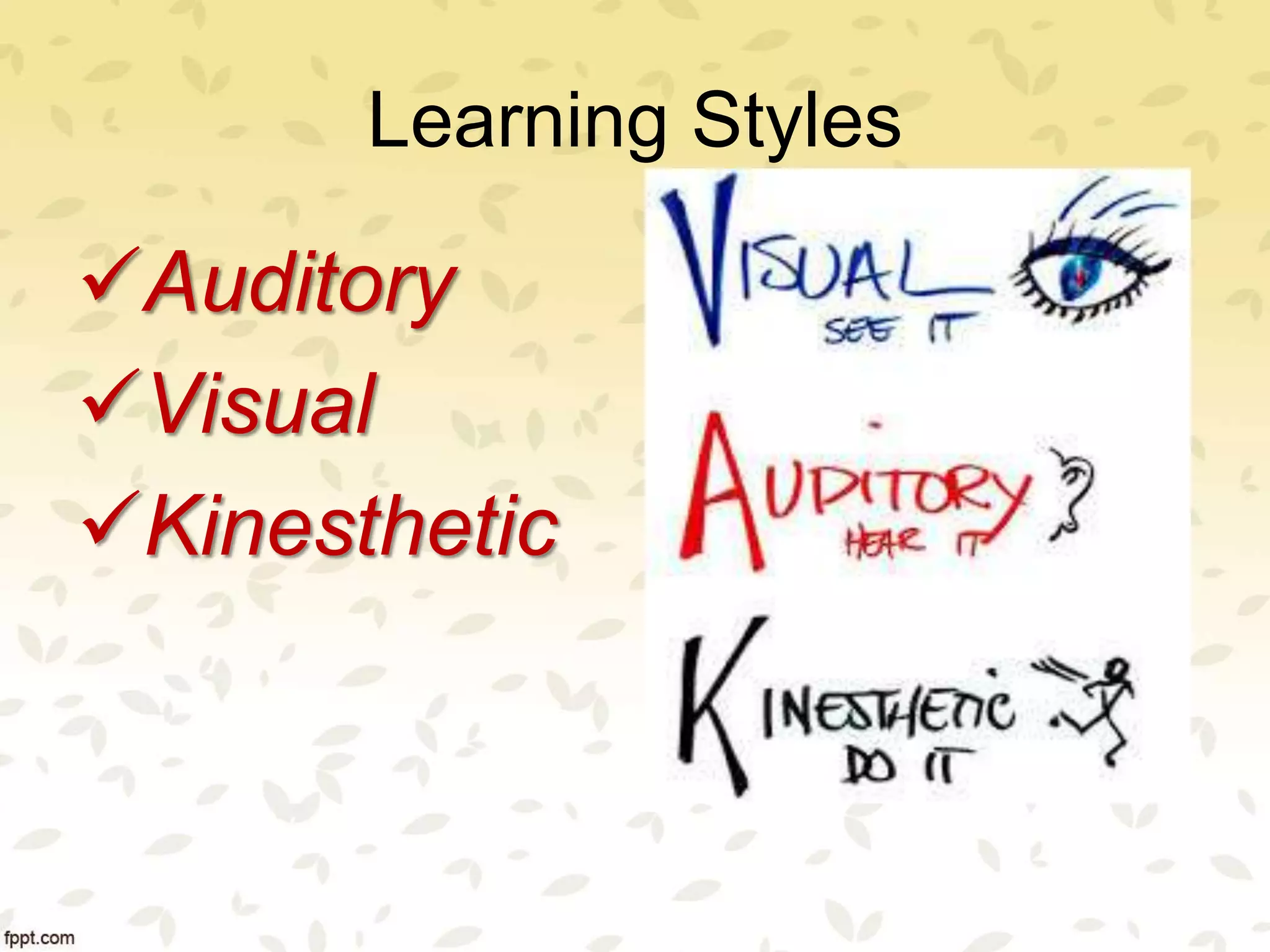
Learning Styles
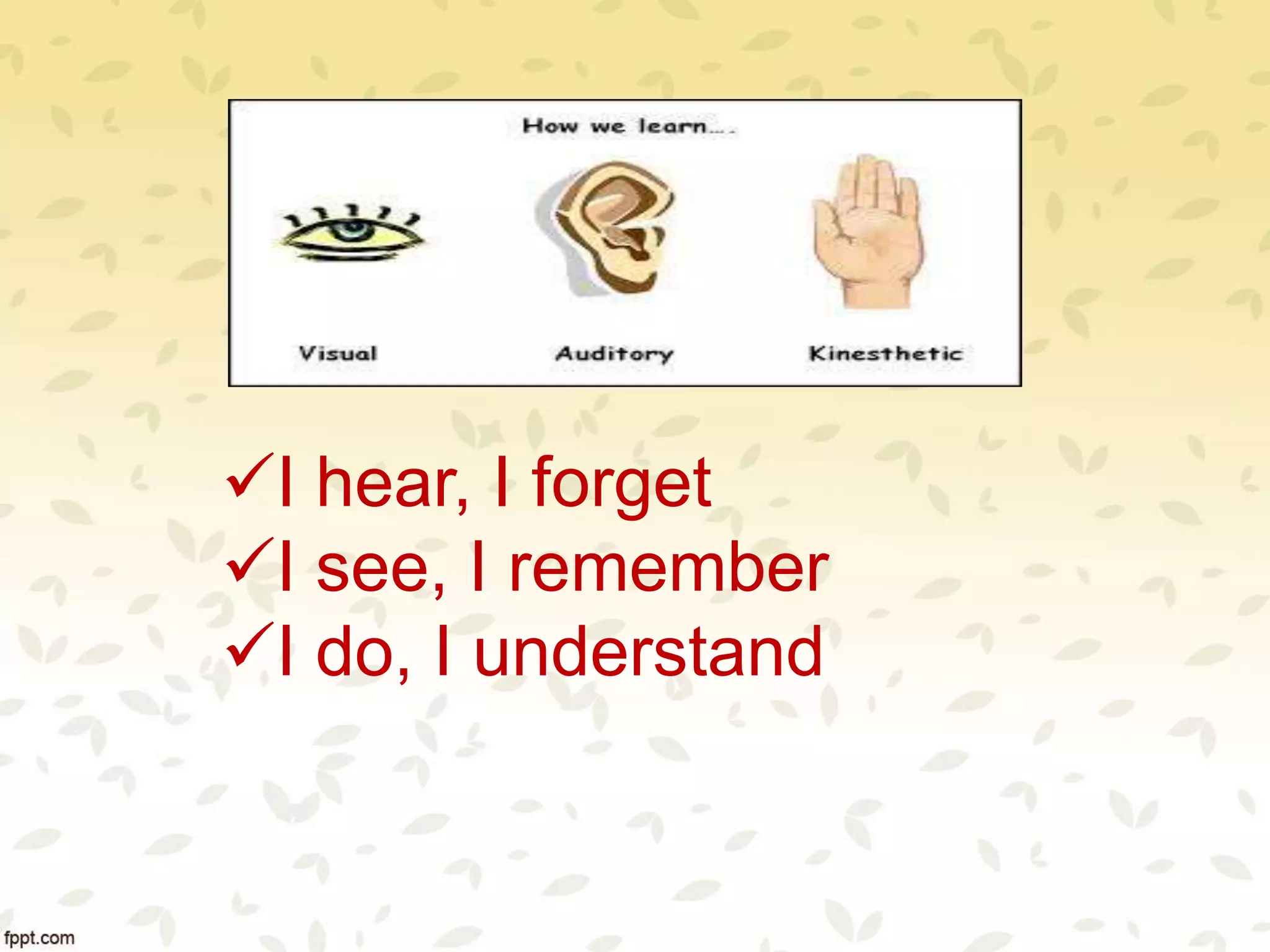
Auditory
Visual
Kinesthetic
I hear, I forget
I see, I remember
I do, I understand
Auditory learners
• Auditory learners often talk to
themselves. They also may move their lips
and read out loud. They may have
difficulty with reading and writing tasks.
They often do better talking to a colleague
or a tape recorder and hearing what was
said. To integrate this style into the
learning environment:
Visual learners
• Visual learners have two sub-channels—
linguistic and spatial. Learners who are visual-linguistic like
to learn through written language, such as reading and
writing tasks.
• They remember what has been written down, even if they
do not read it more than once.
• They like to write down directions and pay better attention
to lectures if they watch them. They easily visualize faces
and places by using their imagination and seldom get lost in
new surroundings.
• They remember what has been written down, even if they
do not read it more than once. They like to write down
directions and pay better attention to lectures if they watch
them.
Kinaesthetic learners
• Kinaesthetic learners do best while touching and
moving. It also has two sub-channels:
kinaesthetic (movement) and tactile (touch).
• They tend to lose concentration if there is little or
no external stimulation or movement.
• When listening to lectures they may want to take
notes for the sake of moving their hands.
• When reading, they like to scan the material first,
and then focus in on the details
• They typically use colour high lighters and take
notes by drawing pictures, diagrams, or
doodling.
Thank You

6 Teaching Style and Learning Style.ppt

  • 1.
  • 2.
  • 3.
    Objectives of thesession We all will- • Understand Teaching Styles. • Understand Learning Styles. • Discuss why students have difficulty in learning. • Learn about matching teaching and learning.
  • 4.
    We are aware- •No two teachers are alike, their style of teaching is uniquely their own. • An effective teaching style engages students in the learning process and helps them develop critical thinking skills.
  • 5.
    What are TeachingStyles? • A set of teaching tactics -(Galton et al, 1980) • Instructional format -(Siedentop, 1991). • the general pattern created by using a particular set of strategies
  • 6.
    • Personality • Presentexperience / training / skill • Knowledge of the activity • Level of Danger • Level of Difficulty • Type of skills involved, classification, organization • Age, Maturity • Level of skill, ability, knowledge • Level of interest, motivation • learning environment • Facilities and equipment • Time
  • 7.
    FORMAL AUTHORITY • Teacherswho have a formal authority teaching style tend to focus on content. • This style is generally teacher-centred, where the teacher feels responsible for providing and controlling the flow of the content • The student is expected to receive the content.
  • 8.
    DEMONSTRATOR OR PERSONAL MODEL •Teachers who have a demonstrator or personal model teaching style tend to run teacher-centred classes with an emphasis on demonstration and modelling. • This type of teacher acts as a role model by demonstrating skills and processes and then as a coach/guide in helping students develop and apply these skills and knowledge.
  • 9.
    FACILITATOR • Teachers whohave a facilitator model teaching style tend to focus on activities. • This teaching style emphasizes student- centred learning and there is much more responsibility placed on the students to take the initiative for meeting the demands of various learning tasks.
  • 10.
    DELEGATOR • Teachers whohave a delegator teaching style tend to place much control and responsibility for learning on individuals or groups of students.
  • 12.
    • Learning isa process of acquiring knowledge or skills through study, experience or teaching. -www.wikipedia.org • A change in neural function as a consequence of experience is learning. -www.medaus.com
  • 13.
    What is aLearning Style? • A preference to grasp the things. • It is the way we perceive and process things the best. • We all have our own preferred method of learning and that is our learning style.
  • 15.
    Learning styles • Itrefer to a range of competing and contested theories that aim to account for differences in individuals' learning. • These theories propose that all people can be classified according to their 'style' of learning, although the various theories present differing views on how the styles should be defined and categorised. • A common concept is that individuals differ in how they learn.
  • 16.
    Learning Styles •Understanding learning style of your student may be the key to help you to improve your classroom performance
  • 17.
    How do youLearn Best??
  • 18.
    When you werea student…. • How did you come to terms with what you have to learn?
  • 19.
    • We remember20% of what we HEAR • We remember 30% of what we SEE • We remember 50% of what we SEE & HEAR • We remember 90% of what we SAY & DO
  • 20.
  • 21.
    I hear, Iforget I see, I remember I do, I understand
  • 22.
    Auditory learners • Auditorylearners often talk to themselves. They also may move their lips and read out loud. They may have difficulty with reading and writing tasks. They often do better talking to a colleague or a tape recorder and hearing what was said. To integrate this style into the learning environment:
  • 23.
    Visual learners • Visuallearners have two sub-channels— linguistic and spatial. Learners who are visual-linguistic like to learn through written language, such as reading and writing tasks. • They remember what has been written down, even if they do not read it more than once. • They like to write down directions and pay better attention to lectures if they watch them. They easily visualize faces and places by using their imagination and seldom get lost in new surroundings. • They remember what has been written down, even if they do not read it more than once. They like to write down directions and pay better attention to lectures if they watch them.
  • 24.
    Kinaesthetic learners • Kinaestheticlearners do best while touching and moving. It also has two sub-channels: kinaesthetic (movement) and tactile (touch). • They tend to lose concentration if there is little or no external stimulation or movement. • When listening to lectures they may want to take notes for the sake of moving their hands. • When reading, they like to scan the material first, and then focus in on the details • They typically use colour high lighters and take notes by drawing pictures, diagrams, or doodling.
  • 25.