Latest
Approaches to
Learning
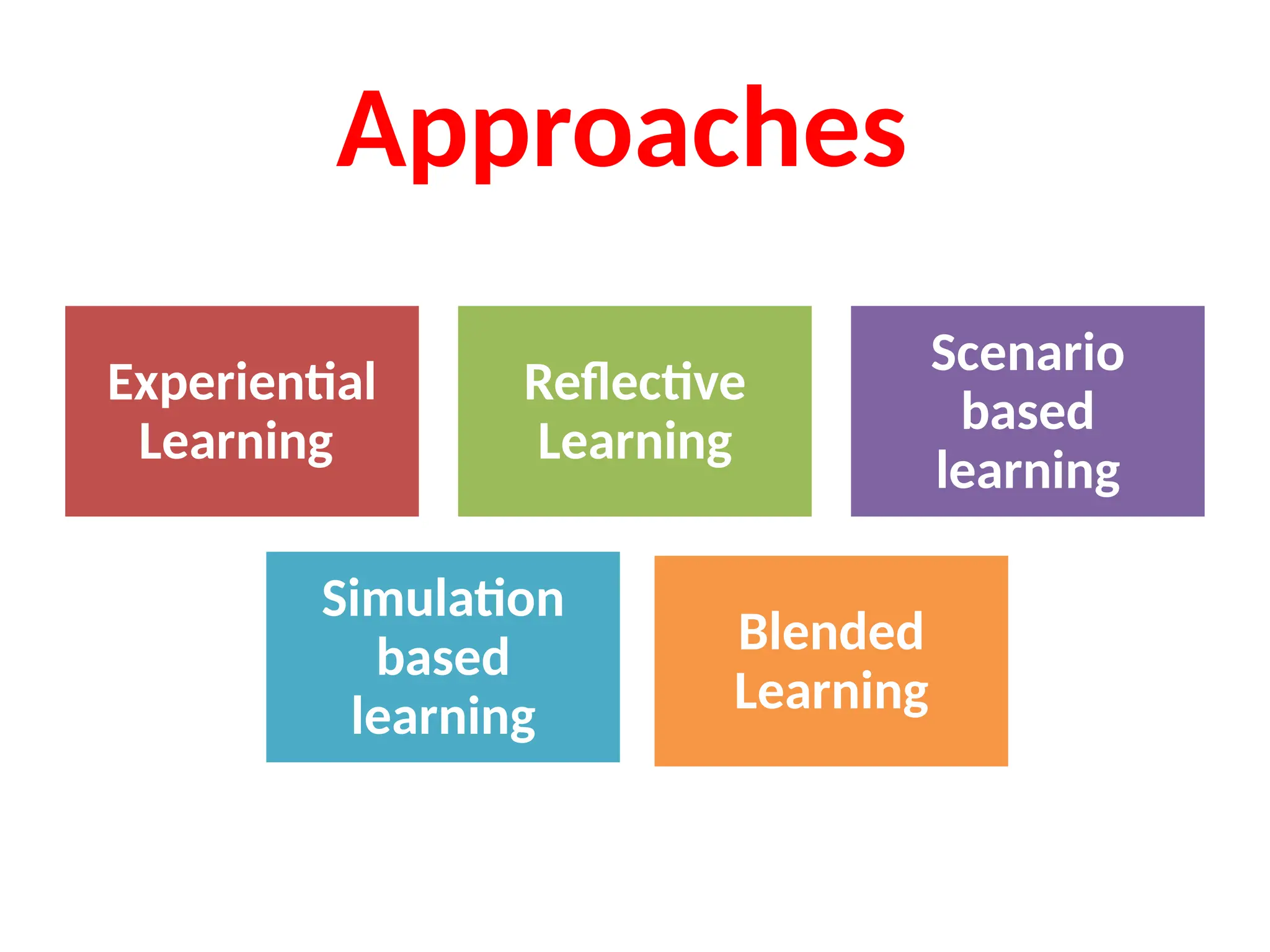
Approaches
Experiential
Learning
Reflective
Learning
Scenario
based
learning
Simulation
based
learning
Blended
Learning
Experiential Learning
• Experiential learning is a crucial component of
nursing education, as it allows students to
apply theoretical knowledge to real-life
situations, develop clinical skills, and cultivate
critical thinking abilities
• The proverb, "practice makes perfect" is apt in the context of
"Experiential Learning" which means the more one engages in an
activity, the more proficient they become at it.
• Experiential learning provides students with the opportunity to gain
hands-on experience in a particular field or subject.
• It helps students better understand the concepts they are learning,
and gives them the opportunity to apply them in a real-world setting.
• Experiential learning also helps students develop key life skills such as
problem-solving, communication, and collaboration.
Methods :
Clinical experience
Simulation
Reflective Practice
Inter professional Collaboration
Problem-Based Learning
Service Learning
Experiential Projects
• Experiential learning plays a vital role in
nursing education by bridging the gap
between theory and practice, preparing
students for the complexities of healthcare
delivery, and fostering professional
development.
• It enhances students' confidence,
competence, and readiness for clinical
practice upon graduation
Reflective learning
• Reflective learning is a critical component of nursing
education, as it enables nursing students to enhance their
clinical reasoning, problem-solving skills, and professional
development.
DEFINITION:
Reflective learning involves the process
of looking back on experiences, analyzing
them, and drawing meaning and insights from
those experiences.
In nursing education, it typically involves
students reflecting on their clinical experiences,
patient encounters, and learning activities.
IMPORTANCE :
Reflective learning is essential in nursing education
because ,
• It helps students integrate theory with practice,
• Identify areas for improvement, and
• Develop a deeper understanding of themselves as
learners and future professionals.
• It also fosters critical thinking and encourages
lifelong learning.
METHODS:
Reflective journaling
Group discussions
Case studies
Simulations and
Debriefing sessions.
Gibbs' Reflective Cycle
• Reflective learning is an integral part of nursing
education that,
– Promotes critical thinking,
– Professional growth, and
– Effective clinical practice.
• By fostering reflection, nursing programs can
prepare students to become competent,
compassionate, and reflective practitioners.
Scenario Based Learning
• Scenario-based learning is an effective
instructional approach widely used in nursing
education due to its ability to simulate real-world
situations and promote critical thinking, problem-
solving, and decision-making skills among student.
Methods :
Field visit
Case scenarios
Examples:
Managing patients with chronic illnesses such
as,
– Diabetes
– Heart disease,
– Providing post-operative care,
– Assisting with wound care,
– Handling patients requiring palliative care, and
– supporting patients with mental health conditions.
Simulation based Learning
• Utilizing high-fidelity simulators allows
nursing students to practice clinical skills and
decision-making in a safe environment.
• Simulations can mimic various patient
scenarios, including emergencies, to provide
hands-on experience without risk to real
patients
Definition
• Simulation-based education is the pedagogical
approach of providing students with the
opportunity to practice learned skills in real-
life situations.
Blended Learning
DEFINITION:
Blended learning in nursing education refers to an
educational approach that combines traditional face-to-
face classroom instruction with online learning activities.
• This hybrid model integrates the advantages
of both traditional and online learning,
providing students with a more flexible and
personalized learning experience.
Advantages
• Different people learn different things in different ways. ...
• Using multiple modalities dramatically reinforces engagement,
learning and retention. ...
• Learners can control the pace of their learning. ...
• Blended learning saves money. ...
Disadvantages
• Technical challenges. Access to technology and reliable internet
is necessary for blended learning, which can be a barrier for
some students.
• Self-discipline. ...
• Reduced face-to-face interaction.
Latest Approaches to Learning, NURSING EDUCATION

Latest Approaches to Learning, NURSING EDUCATION

  • 1.
  • 2.
  • 3.
    Experiential Learning • Experientiallearning is a crucial component of nursing education, as it allows students to apply theoretical knowledge to real-life situations, develop clinical skills, and cultivate critical thinking abilities
  • 4.
    • The proverb,"practice makes perfect" is apt in the context of "Experiential Learning" which means the more one engages in an activity, the more proficient they become at it. • Experiential learning provides students with the opportunity to gain hands-on experience in a particular field or subject. • It helps students better understand the concepts they are learning, and gives them the opportunity to apply them in a real-world setting. • Experiential learning also helps students develop key life skills such as problem-solving, communication, and collaboration.
  • 5.
    Methods : Clinical experience Simulation ReflectivePractice Inter professional Collaboration Problem-Based Learning Service Learning Experiential Projects
  • 7.
    • Experiential learningplays a vital role in nursing education by bridging the gap between theory and practice, preparing students for the complexities of healthcare delivery, and fostering professional development. • It enhances students' confidence, competence, and readiness for clinical practice upon graduation
  • 8.
    Reflective learning • Reflectivelearning is a critical component of nursing education, as it enables nursing students to enhance their clinical reasoning, problem-solving skills, and professional development.
  • 9.
    DEFINITION: Reflective learning involvesthe process of looking back on experiences, analyzing them, and drawing meaning and insights from those experiences. In nursing education, it typically involves students reflecting on their clinical experiences, patient encounters, and learning activities.
  • 10.
    IMPORTANCE : Reflective learningis essential in nursing education because , • It helps students integrate theory with practice, • Identify areas for improvement, and • Develop a deeper understanding of themselves as learners and future professionals. • It also fosters critical thinking and encourages lifelong learning.
  • 11.
    METHODS: Reflective journaling Group discussions Casestudies Simulations and Debriefing sessions.
  • 12.
  • 13.
    • Reflective learningis an integral part of nursing education that, – Promotes critical thinking, – Professional growth, and – Effective clinical practice. • By fostering reflection, nursing programs can prepare students to become competent, compassionate, and reflective practitioners.
  • 14.
    Scenario Based Learning •Scenario-based learning is an effective instructional approach widely used in nursing education due to its ability to simulate real-world situations and promote critical thinking, problem- solving, and decision-making skills among student. Methods : Field visit Case scenarios
  • 15.
    Examples: Managing patients withchronic illnesses such as, – Diabetes – Heart disease, – Providing post-operative care, – Assisting with wound care, – Handling patients requiring palliative care, and – supporting patients with mental health conditions.
  • 16.
    Simulation based Learning •Utilizing high-fidelity simulators allows nursing students to practice clinical skills and decision-making in a safe environment. • Simulations can mimic various patient scenarios, including emergencies, to provide hands-on experience without risk to real patients
  • 17.
    Definition • Simulation-based educationis the pedagogical approach of providing students with the opportunity to practice learned skills in real- life situations.
  • 21.
    Blended Learning DEFINITION: Blended learningin nursing education refers to an educational approach that combines traditional face-to- face classroom instruction with online learning activities.
  • 22.
    • This hybridmodel integrates the advantages of both traditional and online learning, providing students with a more flexible and personalized learning experience.
  • 23.
    Advantages • Different peoplelearn different things in different ways. ... • Using multiple modalities dramatically reinforces engagement, learning and retention. ... • Learners can control the pace of their learning. ... • Blended learning saves money. ... Disadvantages • Technical challenges. Access to technology and reliable internet is necessary for blended learning, which can be a barrier for some students. • Self-discipline. ... • Reduced face-to-face interaction.