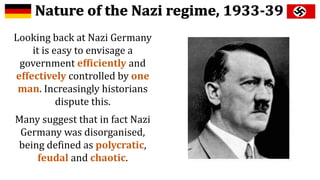
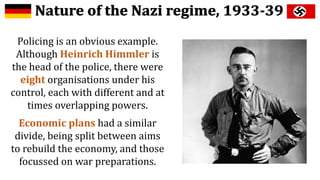
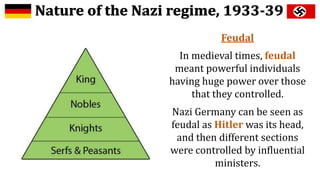
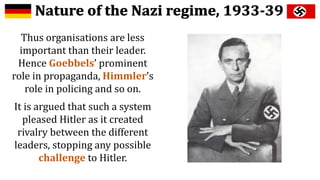
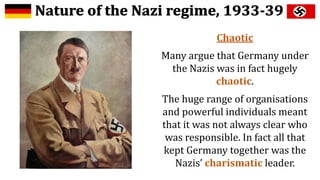
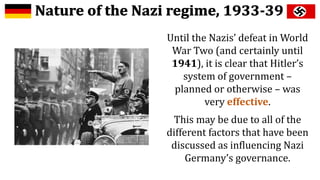
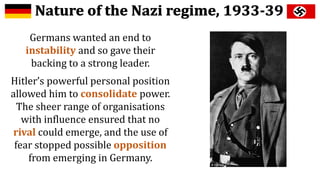
Nazi Germany is characterized as a polycratic, feudal, and chaotic government rather than a streamlined dictatorship under Hitler's sole control. Historians argue that multiple leaders and organizations operated with overlapping powers, creating rivalry that prevented challenges to Hitler's authority, and leading to a complex structure that resulted in confusion and lack of clear responsibility. This intricate governance, coupled with a strong public desire for stability and Hitler's consolidation of power, made the regime effective until its defeat in World War II.