‘Hitler myth’,
propaganda
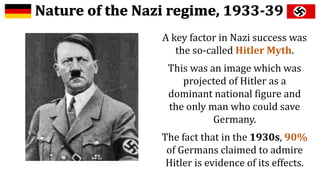
A key factor in Nazi success was
the so-called Hitler Myth.
This was an image which was
projected of Hitler as a
dominant national figure and
the only man who could save
Germany.
The fact that in the 1930s, 90%
of Germans claimed to admire
Hitler is evidence of its effects.
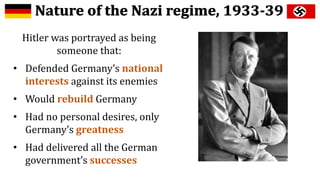
Hitler was portrayed as being
someone that:
• Defended Germany’s national
interests against its enemies
• Would rebuild Germany
• Had no personal desires, only
Germany’s greatness
• Had delivered all the German
government’s successes
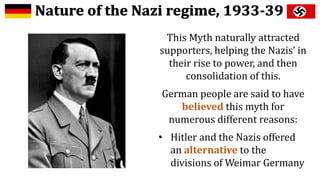
This Myth naturally attracted
supporters, helping the Nazis’ in
their rise to power, and then
consolidation of this.
German people are said to have
believed this myth for
numerous different reasons:
• Hitler and the Nazis offered
an alternative to the
divisions of Weimar Germany
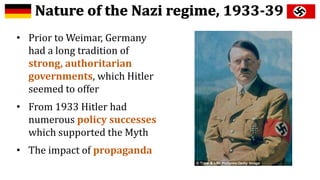
• Prior to Weimar, Germany
had a long tradition of
strong, authoritarian
governments, which Hitler
seemed to offer
• From 1933 Hitler had
numerous policy successes
which supported the Myth
• The impact of propaganda
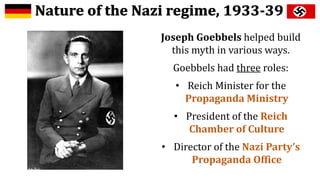
Joseph Goebbels helped build
this myth in various ways.
Goebbels had three roles:
• Reich Minister for the
Propaganda Ministry
• President of the Reich
Chamber of Culture
• Director of the Nazi Party’s
Propaganda Office
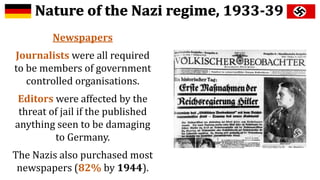
Newspapers
Journalists were all required
to be members of government
controlled organisations.
Editors were affected by the
threat of jail if the published
anything seen to be damaging
to Germany.
The Nazis also purchased most
newspapers (82% by 1944).
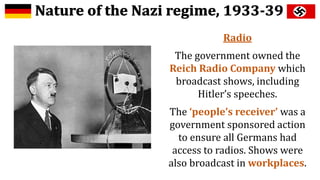
Radio
The government owned the
Reich Radio Company which
broadcast shows, including
Hitler’s speeches.
The ‘people’s receiver’ was a
government sponsored action
to ensure all Germans had
access to radios. Shows were
also broadcast in workplaces.
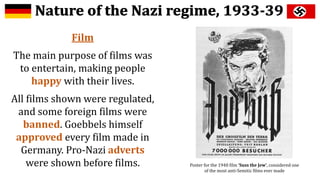
Film
The main purpose of films was
to entertain, making people
happy with their lives.
All films shown were regulated,
and some foreign films were
banned. Goebbels himself
approved every film made in
Germany. Pro-Nazi adverts
were shown before films. Poster for the 1940 film ‘Suss the Jew’, considered one
of the most anti-Semitic films ever made
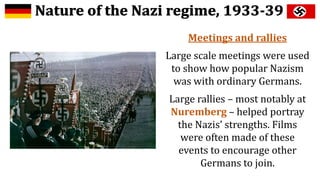
Meetings and rallies
Large scale meetings were used
to show how popular Nazism
was with ordinary Germans.
Large rallies – most notably at
Nuremberg – helped portray
the Nazis’ strengths. Films
were often made of these
events to encourage other
Germans to join.
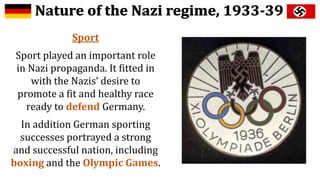
Sport
Sport played an important role
in Nazi propaganda. It fitted in
with the Nazis’ desire to
promote a fit and healthy race
ready to defend Germany.
In addition German sporting
successes portrayed a strong
and successful nation, including
boxing and the Olympic Games.
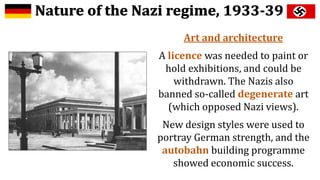
Art and architecture
A licence was needed to paint or
hold exhibitions, and could be
withdrawn. The Nazis also
banned so-called degenerate art
(which opposed Nazi views).
New design styles were used to
portray German strength, and the
autobahn building programme
showed economic success.
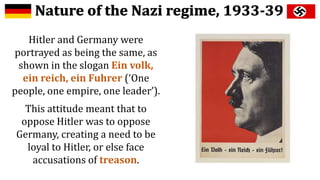
Hitler and Germany were
portrayed as being the same, as
shown in the slogan Ein volk,
ein reich, ein Fuhrer (‘One
people, one empire, one leader’).
This attitude meant that to
oppose Hitler was to oppose
Germany, creating a need to be
loyal to Hitler, or else face
accusations of treason.
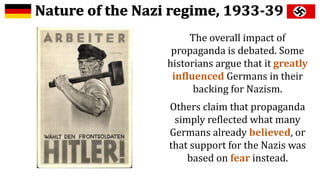
The overall impact of
propaganda is debated. Some
historians argue that it greatly
influenced Germans in their
backing for Nazism.
Others claim that propaganda
simply reflected what many
Germans already believed, or
that support for the Nazis was
based on fear instead.
Historians’ views
• ZAB Zeman (1964): the Nazis’ phenomenal growth “was due
to the skilful exploitation of propaganda techniques.”
• Richard J Evans (2005): The Hitler cult was built by Joseph
Goebbels' ministry using the state’s full resources.
• Neil Gregor (2005): “the function of propaganda was not to
dupe, but to mobilise what was already latent.”
• Ian Kershaw: “when Hitler started to believe his own myth it
marked the beginning of the end of the Third Reich.”

Nazi Germany - hitler myth, propaganda

  • 1.
  • 2.
    A key factorin Nazi success was the so-called Hitler Myth. This was an image which was projected of Hitler as a dominant national figure and the only man who could save Germany. The fact that in the 1930s, 90% of Germans claimed to admire Hitler is evidence of its effects.
  • 3.
    Hitler was portrayedas being someone that: • Defended Germany’s national interests against its enemies • Would rebuild Germany • Had no personal desires, only Germany’s greatness • Had delivered all the German government’s successes
  • 4.
    This Myth naturallyattracted supporters, helping the Nazis’ in their rise to power, and then consolidation of this. German people are said to have believed this myth for numerous different reasons: • Hitler and the Nazis offered an alternative to the divisions of Weimar Germany
  • 5.
    • Prior toWeimar, Germany had a long tradition of strong, authoritarian governments, which Hitler seemed to offer • From 1933 Hitler had numerous policy successes which supported the Myth • The impact of propaganda
  • 6.
    Joseph Goebbels helpedbuild this myth in various ways. Goebbels had three roles: • Reich Minister for the Propaganda Ministry • President of the Reich Chamber of Culture • Director of the Nazi Party’s Propaganda Office
  • 7.
    Newspapers Journalists were allrequired to be members of government controlled organisations. Editors were affected by the threat of jail if the published anything seen to be damaging to Germany. The Nazis also purchased most newspapers (82% by 1944).
  • 8.
    Radio The government ownedthe Reich Radio Company which broadcast shows, including Hitler’s speeches. The ‘people’s receiver’ was a government sponsored action to ensure all Germans had access to radios. Shows were also broadcast in workplaces.
  • 9.
    Film The main purposeof films was to entertain, making people happy with their lives. All films shown were regulated, and some foreign films were banned. Goebbels himself approved every film made in Germany. Pro-Nazi adverts were shown before films. Poster for the 1940 film ‘Suss the Jew’, considered one of the most anti-Semitic films ever made
  • 10.
    Meetings and rallies Largescale meetings were used to show how popular Nazism was with ordinary Germans. Large rallies – most notably at Nuremberg – helped portray the Nazis’ strengths. Films were often made of these events to encourage other Germans to join.
  • 11.
    Sport Sport played animportant role in Nazi propaganda. It fitted in with the Nazis’ desire to promote a fit and healthy race ready to defend Germany. In addition German sporting successes portrayed a strong and successful nation, including boxing and the Olympic Games.
  • 12.
    Art and architecture Alicence was needed to paint or hold exhibitions, and could be withdrawn. The Nazis also banned so-called degenerate art (which opposed Nazi views). New design styles were used to portray German strength, and the autobahn building programme showed economic success.
  • 13.
    Hitler and Germanywere portrayed as being the same, as shown in the slogan Ein volk, ein reich, ein Fuhrer (‘One people, one empire, one leader’). This attitude meant that to oppose Hitler was to oppose Germany, creating a need to be loyal to Hitler, or else face accusations of treason.
  • 14.
    The overall impactof propaganda is debated. Some historians argue that it greatly influenced Germans in their backing for Nazism. Others claim that propaganda simply reflected what many Germans already believed, or that support for the Nazis was based on fear instead.
  • 15.
    Historians’ views • ZABZeman (1964): the Nazis’ phenomenal growth “was due to the skilful exploitation of propaganda techniques.” • Richard J Evans (2005): The Hitler cult was built by Joseph Goebbels' ministry using the state’s full resources. • Neil Gregor (2005): “the function of propaganda was not to dupe, but to mobilise what was already latent.” • Ian Kershaw: “when Hitler started to believe his own myth it marked the beginning of the end of the Third Reich.”