Youth and
educational
policies
Hitler’s goal was to build a
Thousand Year Reich. A key
part of the Nazis’ plans was to
win the support of young
people, to continue the regime
through the generations.
Nazi youth actions targeted in
children in education and free
time as well, regardless of
what parents wanted.
Boys and girls were generally
divided into different groups,
reflecting the Nazis’ views on
the roles of men and women.
Boys’ groups were focused on
creating strong young men to
become workers and soldiers.
Girls’ groups aimed to
produce the mothers and
wives of the future.
Boys joined three groups:
• 6-10 - Cubs
• 10-14 – Young German Boys
• 14-18 – Hitler Youth
Once they were men, German
males would join organisations
such as the army, German
Labour Front or German
Students’ League.
Girls joined three groups:
• 10-14 – Young Girls
• 14-18 – League of German Maidens
• 18-21 – Faith and Beauty
Once they were women, German
females occasionally joined the German
Labour Front or German Students’
League, but were encouraged towards
the Nazi Women’s Organisation.
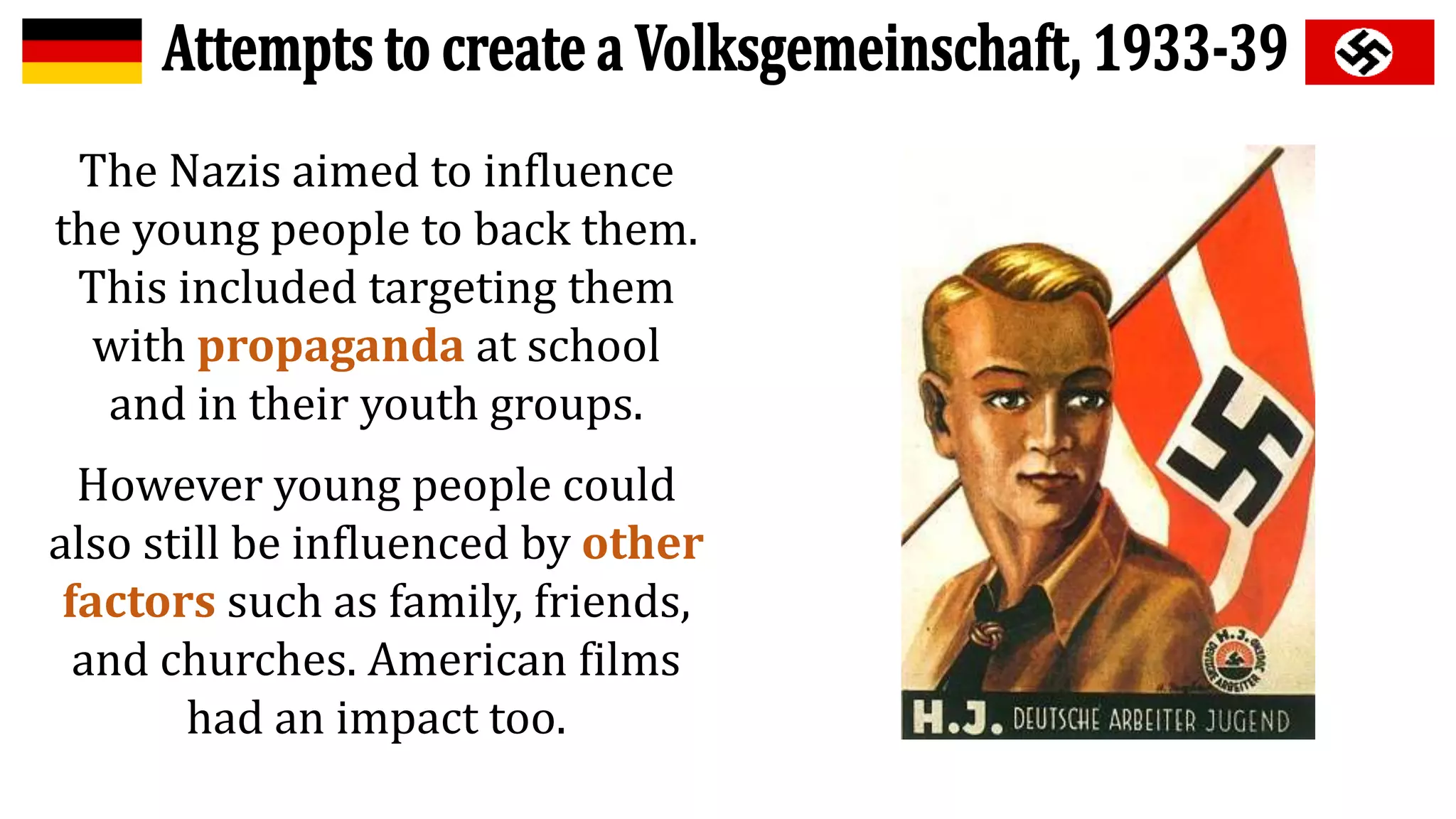
The Nazis aimed to influence
the young people to back them.
This included targeting them
with propaganda at school
and in their youth groups.
However young people could
also still be influenced by other
factors such as family, friends,
and churches. American films
had an impact too.
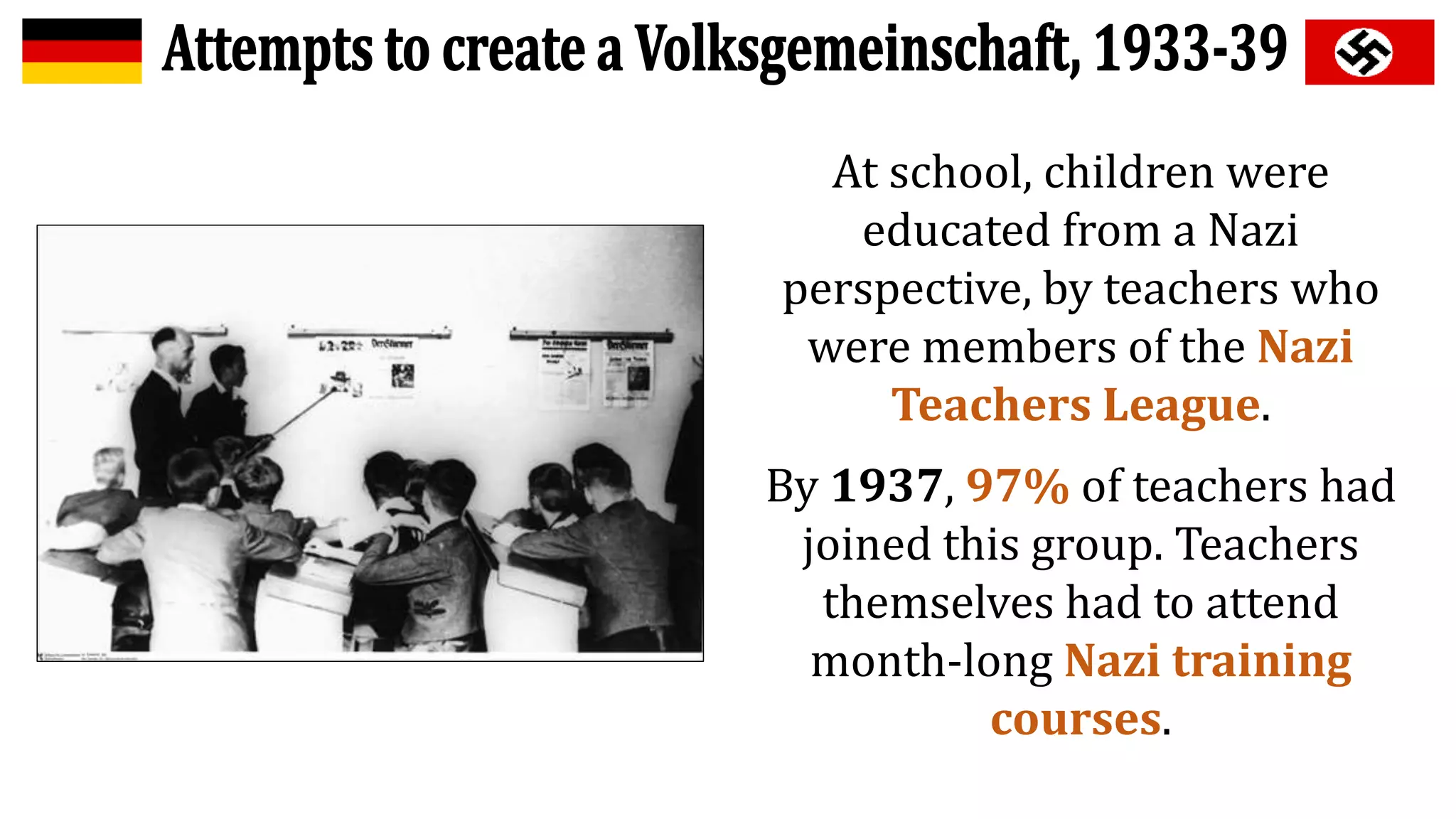
At school, children were
educated from a Nazi
perspective, by teachers who
were members of the Nazi
Teachers League.
By 1937, 97% of teachers had
joined this group. Teachers
themselves had to attend
month-long Nazi training
courses.
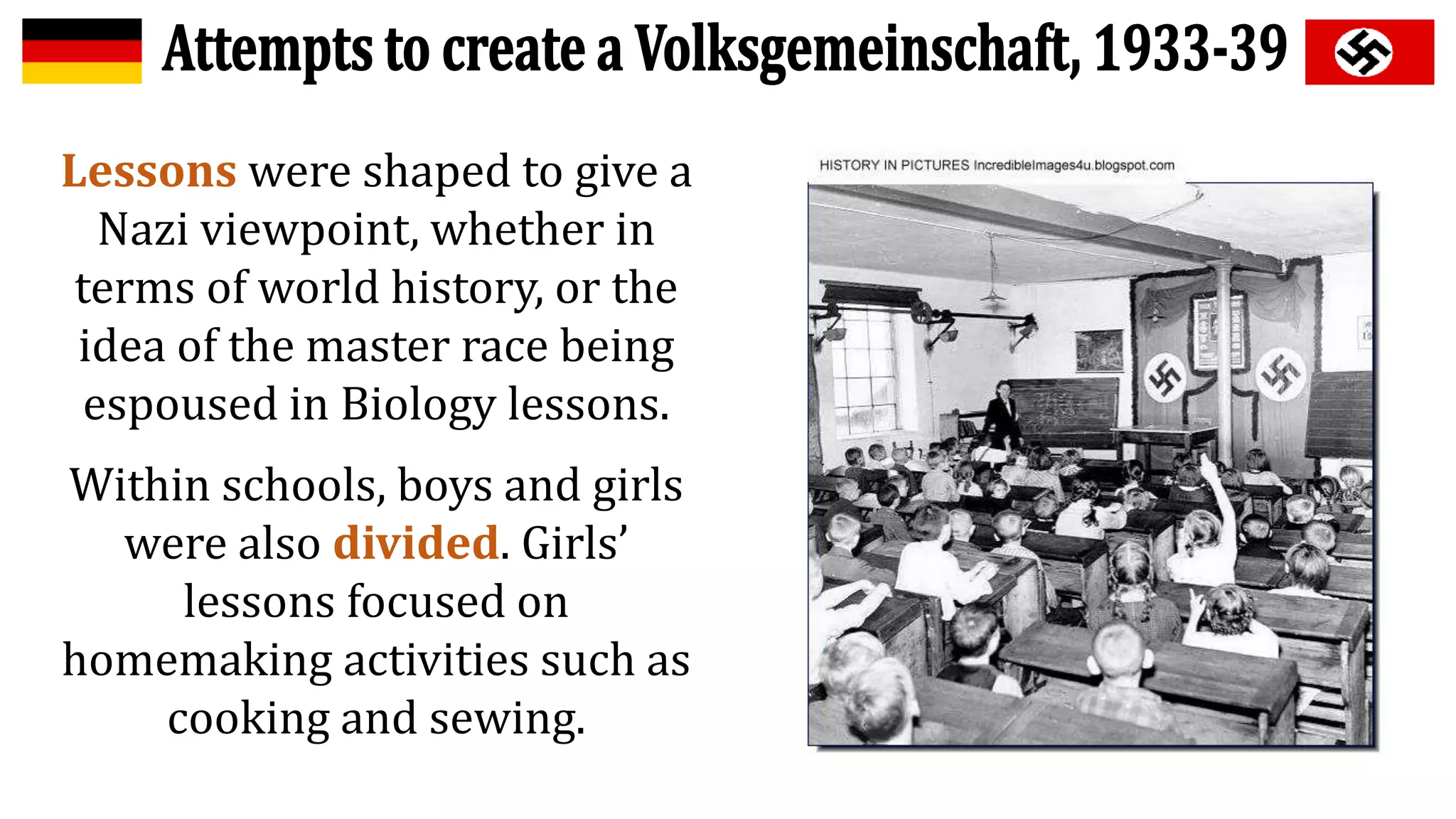
Lessons were shaped to give a
Nazi viewpoint, whether in
terms of world history, or the
idea of the master race being
espoused in Biology lessons.
Within schools, boys and girls
were also divided. Girls’
lessons focused on
homemaking activities such as
cooking and sewing.
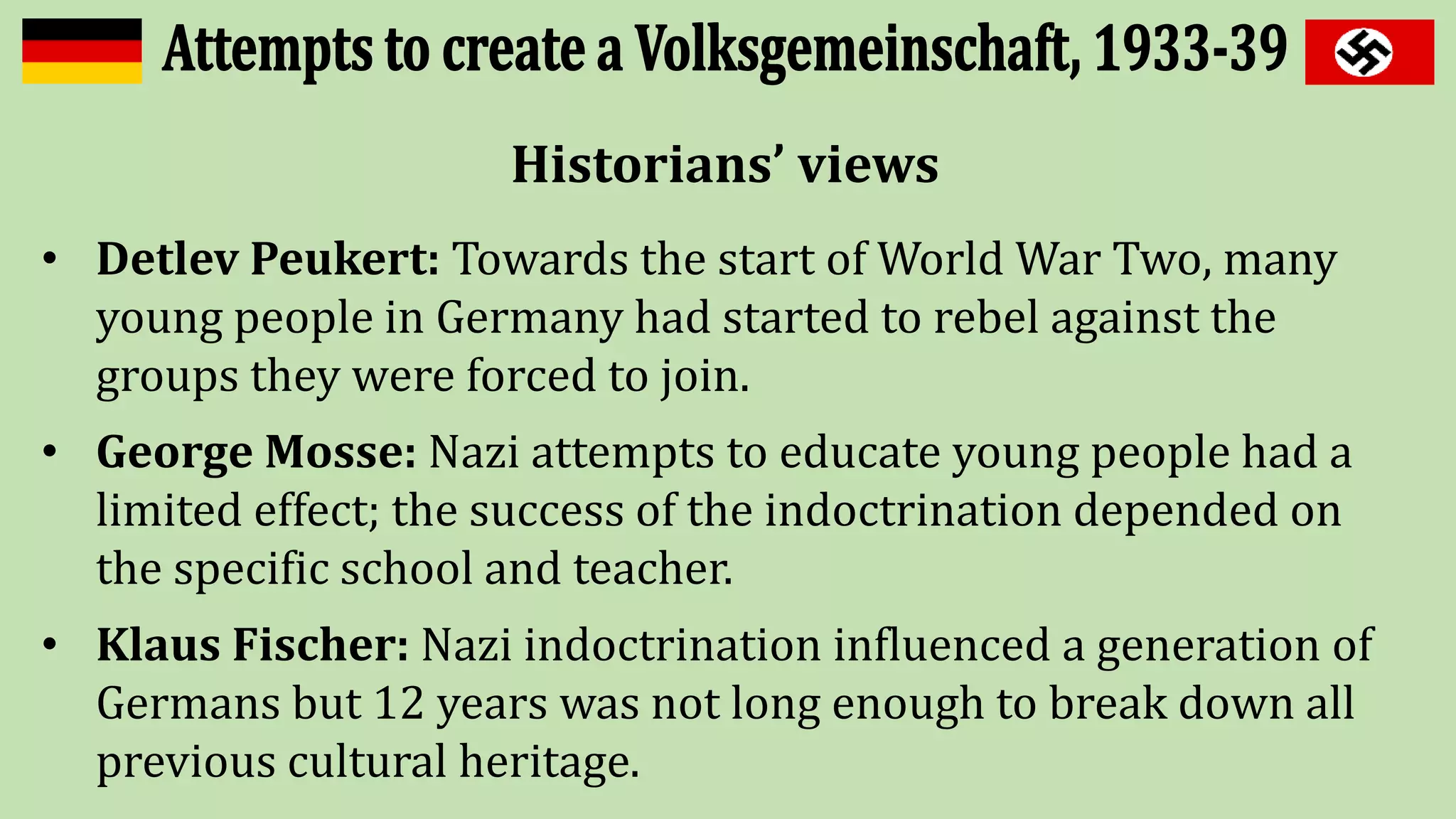
Historians’ views
• Detlev Peukert: Towards the start of World War Two, many
young people in Germany had started to rebel against the
groups they were forced to join.
• George Mosse: Nazi attempts to educate young people had a
limited effect; the success of the indoctrination depended on
the specific school and teacher.
• Klaus Fischer: Nazi indoctrination influenced a generation of
Germans but 12 years was not long enough to break down all
previous cultural heritage.

Nazi Germany - youth and educational policies

  • 1.
  • 2.
    Hitler’s goal wasto build a Thousand Year Reich. A key part of the Nazis’ plans was to win the support of young people, to continue the regime through the generations. Nazi youth actions targeted in children in education and free time as well, regardless of what parents wanted.
  • 3.
    Boys and girlswere generally divided into different groups, reflecting the Nazis’ views on the roles of men and women. Boys’ groups were focused on creating strong young men to become workers and soldiers. Girls’ groups aimed to produce the mothers and wives of the future.
  • 4.
    Boys joined threegroups: • 6-10 - Cubs • 10-14 – Young German Boys • 14-18 – Hitler Youth Once they were men, German males would join organisations such as the army, German Labour Front or German Students’ League.
  • 5.
    Girls joined threegroups: • 10-14 – Young Girls • 14-18 – League of German Maidens • 18-21 – Faith and Beauty Once they were women, German females occasionally joined the German Labour Front or German Students’ League, but were encouraged towards the Nazi Women’s Organisation.
  • 6.
    The Nazis aimedto influence the young people to back them. This included targeting them with propaganda at school and in their youth groups. However young people could also still be influenced by other factors such as family, friends, and churches. American films had an impact too.
  • 7.
    At school, childrenwere educated from a Nazi perspective, by teachers who were members of the Nazi Teachers League. By 1937, 97% of teachers had joined this group. Teachers themselves had to attend month-long Nazi training courses.
  • 8.
    Lessons were shapedto give a Nazi viewpoint, whether in terms of world history, or the idea of the master race being espoused in Biology lessons. Within schools, boys and girls were also divided. Girls’ lessons focused on homemaking activities such as cooking and sewing.
  • 9.
    Historians’ views • DetlevPeukert: Towards the start of World War Two, many young people in Germany had started to rebel against the groups they were forced to join. • George Mosse: Nazi attempts to educate young people had a limited effect; the success of the indoctrination depended on the specific school and teacher. • Klaus Fischer: Nazi indoctrination influenced a generation of Germans but 12 years was not long enough to break down all previous cultural heritage.