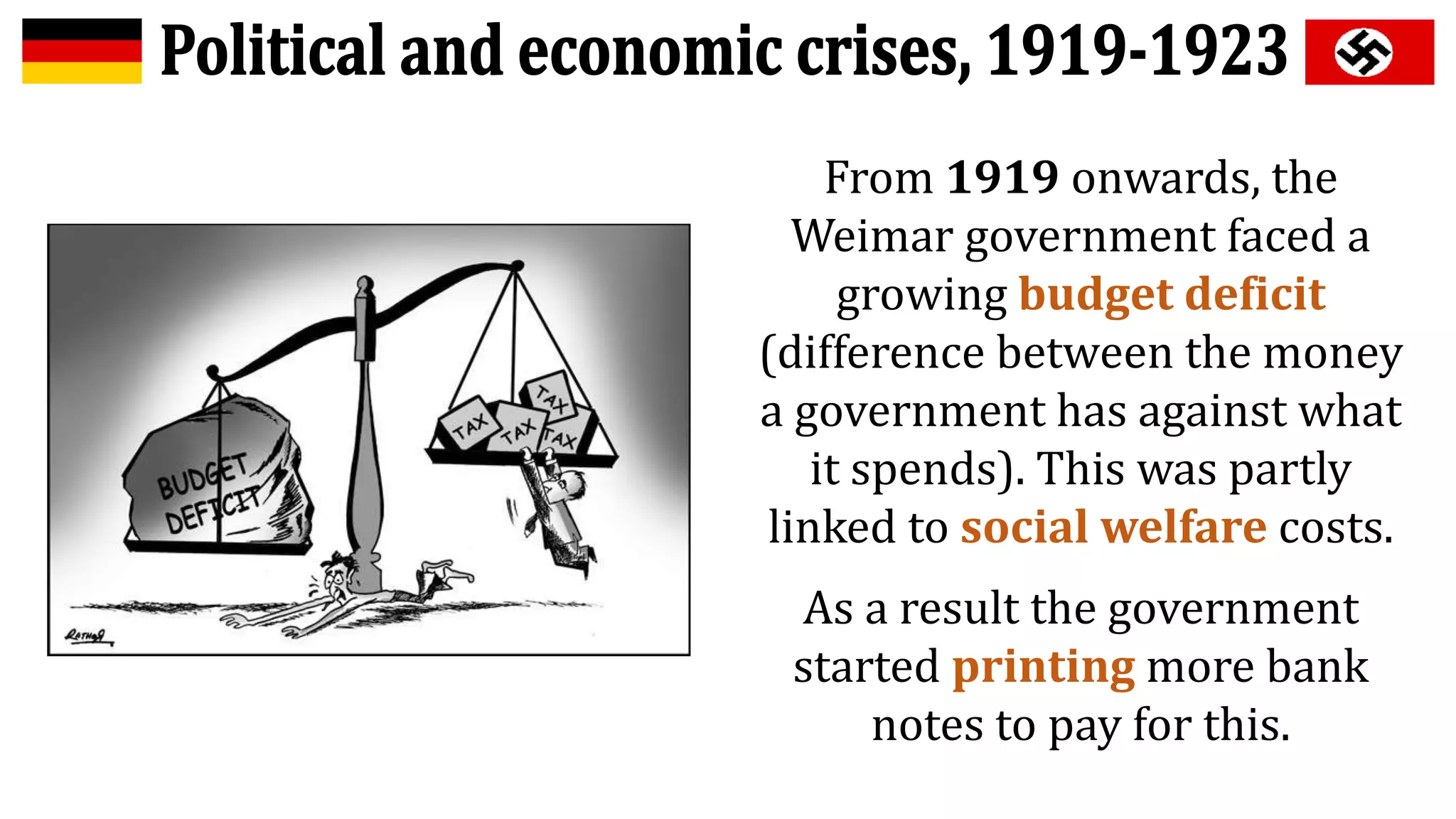
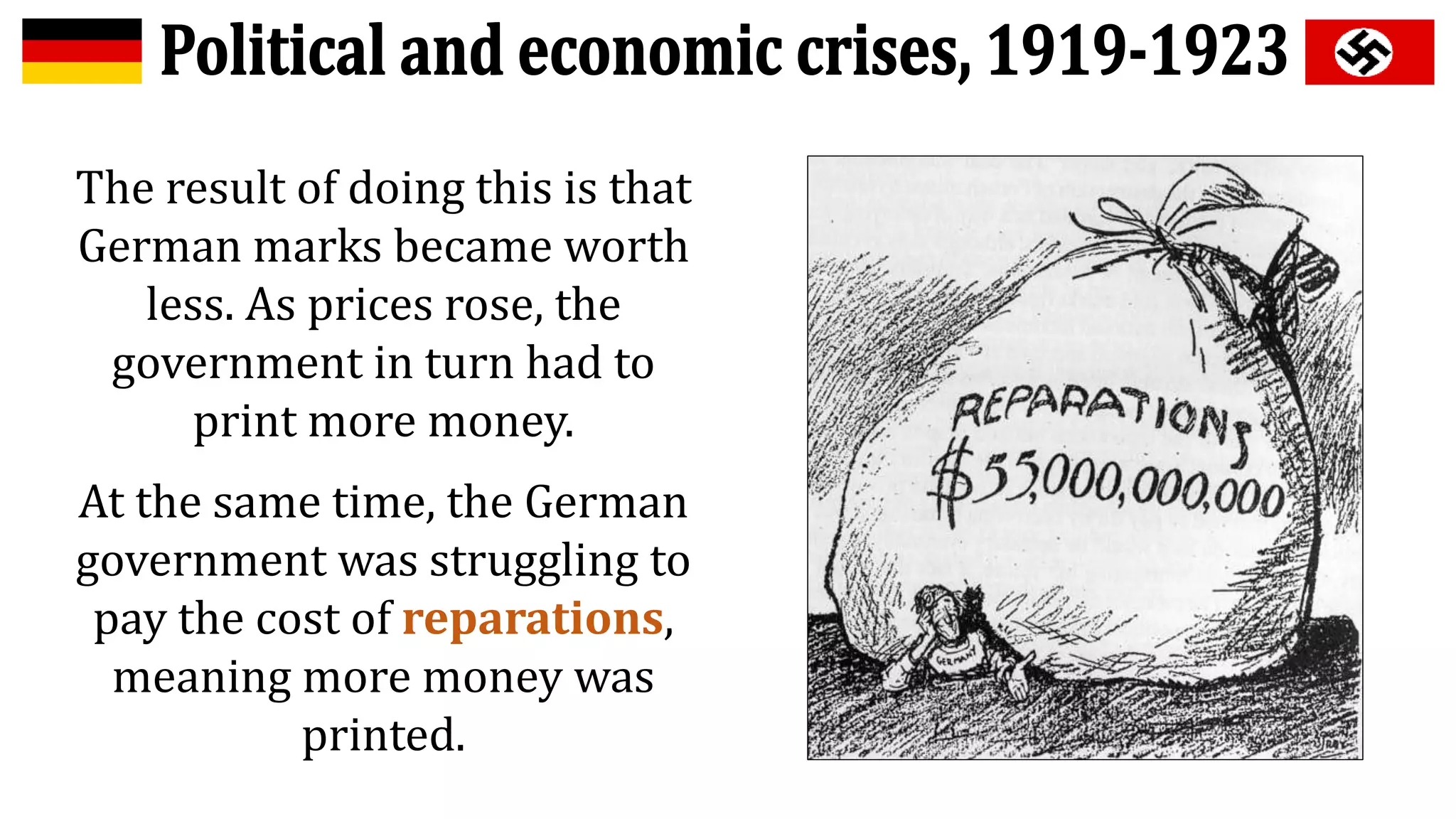
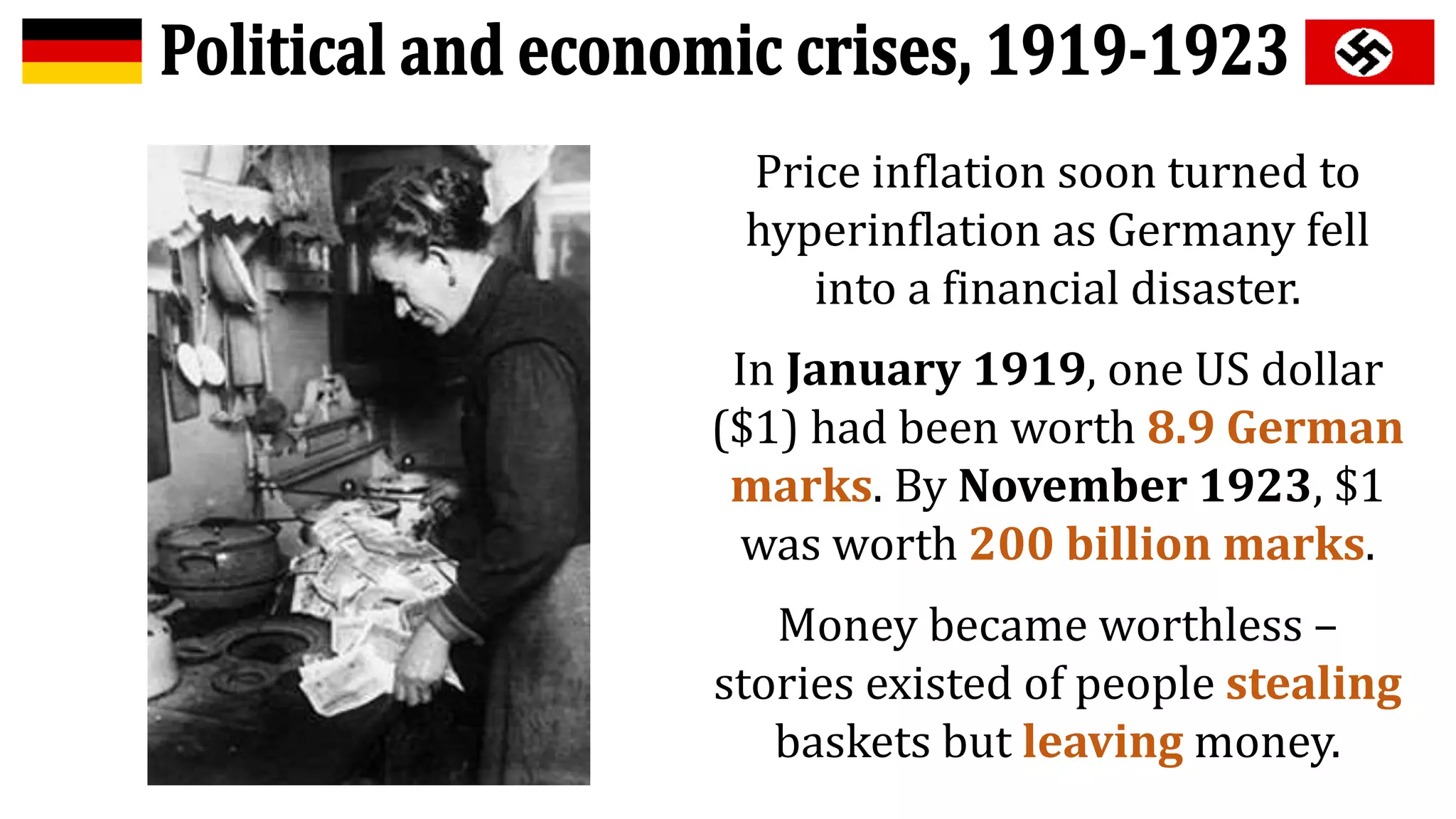
The hyperinflation crisis in early 1920s Germany severely damaged the country's economy and society. As the Weimar government printed more money to pay debts and rising costs, inflation increased dramatically until the currency became virtually worthless by late 1923. This devastated ordinary Germans as prices rose rapidly, wiping out savings and causing widespread poverty, hunger, and illness. While some profited, most people suffered tremendously. The hyperinflation crisis eroded faith in democracy and led many Germans to support extreme political positions. Historians believe this period undermined German society and paved the way for the later rise of the Nazi party.