Download to read offline













The document outlines the approaches and steps involved in creating an effective unit plan for teaching mathematics, emphasizing the organization of content, teaching methods, and evaluation of learning outcomes. It details the importance of setting objectives, content analysis, and the integration of learning experiences to enhance the teaching-learning process. Additionally, an example unit plan for a topic on set theory is provided, demonstrating the structure and essential elements needed for effective lesson planning.
Overview of mathematics pedagogy focusing on lesson planning approaches and teaching levels.
Introduction to unit and lesson plans, detailing the significance and organization of syllabus.
Details about unit planning, its necessity, and how it organizes lessons and pupil activities.
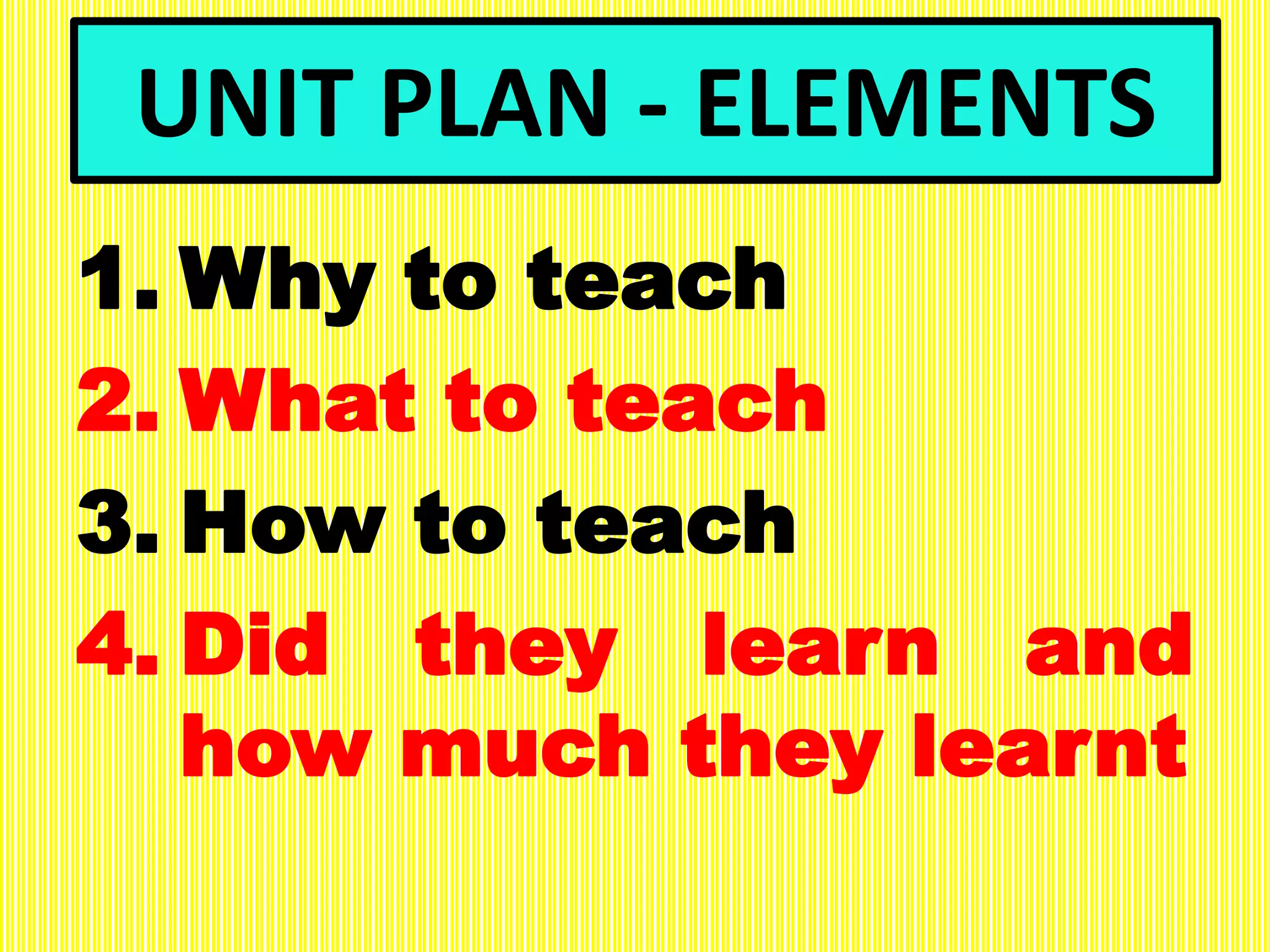
Critical aspects of unit planning including objectives, content, methodology, and evaluation.
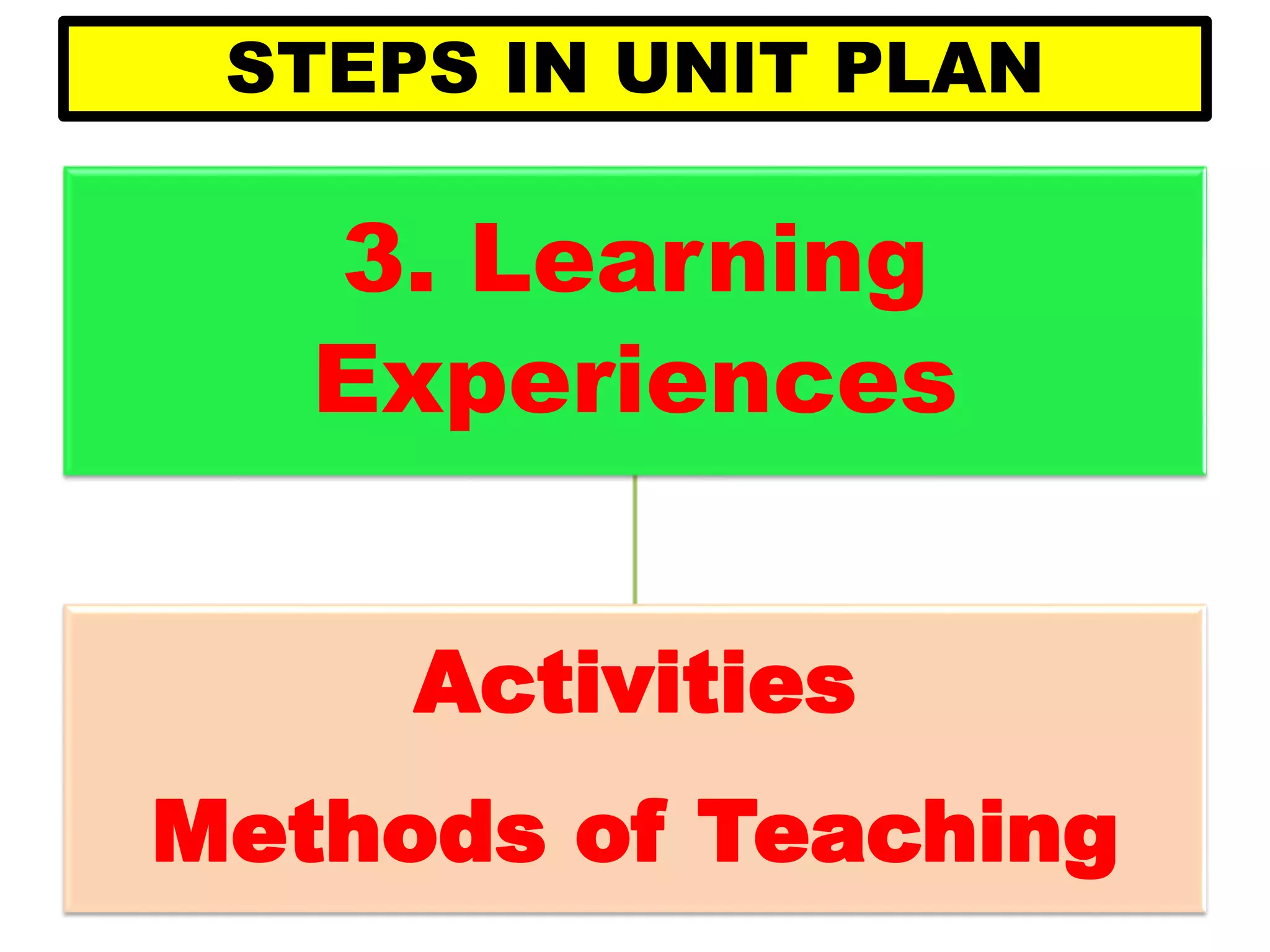
Systematic steps for unit planning including objectives selection, content analysis, and evaluation methods.
Different types of unit plans based on center of interest, student needs, and subject matter.
Fundamental principles guiding effective unit planning such as interest, development and organization.
Advantages of unit planning for teachers including continuous workflow and effective learning experiences.
A practical example of a unit plan focused on Set Theory, including detailed lesson breakdown.
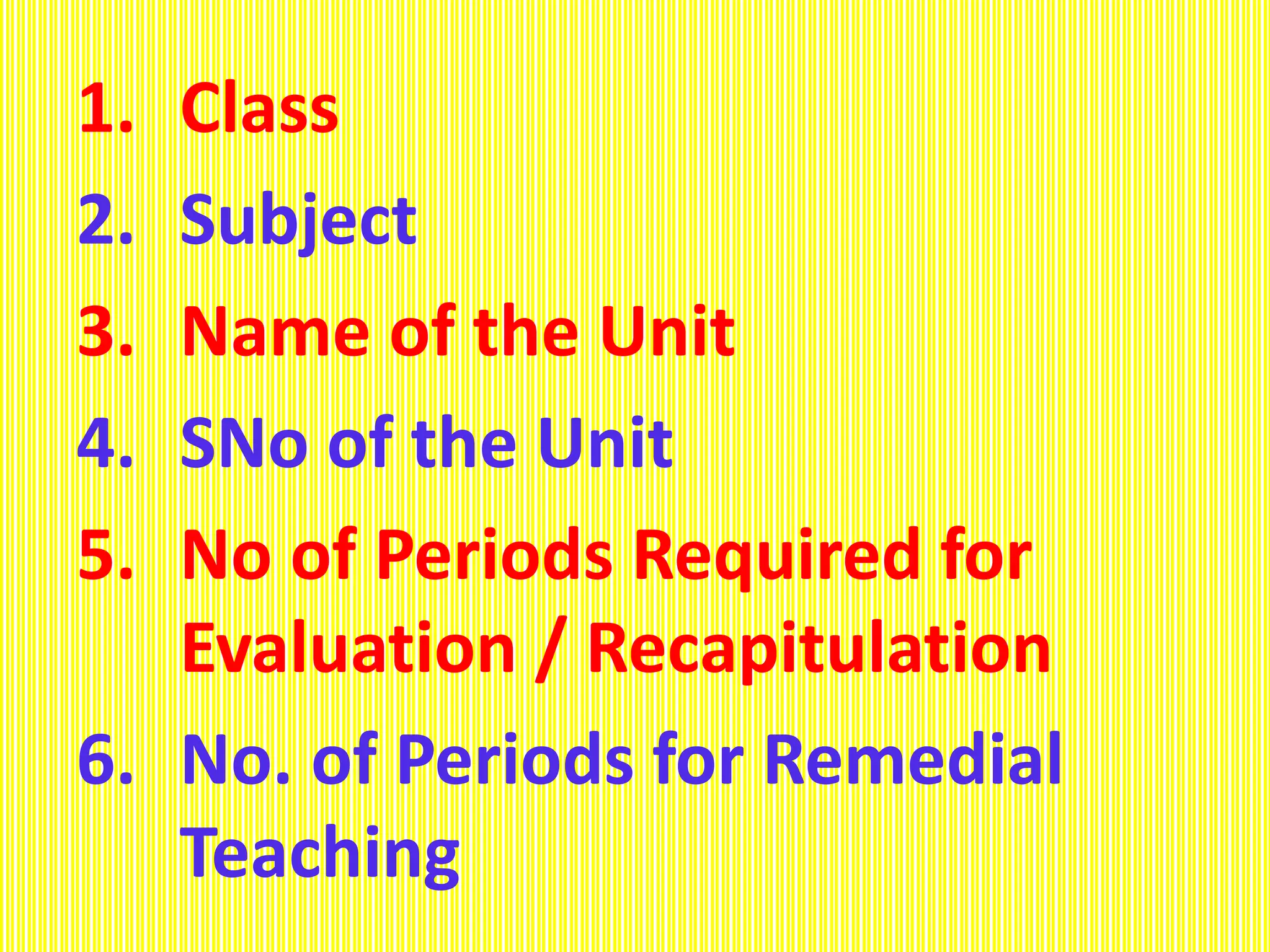
Standard format for unit plans, detailing necessary components and evaluation strategies.
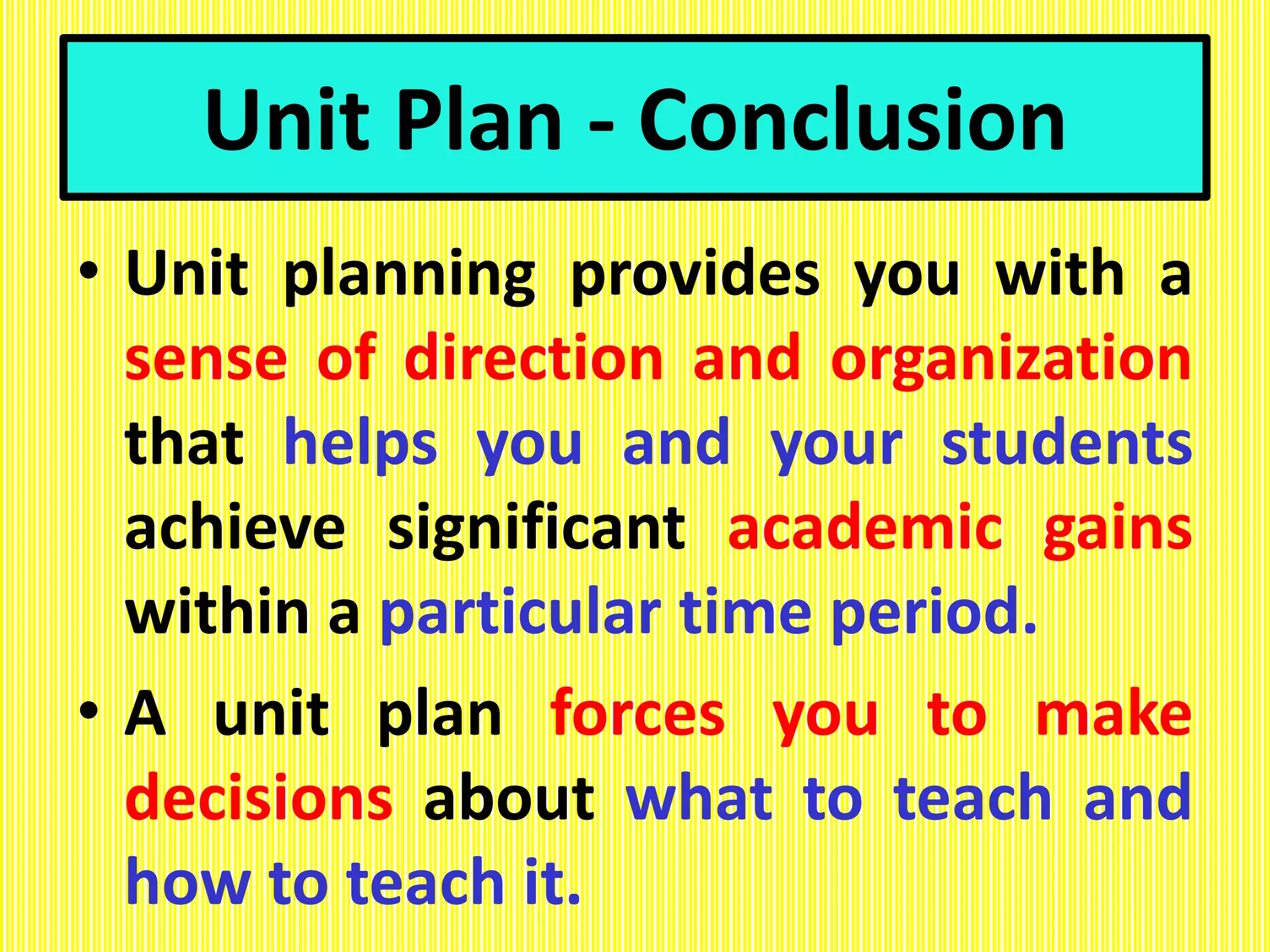
Final thoughts highlighting the organization and direction provided by unit planning for academic success.


