The Biosphere! Chapter 3
3-1 What is Ecology? Study of the interaction among organisms and between organisms and their environment Coined by Earnest Haeckel in 1866 Biosphere:  planet, life, water, land, air and part of the atmosphere
Levels of Organization Study of the interactions between a particular organization and its surroundings.  Species Population Community Ecosystem Biome Biosphere
Levels of Organization Species Group of organisms so similar that they can breed and produce fertile offspring. Population Groups of individuals that belong to the same species living in the same area.
Levels of Organization Community Groups of different populations within a defined area. Ecosystem Collection of organisms that live in a particular place with nonliving; or physical environment.
Levels of Organization Biome Group of ecosystems that have the same climate and similar dominant communities. Biosphere The earth
Ecological Methods of Study Tools and techniques for studying the living world. Observing Experimenting Modeling
3-2 Energy Flow Producers:  Sunlight is the main source of energy for life It is the ultimate producer Autotrophs
Energy Flow Autotrophs: Photosynthesis Chemosynthesis Without the presence of light this process is used to release energy from inorganic molecules
Energy Flow Consumers: Heterotrophs Herbivores Carnivores Omnivores Detritivores Decomposers
Feeding Relationships Energy flows through an ecosystem in one direction:  From sun or inorganic compounds  To autotrophs  Then to various heterotrouphs
Feeding Relationships Relationships between producers and consumers is based on who eats whom Food Chains Food Webs Trophic Levels
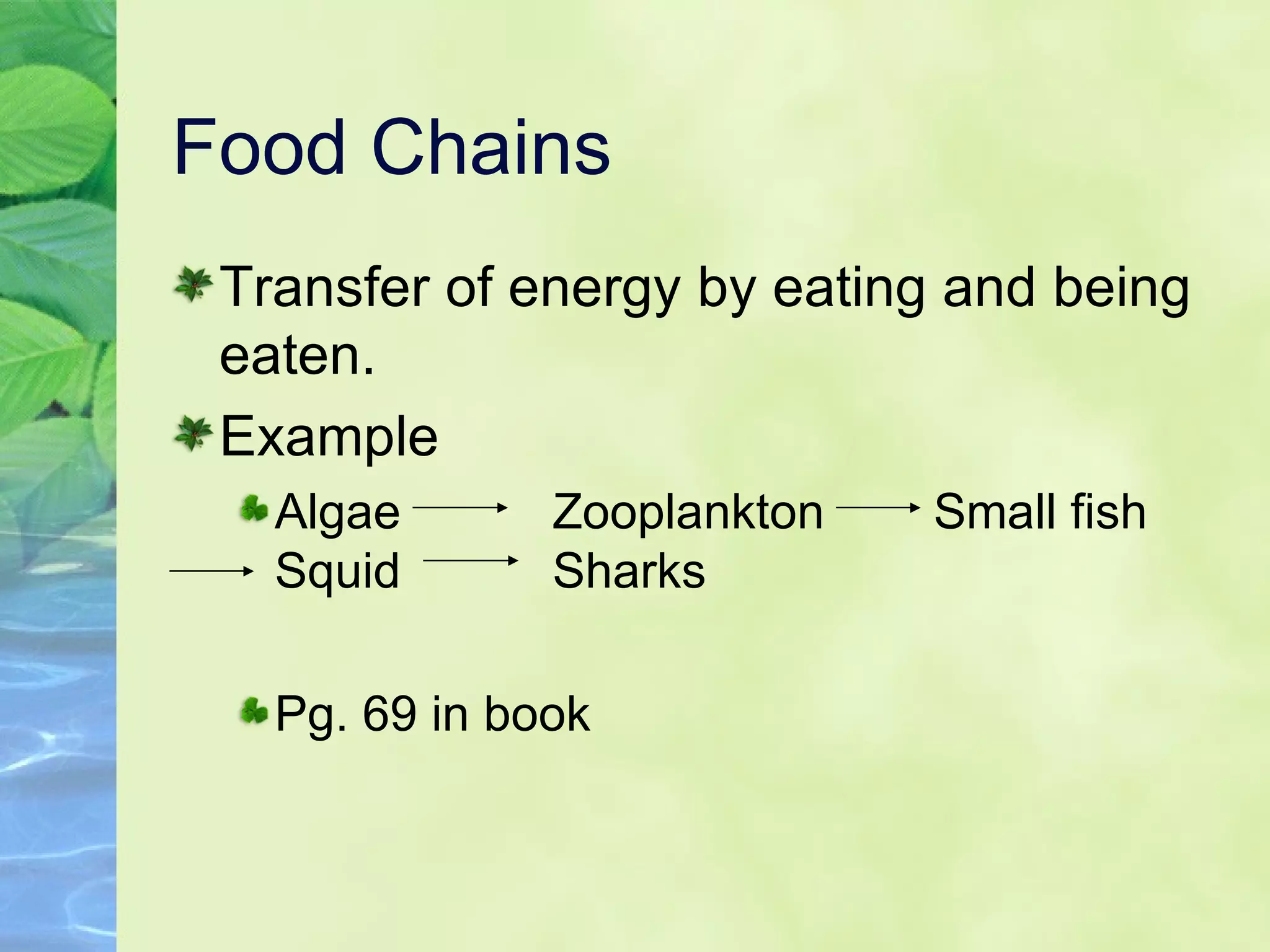
Food Chains Transfer of energy by eating and being eaten. Example Algae Zooplankton Small fish Squid Sharks Pg. 69 in book
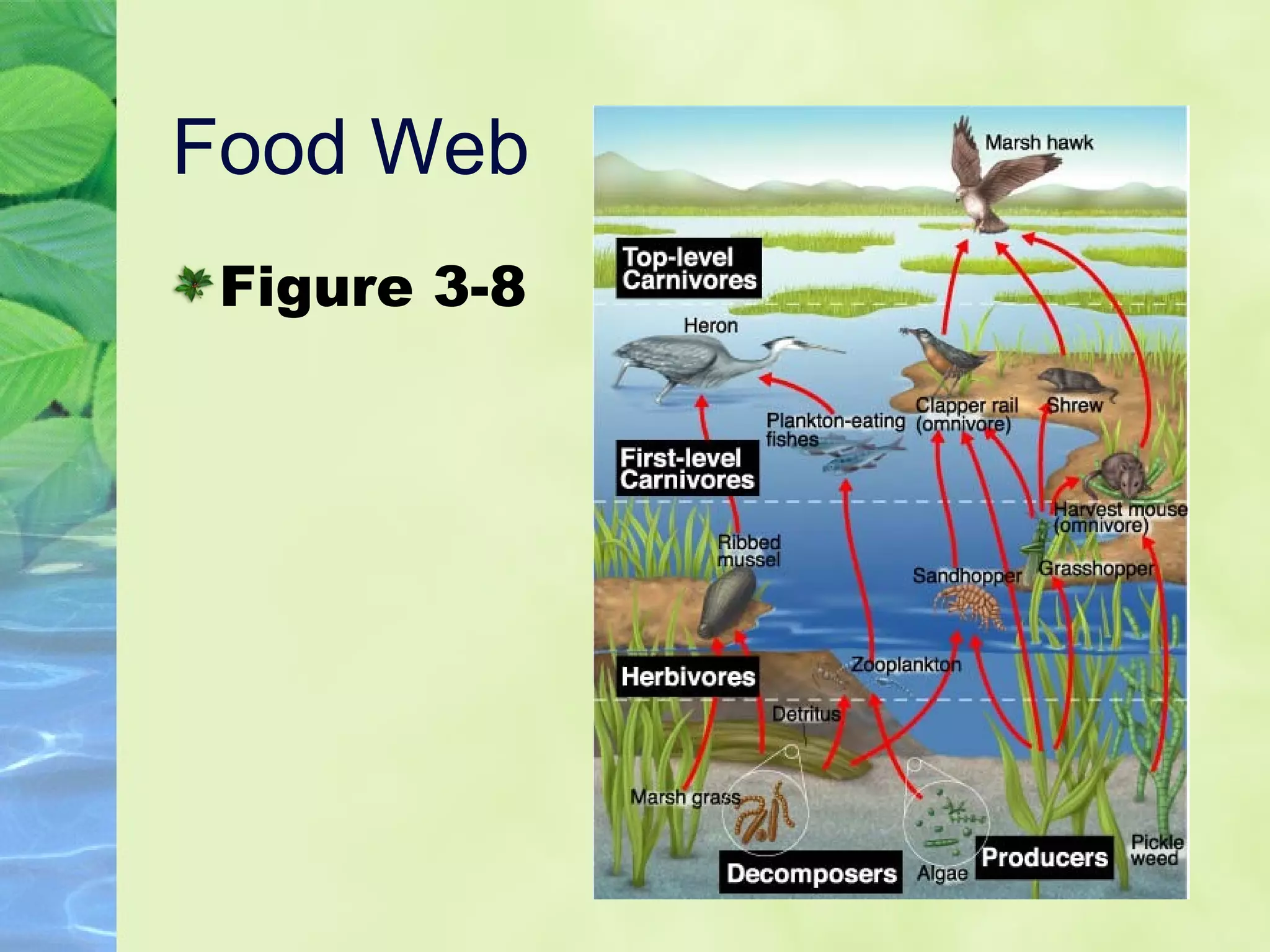
Food Web A network of interconnecting  food chains. Quaternary, tertiary, and secondary consumers Tertiary and Secondary consumers Secondary and Primary consumers Producers (plants) Primary consumers.
Food Web Figure 3-8
Trophic Level Each step in a food chain or food web A  aquatic food chain A  terrestrial food chain Quaternary conusumers Trophic level Tertiary consumers Secondary consumers Primary consumers Producers Hawk Snake Mouse Grasshopper Plant Phytoplankton Zooplankton Herring Tuna Killer whale
Ecological Pyramids Diagram that shows the relative amounts of energy or matter within each trophic level 3 Types: Energy Pyramid Biomass Pyramid Pyramid of Numbers
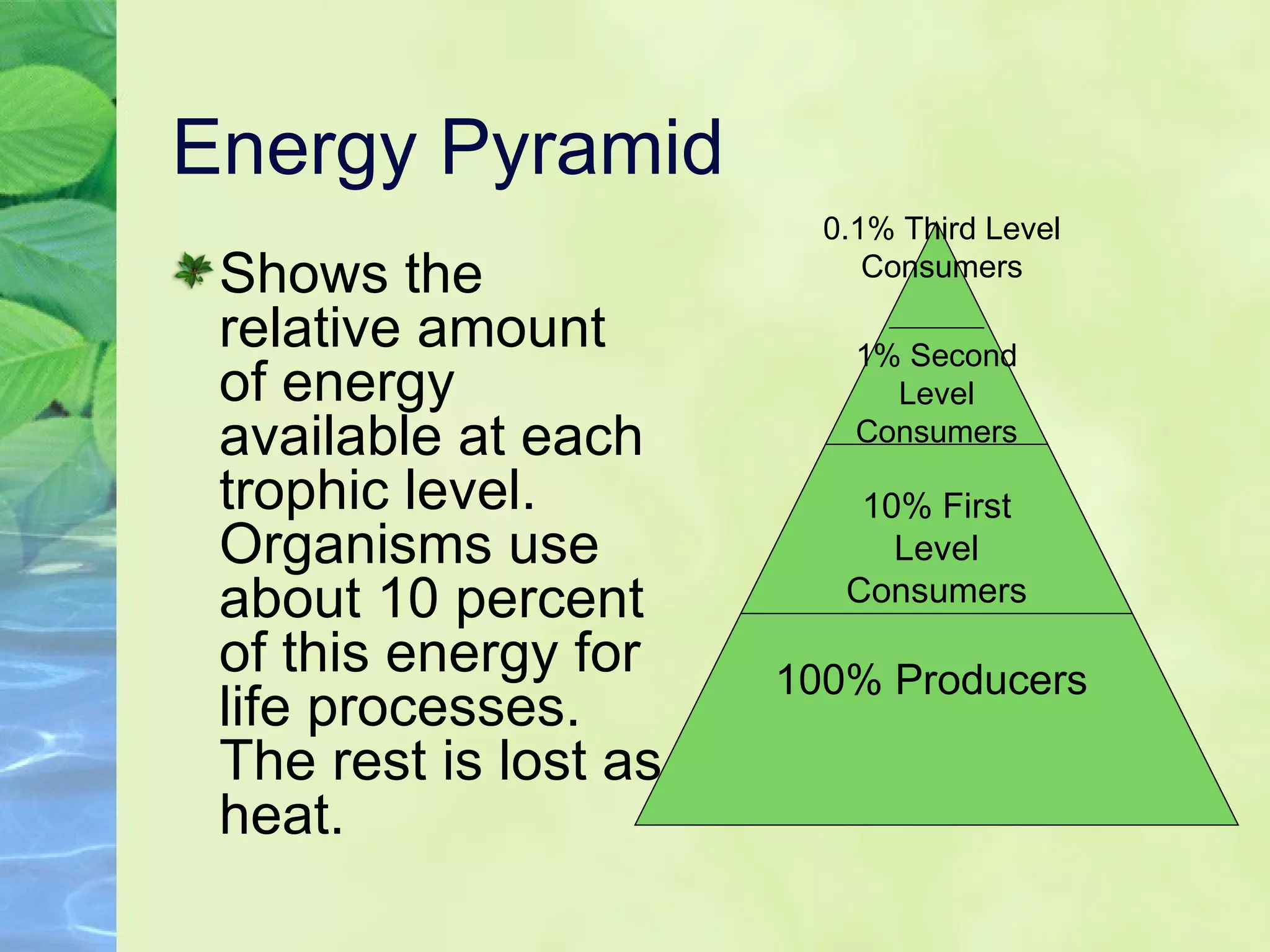
Energy Pyramid Shows the relative amount of energy available at each trophic level. Organisms use about 10 percent of this energy for life processes. The rest is lost as heat. 100% Producers 10% First Level Consumers 1% Second Level Consumers 0.1% Third Level Consumers
Biomass Pyramid Amount of living organic matter in each trophic level. 5000g of Grain 500g of chicken 50g of Human Tissue
Pyramid of Numbers Shows the relative number of individual organisms at each trophic level. 5000 Flowers and Grasses 50 Rabbits and Mice 5 Snakes 1 Hawk
3-3 Cycles of Matter Matter is recycled within and between ecosystems  Biogeochemical Cycle:  Elements, chemical compounds and other forms of matter are passed from one organization to another and from one part of the biosphere to another
The Water Cycle Evaporation:  Liquid to atmospheric gas Transpiration: Evaporation from leaves; from liquid water to water gas
The Water Cycle Condensation Seepage Runoff Precipitation Root Uptake Transpiration Evaporation
Nutrient Cycles Carbon Cycle Nitrogen Cycle Phosphorus Cycle
Carbon Cycle Carbon plays a major role in live. 4 major processes to move carbon through this cycle: Biological Processes Geochemical processes Mixed biogeochemical processes Human activities
Carbon Cycle CO 2  in atmosphere Photosynthesis Cellular respiration Burning of fossil fuels and wood Carbon compounds in water Detritus Primary consumers Higher-level consumers Decomposition
Nitrogen Cycle All organisms require nitrogen to make amino acids which are the building blocks for proteins.  Nitrogen fixation: Bacteria convert ammonia to nitrates and nitrites.
Phosphorus Cycle It is essential to living organisms because it forms part of DNA and RNA. Released as rocks and sediments break down.
Nutrient Limitations Factors that controls the primary productivity of an ecosystem is the amount of available nutrients. Limiting Nutrient: a single nutrient that is scarce or cycles very slowly

3 biosphere

  • 1.
  • 2.
    3-1 What isEcology? Study of the interaction among organisms and between organisms and their environment Coined by Earnest Haeckel in 1866 Biosphere: planet, life, water, land, air and part of the atmosphere
  • 3.
    Levels of OrganizationStudy of the interactions between a particular organization and its surroundings. Species Population Community Ecosystem Biome Biosphere
  • 4.
    Levels of OrganizationSpecies Group of organisms so similar that they can breed and produce fertile offspring. Population Groups of individuals that belong to the same species living in the same area.
  • 5.
    Levels of OrganizationCommunity Groups of different populations within a defined area. Ecosystem Collection of organisms that live in a particular place with nonliving; or physical environment.
  • 6.
    Levels of OrganizationBiome Group of ecosystems that have the same climate and similar dominant communities. Biosphere The earth
  • 7.
    Ecological Methods ofStudy Tools and techniques for studying the living world. Observing Experimenting Modeling
  • 8.
    3-2 Energy FlowProducers: Sunlight is the main source of energy for life It is the ultimate producer Autotrophs
  • 9.
    Energy Flow Autotrophs:Photosynthesis Chemosynthesis Without the presence of light this process is used to release energy from inorganic molecules
  • 10.
    Energy Flow Consumers:Heterotrophs Herbivores Carnivores Omnivores Detritivores Decomposers
  • 11.
    Feeding Relationships Energyflows through an ecosystem in one direction: From sun or inorganic compounds To autotrophs Then to various heterotrouphs
  • 12.
    Feeding Relationships Relationshipsbetween producers and consumers is based on who eats whom Food Chains Food Webs Trophic Levels
  • 13.
    Food Chains Transferof energy by eating and being eaten. Example Algae Zooplankton Small fish Squid Sharks Pg. 69 in book
  • 14.
    Food Web Anetwork of interconnecting food chains. Quaternary, tertiary, and secondary consumers Tertiary and Secondary consumers Secondary and Primary consumers Producers (plants) Primary consumers.
  • 15.
  • 16.
    Trophic Level Eachstep in a food chain or food web A aquatic food chain A terrestrial food chain Quaternary conusumers Trophic level Tertiary consumers Secondary consumers Primary consumers Producers Hawk Snake Mouse Grasshopper Plant Phytoplankton Zooplankton Herring Tuna Killer whale
  • 17.
    Ecological Pyramids Diagramthat shows the relative amounts of energy or matter within each trophic level 3 Types: Energy Pyramid Biomass Pyramid Pyramid of Numbers
  • 18.
    Energy Pyramid Showsthe relative amount of energy available at each trophic level. Organisms use about 10 percent of this energy for life processes. The rest is lost as heat. 100% Producers 10% First Level Consumers 1% Second Level Consumers 0.1% Third Level Consumers
  • 19.
    Biomass Pyramid Amountof living organic matter in each trophic level. 5000g of Grain 500g of chicken 50g of Human Tissue
  • 20.
    Pyramid of NumbersShows the relative number of individual organisms at each trophic level. 5000 Flowers and Grasses 50 Rabbits and Mice 5 Snakes 1 Hawk
  • 21.
    3-3 Cycles ofMatter Matter is recycled within and between ecosystems Biogeochemical Cycle: Elements, chemical compounds and other forms of matter are passed from one organization to another and from one part of the biosphere to another
  • 22.
    The Water CycleEvaporation: Liquid to atmospheric gas Transpiration: Evaporation from leaves; from liquid water to water gas
  • 23.
    The Water CycleCondensation Seepage Runoff Precipitation Root Uptake Transpiration Evaporation
  • 24.
    Nutrient Cycles CarbonCycle Nitrogen Cycle Phosphorus Cycle
  • 25.
    Carbon Cycle Carbonplays a major role in live. 4 major processes to move carbon through this cycle: Biological Processes Geochemical processes Mixed biogeochemical processes Human activities
  • 26.
    Carbon Cycle CO2 in atmosphere Photosynthesis Cellular respiration Burning of fossil fuels and wood Carbon compounds in water Detritus Primary consumers Higher-level consumers Decomposition
  • 27.
    Nitrogen Cycle Allorganisms require nitrogen to make amino acids which are the building blocks for proteins. Nitrogen fixation: Bacteria convert ammonia to nitrates and nitrites.
  • 28.
    Phosphorus Cycle Itis essential to living organisms because it forms part of DNA and RNA. Released as rocks and sediments break down.
  • 29.
    Nutrient Limitations Factorsthat controls the primary productivity of an ecosystem is the amount of available nutrients. Limiting Nutrient: a single nutrient that is scarce or cycles very slowly