Salahaddin university 
College of science 
Environmental science department 
Biosphere 
Halala Rahman Qadir 
Msc.Plant physiology
Contents 
Definition of biosphere 
Origin and use of the term biosphere 
Biosphere concepts 
Physical properties of biosphere 
Factors effect on biosphere
Definition of biosphere 
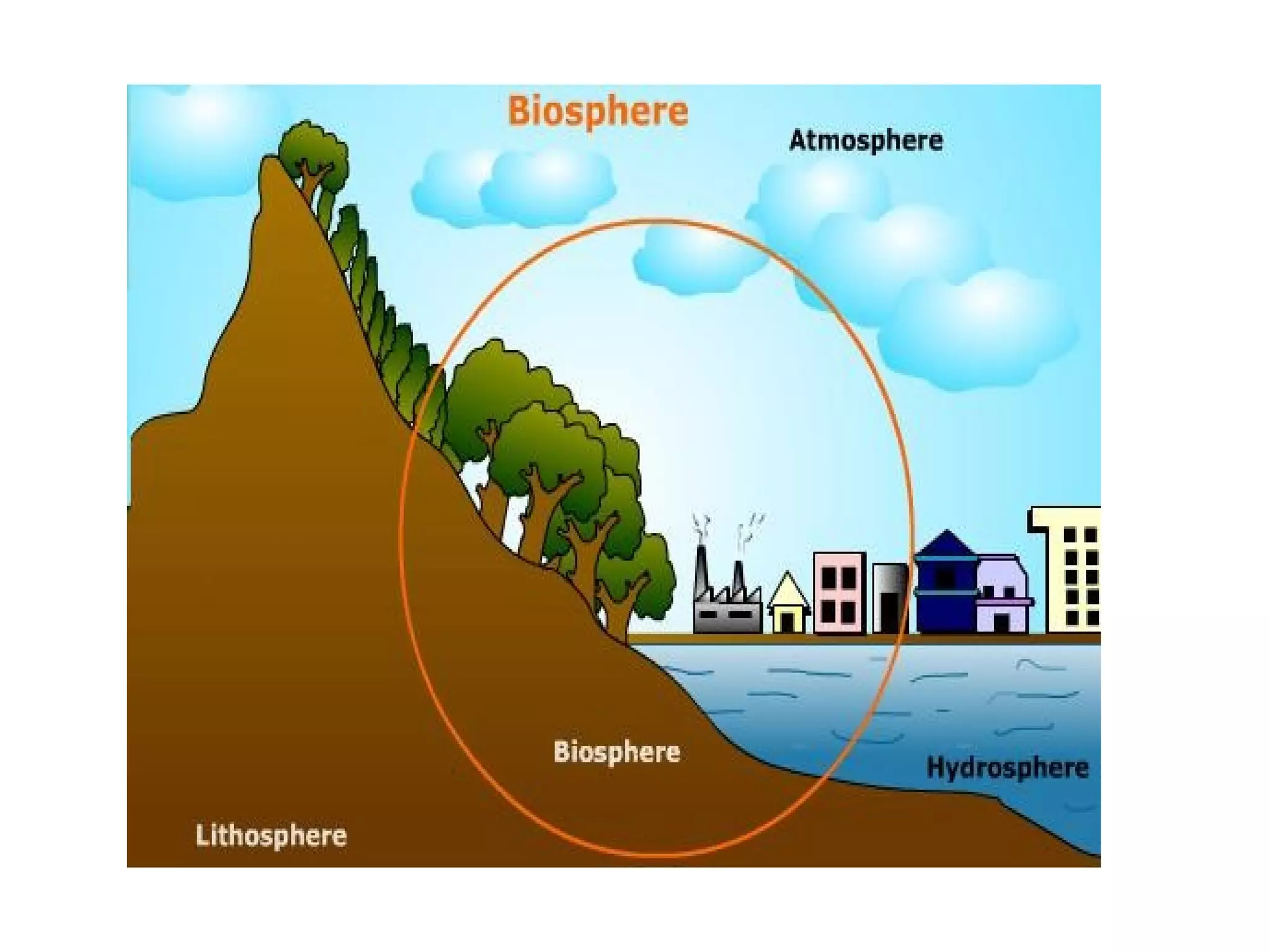
The biosphere: is the global sum of all ecosystems. It 
can also be termed the zone of life on Earth, a closed 
system (apart from solar and cosmic radiation and heat 
from the interior of the Earth), and largely self-regulating
Origin of biosphere 
Biosphere has a geological origin, it is an indication of the 
effect of both Charles Darwin and Matthew F. Maury on the 
Earth sciences. The biosphere's ecological context comes 
from the 1920s, preceding the 1935 introduction of the term 
"ecosystem" by Sir Arthur Tansley. Vernadsky defined 
ecology as the science of the biosphere. It is an 
interdisciplinary concept for integrating astronomy, 
geophysics, meteorology, biogeography, evolution, geology, 
geochemistry, hydrology and, generally speaking, all life and 
Earth sciences.
Use of the term biosphere 
The term "biosphere" was coined by 
geologist Eduard Suess in 1875, which he 
defined as: 
The place on Earth's surface where life 
dwells.
Concepts of biosphere 
The biosphere concept: is common to 
many scientific disciplines including 
astronomy, geophysics, geology, 
hydrology, biogeography and evolution, 
and is a core concept in ecology, earth 
science and physical geography.
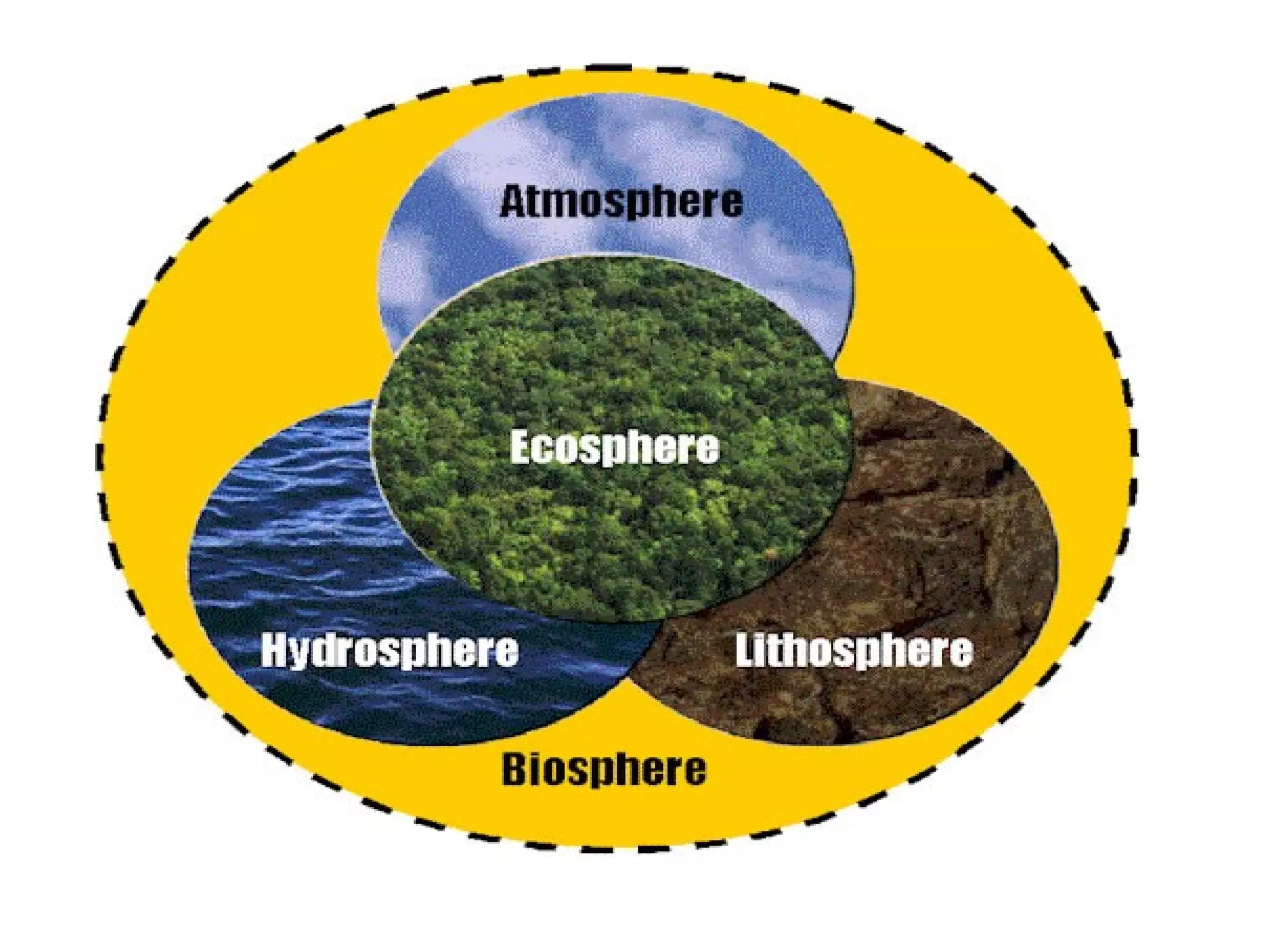
Levels of organization
Physical properties of biosphere 
The physical properties of the biosphere in terms of 
its surface reflectance (albedo) and exchange of heat 
and moisture with the atmosphere are also critical for 
understanding global circulation of heat and 
moisture and therefore climate. Alterations in both 
the physics (albedo, heat exchange) and chemistry 
(carbon dioxide, methane, etc.) of earth systems by 
the biosphere are fundamental in understanding 
anthropogenic global warming.
Factors effect on biosphere 
Distance between the earth and the sun. 
Seasons and seasonal climate changes are direct results of 
the tilt of the Earth towards or away from the Sun. Summer 
months allow half of the planet to warm while the other half 
cools. Six months later, the temperatures shift in the opposite 
direction. 
Chemical erosion is a great example of a landscape 
changing one molecule at a time. 
Oxidation and reduction reactions change the composition 
of rocks and organic materials. There is also biological 
erosion. Tiny organisms, such as bacteria and fungi, are 
constantly working to break down organic and inorganic 
materials.

Biosphere

  • 1.
    Salahaddin university Collegeof science Environmental science department Biosphere Halala Rahman Qadir Msc.Plant physiology
  • 2.
    Contents Definition ofbiosphere Origin and use of the term biosphere Biosphere concepts Physical properties of biosphere Factors effect on biosphere
  • 3.
    Definition of biosphere The biosphere: is the global sum of all ecosystems. It can also be termed the zone of life on Earth, a closed system (apart from solar and cosmic radiation and heat from the interior of the Earth), and largely self-regulating
  • 4.
    Origin of biosphere Biosphere has a geological origin, it is an indication of the effect of both Charles Darwin and Matthew F. Maury on the Earth sciences. The biosphere's ecological context comes from the 1920s, preceding the 1935 introduction of the term "ecosystem" by Sir Arthur Tansley. Vernadsky defined ecology as the science of the biosphere. It is an interdisciplinary concept for integrating astronomy, geophysics, meteorology, biogeography, evolution, geology, geochemistry, hydrology and, generally speaking, all life and Earth sciences.
  • 5.
    Use of theterm biosphere The term "biosphere" was coined by geologist Eduard Suess in 1875, which he defined as: The place on Earth's surface where life dwells.
  • 7.
    Concepts of biosphere The biosphere concept: is common to many scientific disciplines including astronomy, geophysics, geology, hydrology, biogeography and evolution, and is a core concept in ecology, earth science and physical geography.
  • 8.
  • 9.
    Physical properties ofbiosphere The physical properties of the biosphere in terms of its surface reflectance (albedo) and exchange of heat and moisture with the atmosphere are also critical for understanding global circulation of heat and moisture and therefore climate. Alterations in both the physics (albedo, heat exchange) and chemistry (carbon dioxide, methane, etc.) of earth systems by the biosphere are fundamental in understanding anthropogenic global warming.
  • 11.
    Factors effect onbiosphere Distance between the earth and the sun. Seasons and seasonal climate changes are direct results of the tilt of the Earth towards or away from the Sun. Summer months allow half of the planet to warm while the other half cools. Six months later, the temperatures shift in the opposite direction. Chemical erosion is a great example of a landscape changing one molecule at a time. Oxidation and reduction reactions change the composition of rocks and organic materials. There is also biological erosion. Tiny organisms, such as bacteria and fungi, are constantly working to break down organic and inorganic materials.