Chapter
  3

The Biosphere
3-1 What is Ecology?
Interactions and Interdependence

Ecology - _______________________________________________________________
_______________________________________________________________________
_

biosphere - ______________________________________________________________
_______________________________________________________________________
_


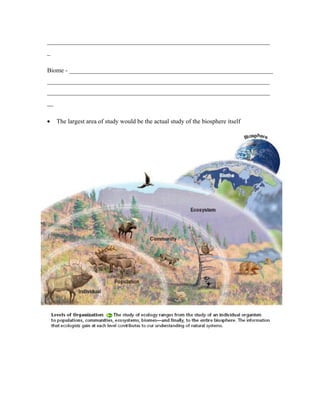
Levels of Organization

•    To understand relationships within the biosphere ecologists ask questions about
     events and organisms that range in complexity from single individuals to the entire
     biosphere
•    Studies can focus on…

Species - ________________________________________________________________
_______________________________________________________________________
_

Populations - ____________________________________________________________
_______________________________________________________________________
_______________________________________________________________________
__


Communities - ___________________________________________________________
_______________________________________________________________________
_

Ecosystem - _____________________________________________________________
_______________________________________________________________________
_
_______________________________________________________________________
_

Biome - _________________________________________________________________
_______________________________________________________________________
_______________________________________________________________________
__

•    The largest area of study would be the actual study of the biosphere itself
Ecological Methods

•    Regardless of the tools they use, scientists conduct modern ecological research using
     3 basic approaches:

1.

2.

3.


Name ____________________________________ Date _________________ Per _____

                                   3-1 Section Review

1. List the six different levels of organization that ecologists study, in order from smallest
   to largest.


2. Describe the three basic methods of ecological research.


3. Identify two ways in which you interact with each of the three parts of the biosphere—
   land, water, and air—every day.
4. Suppose you wanted to know if the water in a certain stream is safe to drink. Which
   ecological method(s) would you choose, and why?


                                3 – 2 Energy Flow

•   The flow of energy through an ecosystem is one of the most important factors that
    determines the systems capacity to sustain life

Producers

•   _______________________ is the main energy source for life on Earth
•   Some types of organisms rely on the energy stored in organic chemical compounds

Producers (autotrophs) - ____________________________________________________
_______________________________________________________________________
_
ex.)

Energy From the Sun

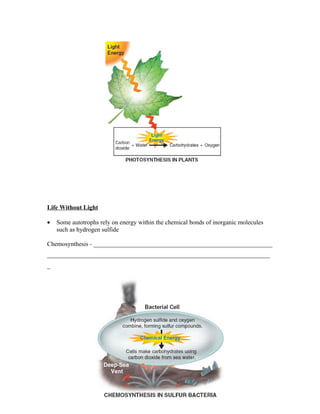
Photosynthesis - __________________________________________________________
_______________________________________________________________________
_
Life Without Light

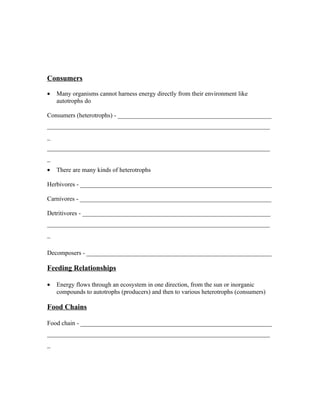
•   Some autotrophs rely on energy within the chemical bonds of inorganic molecules
    such as hydrogen sulfide

Chemosynthesis - _________________________________________________________
_______________________________________________________________________
_
Consumers

•   Many organisms cannot harness energy directly from their environment like
    autotrophs do

Consumers (heterotrophs) - _________________________________________________
_______________________________________________________________________
_
_______________________________________________________________________
_
•   There are many kinds of heterotrophs

Herbivores - _____________________________________________________________

Carnivores - _____________________________________________________________

Detritivores - ____________________________________________________________
_______________________________________________________________________
_

Decomposers - ___________________________________________________________

Feeding Relationships

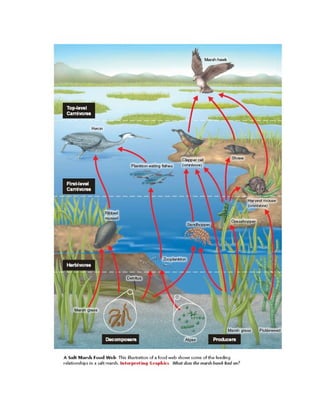
•   Energy flows through an ecosystem in one direction, from the sun or inorganic
    compounds to autotrophs (producers) and then to various heterotrophs (consumers)

Food Chains

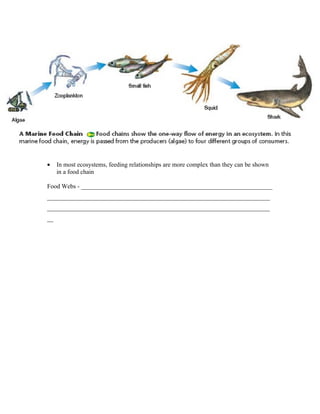
Food chain - _____________________________________________________________
_______________________________________________________________________
_
•    In most ecosystems, feeding relationships are more complex than they can be shown
     in a food chain

Food Webs - _____________________________________________________________
_______________________________________________________________________
_______________________________________________________________________
__
Trophic Levels - __________________________________________________________
_______________________________________________________________________
_

1st - ____________________________________________________
2nd – 3rd or higher - ________________________________________

•   Each consumer depends on the trophic level below it for energy

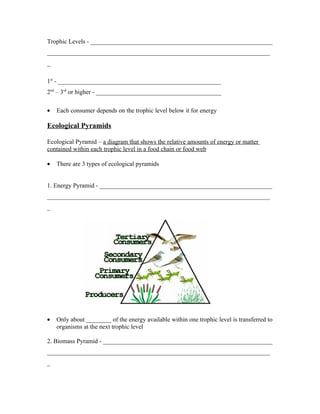
Ecological Pyramids

Ecological Pyramid – a diagram that shows the relative amounts of energy or matter
contained within each trophic level in a food chain or food web

•   There are 3 types of ecological pyramids


1. Energy Pyramid - _______________________________________________________
_______________________________________________________________________
_


•   Only about ________ of the energy available within one trophic level is transferred to
    organisms at the next trophic level

2. Biomass Pyramid - ______________________________________________________
_______________________________________________________________________
_
biomass - _______________________________________________________________
_______________________________________________________________________


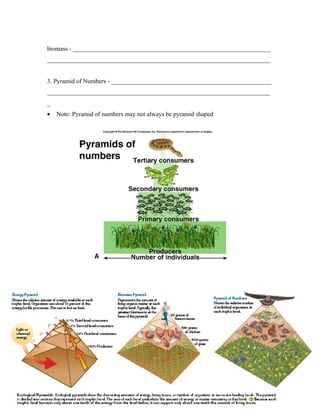
3. Pyramid of Numbers - ___________________________________________________
_______________________________________________________________________
_
•   Note: Pyramid of numbers may not always be pyramid shaped
Name ______________________________ Date _____________________ Per _______

                                3 – 2 Section Review

1. What are the two main forms of energy that power living systems?


2. Briefly describe the flow of energy among organisms in an ecosystem.


3. What proportion of energy is transferred from one trophic level to the next in an
   ecosystem?


4. Show the following as a food chain: omnivore, autotroph, herbivore.


5. Draw an energy pyramid for a five-step food chain. If 100 percent of the energy is
   available at the first trophic level, what percentage of the total energy is available at the
   highest trophic level?
3 – 3 Cycles of Matter

•   Energy is crucial to an Ecosystem, but organisms need more than that to survive
•   They also need
       o
       o
       o
       o
       o
       o

Recycling in the Biosphere

•   unlike the one way flow of energy, matter is recycled within and between ecosystems

The Water Cycle

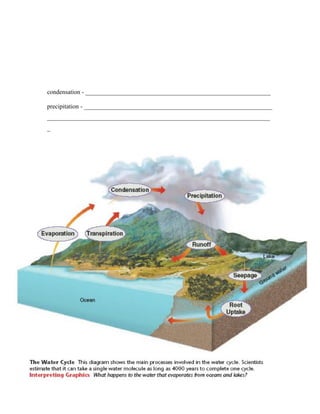
Evaporation - ____________________________________________________________
_______________________________________________________________________
_

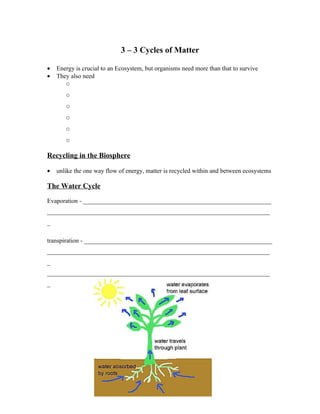
transpiration - ____________________________________________________________
_______________________________________________________________________
_
_______________________________________________________________________
_
condensation - ___________________________________________________________

precipitation - ____________________________________________________________
_______________________________________________________________________
_
Nutrient Cycles

Nutrients - ______________________________________________________________
_______________________________________________________________________
_

•   Every living organism needs nutrients to grow and carry out essential life functions.
    Like water; nutrients are passed between organisms and the environment through
    cycles

The Carbon Cycle

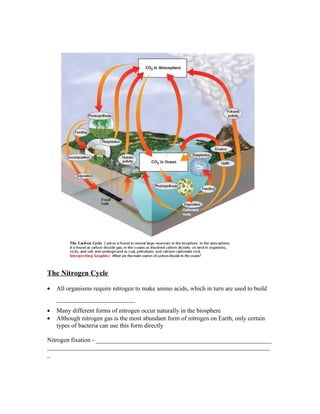
•   There are four different kinds of processes involved in the carbon cycle:

    1. biological processes, such as photosynthesis, respiration, and decomposition of
       plants and animals;

    2. geochemical processes, such as the release of carbon dioxide (CO2) gas to the
       atmosphere by volcanoes;

    3. mixed biogeochemical processes, such as the burial of carbon rich remains of
       organisms and their conversion into coal and petroleum (fossil fuels) by the
       pressure of the overlying earth; and

    4. human activity, including mining, the burning of fossil fuels, and the cutting and
       burning of forests.
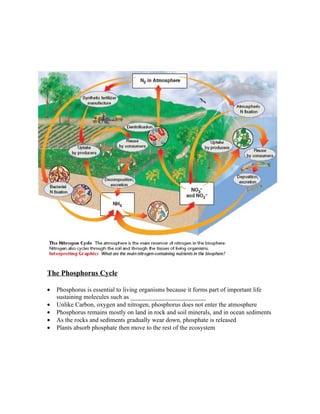
The Nitrogen Cycle

•   All organisms require nitrogen to make amino acids, which in turn are used to build
    _________________________
•   Many different forms of nitrogen occur naturally in the biosphere
•   Although nitrogen gas is the most abundant form of nitrogen on Earth, only certain
    types of bacteria can use this form directly

Nitrogen fixation - ________________________________________________________
_______________________________________________________________________
_
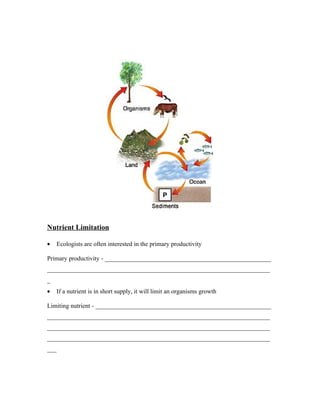
The Phosphorus Cycle

•   Phosphorus is essential to living organisms because it forms part of important life
    sustaining molecules such as ________________________
•   Unlike Carbon, oxygen and nitrogen, phosphorus does not enter the atmosphere
•   Phosphorus remains mostly on land in rock and soil minerals, and in ocean sediments
•   As the rocks and sediments gradually wear down, phosphate is released
•   Plants absorb phosphate then move to the rest of the ecosystem
Nutrient Limitation

•   Ecologists are often interested in the primary productivity

Primary productivity - _____________________________________________________
_______________________________________________________________________
_
•   If a nutrient is in short supply, it will limit an organisms growth

Limiting nutrient - ________________________________________________________
_______________________________________________________________________
_______________________________________________________________________
_______________________________________________________________________
___
Name _________________________________ Date _____________________ Per ____


                          3 – 3 Section Review

Biology - Chp 3 - The Biosphere - Notes

  • 1.
    Chapter 3 TheBiosphere
  • 2.
    3-1 What isEcology? Interactions and Interdependence Ecology - _______________________________________________________________ _______________________________________________________________________ _ biosphere - ______________________________________________________________ _______________________________________________________________________ _ Levels of Organization • To understand relationships within the biosphere ecologists ask questions about events and organisms that range in complexity from single individuals to the entire biosphere • Studies can focus on… Species - ________________________________________________________________ _______________________________________________________________________ _ Populations - ____________________________________________________________ _______________________________________________________________________ _______________________________________________________________________ __ Communities - ___________________________________________________________ _______________________________________________________________________ _ Ecosystem - _____________________________________________________________ _______________________________________________________________________ _
  • 3.
  • 4.
    Ecological Methods • Regardless of the tools they use, scientists conduct modern ecological research using 3 basic approaches: 1. 2. 3. Name ____________________________________ Date _________________ Per _____ 3-1 Section Review 1. List the six different levels of organization that ecologists study, in order from smallest to largest. 2. Describe the three basic methods of ecological research. 3. Identify two ways in which you interact with each of the three parts of the biosphere— land, water, and air—every day.
  • 5.
    4. Suppose youwanted to know if the water in a certain stream is safe to drink. Which ecological method(s) would you choose, and why? 3 – 2 Energy Flow • The flow of energy through an ecosystem is one of the most important factors that determines the systems capacity to sustain life Producers • _______________________ is the main energy source for life on Earth • Some types of organisms rely on the energy stored in organic chemical compounds Producers (autotrophs) - ____________________________________________________ _______________________________________________________________________ _ ex.) Energy From the Sun Photosynthesis - __________________________________________________________ _______________________________________________________________________ _
  • 6.
    Life Without Light • Some autotrophs rely on energy within the chemical bonds of inorganic molecules such as hydrogen sulfide Chemosynthesis - _________________________________________________________ _______________________________________________________________________ _
  • 7.
    Consumers • Many organisms cannot harness energy directly from their environment like autotrophs do Consumers (heterotrophs) - _________________________________________________ _______________________________________________________________________ _ _______________________________________________________________________ _ • There are many kinds of heterotrophs Herbivores - _____________________________________________________________ Carnivores - _____________________________________________________________ Detritivores - ____________________________________________________________ _______________________________________________________________________ _ Decomposers - ___________________________________________________________ Feeding Relationships • Energy flows through an ecosystem in one direction, from the sun or inorganic compounds to autotrophs (producers) and then to various heterotrophs (consumers) Food Chains Food chain - _____________________________________________________________ _______________________________________________________________________ _
  • 8.
    In most ecosystems, feeding relationships are more complex than they can be shown in a food chain Food Webs - _____________________________________________________________ _______________________________________________________________________ _______________________________________________________________________ __
  • 10.
    Trophic Levels -__________________________________________________________ _______________________________________________________________________ _ 1st - ____________________________________________________ 2nd – 3rd or higher - ________________________________________ • Each consumer depends on the trophic level below it for energy Ecological Pyramids Ecological Pyramid – a diagram that shows the relative amounts of energy or matter contained within each trophic level in a food chain or food web • There are 3 types of ecological pyramids 1. Energy Pyramid - _______________________________________________________ _______________________________________________________________________ _ • Only about ________ of the energy available within one trophic level is transferred to organisms at the next trophic level 2. Biomass Pyramid - ______________________________________________________ _______________________________________________________________________ _
  • 11.
    biomass - _______________________________________________________________ _______________________________________________________________________ 3.Pyramid of Numbers - ___________________________________________________ _______________________________________________________________________ _ • Note: Pyramid of numbers may not always be pyramid shaped
  • 12.
    Name ______________________________ Date_____________________ Per _______ 3 – 2 Section Review 1. What are the two main forms of energy that power living systems? 2. Briefly describe the flow of energy among organisms in an ecosystem. 3. What proportion of energy is transferred from one trophic level to the next in an ecosystem? 4. Show the following as a food chain: omnivore, autotroph, herbivore. 5. Draw an energy pyramid for a five-step food chain. If 100 percent of the energy is available at the first trophic level, what percentage of the total energy is available at the highest trophic level?
  • 13.
    3 – 3Cycles of Matter • Energy is crucial to an Ecosystem, but organisms need more than that to survive • They also need o o o o o o Recycling in the Biosphere • unlike the one way flow of energy, matter is recycled within and between ecosystems The Water Cycle Evaporation - ____________________________________________________________ _______________________________________________________________________ _ transpiration - ____________________________________________________________ _______________________________________________________________________ _ _______________________________________________________________________ _
  • 14.
    condensation - ___________________________________________________________ precipitation- ____________________________________________________________ _______________________________________________________________________ _
  • 15.
    Nutrient Cycles Nutrients -______________________________________________________________ _______________________________________________________________________ _ • Every living organism needs nutrients to grow and carry out essential life functions. Like water; nutrients are passed between organisms and the environment through cycles The Carbon Cycle • There are four different kinds of processes involved in the carbon cycle: 1. biological processes, such as photosynthesis, respiration, and decomposition of plants and animals; 2. geochemical processes, such as the release of carbon dioxide (CO2) gas to the atmosphere by volcanoes; 3. mixed biogeochemical processes, such as the burial of carbon rich remains of organisms and their conversion into coal and petroleum (fossil fuels) by the pressure of the overlying earth; and 4. human activity, including mining, the burning of fossil fuels, and the cutting and burning of forests.
  • 16.
    The Nitrogen Cycle • All organisms require nitrogen to make amino acids, which in turn are used to build _________________________ • Many different forms of nitrogen occur naturally in the biosphere • Although nitrogen gas is the most abundant form of nitrogen on Earth, only certain types of bacteria can use this form directly Nitrogen fixation - ________________________________________________________ _______________________________________________________________________ _
  • 17.
    The Phosphorus Cycle • Phosphorus is essential to living organisms because it forms part of important life sustaining molecules such as ________________________ • Unlike Carbon, oxygen and nitrogen, phosphorus does not enter the atmosphere • Phosphorus remains mostly on land in rock and soil minerals, and in ocean sediments • As the rocks and sediments gradually wear down, phosphate is released • Plants absorb phosphate then move to the rest of the ecosystem
  • 18.
    Nutrient Limitation • Ecologists are often interested in the primary productivity Primary productivity - _____________________________________________________ _______________________________________________________________________ _ • If a nutrient is in short supply, it will limit an organisms growth Limiting nutrient - ________________________________________________________ _______________________________________________________________________ _______________________________________________________________________ _______________________________________________________________________ ___
  • 19.
    Name _________________________________ Date_____________________ Per ____ 3 – 3 Section Review