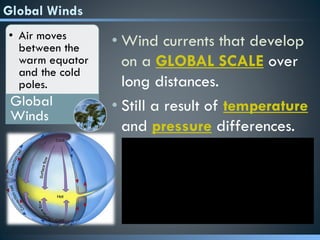
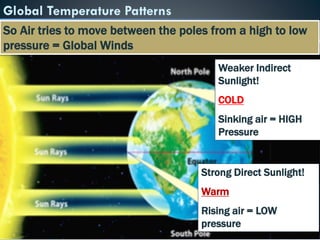
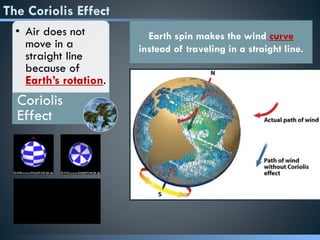
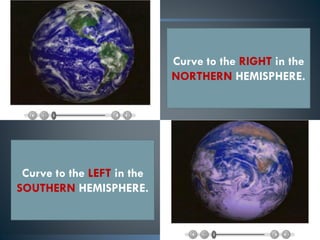
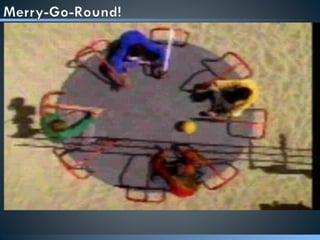
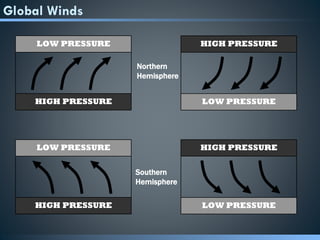
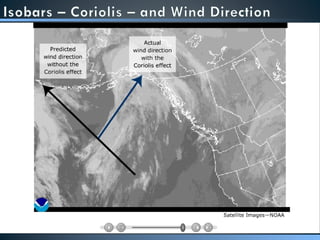
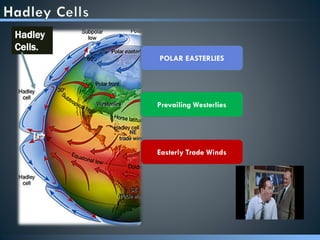
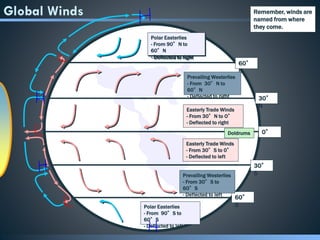
The document discusses global wind patterns that develop due to temperature differences between the equator and poles. Warm air rises at the equator, creating low pressure, while cold air sinks at the poles, creating high pressure. Air moves from high to low pressure areas, resulting in global wind currents called the prevailing westerlies, easterly trade winds, and polar easterlies in both hemispheres. The Coriolis effect causes these winds to curve right in the northern hemisphere and left in the southern hemisphere as they travel.


![Wind [autosaved]](https://cdn.slidesharecdn.com/ss_thumbnails/windautosaved-180708133944-thumbnail.jpg?width=640&height=640&fit=bounds)


