MAN AND NATURALMAN AND NATURAL
ENVIRONMENTENVIRONMENT
INTRODUCTIONINTRODUCTION
Environment means the surrounding
conditions that effects the lifestyle of
living things.
It includes biotic and abiotic components.
Our surroundings includes natural and
manmade things.
Human life gets affected by the
environment and hence we find
differences in the human life of different
regions.
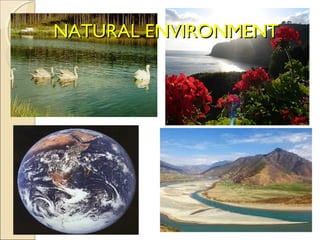
Natural environmentNatural environment
All components which come
into existence naturally are
included in natural environment.
The landforms on the earth, the
climate, soils, minerals, sunlight
etc are components of our
natural environment.
NATURAL ENVIRONMENTNATURAL ENVIRONMENT
CULTURAL ENVIRONMENTCULTURAL ENVIRONMENT
In order to enrich his life man
has used many natural resources
and in this process he has
brought many changes in natural
environment. Human
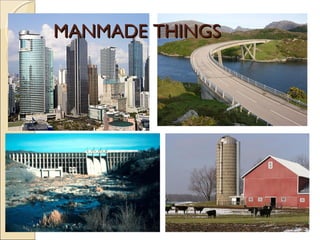
settlements, roads, buildings,
dams etc have developed through
this.
MANMADE THINGSMANMADE THINGS
Interactions in environmentInteractions in environment
THERE ARE MANY INTERACTIONS BETWEEN
BIOTIC [LIVING] AND ABIOTIC [NON LIVING]
COMPONENTS.
ALL THE BIOTIC COMPONENTS DEPEND ON
EACH OTHER.WE BREATHE AIR THAT MEANS
THERE IS AN INTERACTION BETWEEN
US[LIVING] AND THE AIR [NON LIVING]
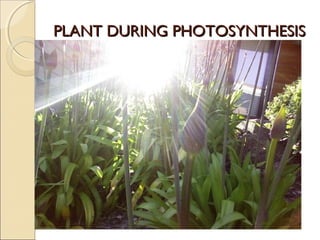
PLANTS MAKE PRODUCE THEIR FOOD USING
SOLAR ENERGY.THAT MEANS THERE IS AN
INTERACTION BETWEEN ABIOTIC AND
BIOTIC COMPONENTS.
PLANT DURING PHOTOSYNTHESISPLANT DURING PHOTOSYNTHESIS
ECOLOGYECOLOGY
A BRANCH OF BIO-SCIENCES THAT
STUDIES THE
INTERDEPENDENCE,INTERRELATIONSAND
INTERACTIONS OD BIO-COMMUNITY
WITH ITS ENVIRONMENT.
THE CHANGES OCCURING IN THE
ENVIRONMENT AND THEIR EFFECTS ON
THE LIVING WORLD ALSO FORM AN
IMPORTANT OF THE SUBJECT MATTER OF
ECOLOGY.
ECOSYSTEMECOSYSTEM
A closely related group bio-community and the
surrounding environment. On which the life of
the community depends together form an eco-
system together form an eco-system.
All the natural regions wherein interactions takes
place between abiotic and biotic components are
callecd ec o
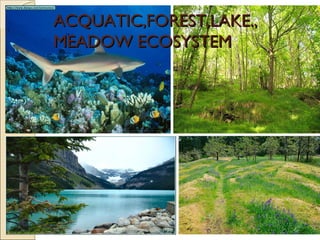
EG: ACQUATIC ECOSYSTEM,FOREST
ECOSYSTEM,LAKE ECOSYSTEM,MEADOW
ECOSYSTEM.
ACQUATIC,FOREST,LAKE.,ACQUATIC,FOREST,LAKE.,
MEADOW ECOSYSTEMMEADOW ECOSYSTEM
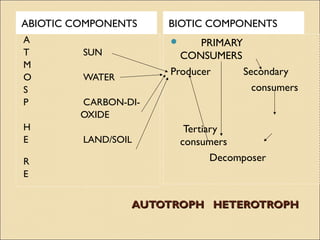
AUTOTROPH HETEROTROPHAUTOTROPH HETEROTROPH
ABIOTIC COMPONENTS BIOTIC COMPONENTS
A
T SUN
M
O WATER
S
P CARBON-DI-
OXIDE
H
E LAND/SOIL
R
E
 PRIMARY
CONSUMERS
Producer Secondary
consumers
Tertiary
consumers
Decomposer
◦ THE BIOTIC COMPONENTS IN
AN ECOSYSTEM IS CLASSIFIED
AS PRODUCERS,CONSUMERS
AND DECOMPOSERS.THE
CONSUMERS ARE FURTHER
DIVIDED INTO
PRIMARY,SECONDARY AND
TERTIARY CONSUMERS
FUNTION OF AN ECOSYSTEMFUNTION OF AN ECOSYSTEM
The sun is the main source of energy
Green plants produce food with the help
of solar energy trough the process of
photosynthesis. Hence they are called
PRODUCERS.
 Plants utilize their own food and they
produce their own growth.
The rest they store in the form of energy
plants are used by herbivorous animals as
food.
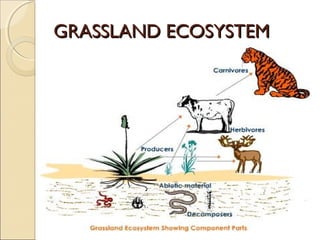
GRASSLAND ECOSYSTEMGRASSLAND ECOSYSTEM
PRIMARY CONSUMER..
The plants are the producers whereas the
hair that uses only green plants as its food is
called primary consumer…
SECONDARY CONSUMER…
The hare becomes food for a snake hence
carnivores animals like snakes are called
secondary consumers…
TERTIARY CONSUMERS…..
The snake becomes food for an eagle hence
eagle is called tertiary consumer. Eagle is in
highest consumer in the food chain……..
The energy in the form of food
enters the body of carnivorous
and omnivorous and is used for
their physiological functions.
This is how the energy cycle
work
Herbivorous become food of
carnivorous and omnivorous like
man.
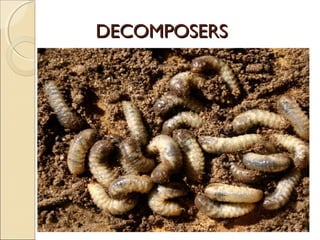
Worms ,Fungi, Insect Etc
Decomposer .The Remain Of Dead
Animals And Plants.
Hence they convert organic matter
into organic matter.
The matter get mixed in soil............
DECOMPOSERSDECOMPOSERS
ENERGY TRANSFERENERGY TRANSFER
WITH THE HELP OF SOLAR ENERGY;
PLANTS PRODUCE FOOD.
FOOD IS ENERGY.
THIS ENERGY GETS TRANSFERRED TO
PRIMARY, SECONDARYAND TERTIARY
CONSUMERS TO DECOMPOSERS.THIS
COMPLETESTHE ENERGY CYCLE.
THE SEQUENTIAL TRANSFER OF
ENERGY IN THE FORM OF FOODIS
CALLED FOOD CHAIN.
LEVELS OF FOOD TRANSFER ARE
CALLED FOOD CHAIN.
FOOD WEBFOOD WEB
A CONSUMER CAN OBTAIN HIS
FOOD IN DIFFERENT WAYS.
AS A RESULT,MULTIPLE FOOD
CHAINS COME INTO EXISTENCE
IN AN ECOSYSTEM.
DIFFERENT FOOD CHAINS GET
CONNECTED TO FOOD WEB.
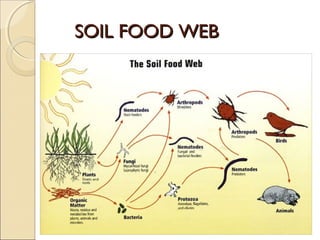
SOIL FOOD WEBSOIL FOOD WEB
FOOD PYRAMIDFOOD PYRAMID
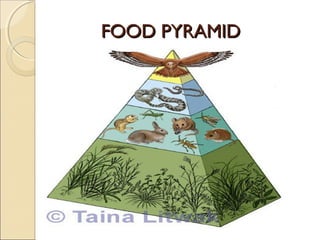
SOME OF THE ENERGY GETS LOST AT
EACH LEVEL. DUE TO THIS WHILE
MOVING FROM PRODUCERS TO LOSS
DIFFERENT TYPES OF
CONSUMERS,THERE IS A DECREASE IN
ENERGY.
IF ONE ATTEMTS DIAGRAMMATIC
REPRESENTATION OF THIS PROCESS
THIS DIAGRAM APPEARS LIKE A
PYRAMID.THIS IS CALLED FOOD CHAIN.
FOOD PYRAMIDFOOD PYRAMID
ENVIRONMENTAL BALANCEENVIRONMENTAL BALANCE
IF THE NUMBER OF BIOMASS AND
ORGANISM IS IN PROPER PROPORTION AT
DIFFERENT TROPHIC LEVELS,THE
ENVIRONMENT OF THAT REGION IS SAID
TO BE BALANCED.
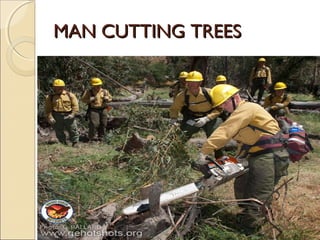
MAN HAS CLEARED THOUSAND HECTARES
OF FOREST LANDS FOR HIS DEVELOPMENT
AS A RESULT THE ENVIRONMENTAL
BALANCE IS SAID TO BE DISTURBED.
MAN IS INTELLIGENT THAN OTHER
ORGANISM.THEREFORE IT IS HIS DUTY TO
PROTECT THE ENVIRONMENT
MAN CUTTING TREESMAN CUTTING TREES
Man & natural environment

Man & natural environment

  • 1.
    MAN AND NATURALMANAND NATURAL ENVIRONMENTENVIRONMENT
  • 2.
    INTRODUCTIONINTRODUCTION Environment means thesurrounding conditions that effects the lifestyle of living things. It includes biotic and abiotic components. Our surroundings includes natural and manmade things. Human life gets affected by the environment and hence we find differences in the human life of different regions.
  • 3.
    Natural environmentNatural environment Allcomponents which come into existence naturally are included in natural environment. The landforms on the earth, the climate, soils, minerals, sunlight etc are components of our natural environment.
  • 4.
  • 5.
    CULTURAL ENVIRONMENTCULTURAL ENVIRONMENT Inorder to enrich his life man has used many natural resources and in this process he has brought many changes in natural environment. Human settlements, roads, buildings, dams etc have developed through this.
  • 6.
  • 7.
    Interactions in environmentInteractionsin environment THERE ARE MANY INTERACTIONS BETWEEN BIOTIC [LIVING] AND ABIOTIC [NON LIVING] COMPONENTS. ALL THE BIOTIC COMPONENTS DEPEND ON EACH OTHER.WE BREATHE AIR THAT MEANS THERE IS AN INTERACTION BETWEEN US[LIVING] AND THE AIR [NON LIVING] PLANTS MAKE PRODUCE THEIR FOOD USING SOLAR ENERGY.THAT MEANS THERE IS AN INTERACTION BETWEEN ABIOTIC AND BIOTIC COMPONENTS.
  • 8.
    PLANT DURING PHOTOSYNTHESISPLANTDURING PHOTOSYNTHESIS
  • 9.
    ECOLOGYECOLOGY A BRANCH OFBIO-SCIENCES THAT STUDIES THE INTERDEPENDENCE,INTERRELATIONSAND INTERACTIONS OD BIO-COMMUNITY WITH ITS ENVIRONMENT. THE CHANGES OCCURING IN THE ENVIRONMENT AND THEIR EFFECTS ON THE LIVING WORLD ALSO FORM AN IMPORTANT OF THE SUBJECT MATTER OF ECOLOGY.
  • 10.
    ECOSYSTEMECOSYSTEM A closely relatedgroup bio-community and the surrounding environment. On which the life of the community depends together form an eco- system together form an eco-system. All the natural regions wherein interactions takes place between abiotic and biotic components are callecd ec o EG: ACQUATIC ECOSYSTEM,FOREST ECOSYSTEM,LAKE ECOSYSTEM,MEADOW ECOSYSTEM.
  • 11.
  • 12.
    AUTOTROPH HETEROTROPHAUTOTROPH HETEROTROPH ABIOTICCOMPONENTS BIOTIC COMPONENTS A T SUN M O WATER S P CARBON-DI- OXIDE H E LAND/SOIL R E  PRIMARY CONSUMERS Producer Secondary consumers Tertiary consumers Decomposer
  • 13.
    ◦ THE BIOTICCOMPONENTS IN AN ECOSYSTEM IS CLASSIFIED AS PRODUCERS,CONSUMERS AND DECOMPOSERS.THE CONSUMERS ARE FURTHER DIVIDED INTO PRIMARY,SECONDARY AND TERTIARY CONSUMERS
  • 14.
    FUNTION OF ANECOSYSTEMFUNTION OF AN ECOSYSTEM The sun is the main source of energy Green plants produce food with the help of solar energy trough the process of photosynthesis. Hence they are called PRODUCERS.  Plants utilize their own food and they produce their own growth. The rest they store in the form of energy plants are used by herbivorous animals as food.
  • 15.
  • 16.
    PRIMARY CONSUMER.. The plantsare the producers whereas the hair that uses only green plants as its food is called primary consumer… SECONDARY CONSUMER… The hare becomes food for a snake hence carnivores animals like snakes are called secondary consumers… TERTIARY CONSUMERS….. The snake becomes food for an eagle hence eagle is called tertiary consumer. Eagle is in highest consumer in the food chain……..
  • 17.
    The energy inthe form of food enters the body of carnivorous and omnivorous and is used for their physiological functions. This is how the energy cycle work Herbivorous become food of carnivorous and omnivorous like man.
  • 18.
    Worms ,Fungi, InsectEtc Decomposer .The Remain Of Dead Animals And Plants. Hence they convert organic matter into organic matter. The matter get mixed in soil............
  • 19.
  • 20.
    ENERGY TRANSFERENERGY TRANSFER WITHTHE HELP OF SOLAR ENERGY; PLANTS PRODUCE FOOD. FOOD IS ENERGY. THIS ENERGY GETS TRANSFERRED TO PRIMARY, SECONDARYAND TERTIARY CONSUMERS TO DECOMPOSERS.THIS COMPLETESTHE ENERGY CYCLE. THE SEQUENTIAL TRANSFER OF ENERGY IN THE FORM OF FOODIS CALLED FOOD CHAIN. LEVELS OF FOOD TRANSFER ARE CALLED FOOD CHAIN.
  • 21.
    FOOD WEBFOOD WEB ACONSUMER CAN OBTAIN HIS FOOD IN DIFFERENT WAYS. AS A RESULT,MULTIPLE FOOD CHAINS COME INTO EXISTENCE IN AN ECOSYSTEM. DIFFERENT FOOD CHAINS GET CONNECTED TO FOOD WEB.
  • 22.
  • 23.
    FOOD PYRAMIDFOOD PYRAMID SOMEOF THE ENERGY GETS LOST AT EACH LEVEL. DUE TO THIS WHILE MOVING FROM PRODUCERS TO LOSS DIFFERENT TYPES OF CONSUMERS,THERE IS A DECREASE IN ENERGY. IF ONE ATTEMTS DIAGRAMMATIC REPRESENTATION OF THIS PROCESS THIS DIAGRAM APPEARS LIKE A PYRAMID.THIS IS CALLED FOOD CHAIN.
  • 24.
  • 25.
    ENVIRONMENTAL BALANCEENVIRONMENTAL BALANCE IFTHE NUMBER OF BIOMASS AND ORGANISM IS IN PROPER PROPORTION AT DIFFERENT TROPHIC LEVELS,THE ENVIRONMENT OF THAT REGION IS SAID TO BE BALANCED. MAN HAS CLEARED THOUSAND HECTARES OF FOREST LANDS FOR HIS DEVELOPMENT AS A RESULT THE ENVIRONMENTAL BALANCE IS SAID TO BE DISTURBED. MAN IS INTELLIGENT THAN OTHER ORGANISM.THEREFORE IT IS HIS DUTY TO PROTECT THE ENVIRONMENT
  • 26.
    MAN CUTTING TREESMANCUTTING TREES