Global Circulation of the Atmosphere
1
Submitted To:
Md. Anarul Haque Mondol
Lecturer
Department of Geography &
Environment
Jahangirnagar University
Submitted By: Group: I
Member Roll
Shahorima Jannati 633
Injamamul Haque 649
Khalilur Rahman 663
Abdul Alim 676
Ayesha Akter 2258
Jahangirnagar
University
Savar, Dhaka- 1342
Course: 201
2
Contents
 Atmospheric Circulation
 Spheres of Atmosphere
 Three model of Atmospheric Circulation
1. Hadley Cell
2.Ferrel Cell
3. Polar Cell
 The Patterns in Global Air Circulation
 Season
 Monsoon
 Day and Night(Sea breeze and Land breeze)
3
The purpose of this presentation is to introduce the topic of
atmospheric circulation.
Main concepts
 Atmospheric circulation is a response to differences in insolation between low
and high latitudes.
 There is a transfer of energy from low to high latitudes.
 A global pattern of surface winds and pressure belts results from this
circulation.
 There is a seasonal shift of the surface wind and pressure belts.
4
 What is Atmospheric Circulation?
The circulation of wind in the
atmosphere is driven by the rotation
of the earth and the incoming energy
from the sun. Wind circulates in each
hemisphere in three distinct cells
which help transport energy and heat
from the equator to the poles.
Cyclone
5
Troposphere
 extends to 16-18 km
above the tropics but
<10 km above the
poles;
contains ~80% of
atmosphere’s mass; and
runs the hydrological
cycle because
tropospheric temperatures
decrease with height
Average temperature, °C
Troposphere
Tropopause
Stratosphere
Mesosphere
Thermo-sphere
Average atmospheric
temperature
Stratopause
There is a hole in the
Ozone layer right
above Antarctica
Height,abovemeansealevel(km)
Spheres of Atmosphere
6
Three model of Atmospheric Circulation
Hadley Cell
 Ferrel Cell
 Polar Cell
7
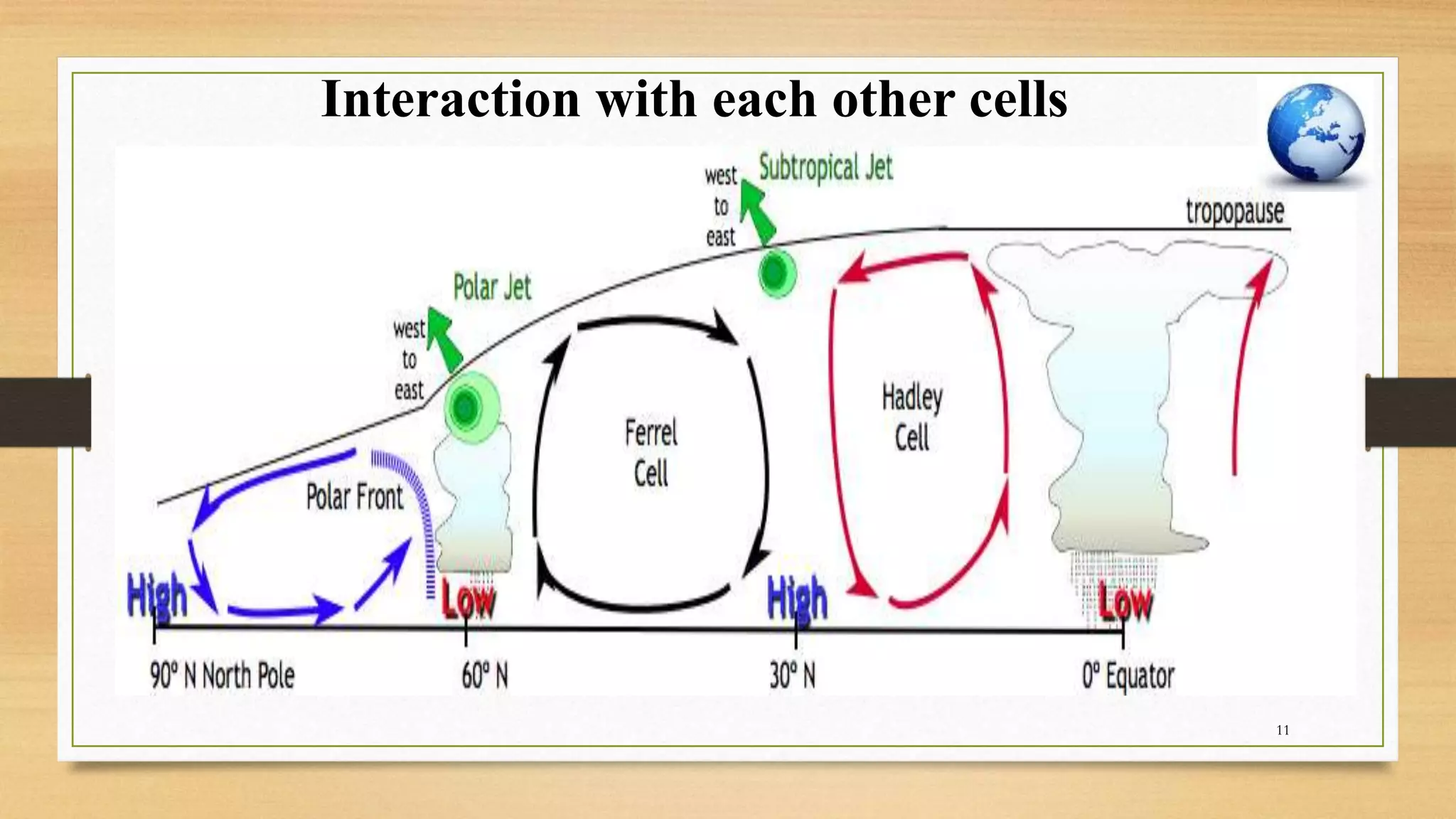
Hadley cell
The Hadley cell, named after George Hadley,
is a global scale tropical atmospheric
circulation that features air rising near the
equator, flowing poleward at 10–15
kilometers above the surface, descending in
the subtropics, and then returning
equatorward near the surface. This
circulation creates the trade winds, tropical
rain-belts and hurricanes, subtropical deserts
and the jet streams.
8
The Ferrel cell occurs between 30 and 60
degrees north and south. The Ferrel cell is
dependent for its existence upon the
Hadley cell and the Polar cell. It comes
about as a result of the high and low
pressure areas of the mid-latitudes. For
this reason it is sometimes known as the
"zone of mixing." In this cell at higher
levels the wind blows equatorward and in
a westerly direction and pole wards and in
an easterly direction on the surface.
Ferrel cell
9
This cell occurs at 60 degrees north and south.
The air has been warmed up and rises upwards,
creating a zone of low pressure. Though cool
and dry relative to equatorial air, air masses are
still sufficiently warm and moist to undergo
convection. When the air reaches the polar
areas, it has cooled considerably, and descends
as a cold, dry high pressure area, moving away
from the pole along the surface.
Polar Cell
Polar cell
10
Interaction with each other cells
11
Describe atmospheric circulation with picture
12
The Patterns in Global Air Circulation
13
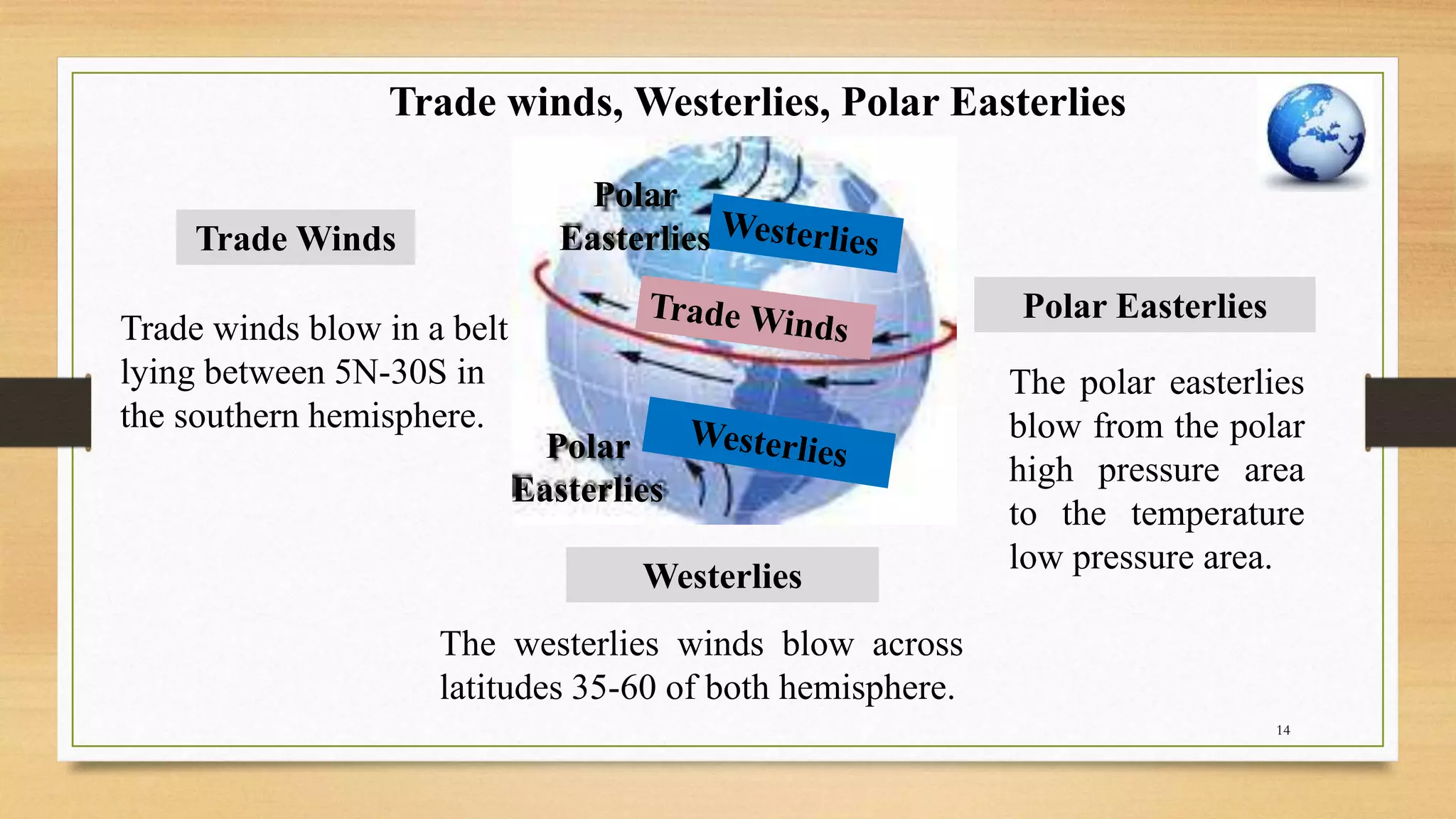
Trade Winds
Trade winds blow in a belt
lying between 5N-30S in
the southern hemisphere.
Polar Easterlies
The polar easterlies
blow from the polar
high pressure area
to the temperature
low pressure area.
Westerlies
The westerlies winds blow across
latitudes 35-60 of both hemisphere.
Polar
Easterlies
Polar
Easterlies
Trade winds, Westerlies, Polar Easterlies
14
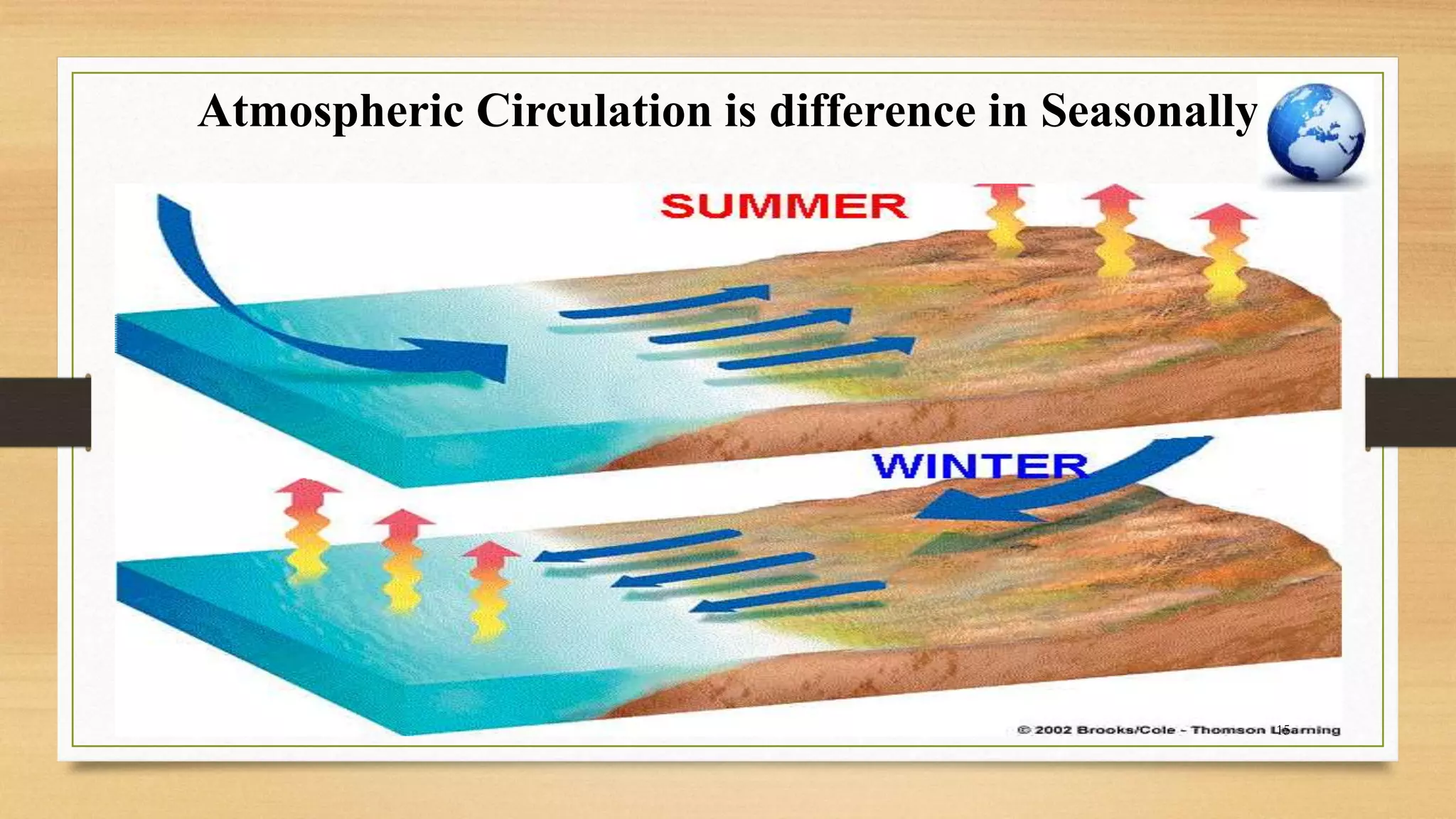
Atmospheric Circulation is difference in Seasonally
15
Monsoon
Monsoon is traditionally defined as a
seasonal reversing wind accompanied by
corresponding changes in precipitation,
but is now used to describe seasonal
changes in atmospheric circulation and
precipitation associated with the
asymmetric heating of land and sea.
Rain
16
Example
17
18
Conclusion
Atmospheric circulation is the large-scale movement of air by which heat
is distributed on the surface of the Earth. The circulation of wind in the
atmosphere is driven by the rotation of the earth and the incoming energy
from the sun. Without atmospheric circulation earth is static.
19
• www.google.com
• www.wikipedia.com
• www.sciencedaily.com/terms/atmospheric_circulation.htm
• https://www.youtube.com/watch?v=WXuGYSM2D8k
• www.dictionary.com
• www.britannica.com
• Class Lecture
Further Read
20
21
22

General Circulation of the Atmosphere

  • 1.
    Global Circulation ofthe Atmosphere 1
  • 2.
    Submitted To: Md. AnarulHaque Mondol Lecturer Department of Geography & Environment Jahangirnagar University Submitted By: Group: I Member Roll Shahorima Jannati 633 Injamamul Haque 649 Khalilur Rahman 663 Abdul Alim 676 Ayesha Akter 2258 Jahangirnagar University Savar, Dhaka- 1342 Course: 201 2
  • 3.
    Contents  Atmospheric Circulation Spheres of Atmosphere  Three model of Atmospheric Circulation 1. Hadley Cell 2.Ferrel Cell 3. Polar Cell  The Patterns in Global Air Circulation  Season  Monsoon  Day and Night(Sea breeze and Land breeze) 3
  • 4.
    The purpose ofthis presentation is to introduce the topic of atmospheric circulation. Main concepts  Atmospheric circulation is a response to differences in insolation between low and high latitudes.  There is a transfer of energy from low to high latitudes.  A global pattern of surface winds and pressure belts results from this circulation.  There is a seasonal shift of the surface wind and pressure belts. 4
  • 5.
     What isAtmospheric Circulation? The circulation of wind in the atmosphere is driven by the rotation of the earth and the incoming energy from the sun. Wind circulates in each hemisphere in three distinct cells which help transport energy and heat from the equator to the poles. Cyclone 5
  • 6.
    Troposphere  extends to16-18 km above the tropics but <10 km above the poles; contains ~80% of atmosphere’s mass; and runs the hydrological cycle because tropospheric temperatures decrease with height Average temperature, °C Troposphere Tropopause Stratosphere Mesosphere Thermo-sphere Average atmospheric temperature Stratopause There is a hole in the Ozone layer right above Antarctica Height,abovemeansealevel(km) Spheres of Atmosphere 6
  • 7.
    Three model ofAtmospheric Circulation Hadley Cell  Ferrel Cell  Polar Cell 7
  • 8.
    Hadley cell The Hadleycell, named after George Hadley, is a global scale tropical atmospheric circulation that features air rising near the equator, flowing poleward at 10–15 kilometers above the surface, descending in the subtropics, and then returning equatorward near the surface. This circulation creates the trade winds, tropical rain-belts and hurricanes, subtropical deserts and the jet streams. 8
  • 9.
    The Ferrel celloccurs between 30 and 60 degrees north and south. The Ferrel cell is dependent for its existence upon the Hadley cell and the Polar cell. It comes about as a result of the high and low pressure areas of the mid-latitudes. For this reason it is sometimes known as the "zone of mixing." In this cell at higher levels the wind blows equatorward and in a westerly direction and pole wards and in an easterly direction on the surface. Ferrel cell 9
  • 10.
    This cell occursat 60 degrees north and south. The air has been warmed up and rises upwards, creating a zone of low pressure. Though cool and dry relative to equatorial air, air masses are still sufficiently warm and moist to undergo convection. When the air reaches the polar areas, it has cooled considerably, and descends as a cold, dry high pressure area, moving away from the pole along the surface. Polar Cell Polar cell 10
  • 11.
    Interaction with eachother cells 11
  • 12.
  • 13.
    The Patterns inGlobal Air Circulation 13
  • 14.
    Trade Winds Trade windsblow in a belt lying between 5N-30S in the southern hemisphere. Polar Easterlies The polar easterlies blow from the polar high pressure area to the temperature low pressure area. Westerlies The westerlies winds blow across latitudes 35-60 of both hemisphere. Polar Easterlies Polar Easterlies Trade winds, Westerlies, Polar Easterlies 14
  • 15.
    Atmospheric Circulation isdifference in Seasonally 15
  • 16.
    Monsoon Monsoon is traditionallydefined as a seasonal reversing wind accompanied by corresponding changes in precipitation, but is now used to describe seasonal changes in atmospheric circulation and precipitation associated with the asymmetric heating of land and sea. Rain 16
  • 17.
  • 18.
  • 19.
    Conclusion Atmospheric circulation isthe large-scale movement of air by which heat is distributed on the surface of the Earth. The circulation of wind in the atmosphere is driven by the rotation of the earth and the incoming energy from the sun. Without atmospheric circulation earth is static. 19
  • 20.
    • www.google.com • www.wikipedia.com •www.sciencedaily.com/terms/atmospheric_circulation.htm • https://www.youtube.com/watch?v=WXuGYSM2D8k • www.dictionary.com • www.britannica.com • Class Lecture Further Read 20
  • 21.
  • 22.