Concept to Understand
Matter, in the form of nutrients, cycles
within and among ecosystems and in the
biosphere, and human activities are
altering these nutrient cycles.
Nutrient Cycles
Driven by solar energy and gravity
Reservoirs – storage sites where nutrients
accumulate and remain there for some
time
Connect all organisms through time
Nutrient Cycles - Water, Carbon,
Nitrogen
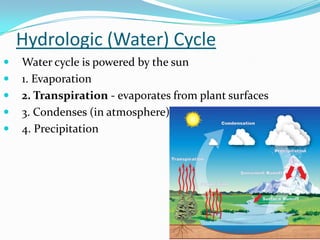
Hydrologic (Water) Cycle
 Water cycle is powered by the sun
 1. Evaporation
 2. Transpiration - evaporates from plant surfaces
 3. Condenses (in atmosphere)
 4. Precipitation
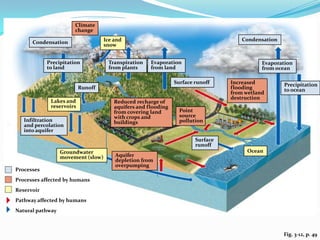
Hydrologic Cycle
 Water vapor in the atmosphere comes from the
oceans
 84%
 Over land, ???% of water reaching the atmosphere
comes from transpiration
 90%
 Only 0.024% of water is available for human use (too
salty, ice, too deep underground)
Animation: Hydrologic Cycle
Increased
flooding
from wetland
destruction
Condensation
Evaporation
from ocean
Climate
change
Infiltration
and percolation
into aquifer
Condensation
Ocean
Lakes and
reservoirs
Ice and
snow
Surface
runoff
Surface runoff
Aquifer
depletion from
overpumping
Point
source
pollution
Reduced recharge of
aquifers and flooding
from covering land
with crops and
buildings
Groundwater
movement (slow)
Runoff
Precipitation
to land
Precipitation
to ocean
Transpiration
from plants
Evaporation
from land
Fig. 3-12, p. 49
Processes
Processes affected by humans
Reservoir
Pathway affected by humans
Natural pathway
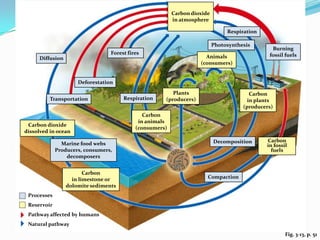
Carbon Cycle
 Carbon – basic building block of organic molecules
(carbohydrates, fats, protein, DNA)
 Carbon dioxide (CO2) also controls warming and cooling of
the Earth.
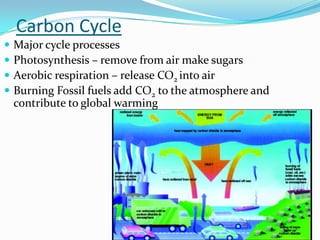
Carbon Cycle
 Major cycle processes
 Photosynthesis – remove from air make sugars
 Aerobic respiration – release CO2 into air
 Burning Fossil fuels add CO2 to the atmosphere and
contribute to global warming
Animation: Carbon Cycle
Respiration
Forest fires
Deforestation
Diffusion
Carbon dioxide
dissolved in ocean
Carbon
in limestone or
dolomite sediments
Marine food webs
Producers, consumers,
decomposers
Transportation
Carbon dioxide
in atmosphere
Carbon
in animals
(consumers)
Plants
(producers)
Animals
(consumers)
Decomposition
Respiration
Compaction
Carbon
in fossil
fuels
Carbon
in plants
(producers)
Burning
fossil fuels
Photosynthesis
Fig. 3-13, p. 51
Processes
Reservoir
Pathway affected by humans
Natural pathway
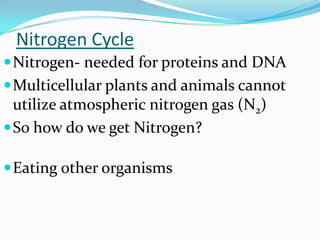
Nitrogen Cycle
Nitrogen- needed for proteins and DNA
Multicellular plants and animals cannot
utilize atmospheric nitrogen gas (N2)
So how do we get Nitrogen?
Eating other organisms
Nitrogen Cycle
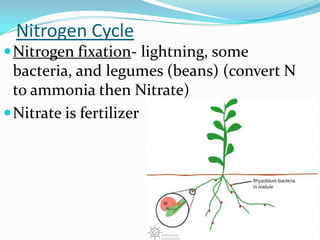
Nitrogen fixation- lightning, some
bacteria, and legumes (beans) (convert N
to ammonia then Nitrate)
Nitrate is fertilizer
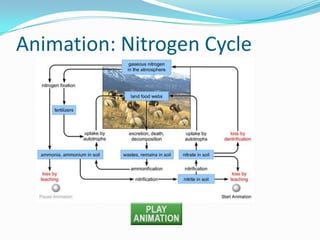
Nitrogen Cycle
 Added to soil by farmers – runs off causing
problems for local streams or lakes
Nitrogen
in atmosphere
Nitrogen
loss to deep
ocean sediments
Nitrogen oxides
from burning fuel
Nitrates
from fertilizer
runoff and
decomposition
Nitrogen
in ocean
sediments Ammonia
in soil
Volcanic
activity
Electrical
storms Nitrogen
in animals
(consumers)
Bacteria
Nitrate
in soil
Nitrogen
in plants
(producers)
Nitrification
by bacteria
Denitrification
by bacteria
Uptake by plantsDecomposition
Fig. 3-14, p. 52
Processes
Reservoir
Pathway affected by humans
Natural pathway
Animation: Nitrogen Cycle

3 4 ecosystem cycles

  • 2.
    Concept to Understand Matter,in the form of nutrients, cycles within and among ecosystems and in the biosphere, and human activities are altering these nutrient cycles.
  • 3.
    Nutrient Cycles Driven bysolar energy and gravity Reservoirs – storage sites where nutrients accumulate and remain there for some time Connect all organisms through time Nutrient Cycles - Water, Carbon, Nitrogen
  • 4.
    Hydrologic (Water) Cycle Water cycle is powered by the sun  1. Evaporation  2. Transpiration - evaporates from plant surfaces  3. Condenses (in atmosphere)  4. Precipitation
  • 5.
    Hydrologic Cycle  Watervapor in the atmosphere comes from the oceans  84%  Over land, ???% of water reaching the atmosphere comes from transpiration  90%  Only 0.024% of water is available for human use (too salty, ice, too deep underground)
  • 6.
  • 7.
    Increased flooding from wetland destruction Condensation Evaporation from ocean Climate change Infiltration andpercolation into aquifer Condensation Ocean Lakes and reservoirs Ice and snow Surface runoff Surface runoff Aquifer depletion from overpumping Point source pollution Reduced recharge of aquifers and flooding from covering land with crops and buildings Groundwater movement (slow) Runoff Precipitation to land Precipitation to ocean Transpiration from plants Evaporation from land Fig. 3-12, p. 49 Processes Processes affected by humans Reservoir Pathway affected by humans Natural pathway
  • 8.
    Carbon Cycle  Carbon– basic building block of organic molecules (carbohydrates, fats, protein, DNA)  Carbon dioxide (CO2) also controls warming and cooling of the Earth.
  • 9.
    Carbon Cycle  Majorcycle processes  Photosynthesis – remove from air make sugars  Aerobic respiration – release CO2 into air  Burning Fossil fuels add CO2 to the atmosphere and contribute to global warming
  • 10.
  • 11.
    Respiration Forest fires Deforestation Diffusion Carbon dioxide dissolvedin ocean Carbon in limestone or dolomite sediments Marine food webs Producers, consumers, decomposers Transportation Carbon dioxide in atmosphere Carbon in animals (consumers) Plants (producers) Animals (consumers) Decomposition Respiration Compaction Carbon in fossil fuels Carbon in plants (producers) Burning fossil fuels Photosynthesis Fig. 3-13, p. 51 Processes Reservoir Pathway affected by humans Natural pathway
  • 12.
    Nitrogen Cycle Nitrogen- neededfor proteins and DNA Multicellular plants and animals cannot utilize atmospheric nitrogen gas (N2) So how do we get Nitrogen? Eating other organisms
  • 13.
    Nitrogen Cycle Nitrogen fixation-lightning, some bacteria, and legumes (beans) (convert N to ammonia then Nitrate) Nitrate is fertilizer
  • 15.
    Nitrogen Cycle  Addedto soil by farmers – runs off causing problems for local streams or lakes
  • 16.
    Nitrogen in atmosphere Nitrogen loss todeep ocean sediments Nitrogen oxides from burning fuel Nitrates from fertilizer runoff and decomposition Nitrogen in ocean sediments Ammonia in soil Volcanic activity Electrical storms Nitrogen in animals (consumers) Bacteria Nitrate in soil Nitrogen in plants (producers) Nitrification by bacteria Denitrification by bacteria Uptake by plantsDecomposition Fig. 3-14, p. 52 Processes Reservoir Pathway affected by humans Natural pathway
  • 17.