Chemical Recycling
Biogeochemical Cycles The cycling of nutrients in an ecosystem involves both the biotic and abiotic parts.
Macronutrients  Elements required in large amounts Carbon Hydrogen Oxygen Nitrogen  Phosphorous Calcium Sulfur Water
Micronutrients  Elements needed on small amounts Zinc Molybdenum Iron Selnium Iodine For enzymes
Reservoirs  Storage sites of nutrients
The Cycles Water Carbon Nitrogen Phosphorous Calcium
The Water Cycle
Why Water? Best natural solvent Most chemical reactions in body take place in water Main transport medium Stable Ionise into hydrogen and hydroxyl (pH) Resists rapid temperature changes
The Cycle
Precipitation  Movement of water from atmosphere to Earth
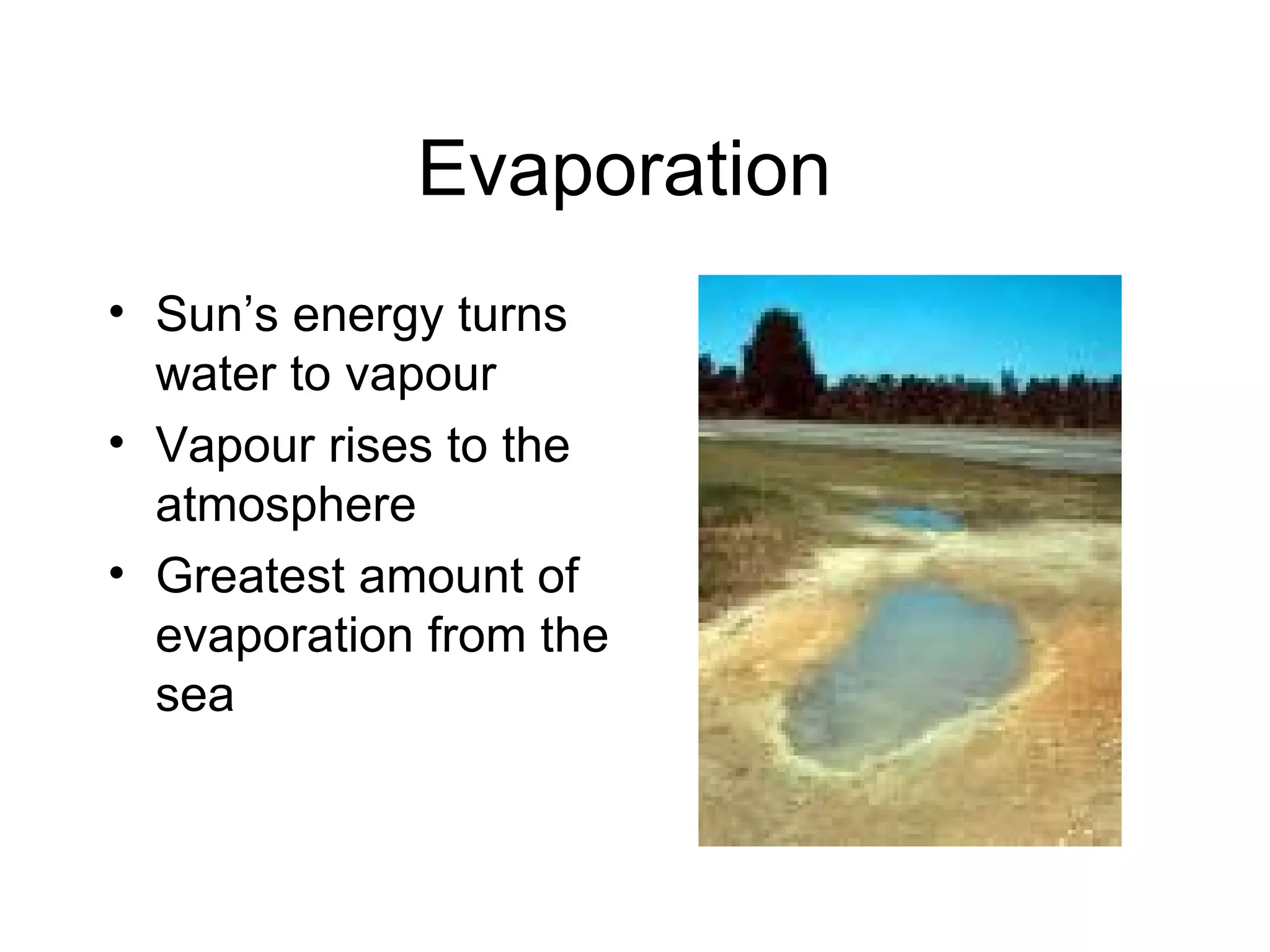
Evaporation  Sun’s energy turns water to vapour Vapour rises to the atmosphere Greatest amount of evaporation from the sea
Transpiration  Water stored in plant tissues moves up the plant to the leaves Carries nutrients with it to the leaves Leaves the plant as water vapour through stomata
Metabolic Water  Cycled by Photosynthesis and respiration Drinking and excretion Burning fossil fuels Decay by micro-organisms
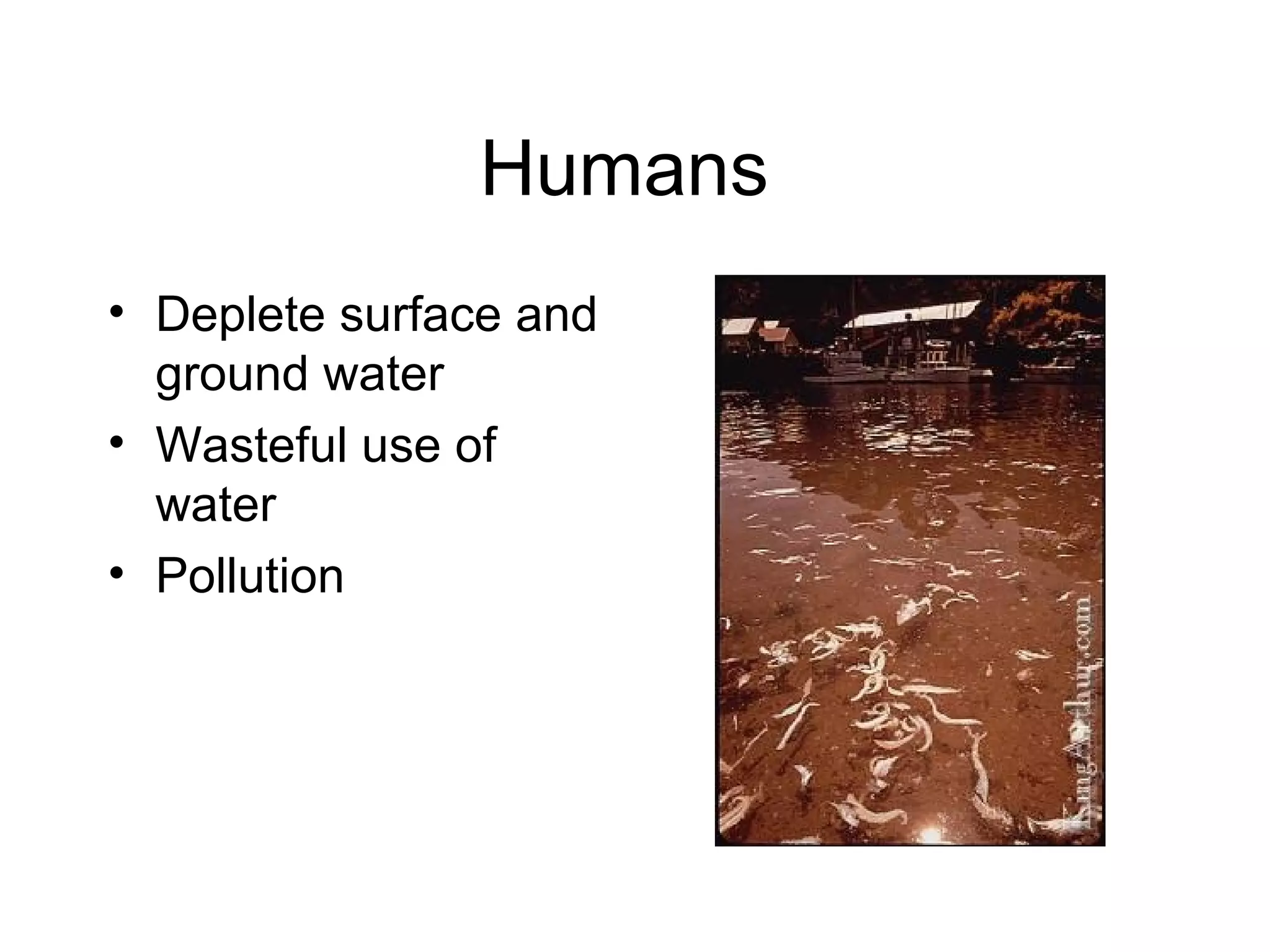
Humans  Deplete surface and ground water Wasteful use of water Pollution
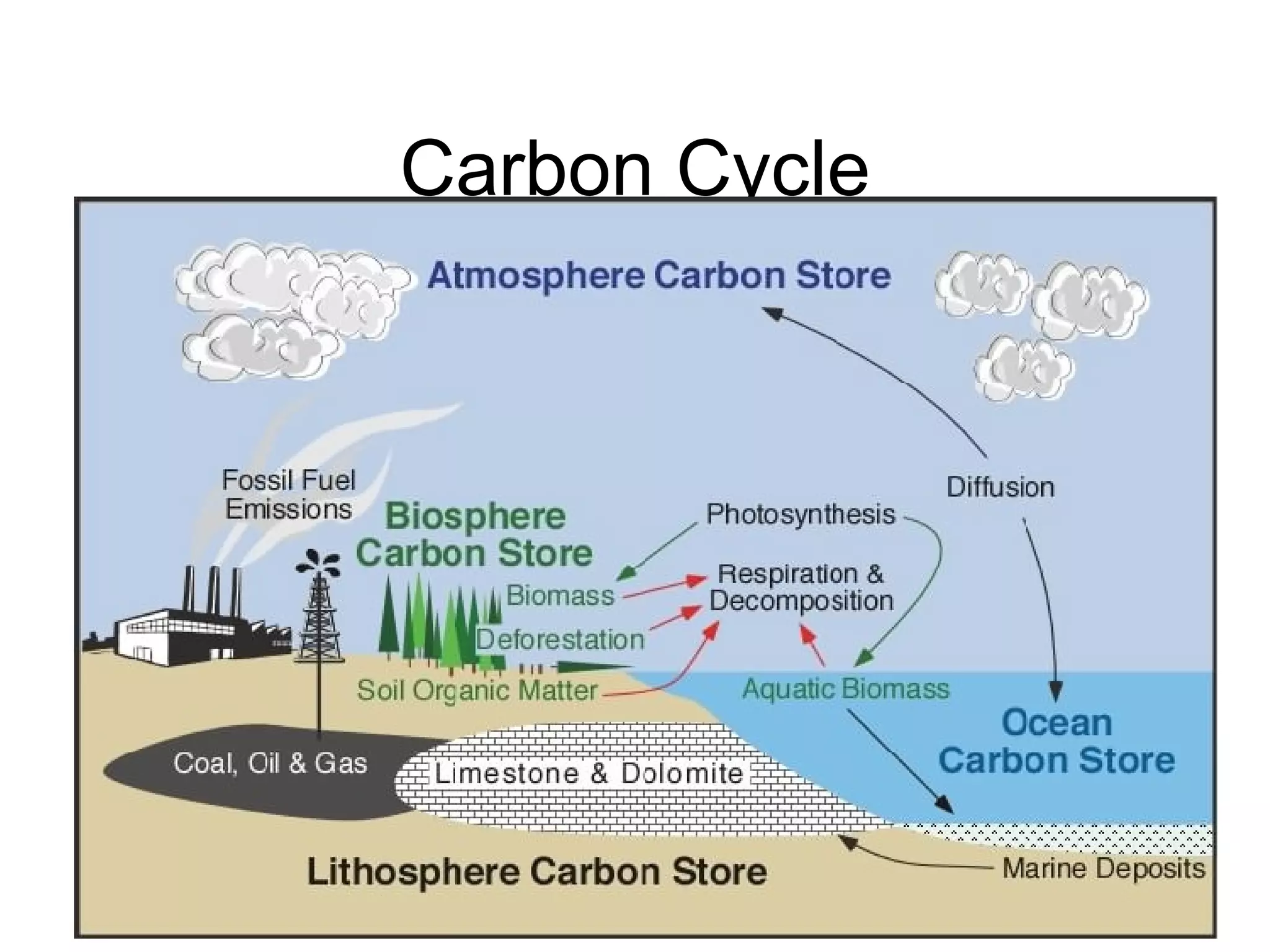
Carbon Cycle
Carbon  Key compound in  Carbohydrates Fats Proteins
Reservoir  Limestone (CaCO 3 ) Atmospheric carbon dioxide Carbon compounds dissolved in water Fossil fuels
The Cycle
Humans  Burn forests Stop photosynthesis Increase CO 2  released by compustion Burn fossil fuels Coal and wood Petrol, diesel
Global Warming Ozone layer reflects some radiation  CO 2  + water vapour reflect radiation back to Earth Causes general warming of Earth
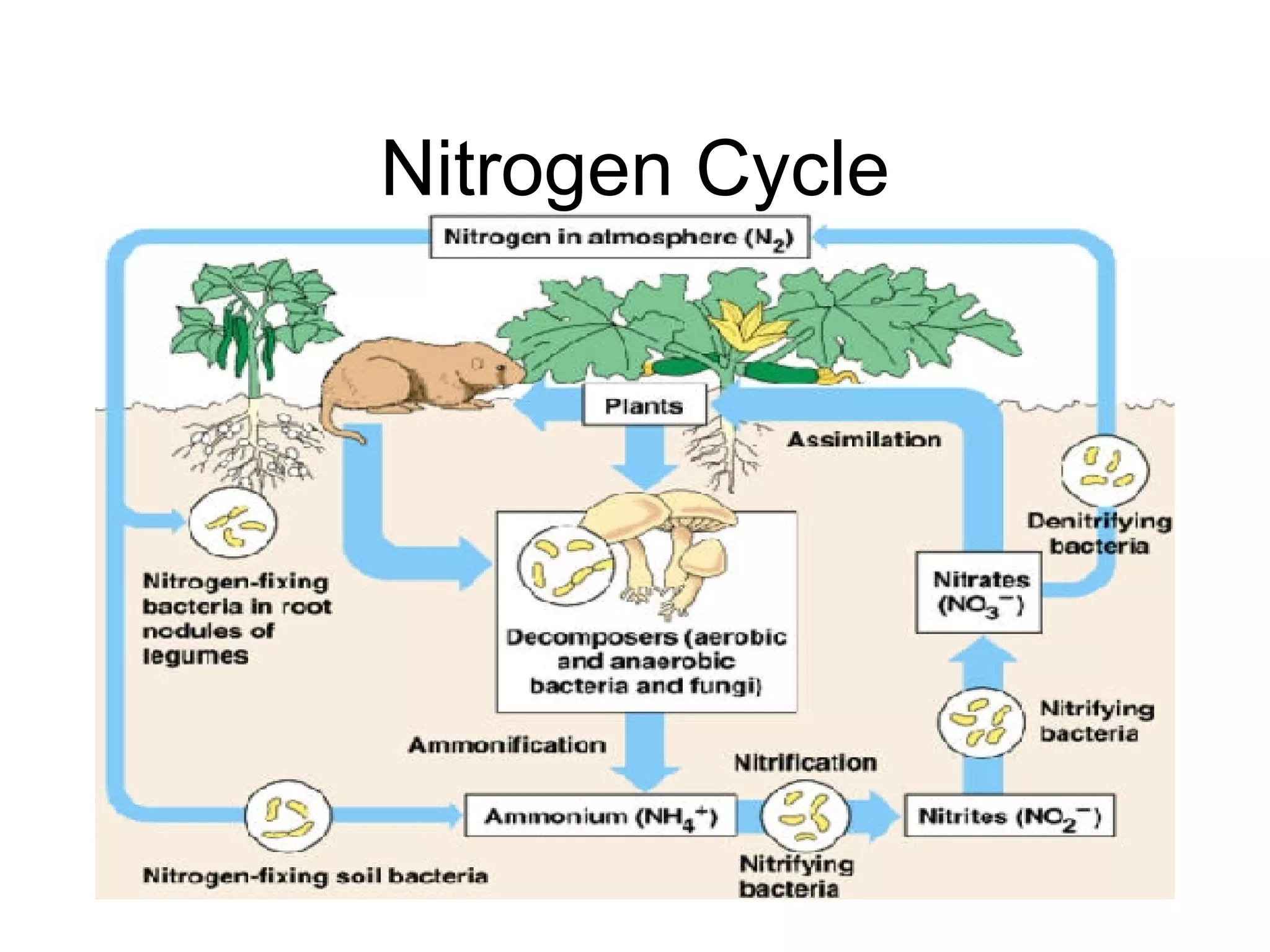
Nitrogen Cycle
Nitrogen  For proteins Body structure Enzymes Hormones Haemoglobin
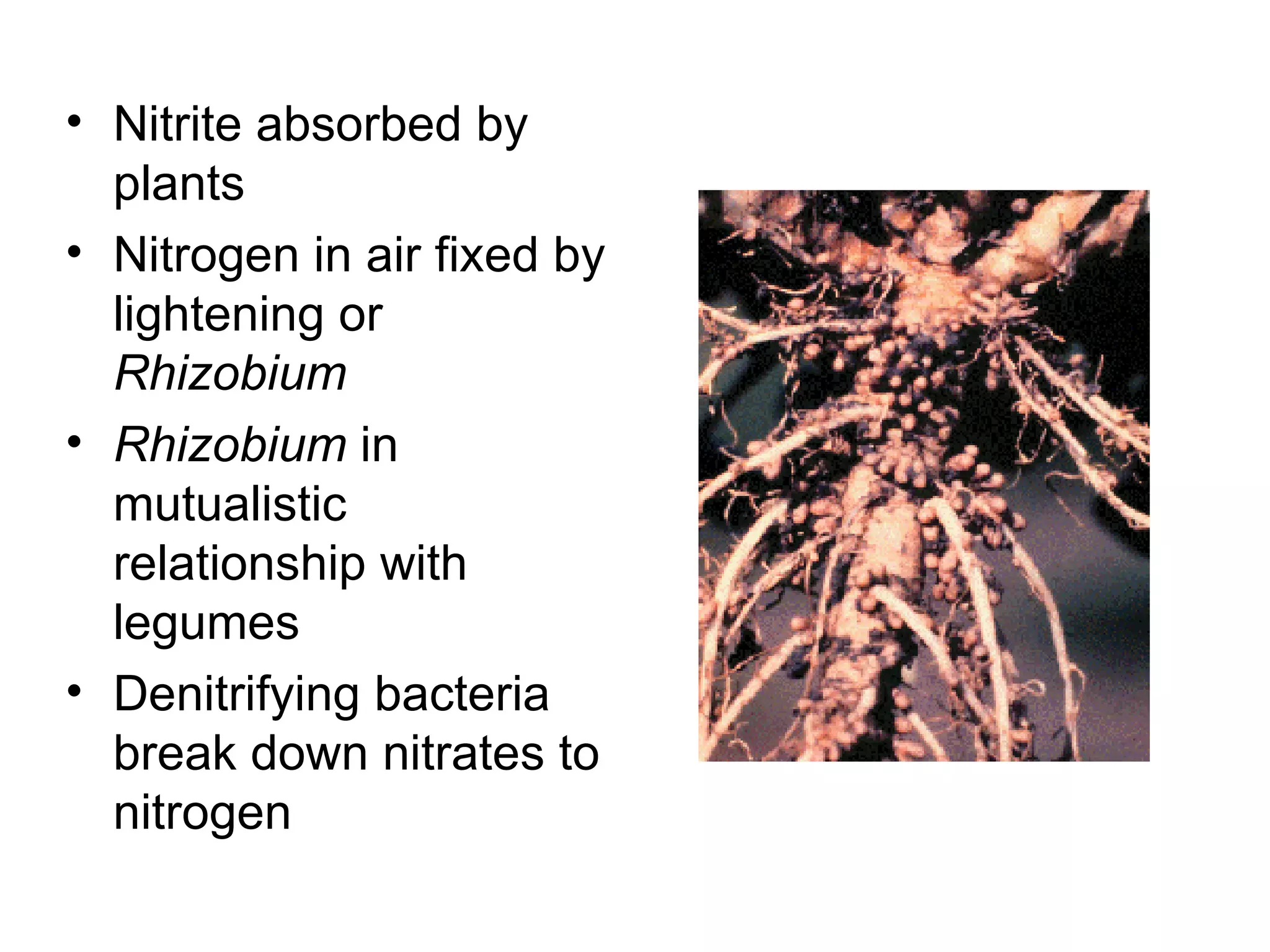
Reservoir  Air 78% nitrogen but largely unusable Used as nitrate ion dissolved in soil water Must be fixed by Lightening Bacteria in legumes Free-living bacteria cyanobacteria
The Cycle Nitrate absorbed by plant roots and turnid into proteins Animals eat proteins Leaves body as waste (urine, faeces) Decomposers turn into ammonia (aminification) Ammonia turned into nitrate by nitrifying bacteria (nitrification)
Nitrite absorbed by plants Nitrogen in air fixed by lightening or  Rhizobium Rhizobium  in mutualistic relationship with legumes Denitrifying bacteria break down nitrates to nitrogen
Humans Use nitrogenous fertilisers Add compost or sewage Plant legumes Remover plants or animals (remove nitrogen) Plant removal causes nitrates to be released (leaching) Remove oxygen (no nitrification) Burn fossil fuels (nitrous oxide released)
Phosphorous Cycle
Phosphorous  For DNA, RNA, ATP, phospholipids, bones, teeth, photosynthesis, respiration
Calcium Cycle Similar to phosphorous cycle Calcium for Cell membranes Enzymes Bones, teeth, exoskeletons
Humans  Fertilisers add phosphorous and increase the rate of calcium recycling Seabird deposits accumulated over years mined for fertiliser Fishing returns calcium from sea to land

Cycles

  • 1.
  • 2.
    Biogeochemical Cycles Thecycling of nutrients in an ecosystem involves both the biotic and abiotic parts.
  • 3.
    Macronutrients Elementsrequired in large amounts Carbon Hydrogen Oxygen Nitrogen Phosphorous Calcium Sulfur Water
  • 4.
    Micronutrients Elementsneeded on small amounts Zinc Molybdenum Iron Selnium Iodine For enzymes
  • 5.
    Reservoirs Storagesites of nutrients
  • 6.
    The Cycles WaterCarbon Nitrogen Phosphorous Calcium
  • 7.
  • 8.
    Why Water? Bestnatural solvent Most chemical reactions in body take place in water Main transport medium Stable Ionise into hydrogen and hydroxyl (pH) Resists rapid temperature changes
  • 9.
  • 10.
    Precipitation Movementof water from atmosphere to Earth
  • 11.
    Evaporation Sun’senergy turns water to vapour Vapour rises to the atmosphere Greatest amount of evaporation from the sea
  • 12.
    Transpiration Waterstored in plant tissues moves up the plant to the leaves Carries nutrients with it to the leaves Leaves the plant as water vapour through stomata
  • 13.
    Metabolic Water Cycled by Photosynthesis and respiration Drinking and excretion Burning fossil fuels Decay by micro-organisms
  • 14.
    Humans Depletesurface and ground water Wasteful use of water Pollution
  • 15.
  • 16.
    Carbon Keycompound in Carbohydrates Fats Proteins
  • 17.
    Reservoir Limestone(CaCO 3 ) Atmospheric carbon dioxide Carbon compounds dissolved in water Fossil fuels
  • 18.
  • 19.
    Humans Burnforests Stop photosynthesis Increase CO 2 released by compustion Burn fossil fuels Coal and wood Petrol, diesel
  • 20.
    Global Warming Ozonelayer reflects some radiation CO 2 + water vapour reflect radiation back to Earth Causes general warming of Earth
  • 21.
  • 22.
    Nitrogen Forproteins Body structure Enzymes Hormones Haemoglobin
  • 23.
    Reservoir Air78% nitrogen but largely unusable Used as nitrate ion dissolved in soil water Must be fixed by Lightening Bacteria in legumes Free-living bacteria cyanobacteria
  • 24.
    The Cycle Nitrateabsorbed by plant roots and turnid into proteins Animals eat proteins Leaves body as waste (urine, faeces) Decomposers turn into ammonia (aminification) Ammonia turned into nitrate by nitrifying bacteria (nitrification)
  • 25.
    Nitrite absorbed byplants Nitrogen in air fixed by lightening or Rhizobium Rhizobium in mutualistic relationship with legumes Denitrifying bacteria break down nitrates to nitrogen
  • 26.
    Humans Use nitrogenousfertilisers Add compost or sewage Plant legumes Remover plants or animals (remove nitrogen) Plant removal causes nitrates to be released (leaching) Remove oxygen (no nitrification) Burn fossil fuels (nitrous oxide released)
  • 27.
  • 28.
    Phosphorous ForDNA, RNA, ATP, phospholipids, bones, teeth, photosynthesis, respiration
  • 29.
    Calcium Cycle Similarto phosphorous cycle Calcium for Cell membranes Enzymes Bones, teeth, exoskeletons
  • 30.
    Humans Fertilisersadd phosphorous and increase the rate of calcium recycling Seabird deposits accumulated over years mined for fertiliser Fishing returns calcium from sea to land