BIO GEOCHEMICAL CYCLES
Bio geochemical cycles
 Chemical substance have elements like oxygen,
carbon, hydrogen,nitrogen,phosphorus etc which is
used by living organisms,from the environment
 From different stages return to the environment.
 The cyclic path of nutrients, elements, water in the
biosphere from the environment to the organisms and
back to the environment called biogeochemical cycles.
Three biogeochemical cycles
 Hydrological cycle : inter change of water
 Gaseous cycle : inter change of gases like oxygen, nitrogen,
carbon dioxide
 Sedimentary cycle : sulphur & phosphorous cycles
concerned inter change of minerals in the lithosphere &
living organisms.
 The cyclic exchange of nutrient materials, elements and
water in the biosphere between the living organisms and
their non living environment is called bio geochemical
cycle.
 Living organisms (bio), through earth (geo), repeatedly
(cycle)
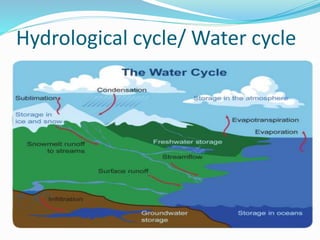
Hydrological cycle/ Water cycle
 Water is moving constantly through various pathways
in the atmosphere, biosphere and lithosphere.
 The natural flow of water through various components
resulting in the global circulation is called water cycle.
 97% water found in the oceans .
Hydrological cycle
 Evaporation & Transpiration.
 Condensation & formation of clouds
 Precipitation
 Runoff
 Infiltration & percolation
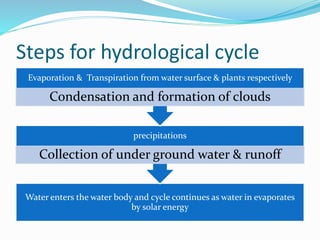
Steps for hydrological cycle
Water enters the water body and cycle continues as water in evaporates
by solar energy
precipitations
Collection of under ground water & runoff
Evaporation & Transpiration from water surface & plants respectively
Condensation and formation of clouds
Human impacts on hydrological
cycle:
 More demand for domestic and industrial purpose
withdraw more amount of fresh water from river, pond,
lake and underground sources.
 Addition of industrial and domestic waste water to river
and stream pollute the source
 Reduction in vegetative cover may increase surface
runoff & reduce percolation of water results in depletion
of ground water table.
 Global warming alter hydrological cycle
 Heavy deforestation reduce transpiration .
Carbon cycle
Sources of Carbon
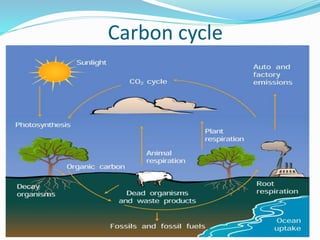
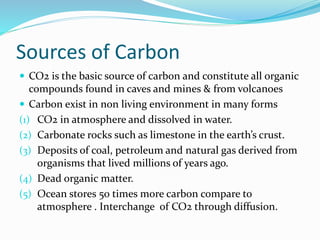
 CO2 is the basic source of carbon and constitute all organic
compounds found in caves and mines & from volcanoes
 Carbon exist in non living environment in many forms
(1) CO2 in atmosphere and dissolved in water.
(2) Carbonate rocks such as limestone in the earth’s crust.
(3) Deposits of coal, petroleum and natural gas derived from
organisms that lived millions of years ago.
(4) Dead organic matter.
(5) Ocean stores 50 times more carbon compare to
atmosphere . Interchange of CO2 through diffusion.
Human Impacts on Carbon Cycle
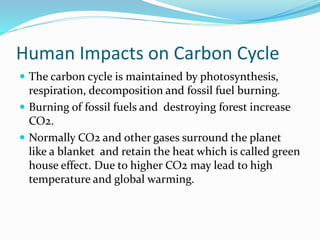
 The carbon cycle is maintained by photosynthesis,
respiration, decomposition and fossil fuel burning.
 Burning of fossil fuels and destroying forest increase
CO2.
 Normally CO2 and other gases surround the planet
like a blanket and retain the heat which is called green
house effect. Due to higher CO2 may lead to high
temperature and global warming.
Nitrogen Cycle
Nitrogen cycle:
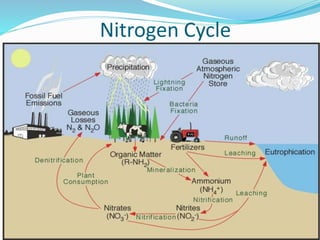
 Nitrogen fixation : atmospheric fixation by lightning
or electrification , industrial fixation, biological
fixation(rhizobium, azotobacters ,blue green algae)
 Ammonification: process where amino acids and urea
converted to ammonia
 Nitrification & denitrification: To complete the cycle,
nitrifying bacteria(nitrosomonas) convert the
ammonia into nitrites, then into nitrates (nitrobacter)
and then back into gaseous nitrogen(Psedomonas) by
denitrifying bacteria.
Human impact on nitrogen cycle
 When grow and harvest the crops, loss of nitrogen
from the soil.
 Harvesting of timber results in heavy outflow of
nitrogen from our forest ecosystem.
 Heavy addition of commercial fertilisers cause
excessive build up of nitrogen in the soil and
groundwater.
 Automobile and industrial exhaust add nitrogen.
 Nitrogen dioxide reacts with moisture in the
atmosphere to form weak nitric acid which is carried
to the soil during rainfall results in acid rain.
Sulphur cycle
 Sulphur is basic constituent of proteins and vitamin in plants
and animals.
 Major source of sulphur are sulphur dioxide in atmosphere,
hydrogen sulphide found in atmosphere , sulphate ion found in
water in soil.
 Most of earth’s sulphur enters the atmosphere through natural
and human sources.
 Burning of fossil fuels in industrial process release SO2 and H2S
gas to the atmosphere, which ultimately returns to the soil as
H2SO4 along with rain.
 Sulphur in forms of SO4-2 is absorbed it to aminoacids and
proteins.
 Animals eats plants and hence sulphur pass in to animals.
 Excess of sulphur is excreted out as faecal matter of animals.
Recycling of Sulphur
 Recycling done by aerobic or anaerobic
decomposition.
 When animals dies the bacteria decompose
aminoacids to H2S under anaerobic conditions
 In aerobic conditions prevails the sulphur bacteria
oxidise sulphur to SO4-2 and sulphate is used by
plants again from soil and cycle goes on.
Human impacts on Sulphur cycle
 By emissions from refineries, chemical plants ,
burning of sulphur containing fuel.
 Thermal power plants
 Open burning of garbage and municipal incineration
plants
 Oil refining, rubber industry, sulphur dyes
 SO2 may be oxidised to SO3 and result in acid rain by
forming H2SO4

BIO GEOCHEMICAL CYCLES.pptx

  • 1.
  • 2.
    Bio geochemical cycles Chemical substance have elements like oxygen, carbon, hydrogen,nitrogen,phosphorus etc which is used by living organisms,from the environment  From different stages return to the environment.  The cyclic path of nutrients, elements, water in the biosphere from the environment to the organisms and back to the environment called biogeochemical cycles.
  • 3.
    Three biogeochemical cycles Hydrological cycle : inter change of water  Gaseous cycle : inter change of gases like oxygen, nitrogen, carbon dioxide  Sedimentary cycle : sulphur & phosphorous cycles concerned inter change of minerals in the lithosphere & living organisms.  The cyclic exchange of nutrient materials, elements and water in the biosphere between the living organisms and their non living environment is called bio geochemical cycle.  Living organisms (bio), through earth (geo), repeatedly (cycle)
  • 4.
  • 5.
     Water ismoving constantly through various pathways in the atmosphere, biosphere and lithosphere.  The natural flow of water through various components resulting in the global circulation is called water cycle.  97% water found in the oceans .
  • 6.
    Hydrological cycle  Evaporation& Transpiration.  Condensation & formation of clouds  Precipitation  Runoff  Infiltration & percolation
  • 7.
    Steps for hydrologicalcycle Water enters the water body and cycle continues as water in evaporates by solar energy precipitations Collection of under ground water & runoff Evaporation & Transpiration from water surface & plants respectively Condensation and formation of clouds
  • 8.
    Human impacts onhydrological cycle:  More demand for domestic and industrial purpose withdraw more amount of fresh water from river, pond, lake and underground sources.  Addition of industrial and domestic waste water to river and stream pollute the source  Reduction in vegetative cover may increase surface runoff & reduce percolation of water results in depletion of ground water table.  Global warming alter hydrological cycle  Heavy deforestation reduce transpiration .
  • 9.
  • 10.
    Sources of Carbon CO2 is the basic source of carbon and constitute all organic compounds found in caves and mines & from volcanoes  Carbon exist in non living environment in many forms (1) CO2 in atmosphere and dissolved in water. (2) Carbonate rocks such as limestone in the earth’s crust. (3) Deposits of coal, petroleum and natural gas derived from organisms that lived millions of years ago. (4) Dead organic matter. (5) Ocean stores 50 times more carbon compare to atmosphere . Interchange of CO2 through diffusion.
  • 11.
    Human Impacts onCarbon Cycle  The carbon cycle is maintained by photosynthesis, respiration, decomposition and fossil fuel burning.  Burning of fossil fuels and destroying forest increase CO2.  Normally CO2 and other gases surround the planet like a blanket and retain the heat which is called green house effect. Due to higher CO2 may lead to high temperature and global warming.
  • 12.
  • 13.
    Nitrogen cycle:  Nitrogenfixation : atmospheric fixation by lightning or electrification , industrial fixation, biological fixation(rhizobium, azotobacters ,blue green algae)  Ammonification: process where amino acids and urea converted to ammonia  Nitrification & denitrification: To complete the cycle, nitrifying bacteria(nitrosomonas) convert the ammonia into nitrites, then into nitrates (nitrobacter) and then back into gaseous nitrogen(Psedomonas) by denitrifying bacteria.
  • 14.
    Human impact onnitrogen cycle  When grow and harvest the crops, loss of nitrogen from the soil.  Harvesting of timber results in heavy outflow of nitrogen from our forest ecosystem.  Heavy addition of commercial fertilisers cause excessive build up of nitrogen in the soil and groundwater.  Automobile and industrial exhaust add nitrogen.  Nitrogen dioxide reacts with moisture in the atmosphere to form weak nitric acid which is carried to the soil during rainfall results in acid rain.
  • 15.
    Sulphur cycle  Sulphuris basic constituent of proteins and vitamin in plants and animals.  Major source of sulphur are sulphur dioxide in atmosphere, hydrogen sulphide found in atmosphere , sulphate ion found in water in soil.  Most of earth’s sulphur enters the atmosphere through natural and human sources.  Burning of fossil fuels in industrial process release SO2 and H2S gas to the atmosphere, which ultimately returns to the soil as H2SO4 along with rain.  Sulphur in forms of SO4-2 is absorbed it to aminoacids and proteins.  Animals eats plants and hence sulphur pass in to animals.  Excess of sulphur is excreted out as faecal matter of animals.
  • 16.
    Recycling of Sulphur Recycling done by aerobic or anaerobic decomposition.  When animals dies the bacteria decompose aminoacids to H2S under anaerobic conditions  In aerobic conditions prevails the sulphur bacteria oxidise sulphur to SO4-2 and sulphate is used by plants again from soil and cycle goes on.
  • 17.
    Human impacts onSulphur cycle  By emissions from refineries, chemical plants , burning of sulphur containing fuel.  Thermal power plants  Open burning of garbage and municipal incineration plants  Oil refining, rubber industry, sulphur dyes  SO2 may be oxidised to SO3 and result in acid rain by forming H2SO4

Editor's Notes

  • #7 Meaning of each term