Topic: Biogeochemical Cycles
Essential Question: How do carbon,
water, nitrogen, and phosphorus
cycle through the biosphere?
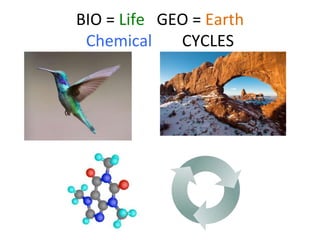
BIO = Life GEO = Earth
Chemical CYCLES
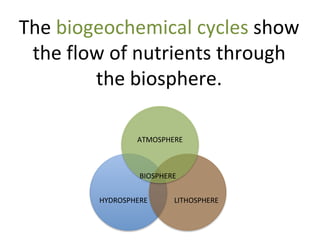
ATMOSPHERE
LITHOSPHERE
HYDROSPHERE
BIOSPHERE
The biogeochemical cycles show
the flow of nutrients through
the biosphere.
Cycles we are going to learn about:
1. Water
2. Carbon
3. Nitrogen
4. Phosphorus
Why is water important?
• Water is necessary for all life on Earth.
• Makes up 60-70% of our body.
• Water is found in all the molecules in our cells
(proteins, carbohydrates, etc.)
How does water move through the cycle?
• Water cycles due to heat from the sun. Without the sun causing
evaporation, the cycle would not happen.
• As water molecules in the atmosphere collide and get larger,
they grow too heavy and fall as precipitation.
• Since most water is found in the ocean, 85% of evaporation
occurs between the ocean and atmosphere.
Human impact on the water cycle
If the total amount of water on earth does not change,
why are there concerns about global freshwater
shortages?
• Over-pumping of aquifers
• Groundwater contamination
• Great pacific garbage patch
Lake Mead (AZ / NV border)
water depletion
Deposition
Why is carbon important?
• All living things on our planet are full of
carbon- it is a building block of life molecules
• Carbon dioxide is required for plants to do
photosynthesis
How does carbon move through the cycle?
• Carbon is found in 4 main places:
1. In the atmosphere as CO2
2. In the ocean as dissolved CO2 gas
3. On land in organisms, rocks, and soil
4. Underground as fossil fuels
• Plants take in CO2 during photosynthesis and
both plants and animals release CO2 during
respiration
• Carbon sinks are where large amounts of
carbon are stored for long periods of time
(old tree growth and the ocean)
Human impact on the carbon cycle
• As humans burn fossil fuels we release carbon
dioxide into the atmosphere, which is contributing
to climate change.
• Methane (CH4) is a greenhouse gas released from
landfills and livestock.
• Too much carbon dioxide absorbed by the ocean
is killing coral reefs.
Coral bleaching
Why is nitrogen important?
• Nitrogen is the most common gas in the
atmosphere- 78%!
• Nitrogen is found in DNA molecules and proteins
• Humans can't use the nitrogen gas we breathe.
As we eat food, we get nitrogen into our bodies
How does nitrogen move through the cycle?
• Nitrogen in the atmosphere (N2) is very stable
and nonreactive. This form of nitrogen is
unusable to plants and animals.
• Bacteria in the soil take nitrogen from the
atmosphere and turn it into ammonia (NH3), a
form which is usable by plants.
• Animals receive nitrogen by eating plant matter.
• Lightning can break bonds between N2, and it
recombines with oxygen in the air to form
nitrogen oxide.
Human impact on the nitrogen cycle
• Farming can cause depletion of soil nutrients so
farmers add fertilizer. This can runoff into water
supplies.
• Runoff can cause algae blooms, releasing toxins
and killing fish.
• Pollution (car emissions, factories) releases nitric
oxide into the atmosphere which causes
respiratory issues.
Why is phosphorus important?
• Phosphorus is important to human bone
health.
• Phosphorus is an important component of
nucleic acid molecules.
• It is found in soil as a major plant nutrient.
How does phosphorus move through the cycle?
• The phosphorus cycle is the only nutrient cycle
that only occurs on land (it does not enter the
atmosphere).
• Phosphorus is found in rocks, and is released
through weathering and leaching.
• Producers pick up phosphorus from the soil
which are then eaten by consumers.
• As plants and animals die, decomposers return
phosphorus to the soil. Weathering and erosion
Human impact on the phosphorus cycle:
• Farmers add phosphorus rich fertilizer to soils,
which can runoff into water supplies and
cause algae blooms.
• Animal waste (especially pig waste) is high in
phosphorus, which can also contaminate
water supplies.
https://www.youtube.com/watch?v=2D7hZpIYlC
A
https://www.youtube.com/watch?v=leHy-Y_8nRs
Crash Course Video
Water and carbon cycles
Crash Course Video
Nitrogen and Phosphorus cycles
Can you make a poster/diagram that shows how
all the nutrients cycle through an ecosystem?
Guided Youtube Lesson: https://www.youtube.com/watch?v=DHwYc5JmxPc

BGC Cycles Overview.pptx

  • 1.
    Topic: Biogeochemical Cycles EssentialQuestion: How do carbon, water, nitrogen, and phosphorus cycle through the biosphere?
  • 2.
    BIO = LifeGEO = Earth Chemical CYCLES
  • 3.
    ATMOSPHERE LITHOSPHERE HYDROSPHERE BIOSPHERE The biogeochemical cyclesshow the flow of nutrients through the biosphere.
  • 4.
    Cycles we aregoing to learn about: 1. Water 2. Carbon 3. Nitrogen 4. Phosphorus
  • 7.
    Why is waterimportant? • Water is necessary for all life on Earth. • Makes up 60-70% of our body. • Water is found in all the molecules in our cells (proteins, carbohydrates, etc.)
  • 8.
    How does watermove through the cycle? • Water cycles due to heat from the sun. Without the sun causing evaporation, the cycle would not happen. • As water molecules in the atmosphere collide and get larger, they grow too heavy and fall as precipitation. • Since most water is found in the ocean, 85% of evaporation occurs between the ocean and atmosphere.
  • 9.
    Human impact onthe water cycle If the total amount of water on earth does not change, why are there concerns about global freshwater shortages? • Over-pumping of aquifers • Groundwater contamination • Great pacific garbage patch Lake Mead (AZ / NV border) water depletion
  • 13.
  • 14.
    Why is carbonimportant? • All living things on our planet are full of carbon- it is a building block of life molecules • Carbon dioxide is required for plants to do photosynthesis
  • 15.
    How does carbonmove through the cycle? • Carbon is found in 4 main places: 1. In the atmosphere as CO2 2. In the ocean as dissolved CO2 gas 3. On land in organisms, rocks, and soil 4. Underground as fossil fuels • Plants take in CO2 during photosynthesis and both plants and animals release CO2 during respiration • Carbon sinks are where large amounts of carbon are stored for long periods of time (old tree growth and the ocean)
  • 16.
    Human impact onthe carbon cycle • As humans burn fossil fuels we release carbon dioxide into the atmosphere, which is contributing to climate change. • Methane (CH4) is a greenhouse gas released from landfills and livestock. • Too much carbon dioxide absorbed by the ocean is killing coral reefs. Coral bleaching
  • 19.
    Why is nitrogenimportant? • Nitrogen is the most common gas in the atmosphere- 78%! • Nitrogen is found in DNA molecules and proteins • Humans can't use the nitrogen gas we breathe. As we eat food, we get nitrogen into our bodies
  • 20.
    How does nitrogenmove through the cycle? • Nitrogen in the atmosphere (N2) is very stable and nonreactive. This form of nitrogen is unusable to plants and animals. • Bacteria in the soil take nitrogen from the atmosphere and turn it into ammonia (NH3), a form which is usable by plants. • Animals receive nitrogen by eating plant matter. • Lightning can break bonds between N2, and it recombines with oxygen in the air to form nitrogen oxide.
  • 21.
    Human impact onthe nitrogen cycle • Farming can cause depletion of soil nutrients so farmers add fertilizer. This can runoff into water supplies. • Runoff can cause algae blooms, releasing toxins and killing fish. • Pollution (car emissions, factories) releases nitric oxide into the atmosphere which causes respiratory issues.
  • 23.
    Why is phosphorusimportant? • Phosphorus is important to human bone health. • Phosphorus is an important component of nucleic acid molecules. • It is found in soil as a major plant nutrient.
  • 24.
    How does phosphorusmove through the cycle? • The phosphorus cycle is the only nutrient cycle that only occurs on land (it does not enter the atmosphere). • Phosphorus is found in rocks, and is released through weathering and leaching. • Producers pick up phosphorus from the soil which are then eaten by consumers. • As plants and animals die, decomposers return phosphorus to the soil. Weathering and erosion
  • 25.
    Human impact onthe phosphorus cycle: • Farmers add phosphorus rich fertilizer to soils, which can runoff into water supplies and cause algae blooms. • Animal waste (especially pig waste) is high in phosphorus, which can also contaminate water supplies.
  • 26.
  • 27.
    Can you makea poster/diagram that shows how all the nutrients cycle through an ecosystem?
  • 29.
    Guided Youtube Lesson:https://www.youtube.com/watch?v=DHwYc5JmxPc