Energy Cycles
The Law of Conservation of Energy
Energy CANNOT be created
or destroyed, but only
changes forms.
Biogeochemical Cycles
▪ Bio
▪ Life
▪ Geo
▪ Earth
▪ Chemical
▪ Elements, compounds, substances
▪ Cycle
▪ Series of events repeated in the same order
Biogeochemical Cycles
▪Chemicals move from living things (biotic) to
non-living (abiotic) things and back.
Important Elements
▪Carbon
▪4 valence electrons
▪Good at bonding
▪Macromolecules
Important Elements
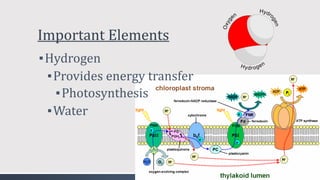
▪Hydrogen
▪Provides energy transfer
▪Photosynthesis
▪Water
Important Elements
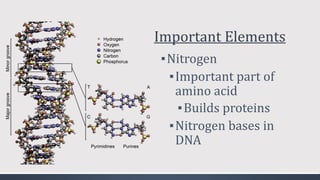
▪Nitrogen
▪Important part of
amino acid
▪Builds proteins
▪Nitrogen bases in
DNA
Important Elements
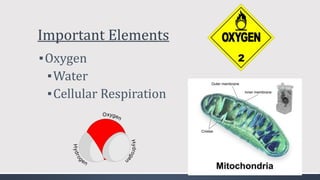
▪Oxygen
▪Water
▪Cellular Respiration
Important Elements
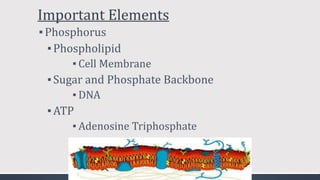
▪Phosphorus
▪Phospholipid
▪ Cell Membrane
▪Sugar and Phosphate Backbone
▪ DNA
▪ATP
▪ Adenosine Triphosphate
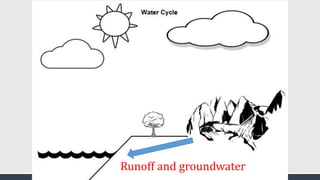
Water Cycle
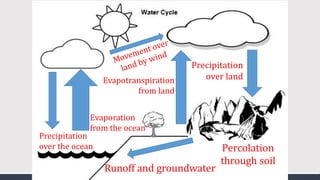
Water Cycle
▪Essential to ALL living organisms
▪97% of water is in oceans
▪2% in glaciers and polar ice caps
▪1% in lakes, rivers, and groundwater
Key Processes
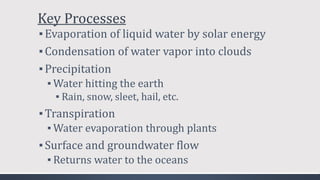
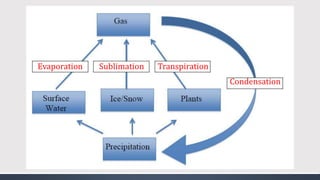
▪Evaporation of liquid water by solar energy
▪Condensation of water vapor into clouds
▪Precipitation
▪ Water hitting the earth
▪ Rain, snow, sleet, hail, etc.
▪Transpiration
▪ Water evaporation through plants
▪Surface and groundwater flow
▪ Returns water to the oceans
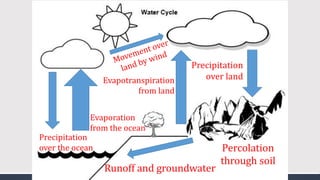
Runoff and groundwater
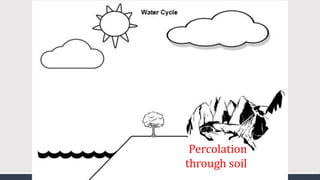
Percolation
through soil
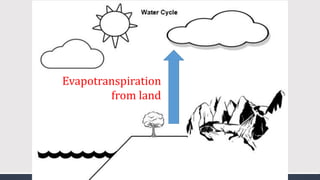
Evapotranspiration
from land
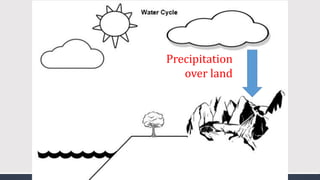
Precipitation
over land
Evaporation
from the ocean
Precipitation
over the ocean
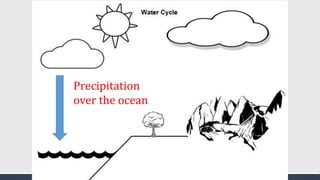
Precipitation
over the ocean
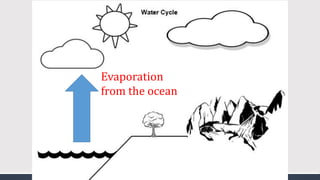
Evaporation
from the ocean
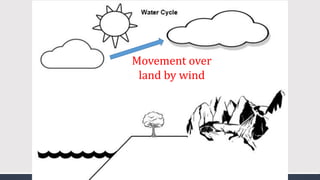
Movement over
land by wind
Precipitation
over land
Percolation
through soil
Evapotranspiration
from land
Runoff and groundwater
Percolation
through soil
Evapotranspiration
from land
Precipitation
over land
Evaporation
from the ocean
Precipitation
over the ocean
Evaporation Sublimation Transpiration
Condensation
Carbon Cycle
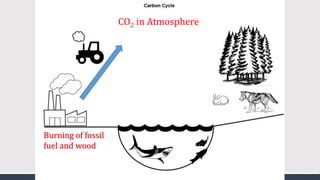
Carbon absorbs heat energy. Increase CO2 in the atmosphere
increases global temperature creating the Greenhouse Effect.
Biological Importance
▪Carbon is the essential organic element
that forms molecules essential to all
organisms
Key Processes
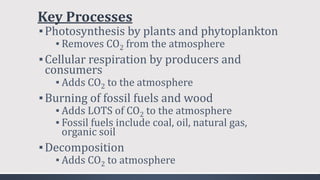
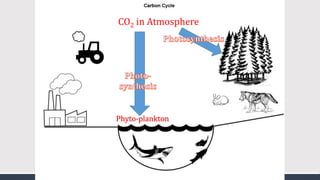
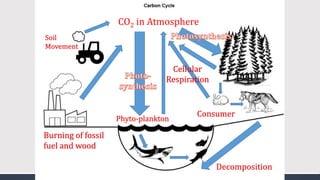
▪Photosynthesis by plants and phytoplankton
▪ Removes CO2 from the atmosphere
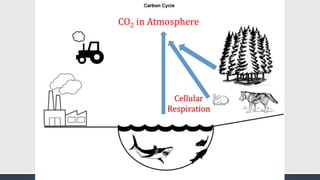
▪Cellular respiration by producers and
consumers
▪ Adds CO2 to the atmosphere
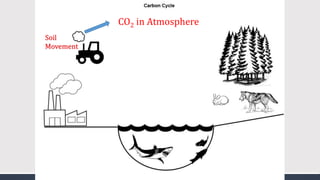
▪Burning of fossil fuels and wood
▪ Adds LOTS of CO2 to the atmosphere
▪ Fossil fuels include coal, oil, natural gas,
organic soil
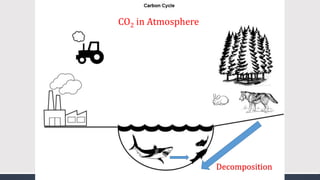
▪Decomposition
▪ Adds CO2 to atmosphere
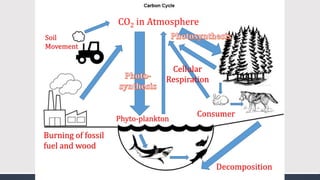
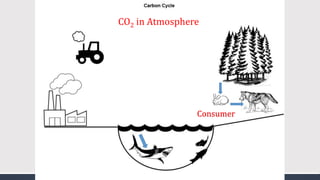
CO2 in Atmosphere
Consumer
Decomposition
Phyto-plankton
Burning of fossil
fuel and wood
Soil
Movement
Cellular
Respiration
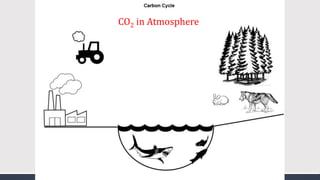
CO2 in Atmosphere
CO2 in Atmosphere
Phyto-plankton
CO2 in Atmosphere
Consumer
CO2 in Atmosphere
Cellular
Respiration
CO2 in Atmosphere
Decomposition
CO2 in Atmosphere
Burning of fossil
fuel and wood
CO2 in Atmosphere
Soil
Movement
CO2 in Atmosphere
Consumer
Decomposition
Phyto-plankton
Burning of fossil
fuel and wood
Soil
Movement
Cellular
Respiration
Nitrogen Cycle
Biological Importance
▪Nitrogen is part of amino acids, proteins, and
nucleic acids and is often a limiting plant
nutrient.
▪78% of the Earth’s Atmosphere
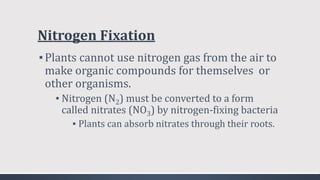
Nitrogen Fixation
▪Plants cannot use nitrogen gas from the air to
make organic compounds for themselves or
other organisms.
▪ Nitrogen (N2) must be converted to a form
called nitrates (NO3) by nitrogen-fixing bacteria
▪ Plants can absorb nitrates through their roots.
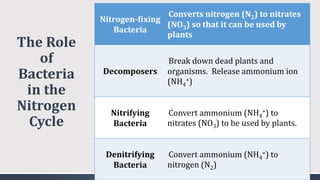
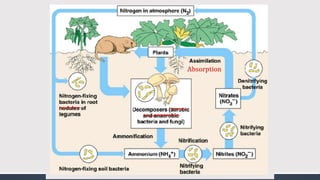
Nitrogen-Fixing Bacteria
▪Live in soil and roots of legumes
▪ Peas
▪ Beans
Decomposers
▪Break down dead plants and organisms
▪Release nitrogen in the form of ammonium
ions (NH4
+)
▪ Nitrifying bacteria change the ammonium into
nitrates
▪ Some nitrates are changed back to nitrogen gas
by denitrifying bacteria
The Role
of
Bacteria
in the
Nitrogen
Cycle
Nitrogen-fixing
Bacteria
Converts nitrogen (N2) to nitrates
(NO3) so that it can be used by
plants
Decomposers
Break down dead plants and
organisms. Release ammonium ion
(NH4
+)
Nitrifying
Bacteria
Convert ammonium (NH4
+) to
nitrates (NO3) to be used by plants.
Denitrifying
Bacteria
Convert ammonium (NH4
+) to
nitrogen (N2)
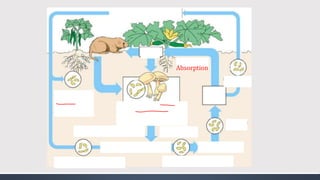
Absorption
Energy cycles notes

Energy cycles notes