

Topic
Biogeochemical Cycles
Carbon-Oxygen Cycle
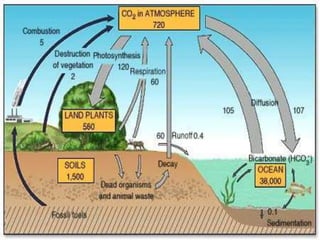
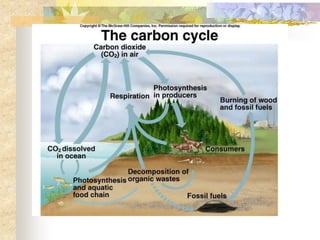
The Carbon Cycle
 Circulation of CO2
 Biotic Component
 Carbon is the key element in living compounds
 Carbon is trapped and stored in organic compounds by
photosynthesis
 CO2 is released to the atmosphere by respiration
 Abiotic Component
 CO2 – found in atmosphere (0.03%) and in oceans
 Can be trapped in fossil fuels
 In oceans, it is incorporated into rocks, shells, corals
 CO2 released into the atmosphere by combustion
Oxygen Cycle
 Movement of oxygen between the
atmosphere and the biota
 21% of atmosphere
 Released by photosynthesis
 Consumed by respiration
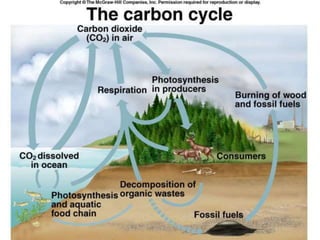
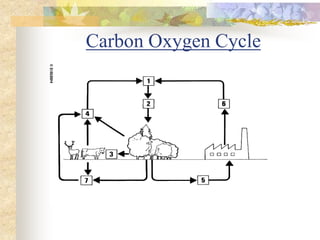
Carbon Oxygen Cycle
Carbon Oxygen Cycle
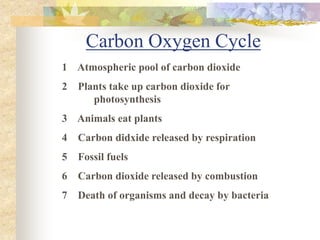
1 Atmospheric pool of carbon dioxide
2 Plants take up carbon dioxide for
photosynthesis
3 Animals eat plants
4 Carbon didxide released by respiration
5 Fossil fuels
6 Carbon dioxide released by combustion
7 Death of organisms and decay by bacteria
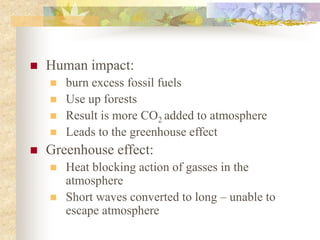
 Human impact:
 burn excess fossil fuels
 Use up forests
 Result is more CO2 added to atmosphere
 Leads to the greenhouse effect
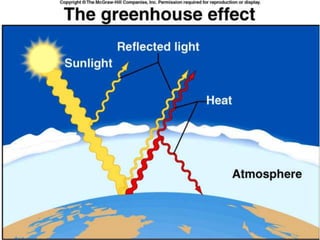
 Greenhouse effect:
 Heat blocking action of gasses in the
atmosphere
 Short waves converted to long – unable to
escape atmosphere
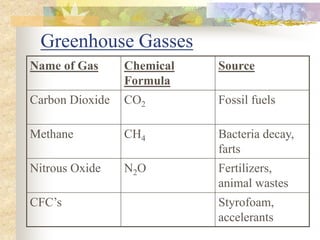
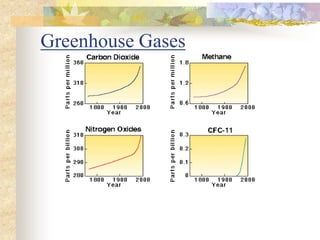
Greenhouse Gasses
Name of Gas Chemical
Formula
Source
Carbon Dioxide CO2 Fossil fuels
Methane CH4 Bacteria decay,
farts
Nitrous Oxide N2O Fertilizers,
animal wastes
CFC’s Styrofoam,
accelerants
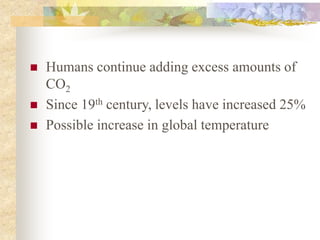
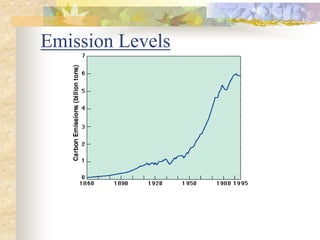
 Humans continue adding excess amounts of
CO2
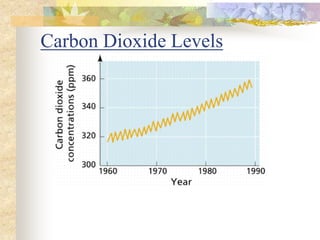
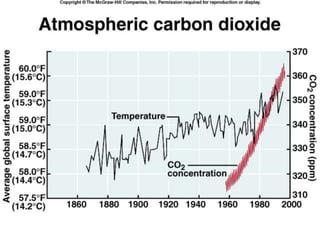
 Since 19th century, levels have increased 25%
 Possible increase in global temperature
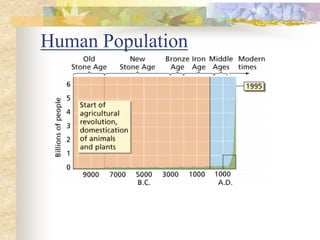
Human Population
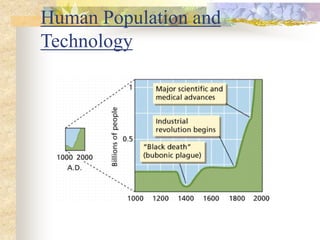
Human Population and
Technology
Carbon Dioxide Levels
Emission Levels
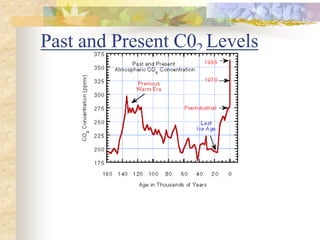
Past and Present C02 Levels
Greenhouse Gases
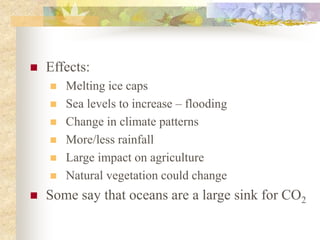
 Effects:
 Melting ice caps
 Sea levels to increase – flooding
 Change in climate patterns
 More/less rainfall
 Large impact on agriculture
 Natural vegetation could change
 Some say that oceans are a large sink for CO2
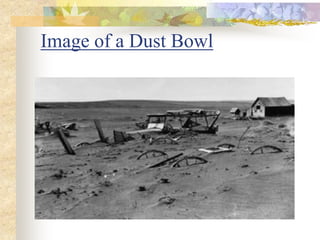
Image of a Dust Bowl
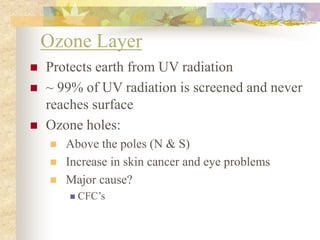
Ozone Layer
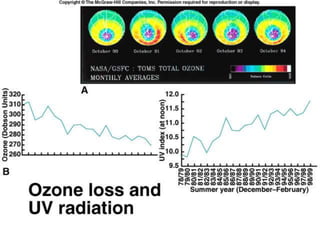
 Protects earth from UV radiation
 ~ 99% of UV radiation is screened and never
reaches surface
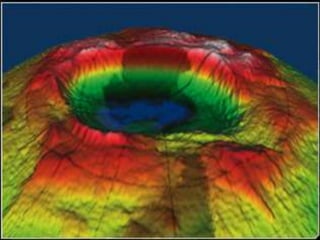
 Ozone holes:
 Above the poles (N & S)
 Increase in skin cancer and eye problems
 Major cause?
 CFC’s
 CFC’s released in sprays and as a waste
product
 When in upper atmosphere, Chlorine reacts
with ozone and breaks it down
 CFC’s stay in atmosphere for a very long
time
 May continue to break down ozone layer
 Solution?
carbon oxygen cycle

carbon oxygen cycle

  • 1.
  • 2.
  • 3.
    The Carbon Cycle Circulation of CO2  Biotic Component  Carbon is the key element in living compounds  Carbon is trapped and stored in organic compounds by photosynthesis  CO2 is released to the atmosphere by respiration  Abiotic Component  CO2 – found in atmosphere (0.03%) and in oceans  Can be trapped in fossil fuels  In oceans, it is incorporated into rocks, shells, corals  CO2 released into the atmosphere by combustion
  • 4.
    Oxygen Cycle  Movementof oxygen between the atmosphere and the biota  21% of atmosphere  Released by photosynthesis  Consumed by respiration
  • 7.
  • 8.
    Carbon Oxygen Cycle 1Atmospheric pool of carbon dioxide 2 Plants take up carbon dioxide for photosynthesis 3 Animals eat plants 4 Carbon didxide released by respiration 5 Fossil fuels 6 Carbon dioxide released by combustion 7 Death of organisms and decay by bacteria
  • 9.
     Human impact: burn excess fossil fuels  Use up forests  Result is more CO2 added to atmosphere  Leads to the greenhouse effect  Greenhouse effect:  Heat blocking action of gasses in the atmosphere  Short waves converted to long – unable to escape atmosphere
  • 11.
    Greenhouse Gasses Name ofGas Chemical Formula Source Carbon Dioxide CO2 Fossil fuels Methane CH4 Bacteria decay, farts Nitrous Oxide N2O Fertilizers, animal wastes CFC’s Styrofoam, accelerants
  • 12.
     Humans continueadding excess amounts of CO2  Since 19th century, levels have increased 25%  Possible increase in global temperature
  • 14.
  • 15.
  • 16.
  • 17.
  • 18.
    Past and PresentC02 Levels
  • 19.
  • 20.
     Effects:  Meltingice caps  Sea levels to increase – flooding  Change in climate patterns  More/less rainfall  Large impact on agriculture  Natural vegetation could change  Some say that oceans are a large sink for CO2
  • 23.
    Image of aDust Bowl
  • 25.
    Ozone Layer  Protectsearth from UV radiation  ~ 99% of UV radiation is screened and never reaches surface  Ozone holes:  Above the poles (N & S)  Increase in skin cancer and eye problems  Major cause?  CFC’s
  • 27.
     CFC’s releasedin sprays and as a waste product  When in upper atmosphere, Chlorine reacts with ozone and breaks it down  CFC’s stay in atmosphere for a very long time  May continue to break down ozone layer  Solution?