Natural Resources
Presented By: Anna Ortiz
June 23, 2015
Geography
& the United States
What are natural resources?
 Natural resources are materials or
substances such as minerals, forests,
water, and fertile land that occur in
nature and can be used for
economic gain.
Water
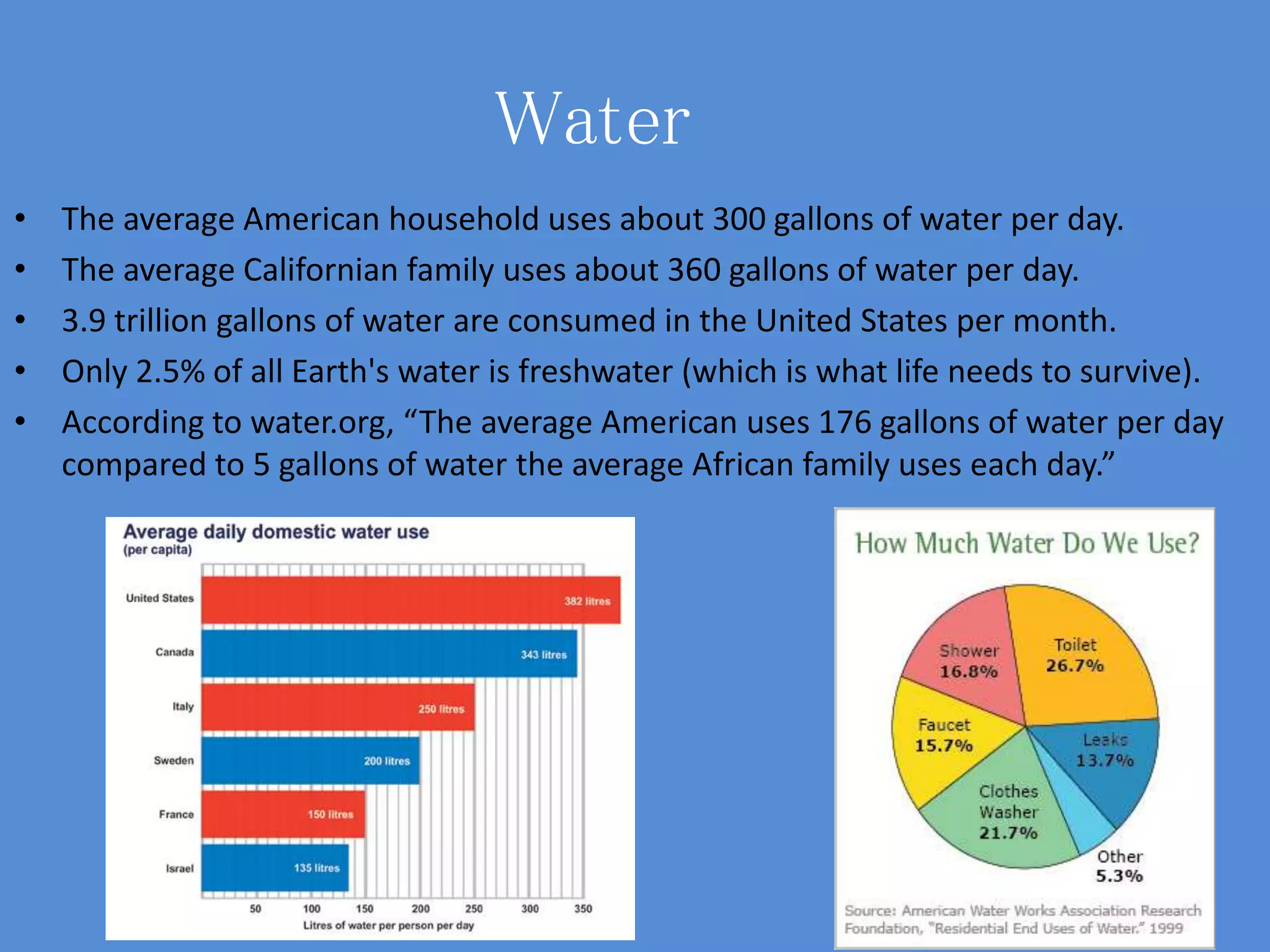
• The average American household uses about 300 gallons of water per day.
• The average Californian family uses about 360 gallons of water per day.
• 3.9 trillion gallons of water are consumed in the United States per month.
• Only 2.5% of all Earth's water is freshwater (which is what life needs to survive).
• According to water.org, “The average American uses 176 gallons of water per day
compared to 5 gallons of water the average African family uses each day.”
Water & California
Folsom Lake
Oroville Lake
Shasta Lake
Lake Lanier
Water & the
World
Fossil Fuel & Natural Gases
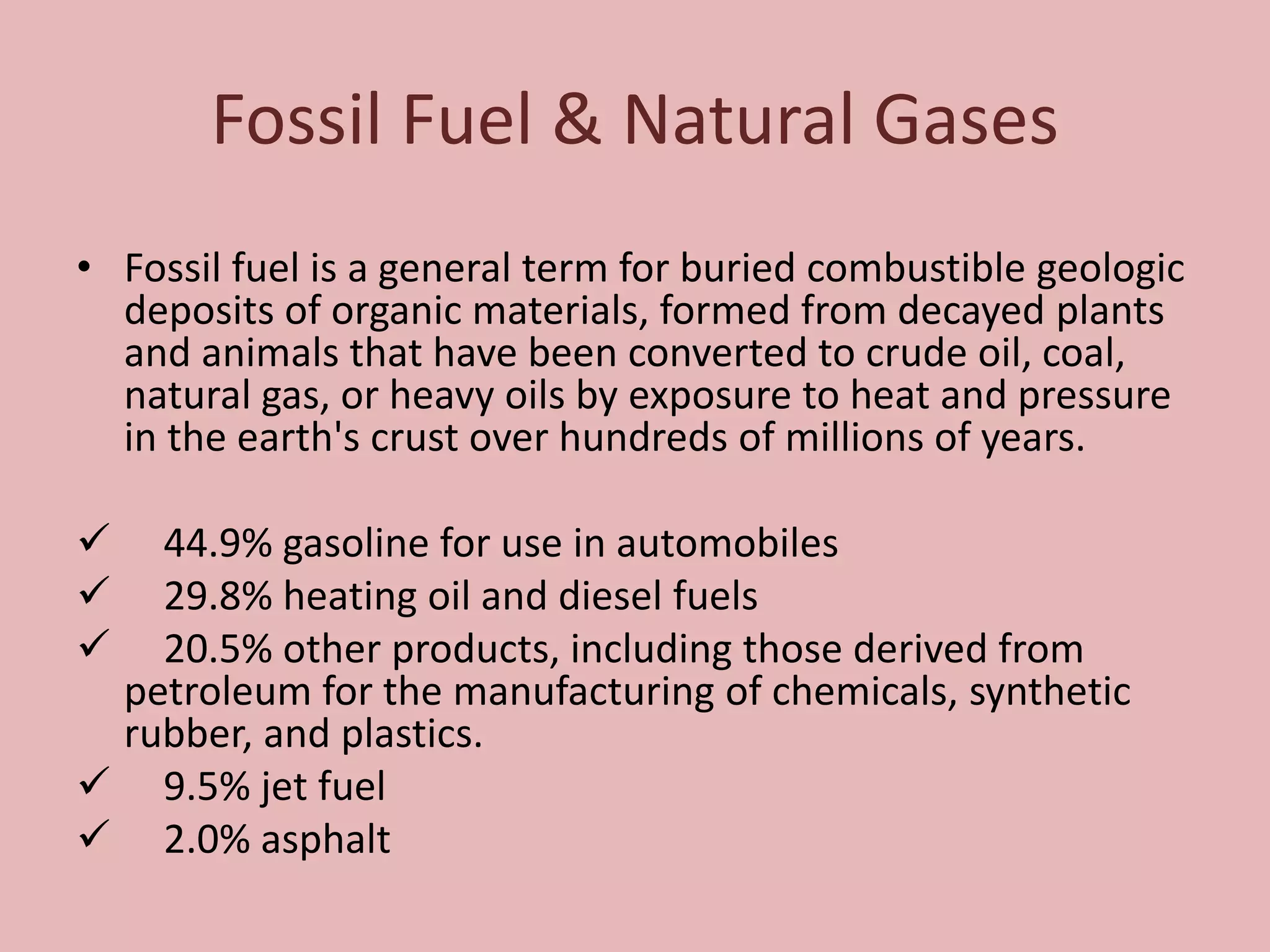
• Fossil fuel is a general term for buried combustible geologic
deposits of organic materials, formed from decayed plants
and animals that have been converted to crude oil, coal,
natural gas, or heavy oils by exposure to heat and pressure
in the earth's crust over hundreds of millions of years.
 44.9% gasoline for use in automobiles
 29.8% heating oil and diesel fuels
 20.5% other products, including those derived from
petroleum for the manufacturing of chemicals, synthetic
rubber, and plastics.
 9.5% jet fuel
 2.0% asphalt
Fossil Fuel & Natural Gases
• According to InstituteForEnergyResearch.org, The United States
Natural Gas Consumption for the year of 2014 was:
 34% Industrial
 30% Electric Power
 19% Residential
 13% Commercial
 3% Transportation
We rely heavily on fossil fuels as a source of energy in our day to day
lives. Without the production of goods from industries we wouldn’t
have common household items and it would be a detrimental to our
economy.
• Earth Policy Institute states, all
together, governments are shelling
out nearly $1.4 billion per day to
further destabilize the earth’s
climate. (damage our climate)
Fossil Fuels & Earth
Forest & Soil
• Soil provides ecosystem services critical for life : soil acts as a
water filter and provides habitat for billions of organisms,
contributing to biodiversity; & supplies most of the antibiotics
used to fight diseases. Soil is the basis of our agroecosystems
which provide us with feed, fiber, food and fuel.
• Soil pollution is the change in physical, chemical, and
biological conditions of the soil through mans intervention
resulting from degradation in quality and productivity of the
soil.
• Each year the United States factories release over 3 million
tons of toxic chemicals into the air, land, and water.
– The Mississippi river carries about 1.5 million metric tons of nitrogen
pollution into the Gulf, annually.
Soil contamination
• Forests are an extremely important natural resource
that can potentially be sustainably harvested
• Unfortunately, in most cases forests have been
unsustainably overharvested, resulting in the "mining"
of the forest resource and widespread ecological
degradation.
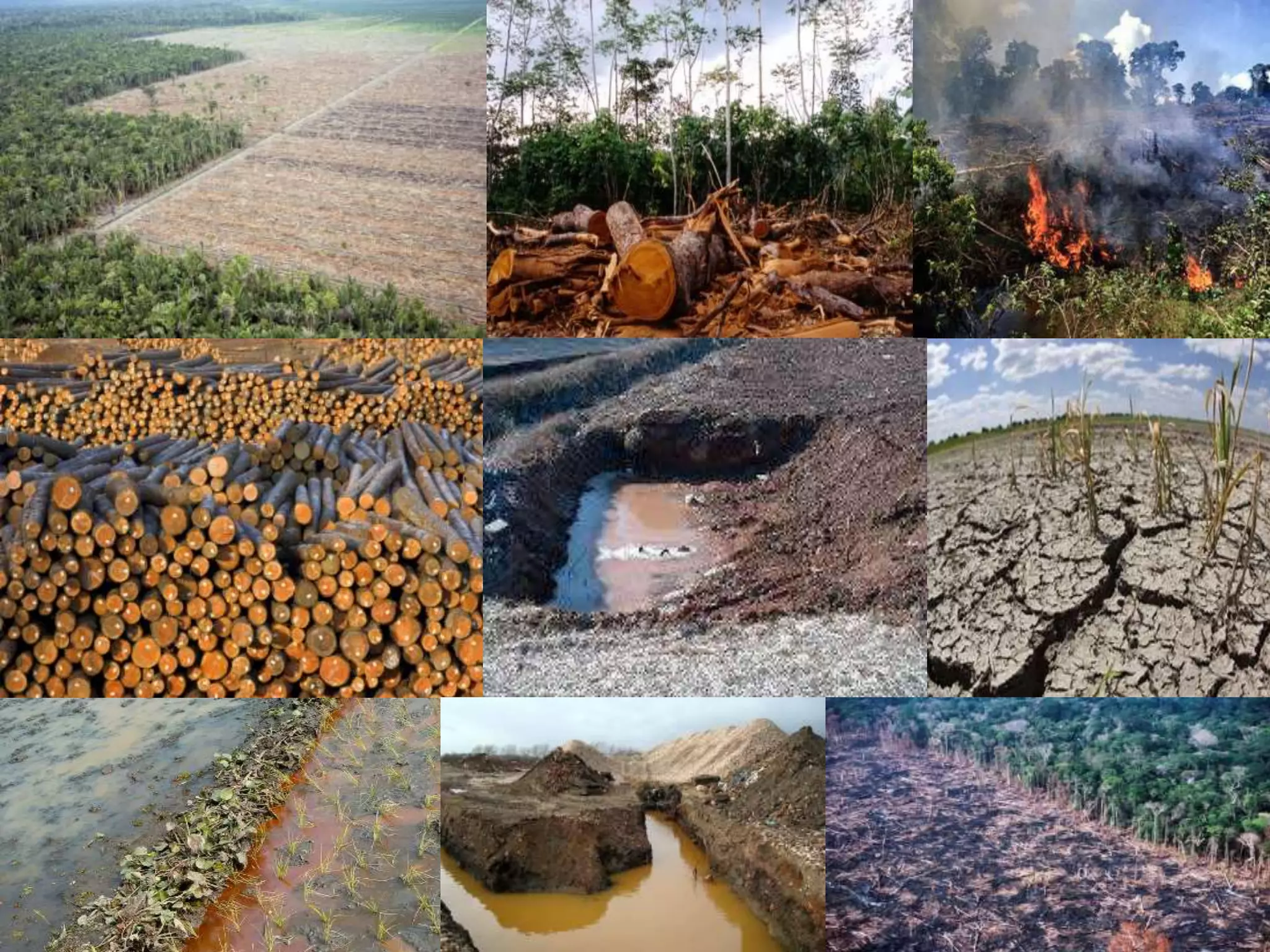
• Deforestation: the clearing of trees, transforming a
forest into cleared land.
– It causes increases in temperatures as well as changes in
rainfall patterns which generally create a drier climate.
• Forests are an important part of the water cycle. They
move water from the soil into the atmosphere through
'evapotranspiration'. This moisture eventually falls as
rain. The evapotranspiration also results in a cooling
effect; the effects of deforestation are drier and
warmer conditions.
Natural resources
Natural resources

Natural resources

  • 1.
    Natural Resources Presented By:Anna Ortiz June 23, 2015 Geography & the United States
  • 2.
    What are naturalresources?  Natural resources are materials or substances such as minerals, forests, water, and fertile land that occur in nature and can be used for economic gain.
  • 3.
    Water • The averageAmerican household uses about 300 gallons of water per day. • The average Californian family uses about 360 gallons of water per day. • 3.9 trillion gallons of water are consumed in the United States per month. • Only 2.5% of all Earth's water is freshwater (which is what life needs to survive). • According to water.org, “The average American uses 176 gallons of water per day compared to 5 gallons of water the average African family uses each day.”
  • 4.
    Water & California FolsomLake Oroville Lake Shasta Lake
  • 5.
  • 6.
    Fossil Fuel &Natural Gases • Fossil fuel is a general term for buried combustible geologic deposits of organic materials, formed from decayed plants and animals that have been converted to crude oil, coal, natural gas, or heavy oils by exposure to heat and pressure in the earth's crust over hundreds of millions of years.  44.9% gasoline for use in automobiles  29.8% heating oil and diesel fuels  20.5% other products, including those derived from petroleum for the manufacturing of chemicals, synthetic rubber, and plastics.  9.5% jet fuel  2.0% asphalt
  • 7.
    Fossil Fuel &Natural Gases • According to InstituteForEnergyResearch.org, The United States Natural Gas Consumption for the year of 2014 was:  34% Industrial  30% Electric Power  19% Residential  13% Commercial  3% Transportation We rely heavily on fossil fuels as a source of energy in our day to day lives. Without the production of goods from industries we wouldn’t have common household items and it would be a detrimental to our economy.
  • 8.
    • Earth PolicyInstitute states, all together, governments are shelling out nearly $1.4 billion per day to further destabilize the earth’s climate. (damage our climate)
  • 9.
  • 11.
    Forest & Soil •Soil provides ecosystem services critical for life : soil acts as a water filter and provides habitat for billions of organisms, contributing to biodiversity; & supplies most of the antibiotics used to fight diseases. Soil is the basis of our agroecosystems which provide us with feed, fiber, food and fuel. • Soil pollution is the change in physical, chemical, and biological conditions of the soil through mans intervention resulting from degradation in quality and productivity of the soil. • Each year the United States factories release over 3 million tons of toxic chemicals into the air, land, and water. – The Mississippi river carries about 1.5 million metric tons of nitrogen pollution into the Gulf, annually.
  • 12.
  • 13.
    • Forests arean extremely important natural resource that can potentially be sustainably harvested • Unfortunately, in most cases forests have been unsustainably overharvested, resulting in the "mining" of the forest resource and widespread ecological degradation. • Deforestation: the clearing of trees, transforming a forest into cleared land. – It causes increases in temperatures as well as changes in rainfall patterns which generally create a drier climate. • Forests are an important part of the water cycle. They move water from the soil into the atmosphere through 'evapotranspiration'. This moisture eventually falls as rain. The evapotranspiration also results in a cooling effect; the effects of deforestation are drier and warmer conditions.