Downloaded 3,128 times

The document discusses the principles and concepts of human development, emphasizing that it is a lifelong, complex process influenced by biological, cognitive, and socio-emotional factors. It contrasts traditional and life-span approaches, noting that development is multidimensional, varies among individuals, and is shaped by social and cultural contexts. Key principles include the importance of early experiences, secure relationships, and the role of play in fostering development and learning.
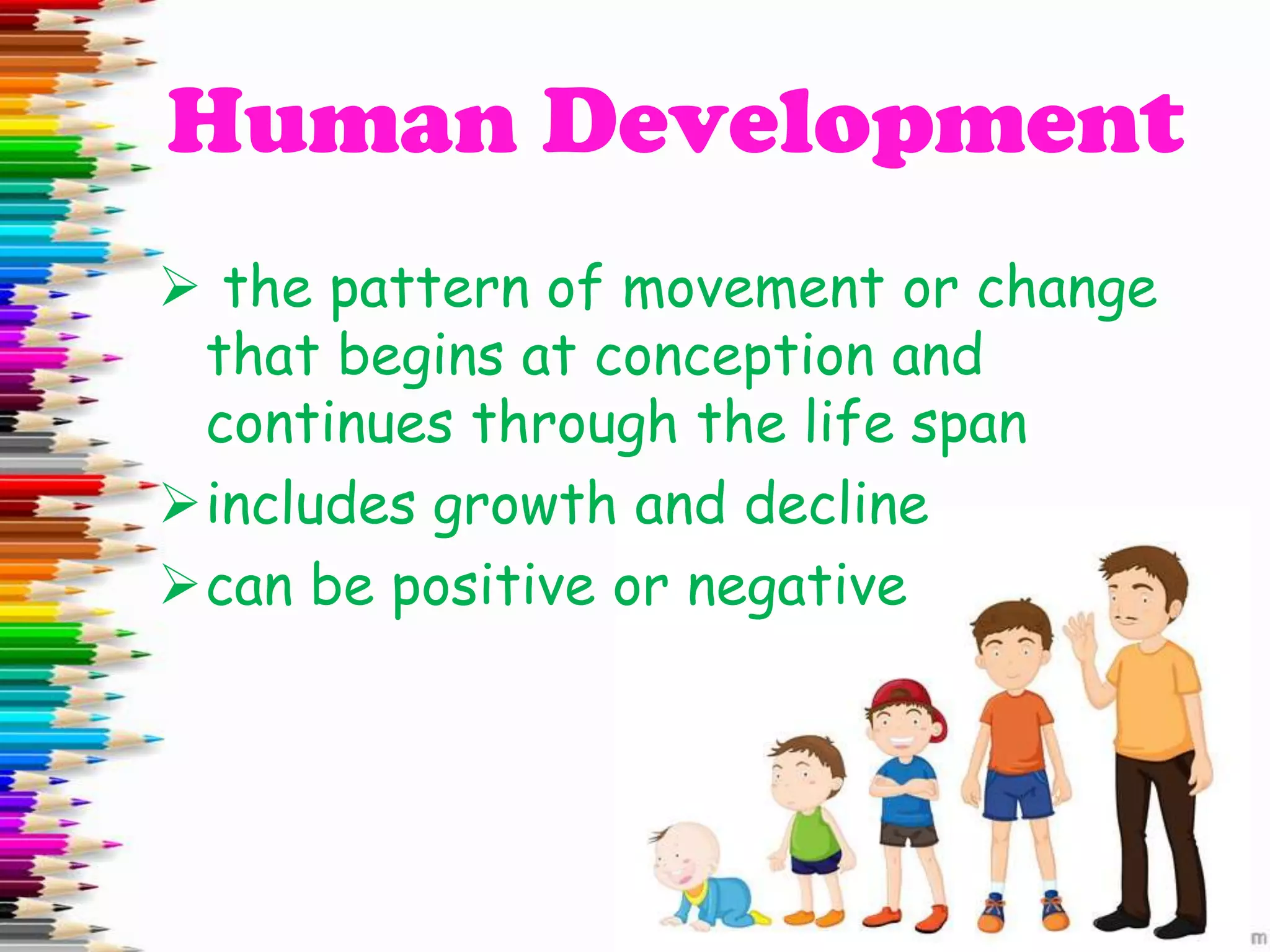
Overview of human development concepts and definitions, including patterns of change throughout the lifespan.
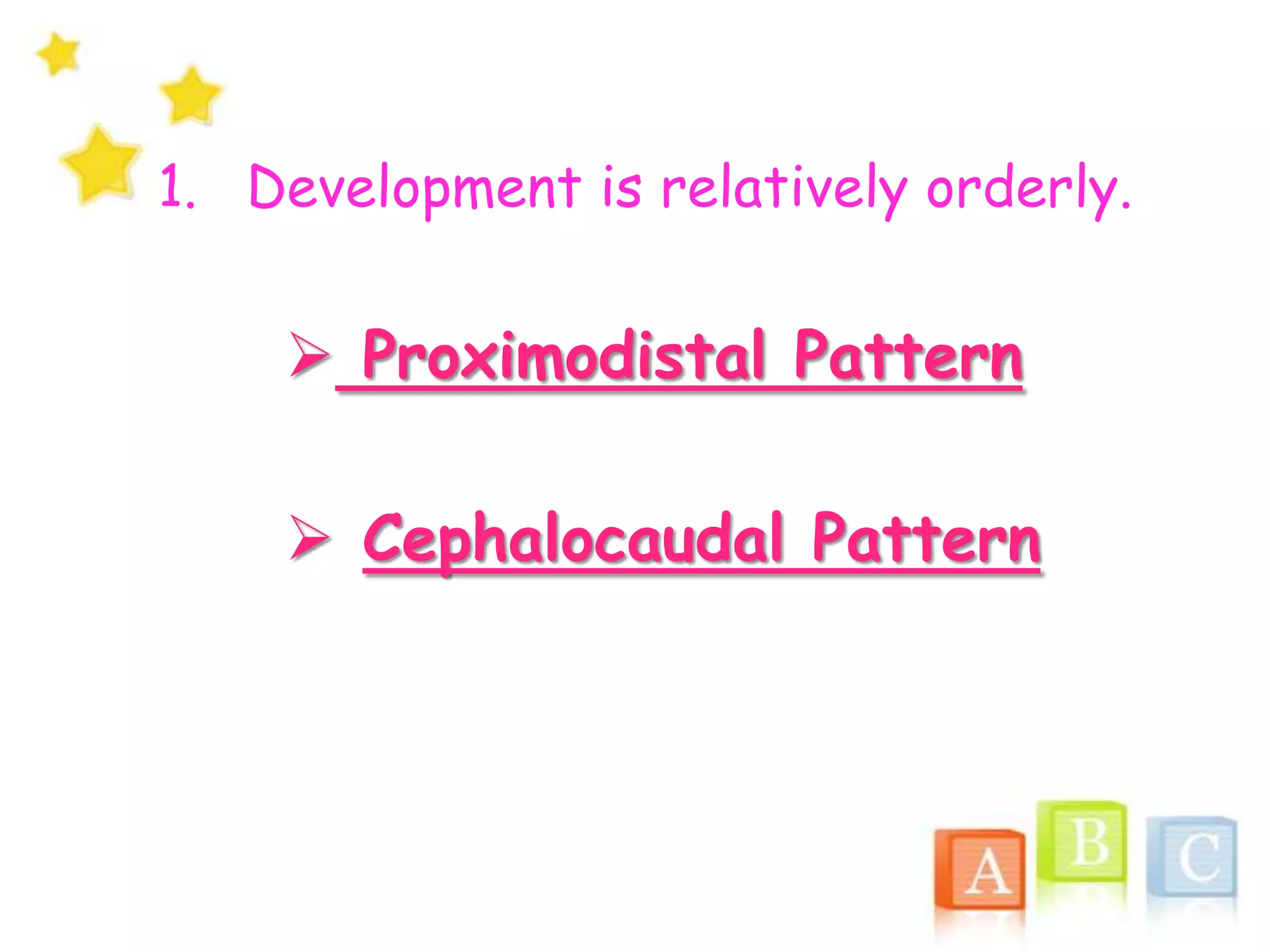
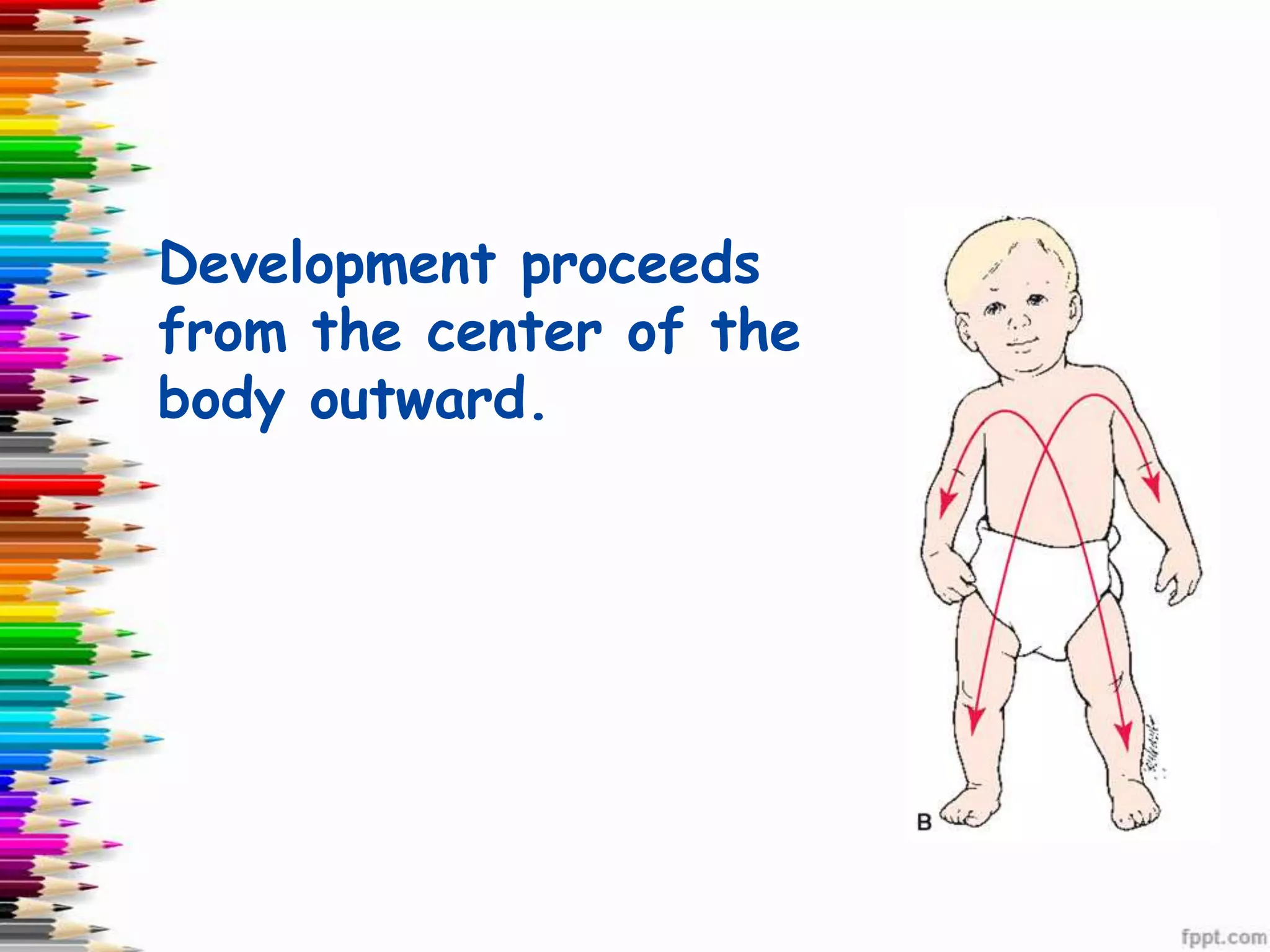
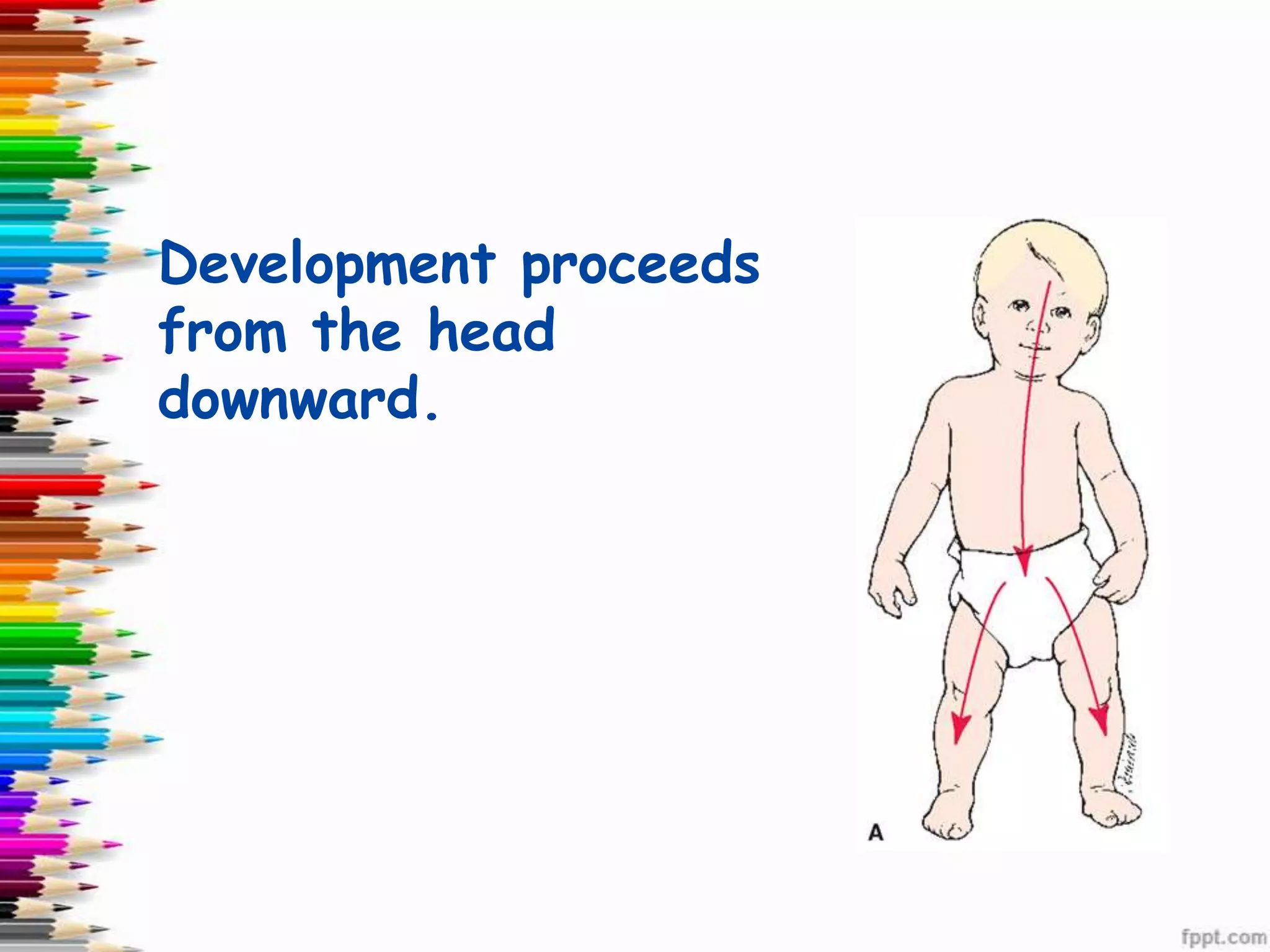
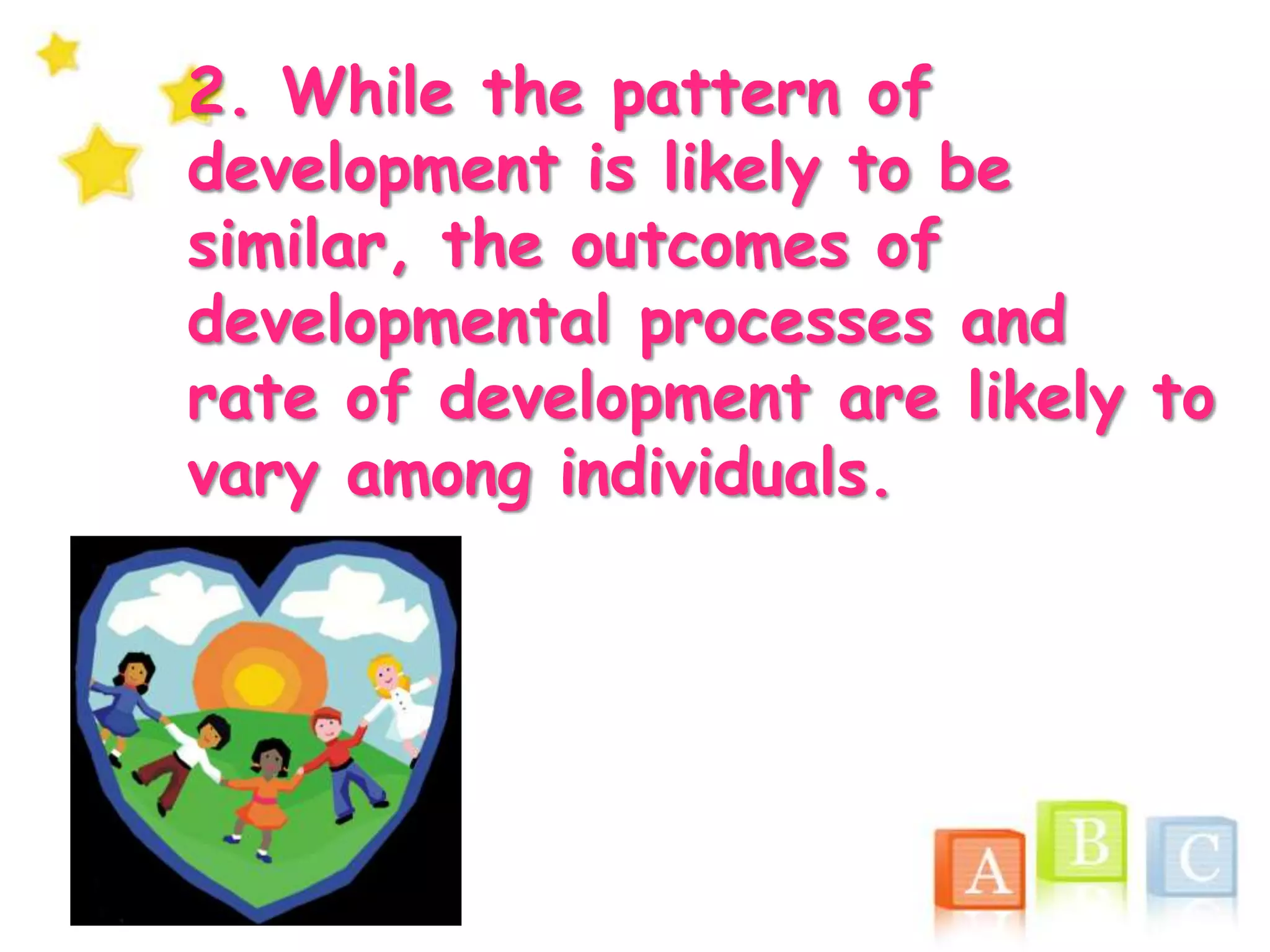
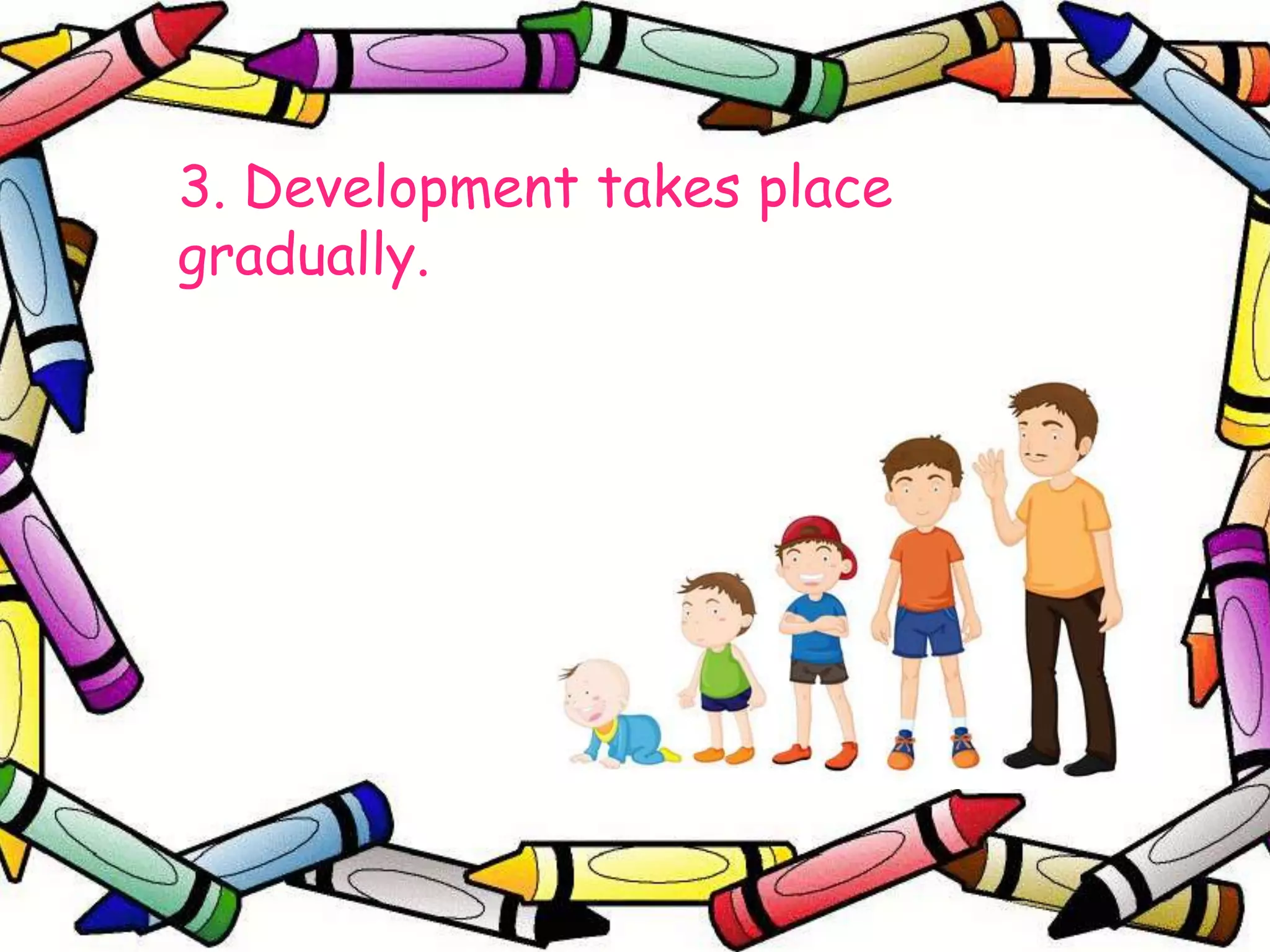
Major principles of development are discussed, emphasizing orderly progression, individual variation, gradual processes, and complexity involving biological and socio-emotional factors.
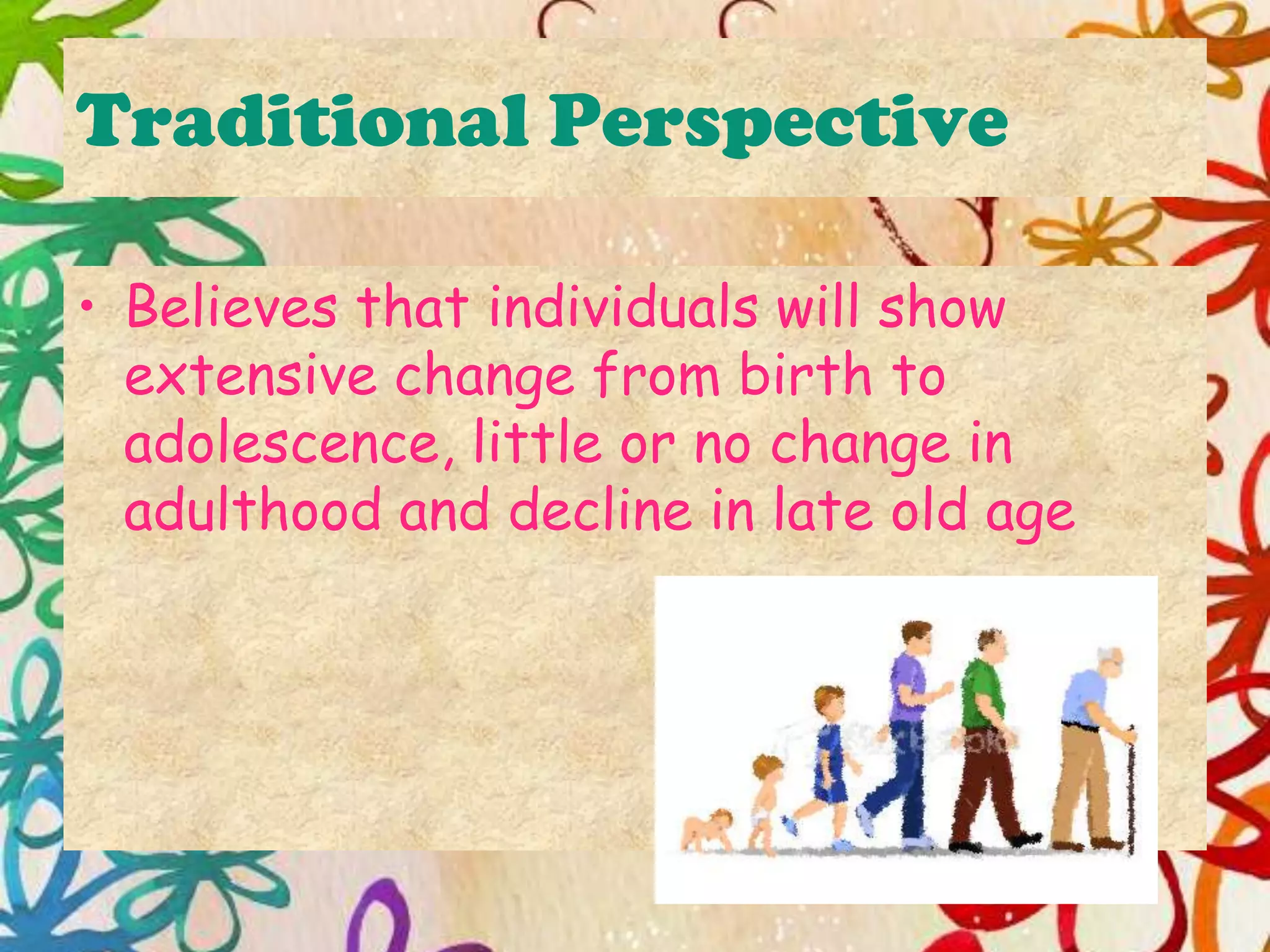
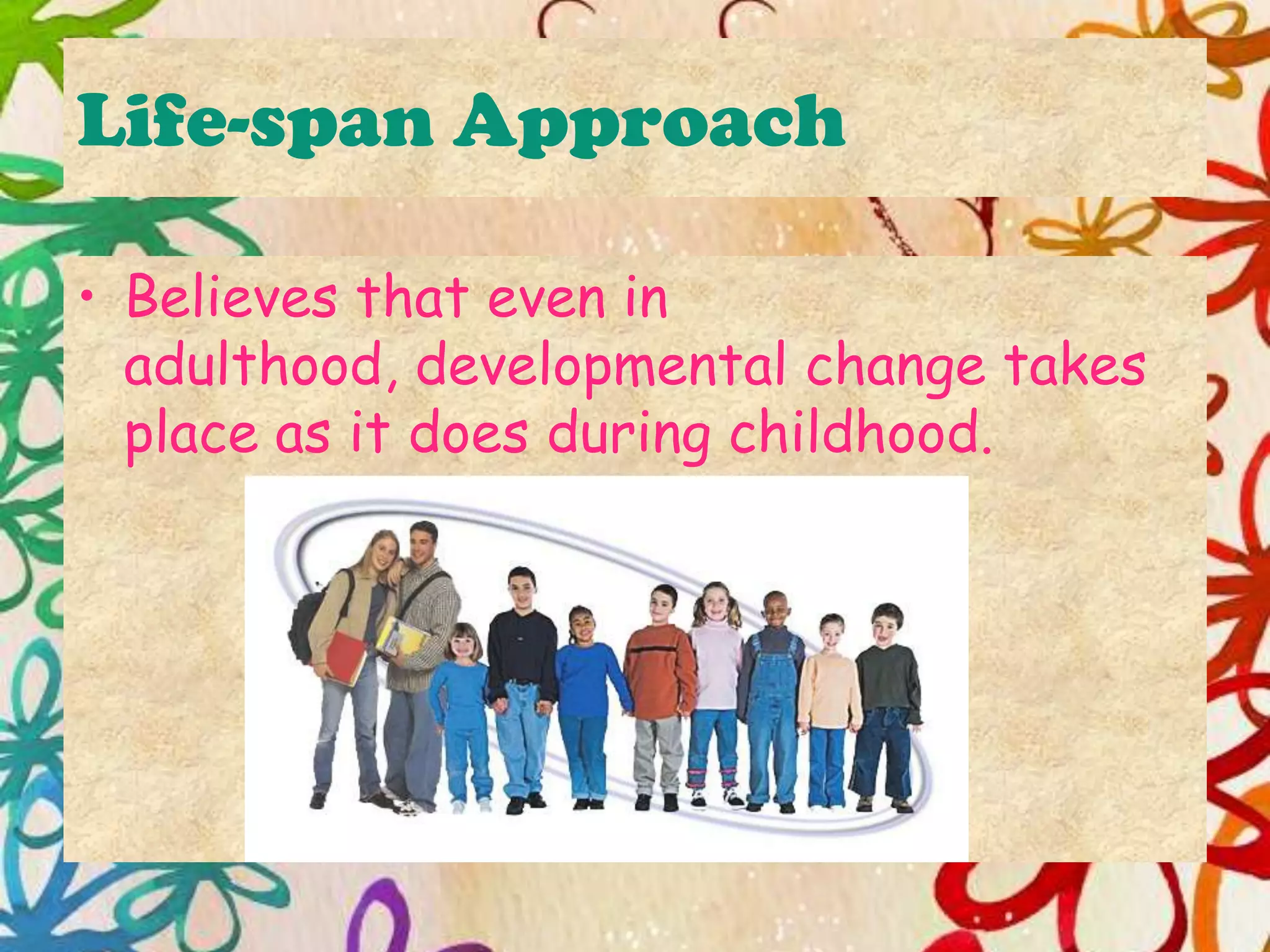
Contrasting Traditional and Life-span Perspectives on development stages from birth through adulthood.
Development is lifelong, multidimensional, plastic, and contextual, highlighting various influences through the lifespan.
Focus on the goals of growth, maintenance, and regulation throughout different developmental stages.
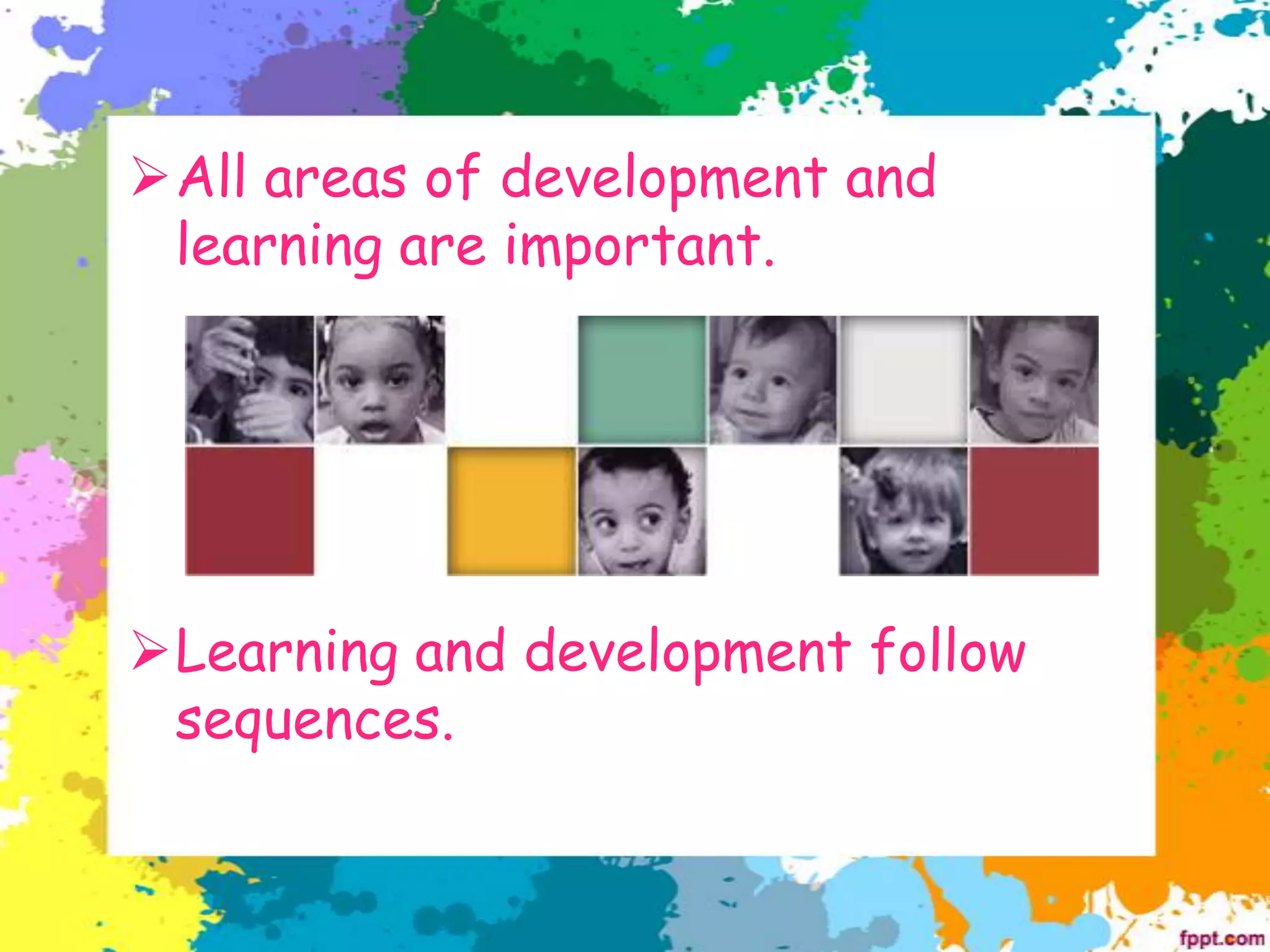
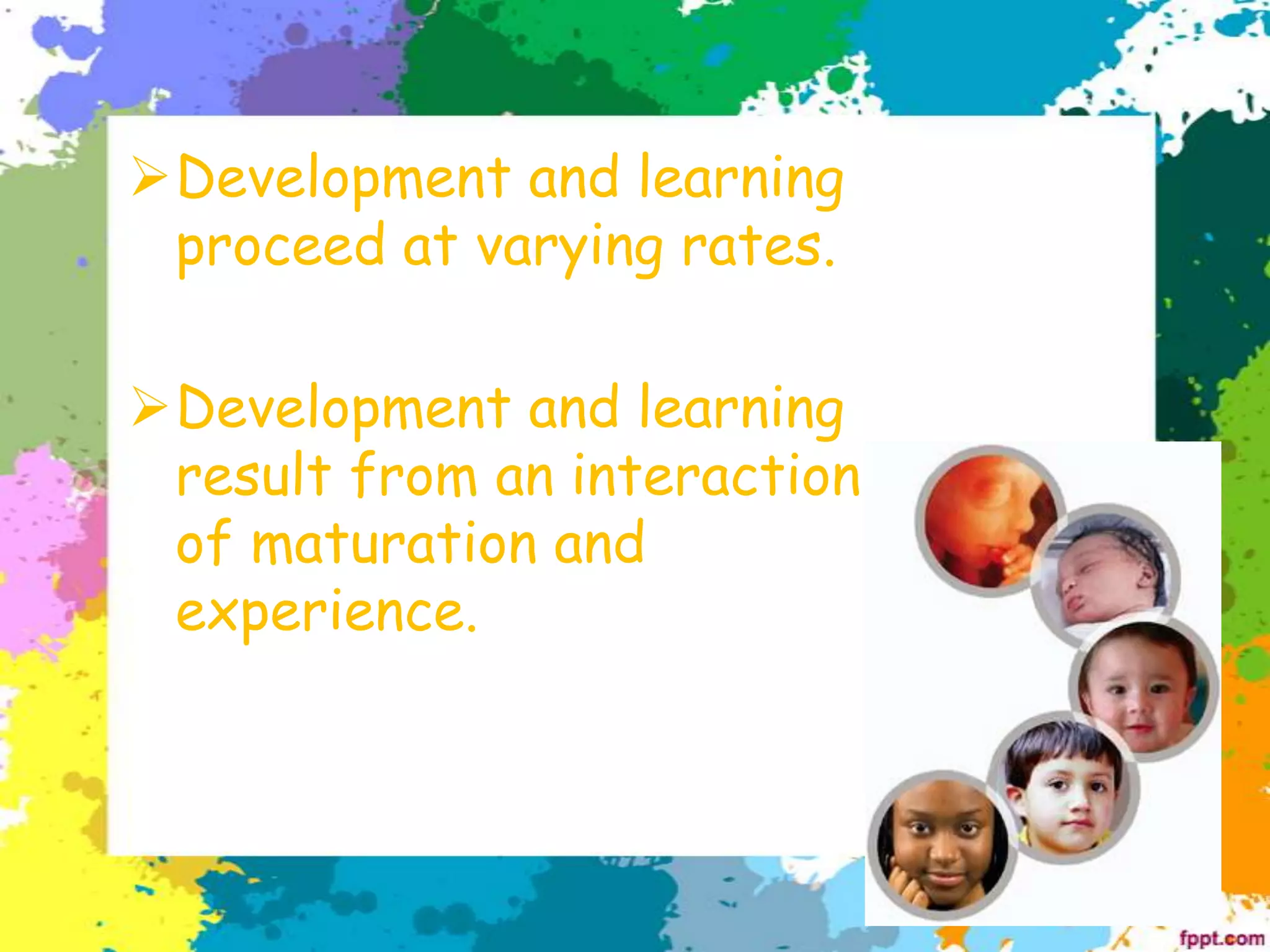
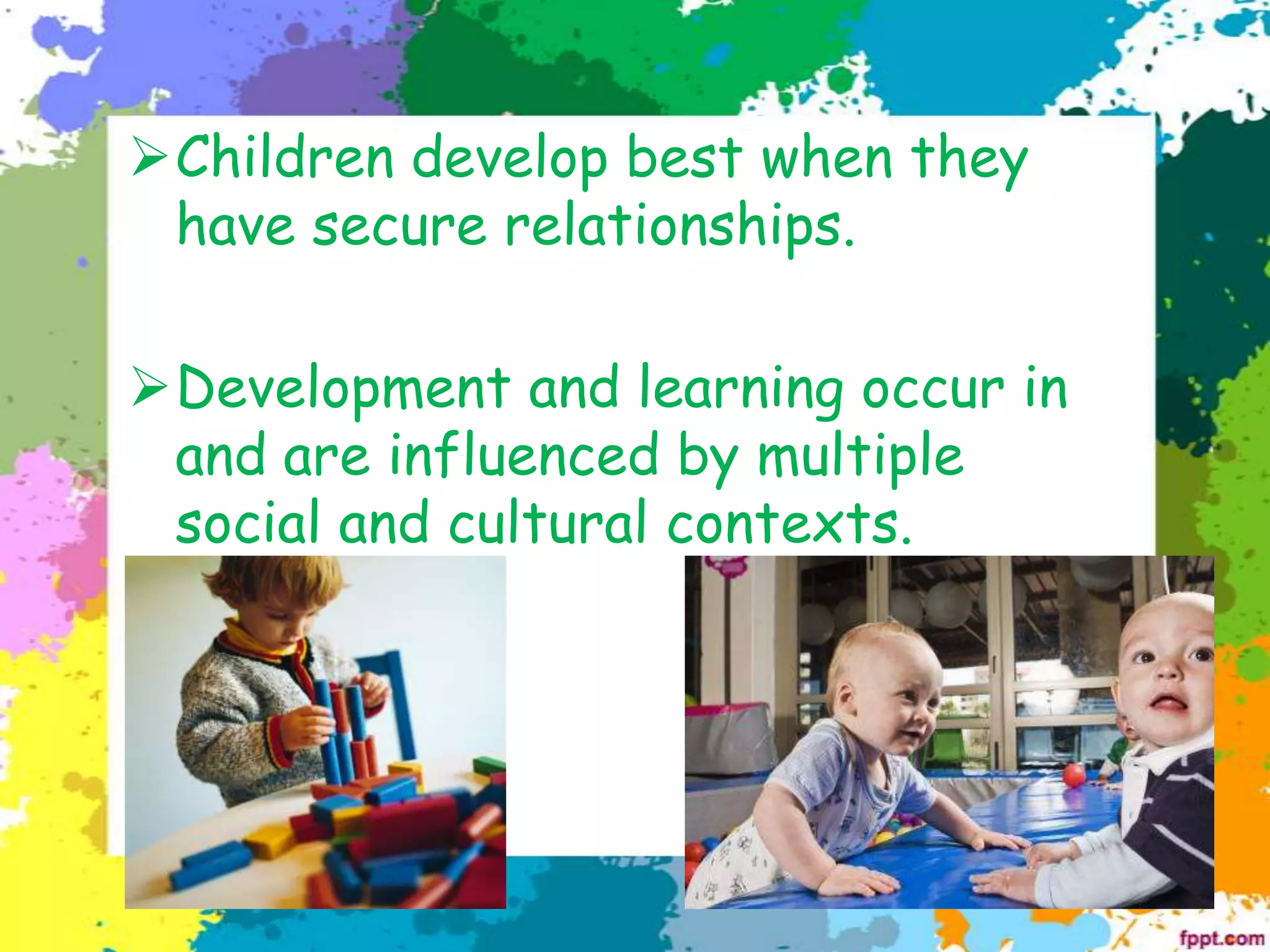
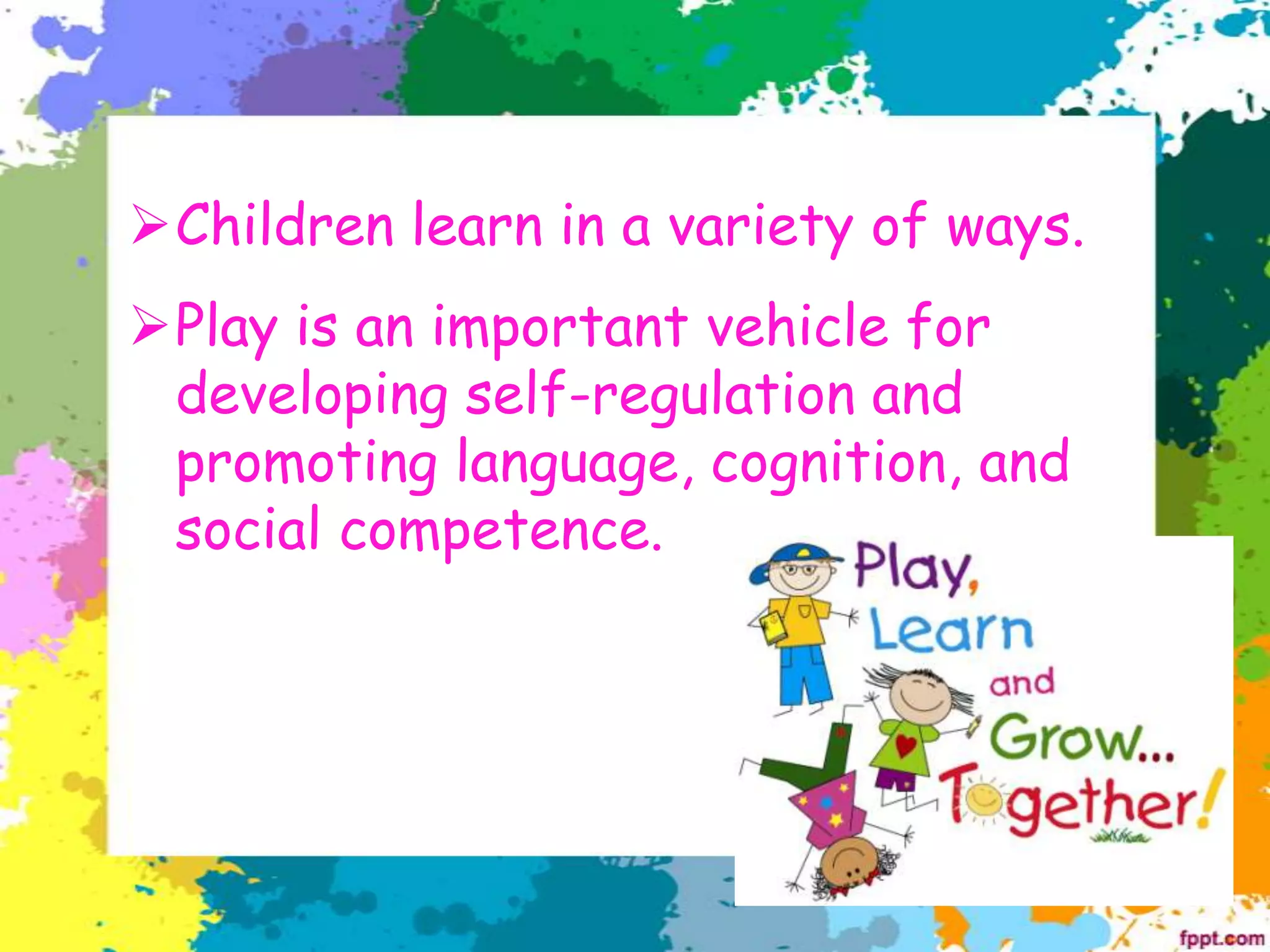
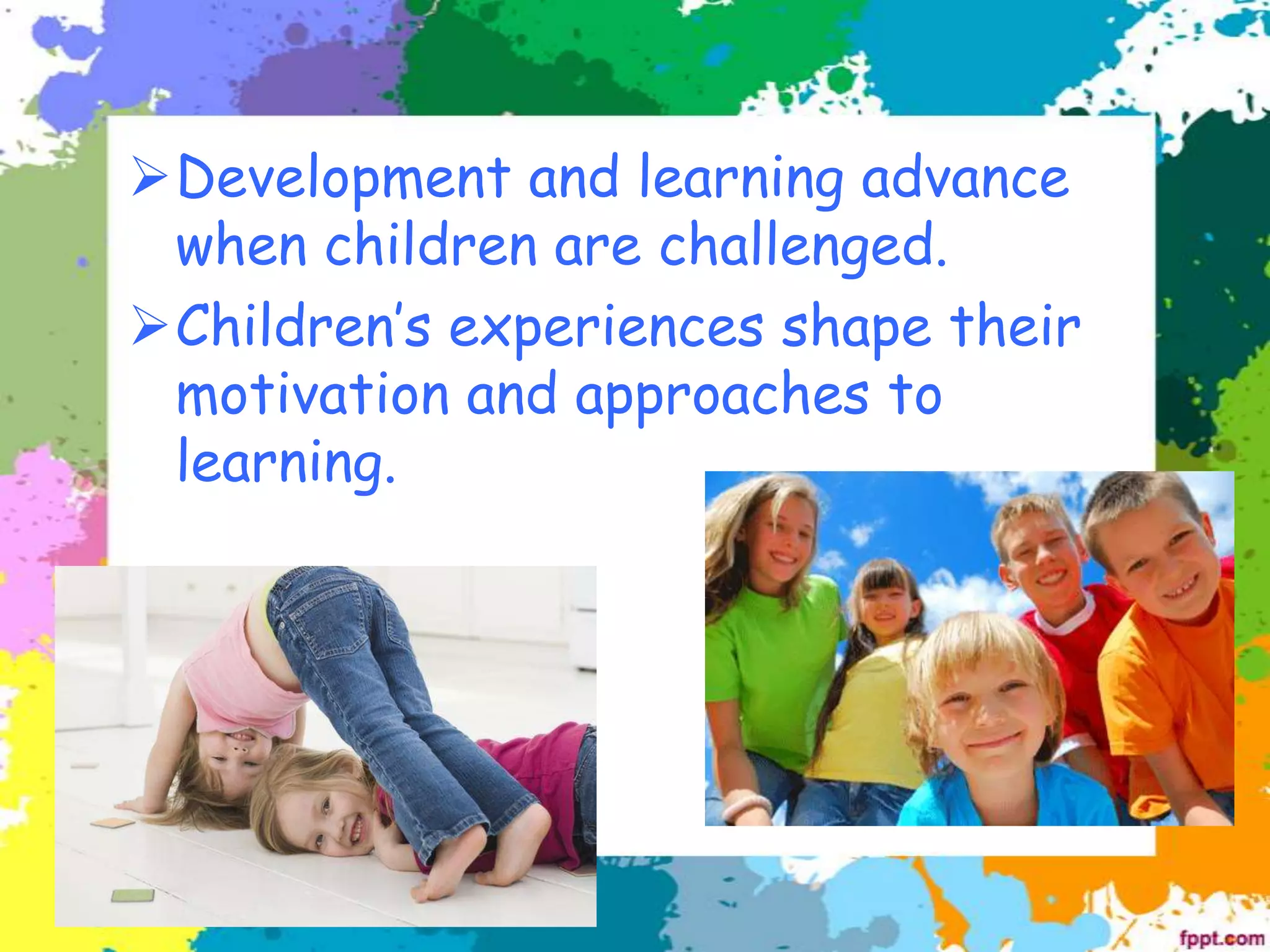
Key principles guiding child development and learning, including the importance of secure relationships and diverse learning contexts.


