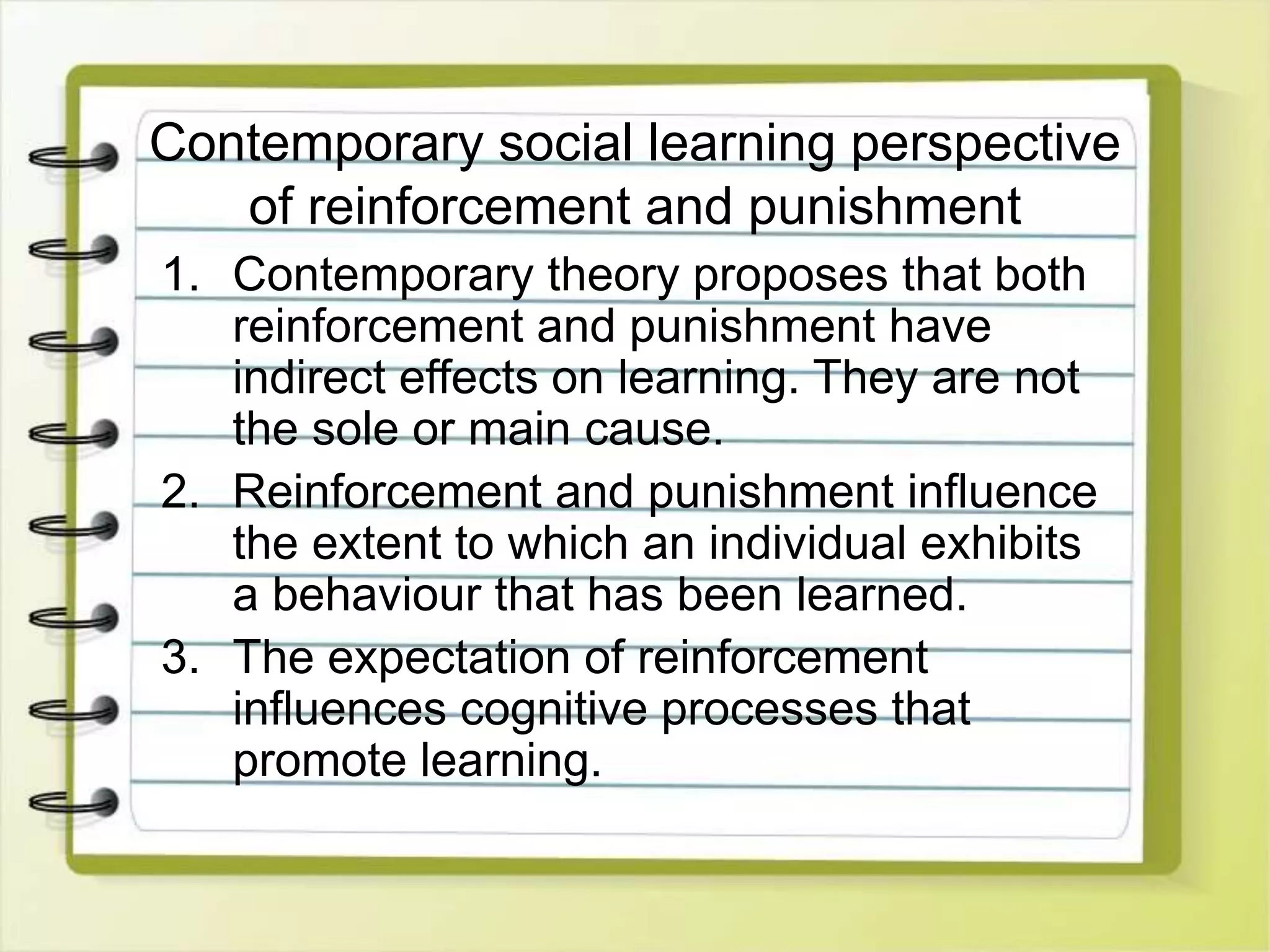
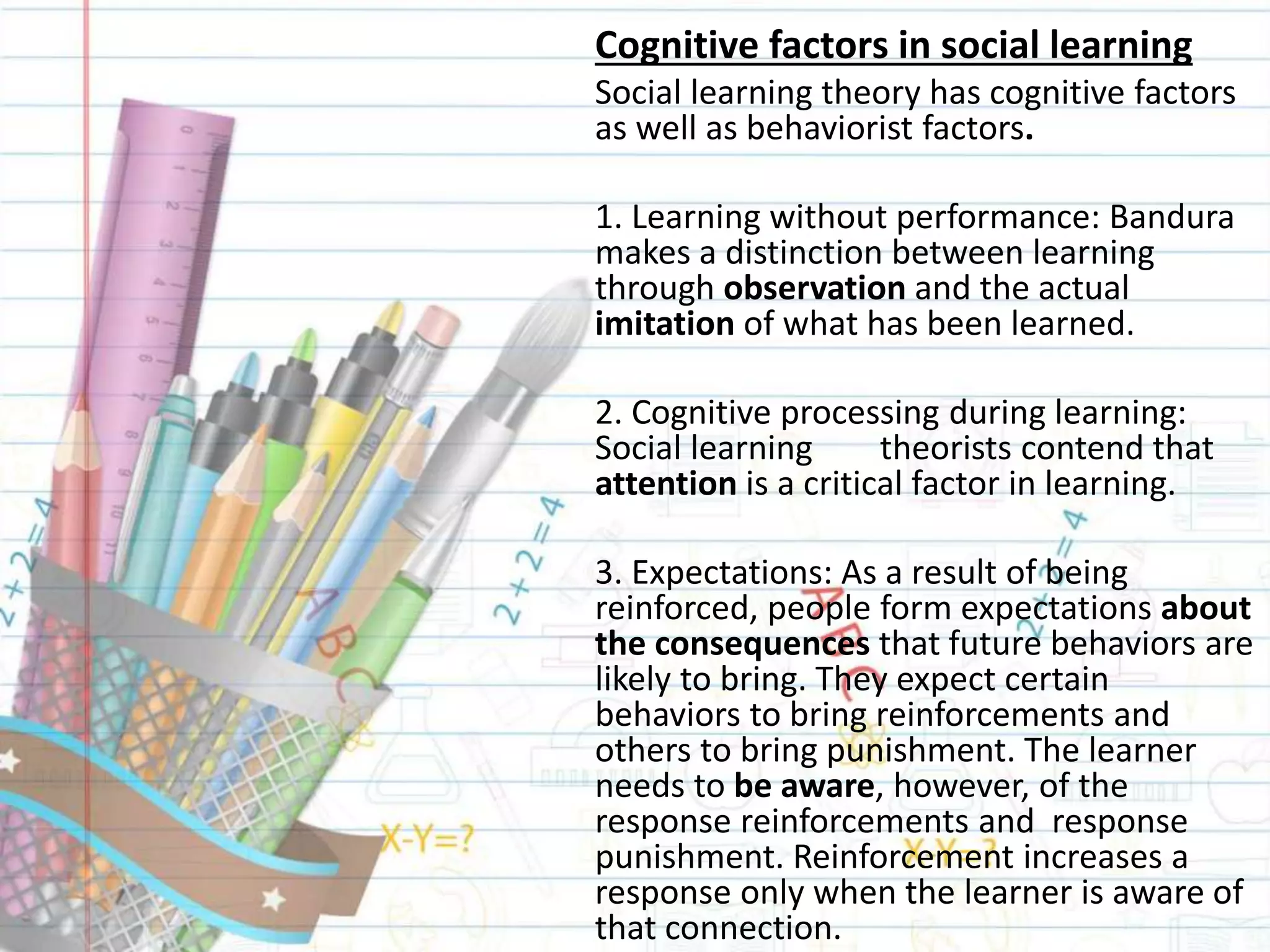
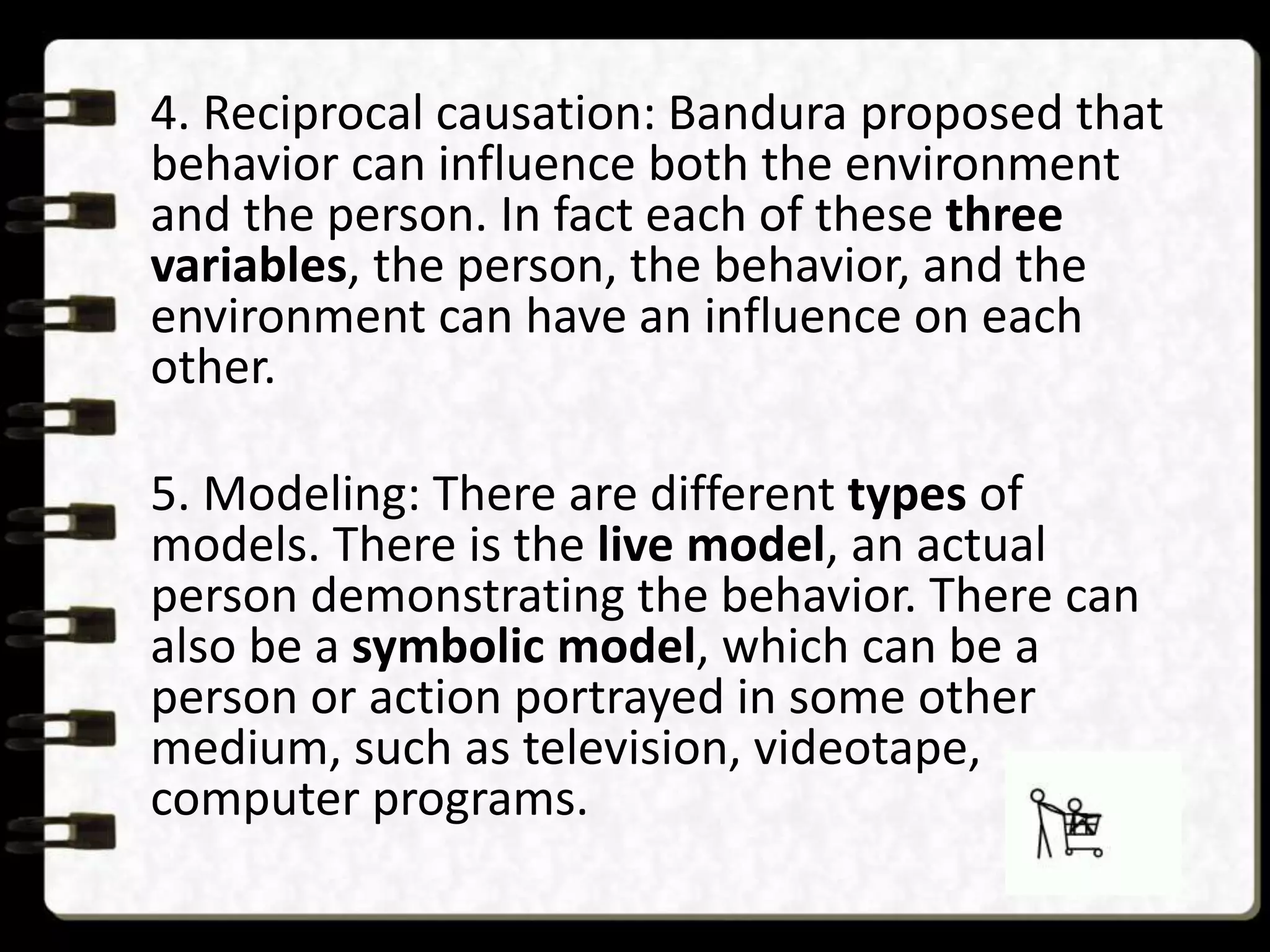
This document discusses neo-behaviorism and two of its major theorists, Edward Tolman and Albert Bandura. It summarizes Tolman's purposive behaviorism, including his concepts of cognitive maps, latent learning, intervening variables, and that reinforcement is not essential for learning. It then summarizes Albert Bandura's social learning theory, including concepts like observational learning, modeling, vicarious reinforcement, and the four conditions necessary for effective modeling.