What you need to know
about the stages of human
development
HUMAN
DEVELOPMENT
Think-Pair-Share
Identify three ways you have
changed from when you
were a newborn to now.
Discuss and compare your
list with a partner.
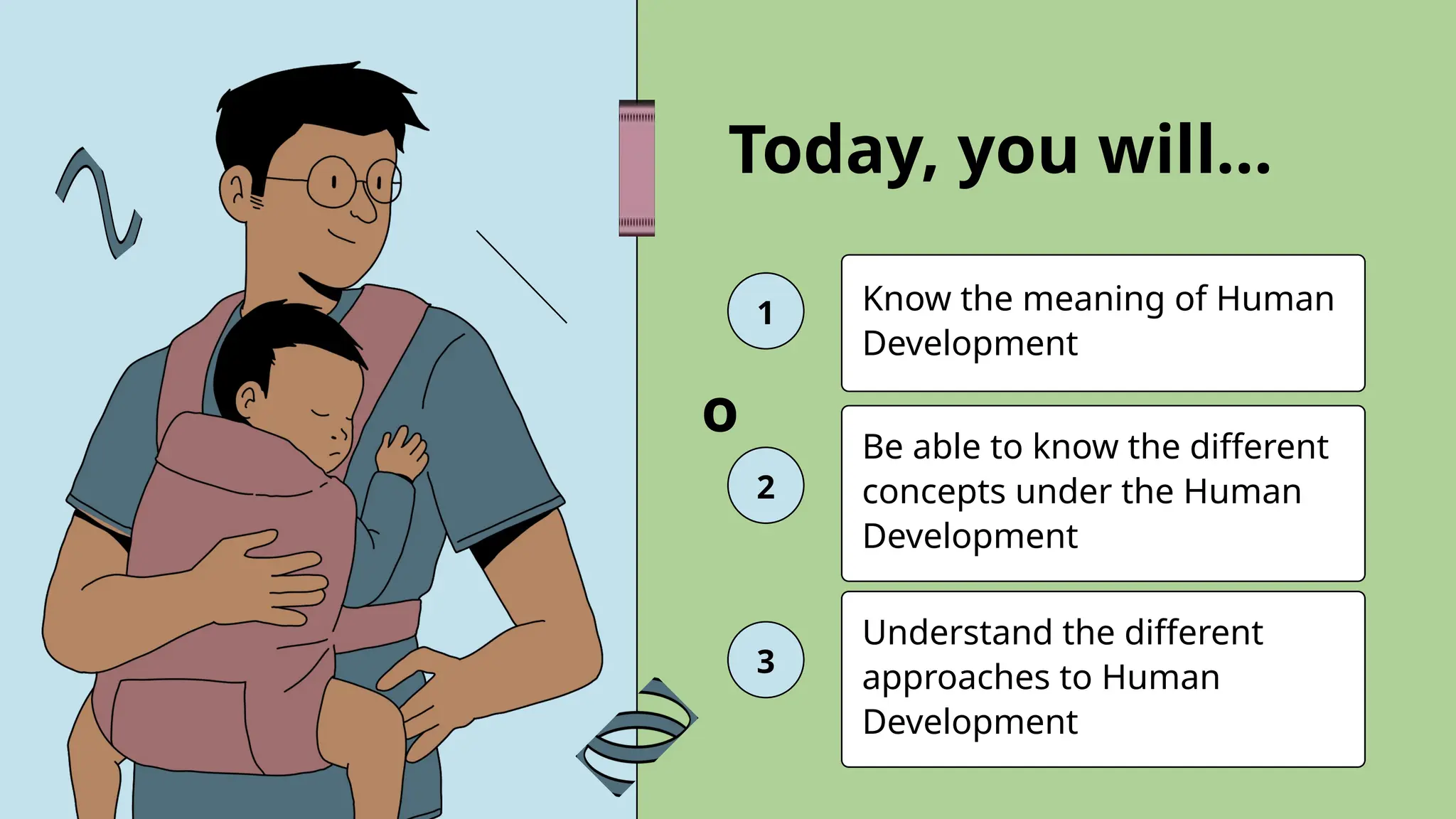
Know the meaning of Human
Development
Be able to know the different
concepts under the Human
Development
Understand the different
approaches to Human
Development
1
2
3
Today, you will...
o
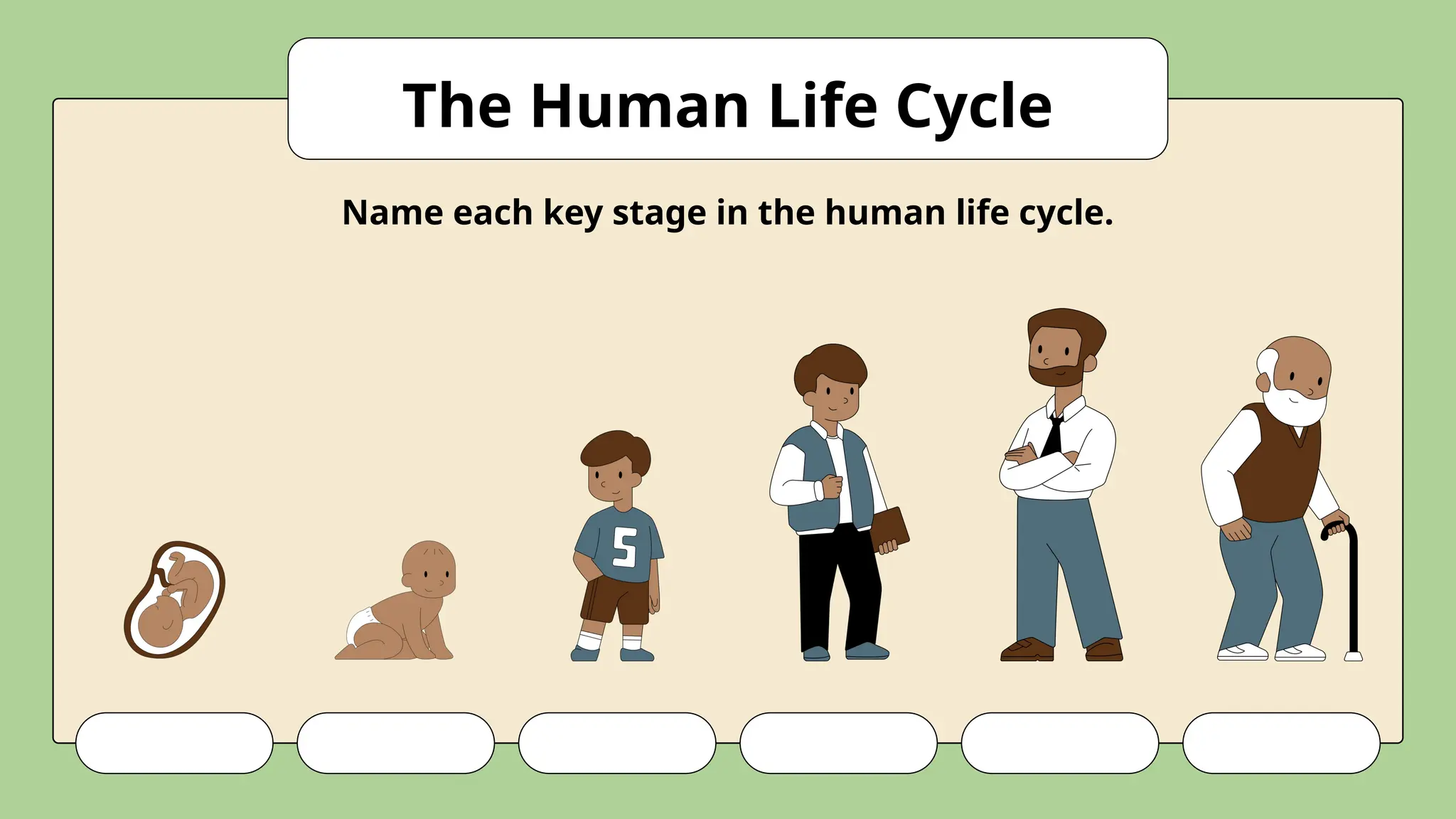
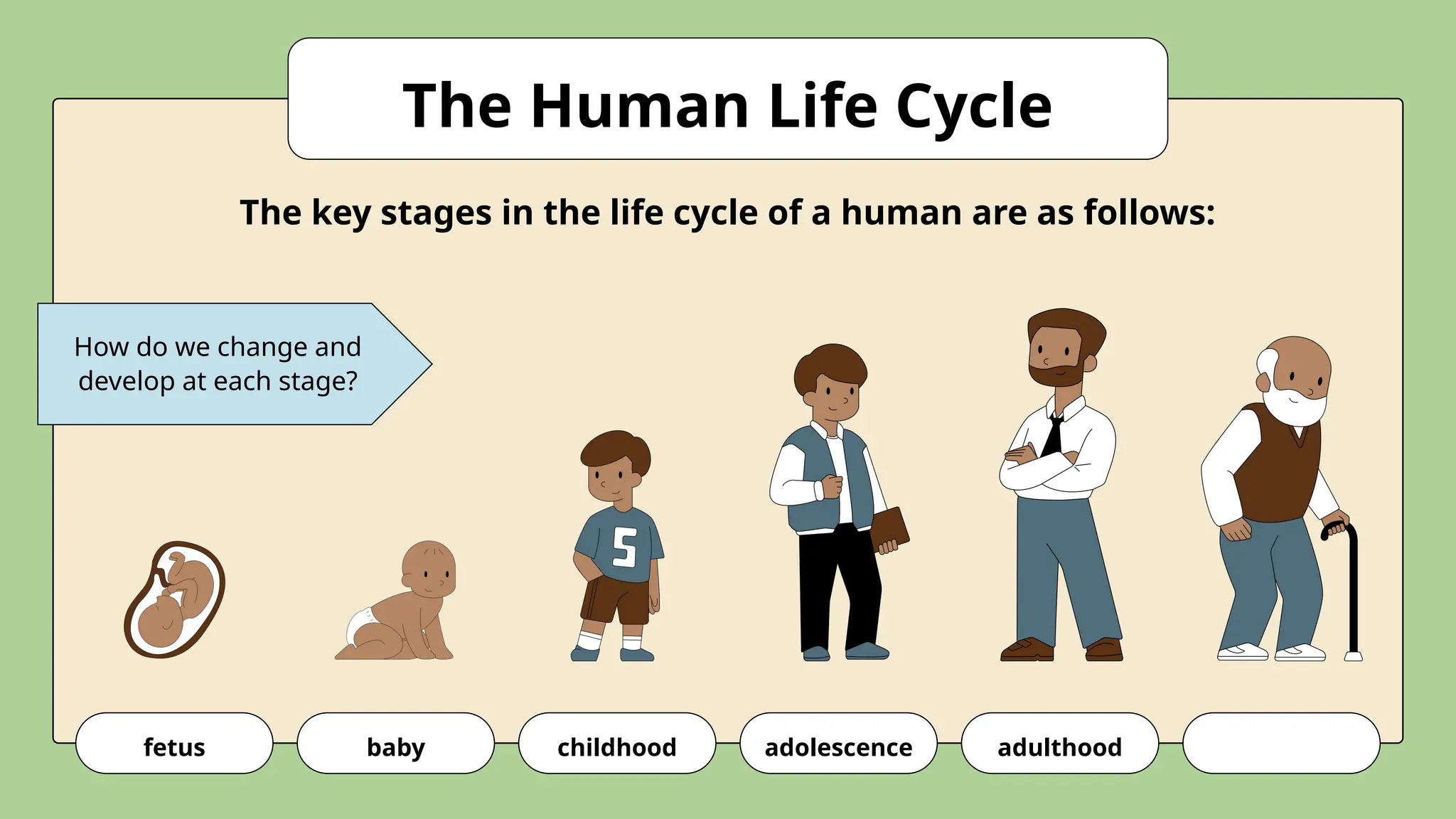
The Human Life Cycle
Name each key stage in the human life cycle.
How do we change and
develop at each stage?
fetus
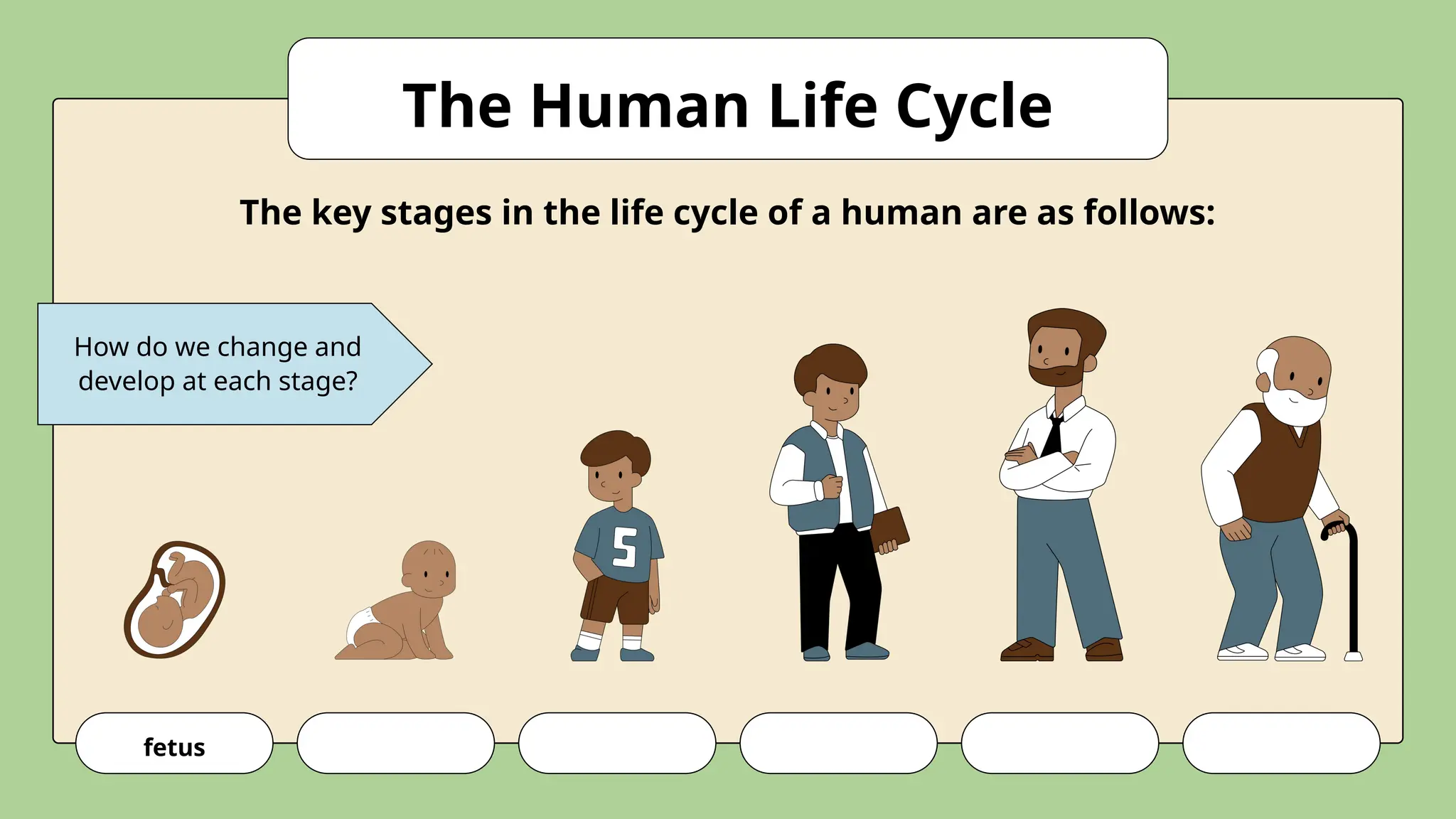
The Human Life Cycle
The key stages in the life cycle of a human are as follows:
How do we change and
develop at each stage?
fetus baby
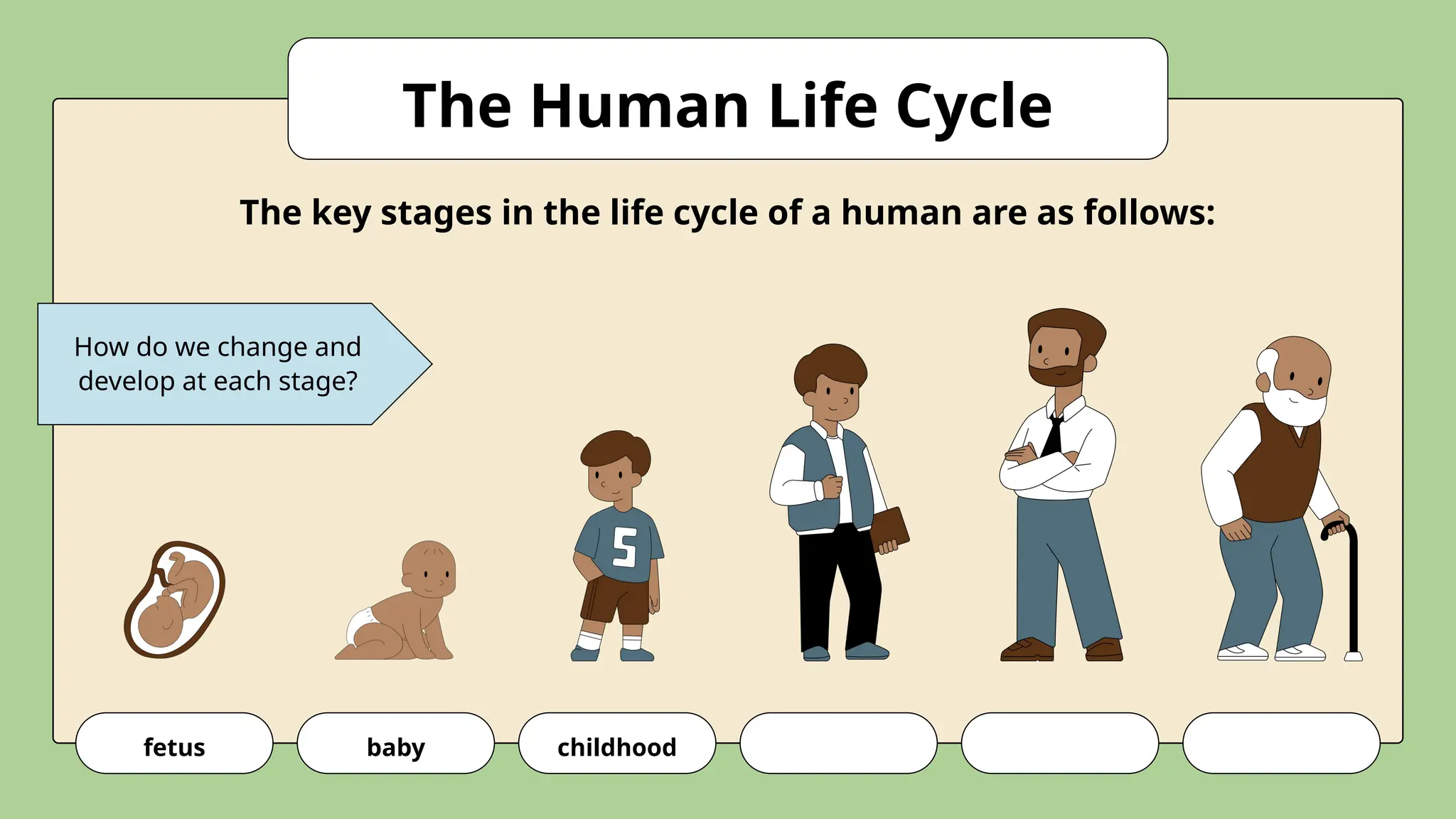
The Human Life Cycle
The key stages in the life cycle of a human are as follows:
How do we change and
develop at each stage?
fetus baby childhood
The Human Life Cycle
The key stages in the life cycle of a human are as follows:
How do we change and
develop at each stage?
fetus baby childhood adolescence
The Human Life Cycle
The key stages in the life cycle of a human are as follows:
How do we change and
develop at each stage?
fetus baby childhood adolescence adulthood
The Human Life Cycle
The key stages in the life cycle of a human are as follows:
How do we change and
develop at each stage?
fetus baby childhood adolescence adulthood old age
The Human Life Cycle
The key stages in the life cycle of a human are as follows:
HUMAN
DEVELOPMENT
the pattern of movement
or change that begins at
conception and continues
through the life span
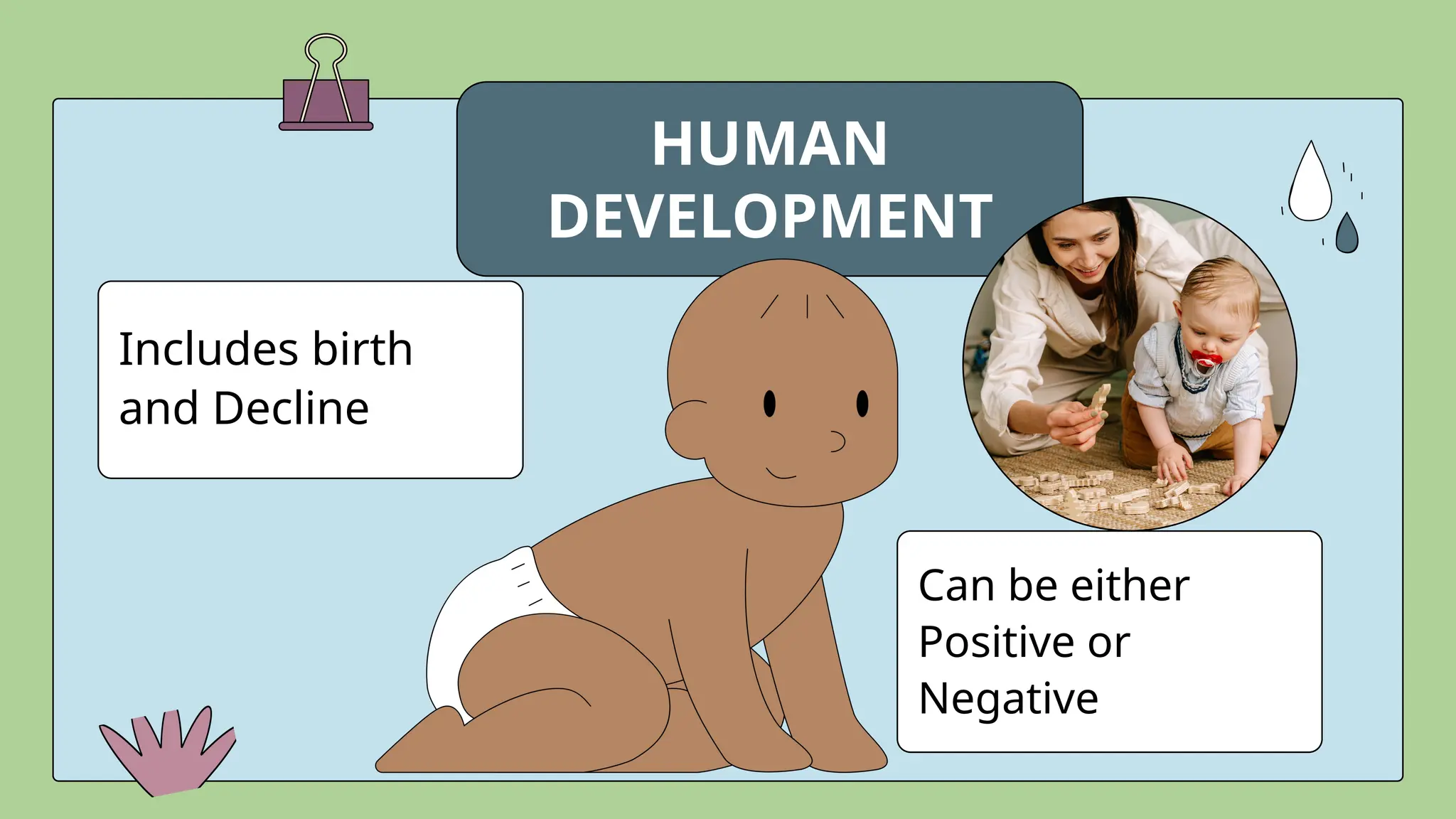
HUMAN
DEVELOPMENT
Includes birth
and Decline
Can be either
Positive or
Negative
1. DEVELOPMENT IS
RELATIVELY ORDERLY
MAJOR PRINCIPLES OF
HUMAN DEVELOPMENT
Cephalocaudal -development
proceeds from head downward.
Proximodistal -development
proceeds from the center of the
body outside.
MAJOR PRINCIPLES OF
HUMAN DEVELOPMENT
2. While the pattern of development
is likely to be similar, the outcomes of
developmental processes and rate of
development are likely to vary among
individuals
3. Development takes place
gradually
4. Development as a process is complex because
it is the product of biological, cognitive and socio-
emotional processes.
MAJOR PRINCIPLES OF
HUMAN DEVELOPMENT
Believes that individuals will show extensive
change from birth to adolescence, little or
no change in adulthood and decline in late
old age
1.Traditional Perspective
APPROACHES TO HUMAN
DEVELOPMENT
APPROACHES TO HUMAN
DEVELOPMENT
2. LIFE SPAN APPROACH
Believes that even in adulthood,
developmental change takes place as it does
during childhood
CHARACTERISTICS LIFE
SPAN APPROACH
• It does not end in
adulthood.
• No developmental stage
dominates development
• Development consists of
biological, cognitive and
socio- emotional dimensions.
1.Development is
Lifelong
2. Development is
Multidimensional
CHARACTERISTICS LIFE
SPAN APPROACH
Development is possible
throughout the lifespan
Individuals are changing beings
in a changing world.
3. Development is Plastic 4. Development is
Contextual
CHARACTERISTICS LIFE
SPAN APPROACH
Growth, maintenance and regulation are 3 goals of human
development. The goals of individuals vary among
developmental stages
5. Development involves GROWTH, MAINTENANCE and
REGULATION
PRINCIPLES OF CHILD DEVELOPMENT
AND LEARNING THAT INFORM PRACTICE
• All areas of development and learning are important
• Learning and development follow sequences
• Development and learning proceed at varying rates
• Development and learning results from an interaction of
maturation and experiences.
PRINCIPLES OF CHILD DEVELOPMENT
AND LEARNING THAT INFORM PRATICE
• Children learn in a variety of ways
• Play is an important vehicle for developing self-regulation and
promoting language. Cognition and social competence.
• Development and learning advance when children are challenged
• Children’s experiences shape their motivation and approaches to
learning.
POST ACTIVITY :

1.-HUMAN-DEVELOPMENT para sa education units

  • 1.
    What you needto know about the stages of human development HUMAN DEVELOPMENT
  • 2.
    Think-Pair-Share Identify three waysyou have changed from when you were a newborn to now. Discuss and compare your list with a partner.
  • 3.
    Know the meaningof Human Development Be able to know the different concepts under the Human Development Understand the different approaches to Human Development 1 2 3 Today, you will... o
  • 4.
    The Human LifeCycle Name each key stage in the human life cycle.
  • 5.
    How do wechange and develop at each stage? fetus The Human Life Cycle The key stages in the life cycle of a human are as follows:
  • 6.
    How do wechange and develop at each stage? fetus baby The Human Life Cycle The key stages in the life cycle of a human are as follows:
  • 7.
    How do wechange and develop at each stage? fetus baby childhood The Human Life Cycle The key stages in the life cycle of a human are as follows:
  • 8.
    How do wechange and develop at each stage? fetus baby childhood adolescence The Human Life Cycle The key stages in the life cycle of a human are as follows:
  • 9.
    How do wechange and develop at each stage? fetus baby childhood adolescence adulthood The Human Life Cycle The key stages in the life cycle of a human are as follows:
  • 10.
    How do wechange and develop at each stage? fetus baby childhood adolescence adulthood old age The Human Life Cycle The key stages in the life cycle of a human are as follows:
  • 11.
    HUMAN DEVELOPMENT the pattern ofmovement or change that begins at conception and continues through the life span
  • 12.
  • 13.
    1. DEVELOPMENT IS RELATIVELYORDERLY MAJOR PRINCIPLES OF HUMAN DEVELOPMENT Cephalocaudal -development proceeds from head downward. Proximodistal -development proceeds from the center of the body outside.
  • 14.
    MAJOR PRINCIPLES OF HUMANDEVELOPMENT 2. While the pattern of development is likely to be similar, the outcomes of developmental processes and rate of development are likely to vary among individuals
  • 15.
    3. Development takesplace gradually 4. Development as a process is complex because it is the product of biological, cognitive and socio- emotional processes. MAJOR PRINCIPLES OF HUMAN DEVELOPMENT
  • 16.
    Believes that individualswill show extensive change from birth to adolescence, little or no change in adulthood and decline in late old age 1.Traditional Perspective APPROACHES TO HUMAN DEVELOPMENT
  • 17.
    APPROACHES TO HUMAN DEVELOPMENT 2.LIFE SPAN APPROACH Believes that even in adulthood, developmental change takes place as it does during childhood
  • 18.
    CHARACTERISTICS LIFE SPAN APPROACH •It does not end in adulthood. • No developmental stage dominates development • Development consists of biological, cognitive and socio- emotional dimensions. 1.Development is Lifelong 2. Development is Multidimensional
  • 19.
    CHARACTERISTICS LIFE SPAN APPROACH Developmentis possible throughout the lifespan Individuals are changing beings in a changing world. 3. Development is Plastic 4. Development is Contextual
  • 20.
    CHARACTERISTICS LIFE SPAN APPROACH Growth,maintenance and regulation are 3 goals of human development. The goals of individuals vary among developmental stages 5. Development involves GROWTH, MAINTENANCE and REGULATION
  • 21.
    PRINCIPLES OF CHILDDEVELOPMENT AND LEARNING THAT INFORM PRACTICE • All areas of development and learning are important • Learning and development follow sequences • Development and learning proceed at varying rates • Development and learning results from an interaction of maturation and experiences.
  • 22.
    PRINCIPLES OF CHILDDEVELOPMENT AND LEARNING THAT INFORM PRATICE • Children learn in a variety of ways • Play is an important vehicle for developing self-regulation and promoting language. Cognition and social competence. • Development and learning advance when children are challenged • Children’s experiences shape their motivation and approaches to learning.
  • 23.

Editor's Notes

  • #23 Biological: Physical changes like height, strength, or other bodily changes. Cognitive: Changes in your ability to think, reason, or learn. Socio-emotional: How your relationships, emotions, or self-identity have evolved.