Prepared By
ARLY MAE P MICAYABAS,
LPT
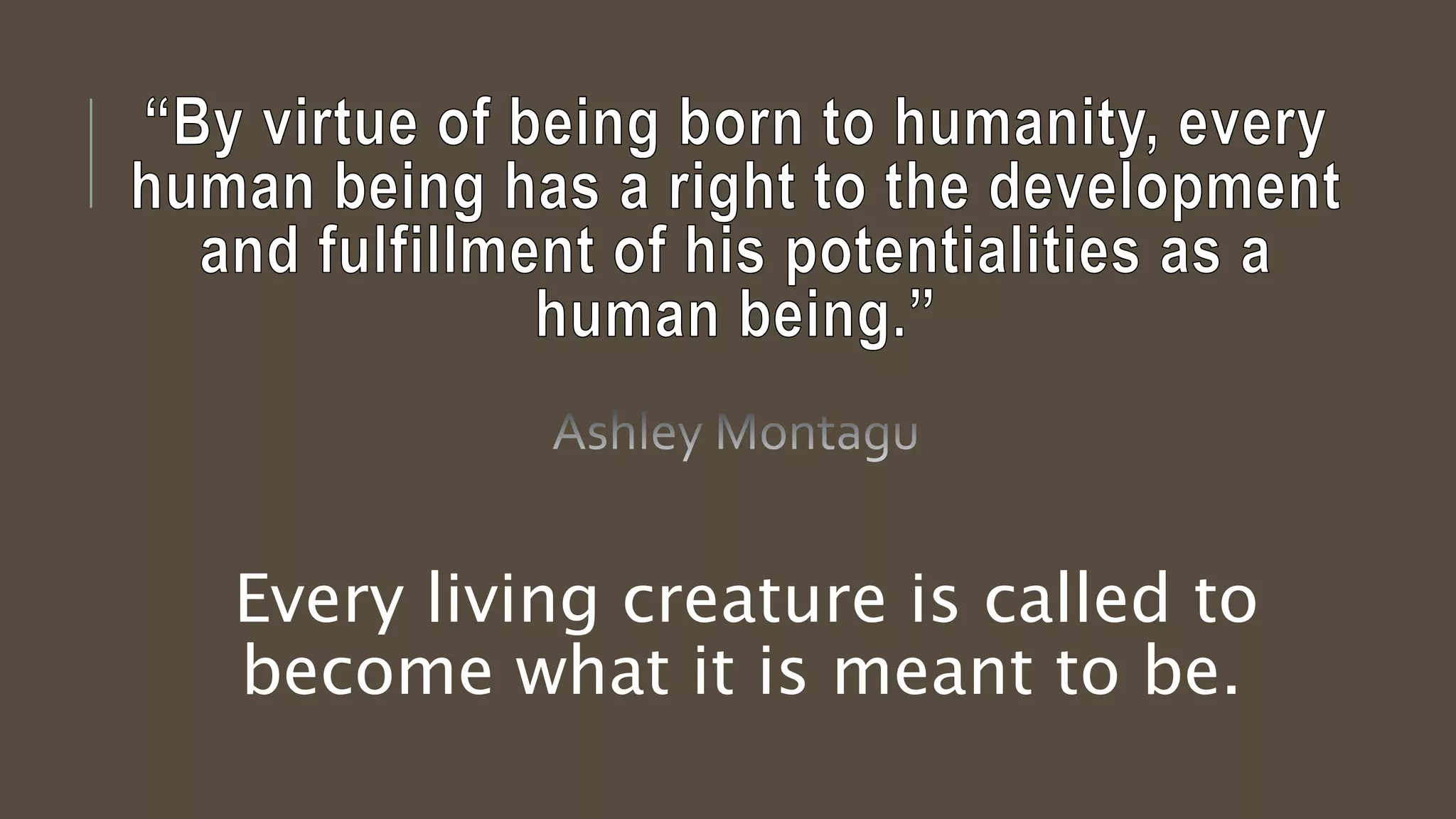
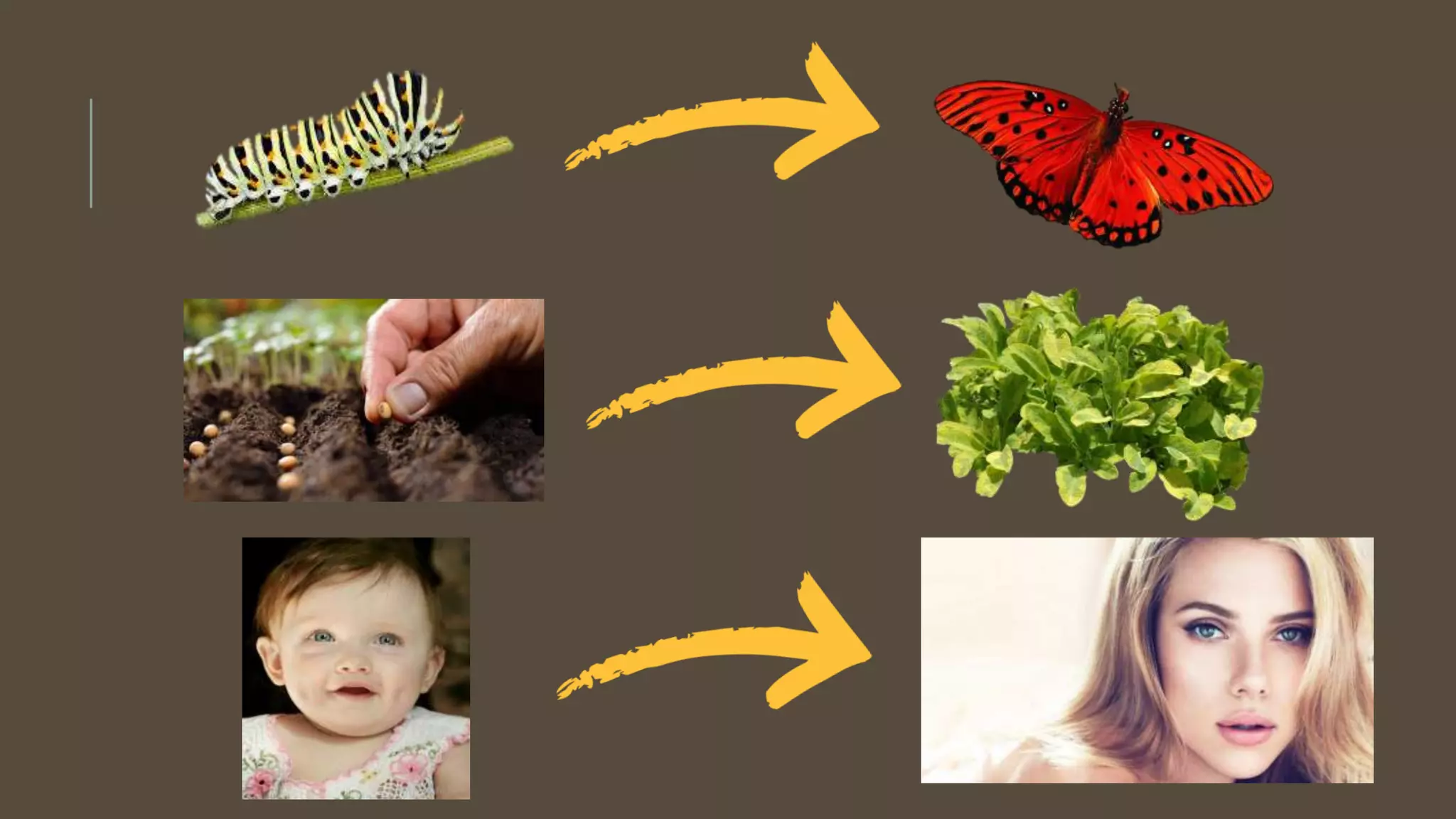
Every living creature is called to
become what it is meant to be.
HUMAN DEVELOPMENT
The pattern of movement or change that begins
at conception and continues through life span.
Development includes growth and decline. This
means that development can be positive or
negative (Santrock, 2002).
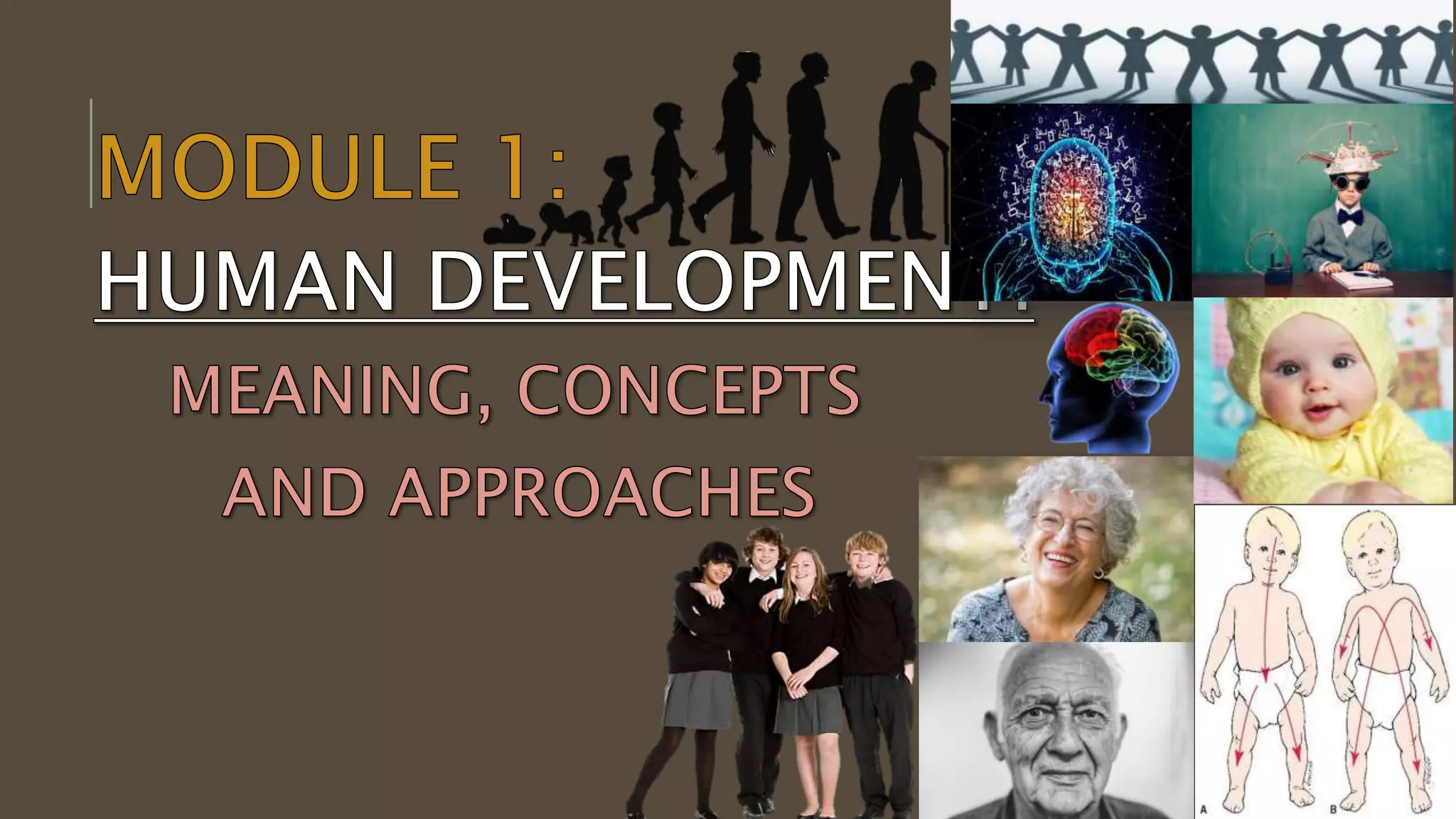
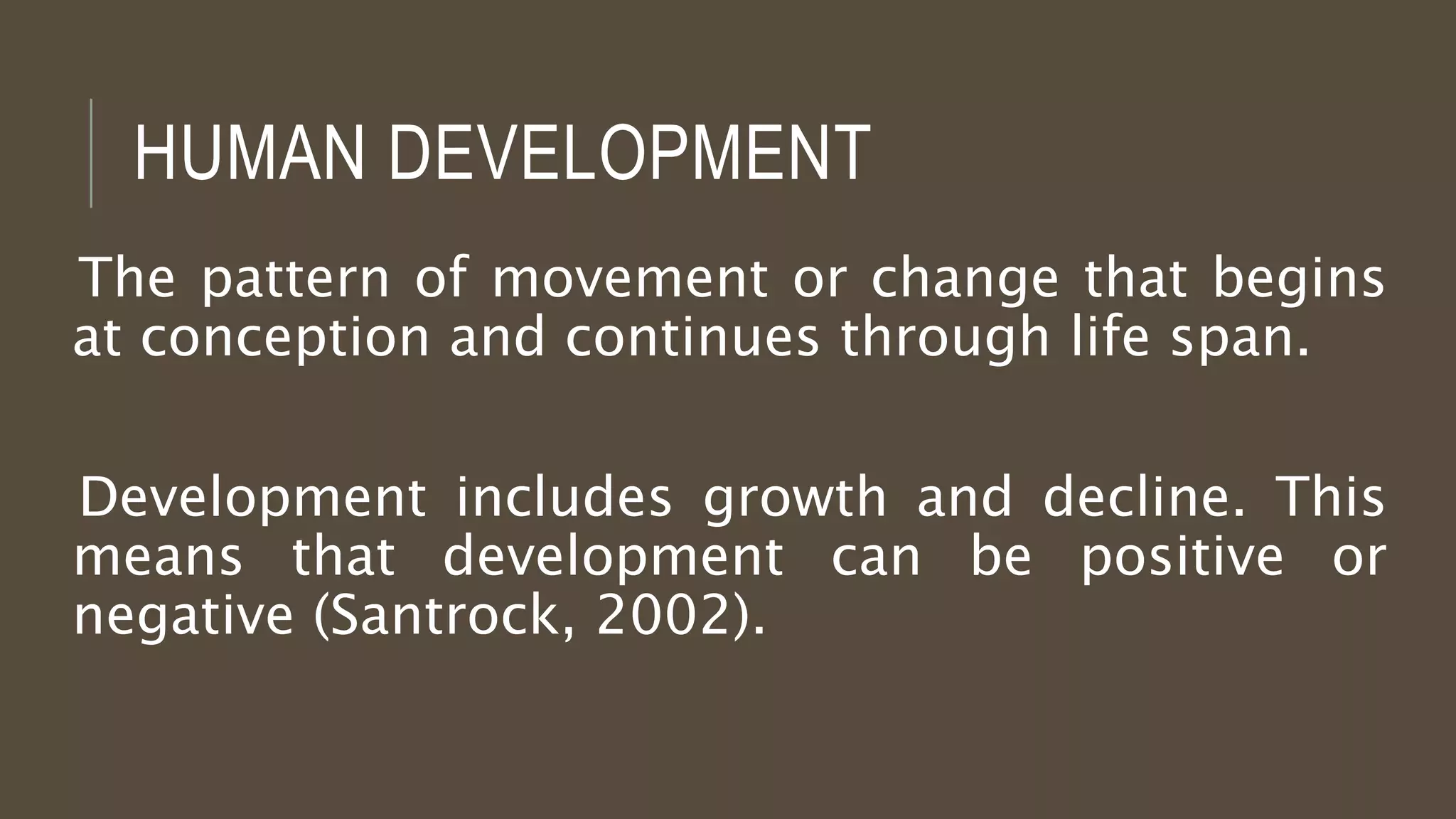
A. Proximodistal Pattern
The muscular control of the trunk and the arms
comes earlier as compared to the hands and fingers.
B. Cephalo-caudal Pattern
During infancy, the greatest growth always occurs at the
top – the head – with physical growth in size, weight and
future differentiation gradually working its way down
from top to bottom.
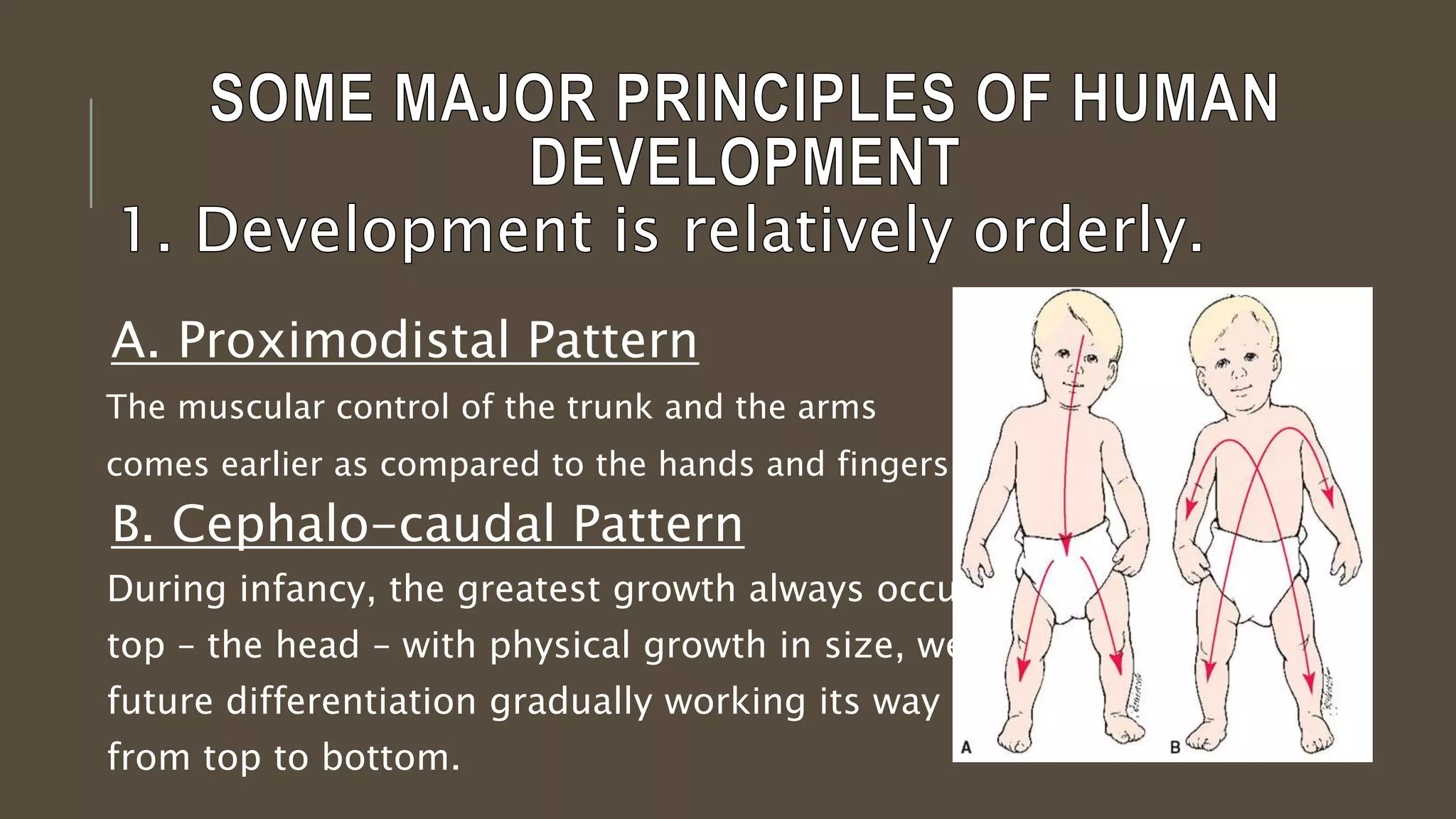
involves changes in the
individual’s physical nature.
involves changes in the
individual’s thought, intelligence, and language.
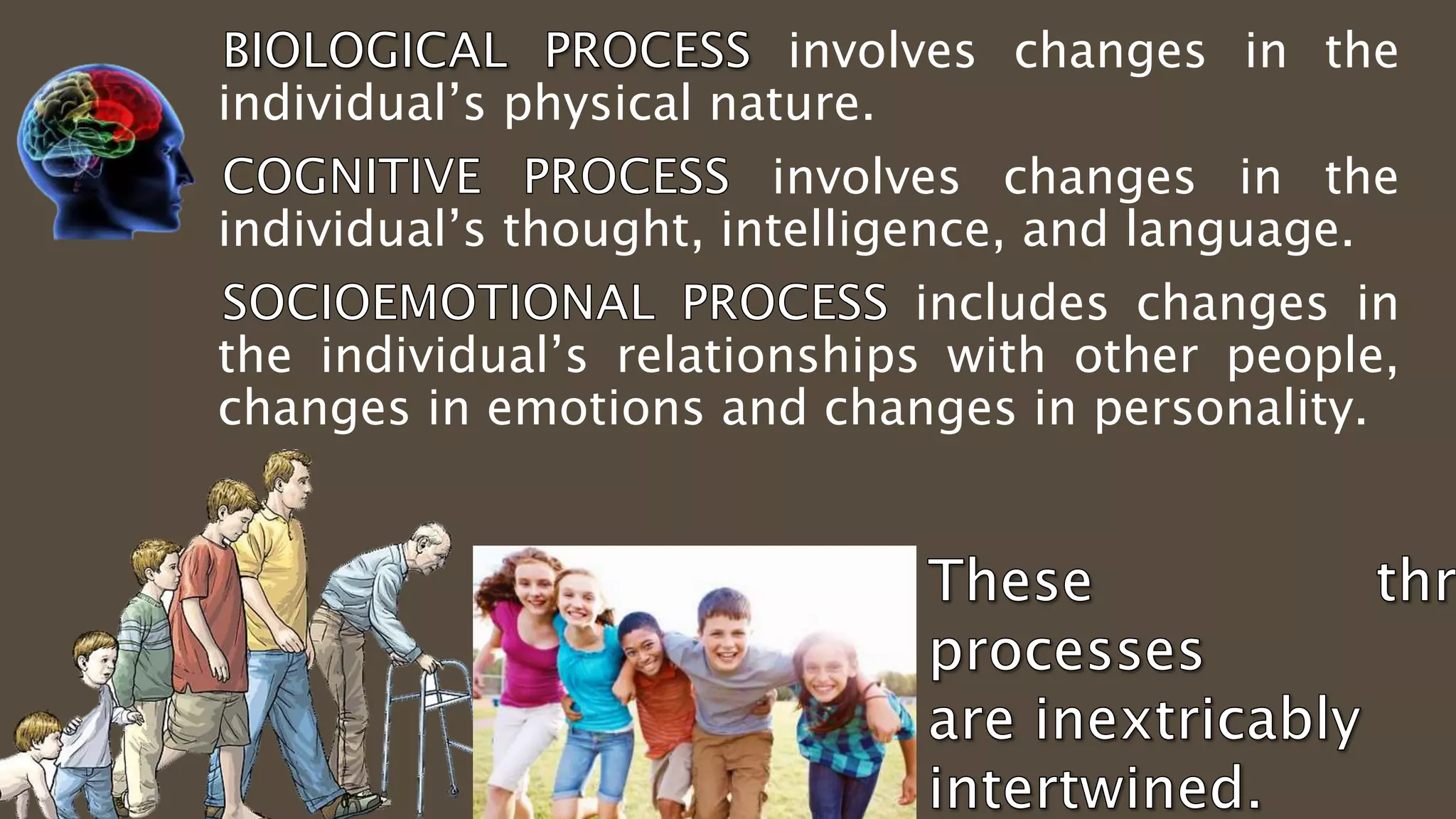
includes changes in
the individual’s relationships with other people,
changes in emotions and changes in personality.
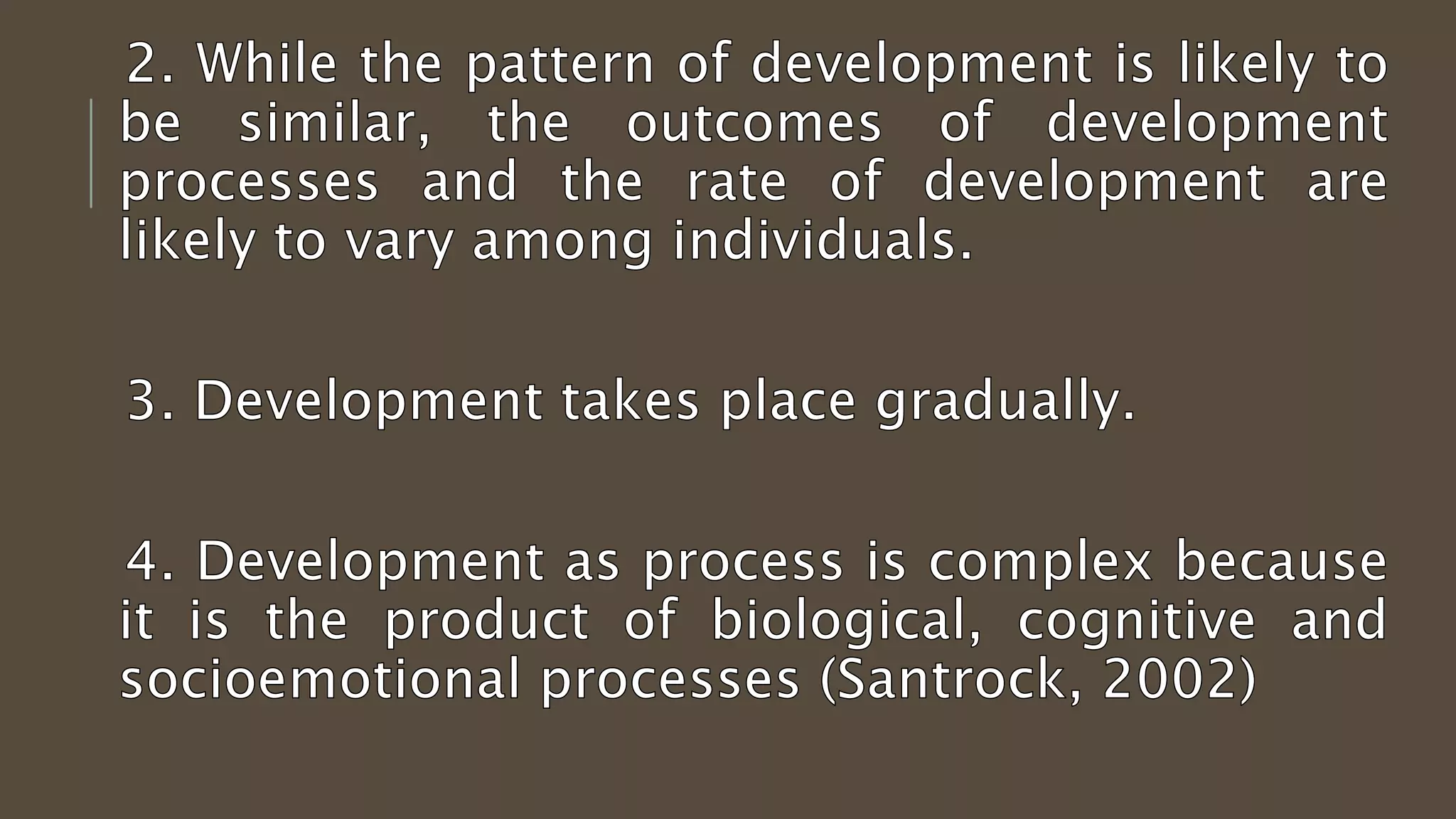
Extensive change from birth to
adolescence, little or no change in
adulthood and decline in late old age.
PAUL BALTES (SANTROCK, 2002), AN EXPERT IN LIFE-SPAN
DEVELOPMENT
1)Development is lifelong.
2)Development is multidimensional.
3)Development is Plastic.
4)Development is contextual.
5)Development involves growth, maintenance and
regulation.
Below are the principles of child development and
learning which are the bases of developmentally
appropriate practice (DAP) in early childhood program for
children from birth through age 8, which are stated in the
position paper of the National Association for the
Education of Young Children (2009)
1.All the domains of development and learning-
physical social and emotional, and cognitive are
important and they are closely interrelated.
2. Many aspects of children’s learning
and development follow well documented
sequences , with later abilities, skills and
knowledge building on those already
acquired.
3. Development and learning proceed at
varying rates from child to child, as well
as at uneven rates across different areas
of child’s individual functioning.
4. Development and learning result from
a dynamic and continuous interaction of
biological maturation and experience.
5. Early experiences have profound
effects, both cumulative and delayed, on
a child’s development and learning; and
optimal periods exist for certain types of
development and learning to occur.
6. Development proceeds toward greater
complexity, self-regulation, and symbolic or
representational capacities.
7. Children develop best when they have
secure, consistent, relationships with
responsive adults and opportunities for positive
relationships with peers.
8. Development and learning occur in and are
influenced by multiple social and cultural
contexts.
10. Play is an important vehicle for developing
self regulation as well as for promoting
language, cognition, and social competence.
11. Development and learning advance when
children are challenged to achieve at a level just
beyond their current mastery, and also when
they have many opportunities to practice newly
acquired skills.
12.Children’s experiences shape their
motivation and approaches to learning, such as
persistence , initiative and flexibility.
END OF DISCUSSION

Human Development: Meaning, Concepts and Approaches

  • 1.
    Prepared By ARLY MAEP MICAYABAS, LPT
  • 2.
    Every living creatureis called to become what it is meant to be.
  • 6.
    HUMAN DEVELOPMENT The patternof movement or change that begins at conception and continues through life span. Development includes growth and decline. This means that development can be positive or negative (Santrock, 2002).
  • 7.
    A. Proximodistal Pattern Themuscular control of the trunk and the arms comes earlier as compared to the hands and fingers. B. Cephalo-caudal Pattern During infancy, the greatest growth always occurs at the top – the head – with physical growth in size, weight and future differentiation gradually working its way down from top to bottom.
  • 9.
    involves changes inthe individual’s physical nature. involves changes in the individual’s thought, intelligence, and language. includes changes in the individual’s relationships with other people, changes in emotions and changes in personality.
  • 10.
    Extensive change frombirth to adolescence, little or no change in adulthood and decline in late old age.
  • 11.
    PAUL BALTES (SANTROCK,2002), AN EXPERT IN LIFE-SPAN DEVELOPMENT 1)Development is lifelong. 2)Development is multidimensional. 3)Development is Plastic. 4)Development is contextual. 5)Development involves growth, maintenance and regulation.
  • 12.
    Below are theprinciples of child development and learning which are the bases of developmentally appropriate practice (DAP) in early childhood program for children from birth through age 8, which are stated in the position paper of the National Association for the Education of Young Children (2009) 1.All the domains of development and learning- physical social and emotional, and cognitive are important and they are closely interrelated.
  • 13.
    2. Many aspectsof children’s learning and development follow well documented sequences , with later abilities, skills and knowledge building on those already acquired. 3. Development and learning proceed at varying rates from child to child, as well as at uneven rates across different areas of child’s individual functioning.
  • 14.
    4. Development andlearning result from a dynamic and continuous interaction of biological maturation and experience. 5. Early experiences have profound effects, both cumulative and delayed, on a child’s development and learning; and optimal periods exist for certain types of development and learning to occur.
  • 15.
    6. Development proceedstoward greater complexity, self-regulation, and symbolic or representational capacities. 7. Children develop best when they have secure, consistent, relationships with responsive adults and opportunities for positive relationships with peers. 8. Development and learning occur in and are influenced by multiple social and cultural contexts.
  • 16.
    10. Play isan important vehicle for developing self regulation as well as for promoting language, cognition, and social competence. 11. Development and learning advance when children are challenged to achieve at a level just beyond their current mastery, and also when they have many opportunities to practice newly acquired skills. 12.Children’s experiences shape their motivation and approaches to learning, such as persistence , initiative and flexibility.
  • 17.