2.1 Prokaryotic cells
Prokaryotes
 Pro = before

 Karyon = nucleus

 There are two basic kinds of cells. One kind—a
  prokaryotic cell— lacks a nucleus and most other
  organelles.

 Bacteria and archaea are prokaryotic cells.

 Prokaryotic organisms appear earliest in Earth's
  fossil record.
 2.2.1 Draw and label a diagram of the ultrastructure of
  Escherichia coli (E. coli) as an example of a prokaryote.

 The diagram should show the cell wall, plasma membrane,
  cytoplasm, pili, flagella, ribosomes and nucleoid (region
  containing naked DNA).

 2.2.2 Annotate the diagram from 2.2.1 with the functions of each
  named structure.

 Draw: Represent by means of pencil lines.

 Label: Add labels to a diagram.

 Annotate: Add brief notes to a diagram or graph.
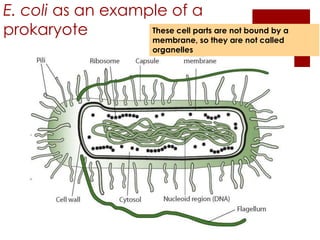
E. coli as an example of a
prokaryote         These cell parts are not bound by a
                            membrane, so they are not called
                            organelles
E. coli as an example of a
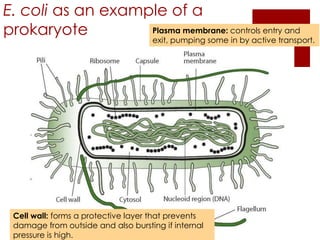
prokaryote         Plasma membrane: controls entry and
                                    exit, pumping some in by active transport.


 Cell wall: forms a protective layer that prevents
 damage from outside and also bursting if internal
 pressure is high.
E. coli as an example of a
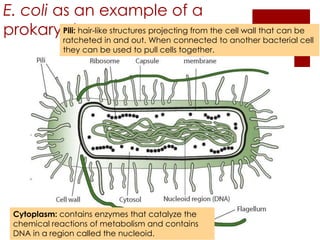
prokaryote structures projecting from the cell wall that can be
         Pili: hair-like
              ratcheted in and out. When connected to another bacterial cell
              they can be used to pull cells together.


  Cytoplasm: contains enzymes that catalyze the
  chemical reactions of metabolism and contains
  DNA in a region called the nucleoid.
E. coli as an example of a
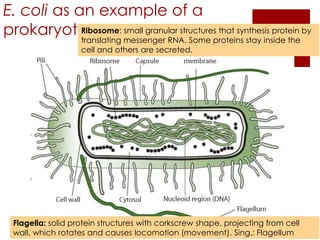
prokaryote  Ribosome: small granular structures that synthesis protein by
                    translating messenger RNA. Some proteins stay inside the
                    cell and others are secreted.


  Flagella: solid protein structures with corkscrew shape, projecting from cell
  wall, which rotates and causes locomotion (movement). Sing.: Flagellum
E. coli as an example of a
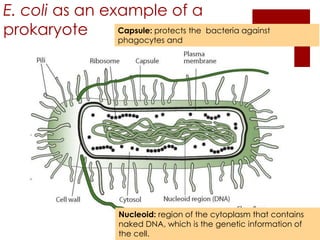
prokaryote      Capsule: protects the bacteria against
                       phagocytes and


                       Nucleoid: region of the cytoplasm that contains
                       naked DNA, which is the genetic information of
                       the cell.
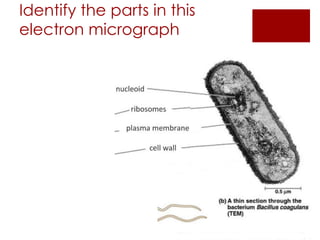
Identify the parts in this
electron micrograph
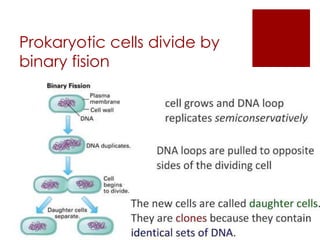
Prokaryotic cells divide by
binary fision
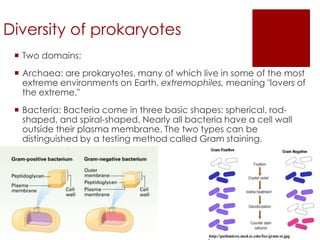
Diversity of prokaryotes
  Two domains:
  Archaea: are prokaryotes, many of which live in some of the most
   extreme environments on Earth, extremophiles, meaning "lovers of
   the extreme."
  Bacteria: Bacteria come in three basic shapes: spherical, rod-
   shaped, and spiral-shaped. Nearly all bacteria have a cell wall
   outside their plasma membrane. The two types can be
   distinguished by a testing method called Gram staining.
Homework
 Read 16.1 and 16.2 in the book.

2.2 prokaryotic cells

  • 1.
  • 2.
    Prokaryotes  Pro =before  Karyon = nucleus  There are two basic kinds of cells. One kind—a prokaryotic cell— lacks a nucleus and most other organelles.  Bacteria and archaea are prokaryotic cells.  Prokaryotic organisms appear earliest in Earth's fossil record.
  • 3.
     2.2.1 Drawand label a diagram of the ultrastructure of Escherichia coli (E. coli) as an example of a prokaryote.  The diagram should show the cell wall, plasma membrane, cytoplasm, pili, flagella, ribosomes and nucleoid (region containing naked DNA).  2.2.2 Annotate the diagram from 2.2.1 with the functions of each named structure.  Draw: Represent by means of pencil lines.  Label: Add labels to a diagram.  Annotate: Add brief notes to a diagram or graph.
  • 4.
    E. coli asan example of a prokaryote These cell parts are not bound by a membrane, so they are not called organelles
  • 5.
    E. coli asan example of a prokaryote Plasma membrane: controls entry and exit, pumping some in by active transport. Cell wall: forms a protective layer that prevents damage from outside and also bursting if internal pressure is high.
  • 6.
    E. coli asan example of a prokaryote structures projecting from the cell wall that can be Pili: hair-like ratcheted in and out. When connected to another bacterial cell they can be used to pull cells together. Cytoplasm: contains enzymes that catalyze the chemical reactions of metabolism and contains DNA in a region called the nucleoid.
  • 7.
    E. coli asan example of a prokaryote Ribosome: small granular structures that synthesis protein by translating messenger RNA. Some proteins stay inside the cell and others are secreted. Flagella: solid protein structures with corkscrew shape, projecting from cell wall, which rotates and causes locomotion (movement). Sing.: Flagellum
  • 8.
    E. coli asan example of a prokaryote Capsule: protects the bacteria against phagocytes and Nucleoid: region of the cytoplasm that contains naked DNA, which is the genetic information of the cell.
  • 9.
    Identify the partsin this electron micrograph
  • 10.
    Prokaryotic cells divideby binary fision
  • 11.
    Diversity of prokaryotes  Two domains:  Archaea: are prokaryotes, many of which live in some of the most extreme environments on Earth, extremophiles, meaning "lovers of the extreme."  Bacteria: Bacteria come in three basic shapes: spherical, rod- shaped, and spiral-shaped. Nearly all bacteria have a cell wall outside their plasma membrane. The two types can be distinguished by a testing method called Gram staining.
  • 12.
    Homework  Read 16.1and 16.2 in the book.