COMPONENTS OF XYLEM
AND PHLOEM
PRESENTED BY
MOHD SALIM
18-BTM-28
GK7985
INTRODUCTION
• Vascular tissue system
• Vascular plants: plants with well developed
conductive system
• Vascular plants are also called as tracheophyta
• Main function of vascular tissue : conduction
• Conduct water minerals and food materials
• It also provide mechanical support
Vascular tissue composed of two types tissues:
XYLEM: For the conduction of water and
minerals
phloem : for the conduction of food
• Xylem and phloem are complex tissues
XYLEM
• XYLEM- Term introduced by NAGELI(1858)
• XYLOS means wood in Greek
• Its basic function is to transport water, but it
also transfer some nutrients through the
plants
• Xylem fibres are supportive in function.
• It consists of tracheids, vessels, xylem
parenchyma and xylem fibres
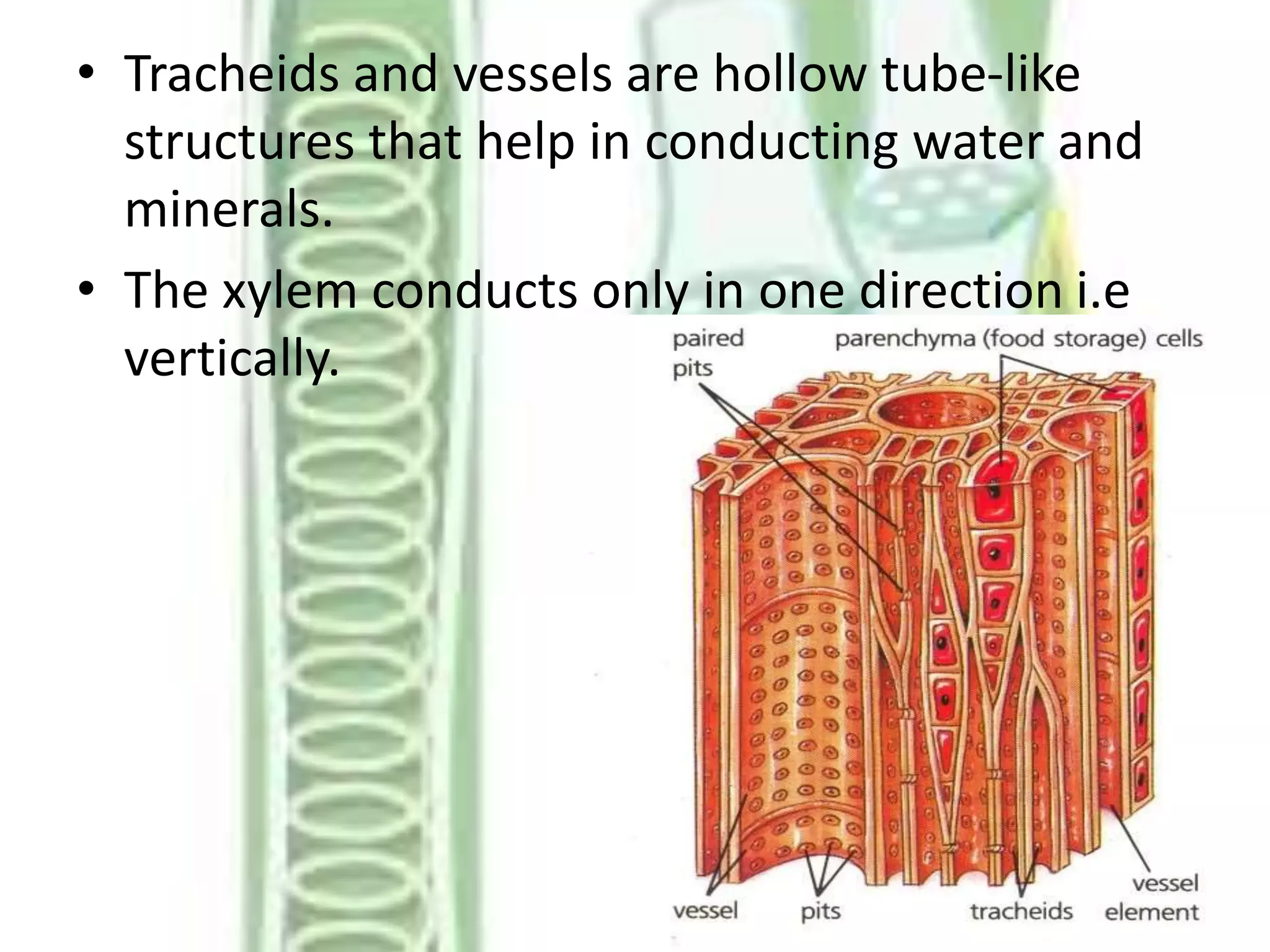
• Tracheids and vessels are hollow tube-like
structures that help in conducting water and
minerals.
• The xylem conducts only in one direction i.e
vertically.
COMPONENTS OF XYLEM
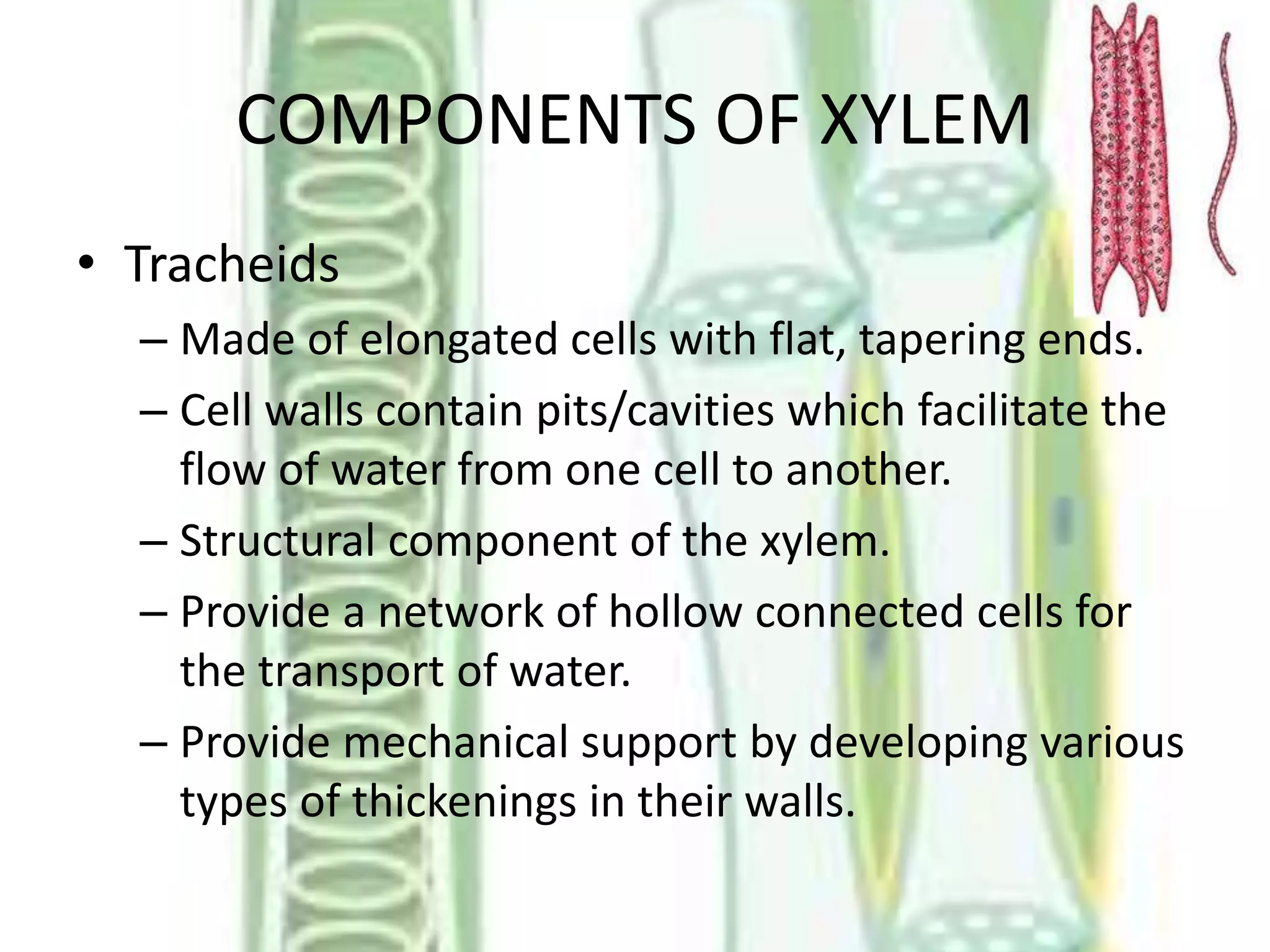
• Tracheids
– Made of elongated cells with flat, tapering ends.
– Cell walls contain pits/cavities which facilitate the
flow of water from one cell to another.
– Structural component of the xylem.
– Provide a network of hollow connected cells for
the transport of water.
– Provide mechanical support by developing various
types of thickenings in their walls.
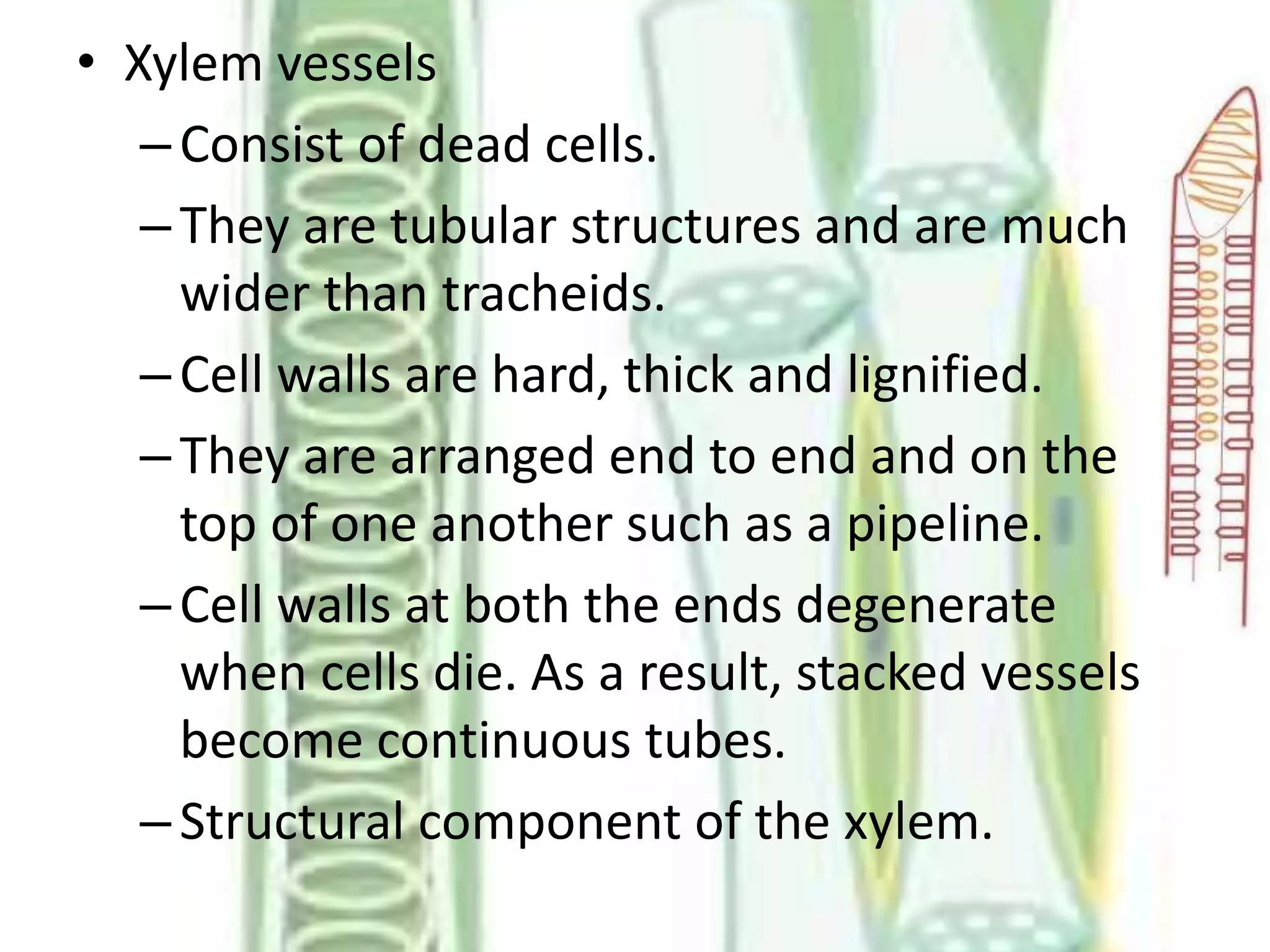
• Xylem vessels
–Consist of dead cells.
–They are tubular structures and are much
wider than tracheids.
–Cell walls are hard, thick and lignified.
–They are arranged end to end and on the
top of one another such as a pipeline.
–Cell walls at both the ends degenerate
when cells die. As a result, stacked vessels
become continuous tubes.
–Structural component of the xylem.
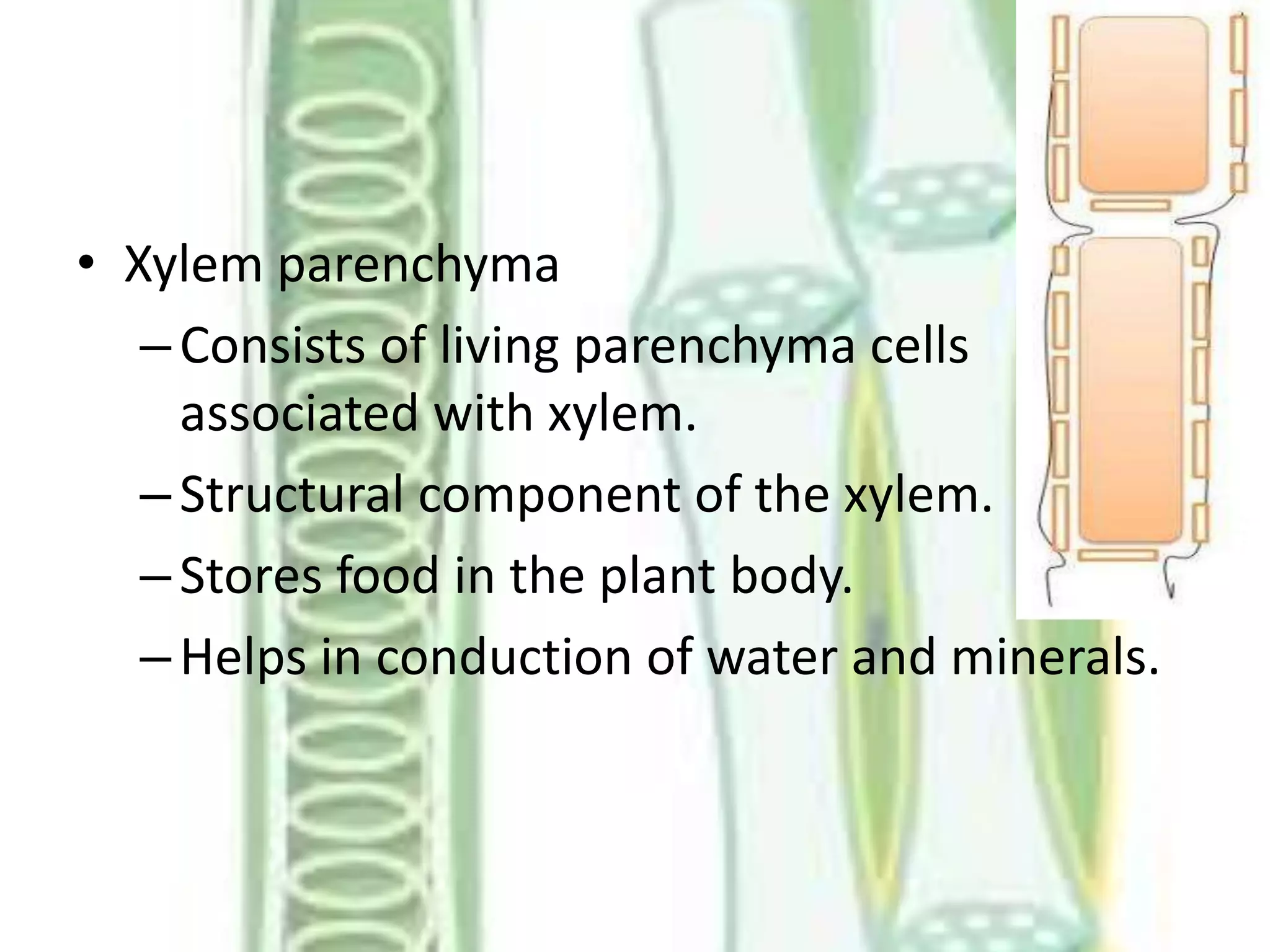
• Xylem parenchyma
–Consists of living parenchyma cells
associated with xylem.
–Structural component of the xylem.
–Stores food in the plant body.
–Helps in conduction of water and minerals.
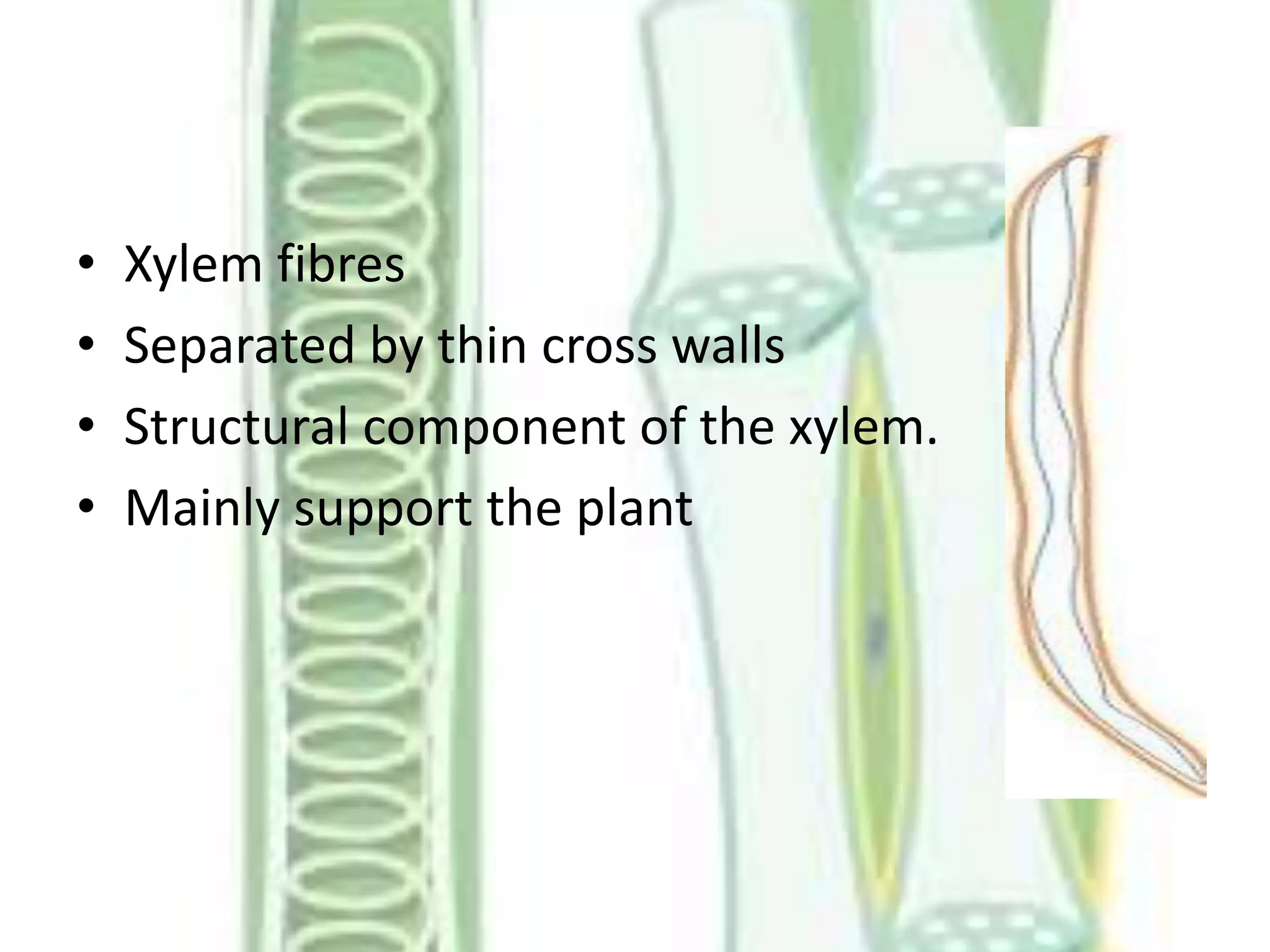
• Xylem fibres
• Separated by thin cross walls
• Structural component of the xylem.
• Mainly support the plant
PHLOEM
• Phloem : Phloem is a complex permanent tissue,
which is meant for the conduction of food within
the plant.
• It is also called bast or laptone.
• They are made of sclerenchymatous cells.
• Phloem fibres are absent in the primary phloem
but present in the secondary phloem.
• Fibres are elongated, unbranded and bear
pointed apices.
• They lose their protoplasm at maturity and
become dead.
COMPONENTS OF PHLOEM
• Phloem consists of four types of cells :
(a) Sieve elements: They are the main food
conducting elements and are of two types-
sieve cells and sieve tubes.
(i)Sieve cells: They are elongated cells having
several perforated areas called sieve areas,
• (ii) Sieve tubes : They are elongated tubular
channels.Each sieve tube is made up of several cells
called sieve tube members. The end walls have many
large pores or sieve pits and are known as sieve
plates. Each sieve tube is always associated with a
companion cell. Sieve element take part in the
transport of organic food.
• (b) Companion cells : They are elongated thin
walled parenchymatous cells, which lie on the
sides of the sieve tubes. They are closely
associated with the sieve tubes. The
companion cell and a sieve tube originate
from the same mother cell. The companion
cells play an important role in the
maintenance of a pressure gradient in the
sieve tubes.
• Phloem parenchyma: They are ordinary
parenchyma cells, which are intermingled with
sieve elements.They store food and also assist
in the conduction of food in lateral direction.
• Phloem fibres : They are also called bast
fibres.Phloem fibres are sclerenchymatous
fibres, which occur in phloem. They provide
mechanical strength. The textile fibres of flex,
hemp and jute are phloem fibres.
Components of xylem and phloem

Components of xylem and phloem

  • 1.
    COMPONENTS OF XYLEM ANDPHLOEM PRESENTED BY MOHD SALIM 18-BTM-28 GK7985
  • 2.
    INTRODUCTION • Vascular tissuesystem • Vascular plants: plants with well developed conductive system • Vascular plants are also called as tracheophyta • Main function of vascular tissue : conduction • Conduct water minerals and food materials • It also provide mechanical support
  • 3.
    Vascular tissue composedof two types tissues: XYLEM: For the conduction of water and minerals phloem : for the conduction of food • Xylem and phloem are complex tissues
  • 4.
    XYLEM • XYLEM- Termintroduced by NAGELI(1858) • XYLOS means wood in Greek • Its basic function is to transport water, but it also transfer some nutrients through the plants • Xylem fibres are supportive in function. • It consists of tracheids, vessels, xylem parenchyma and xylem fibres
  • 5.
    • Tracheids andvessels are hollow tube-like structures that help in conducting water and minerals. • The xylem conducts only in one direction i.e vertically.
  • 6.
    COMPONENTS OF XYLEM •Tracheids – Made of elongated cells with flat, tapering ends. – Cell walls contain pits/cavities which facilitate the flow of water from one cell to another. – Structural component of the xylem. – Provide a network of hollow connected cells for the transport of water. – Provide mechanical support by developing various types of thickenings in their walls.
  • 7.
    • Xylem vessels –Consistof dead cells. –They are tubular structures and are much wider than tracheids. –Cell walls are hard, thick and lignified. –They are arranged end to end and on the top of one another such as a pipeline. –Cell walls at both the ends degenerate when cells die. As a result, stacked vessels become continuous tubes. –Structural component of the xylem.
  • 8.
    • Xylem parenchyma –Consistsof living parenchyma cells associated with xylem. –Structural component of the xylem. –Stores food in the plant body. –Helps in conduction of water and minerals.
  • 9.
    • Xylem fibres •Separated by thin cross walls • Structural component of the xylem. • Mainly support the plant
  • 10.
    PHLOEM • Phloem :Phloem is a complex permanent tissue, which is meant for the conduction of food within the plant. • It is also called bast or laptone. • They are made of sclerenchymatous cells. • Phloem fibres are absent in the primary phloem but present in the secondary phloem. • Fibres are elongated, unbranded and bear pointed apices. • They lose their protoplasm at maturity and become dead.
  • 11.
    COMPONENTS OF PHLOEM •Phloem consists of four types of cells : (a) Sieve elements: They are the main food conducting elements and are of two types- sieve cells and sieve tubes. (i)Sieve cells: They are elongated cells having several perforated areas called sieve areas,
  • 12.
    • (ii) Sievetubes : They are elongated tubular channels.Each sieve tube is made up of several cells called sieve tube members. The end walls have many large pores or sieve pits and are known as sieve plates. Each sieve tube is always associated with a companion cell. Sieve element take part in the transport of organic food.
  • 13.
    • (b) Companioncells : They are elongated thin walled parenchymatous cells, which lie on the sides of the sieve tubes. They are closely associated with the sieve tubes. The companion cell and a sieve tube originate from the same mother cell. The companion cells play an important role in the maintenance of a pressure gradient in the sieve tubes.
  • 14.
    • Phloem parenchyma:They are ordinary parenchyma cells, which are intermingled with sieve elements.They store food and also assist in the conduction of food in lateral direction. • Phloem fibres : They are also called bast fibres.Phloem fibres are sclerenchymatous fibres, which occur in phloem. They provide mechanical strength. The textile fibres of flex, hemp and jute are phloem fibres.