~
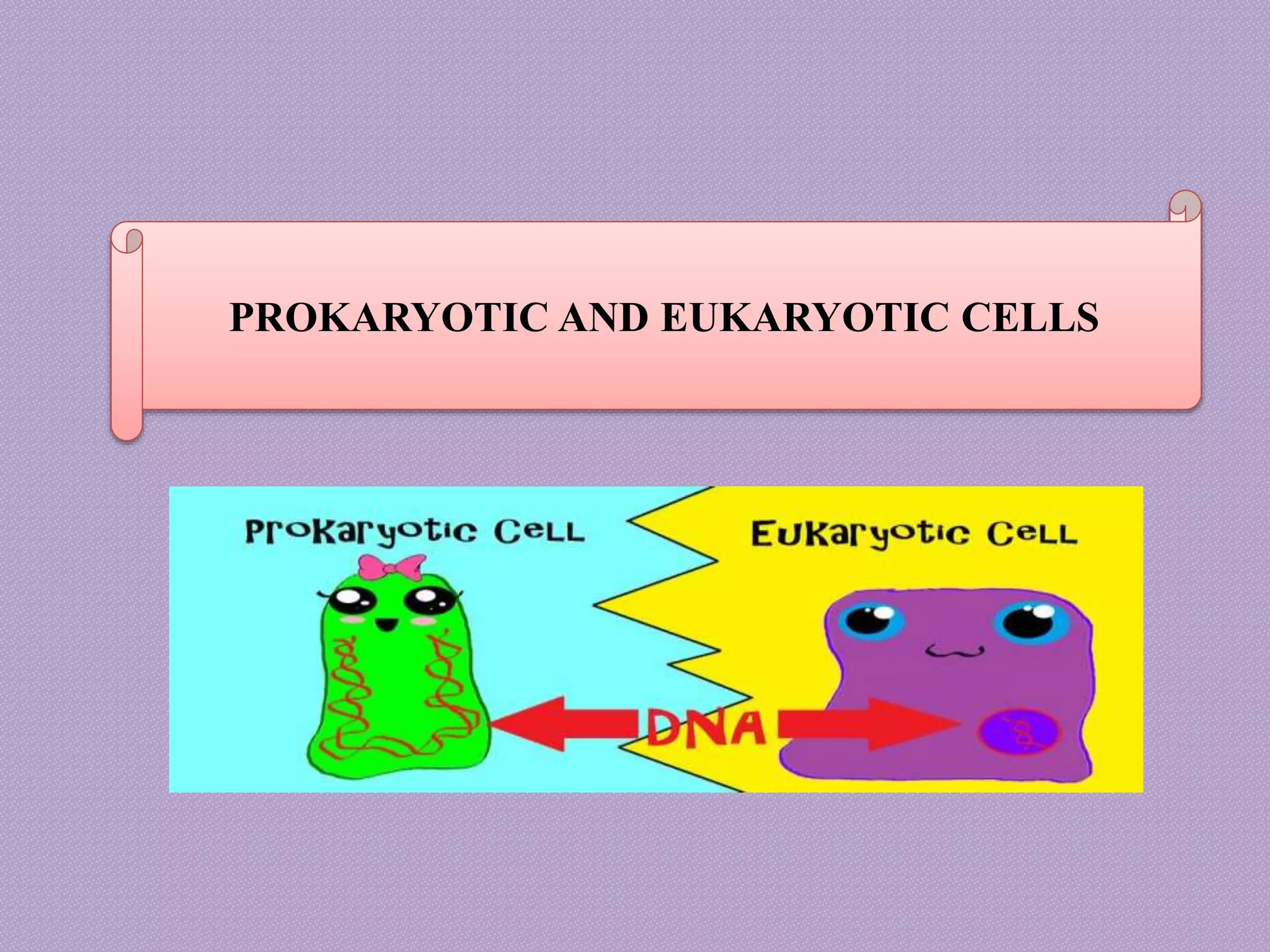
PROKARYOTIC AND EUKARYOTIC CELLS
INTRODUCTION
• All living things are made up of cells. Cells are the
smallest units that can be alive. During the 1950’s
scientists developed the concept that life on earth is
classified into six kingdoms and each have their own
characteristic kind of cell. However the biggest
division is between the cells of the Prokaryote
kingdom (Eubacteria and archaebacteria and those of
the other four kingdoms (animals, plants, fungi and
protoctista which are all eukaryotes cells.
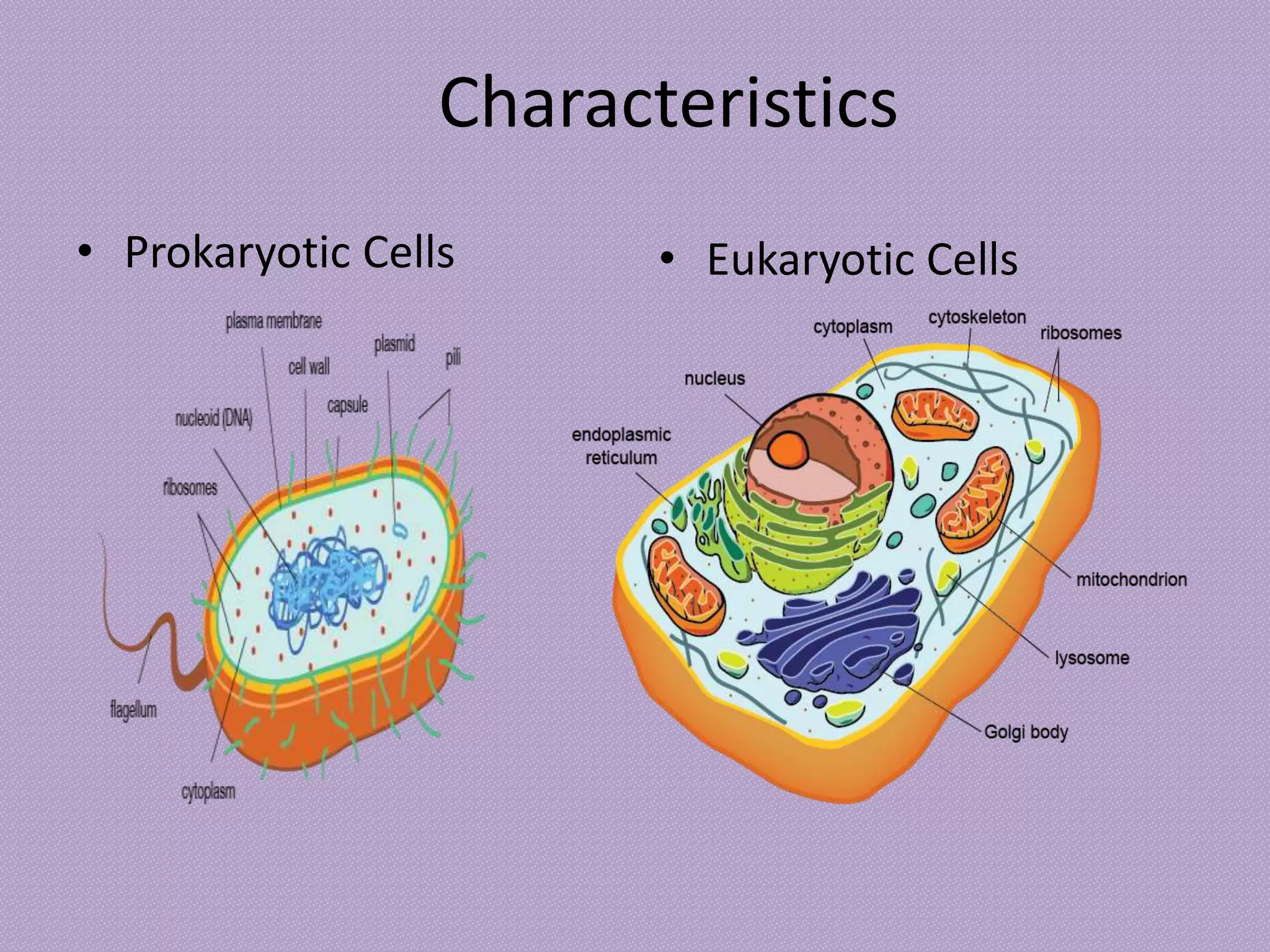
Characteristics
• Prokaryotic Cells • Eukaryotic Cells
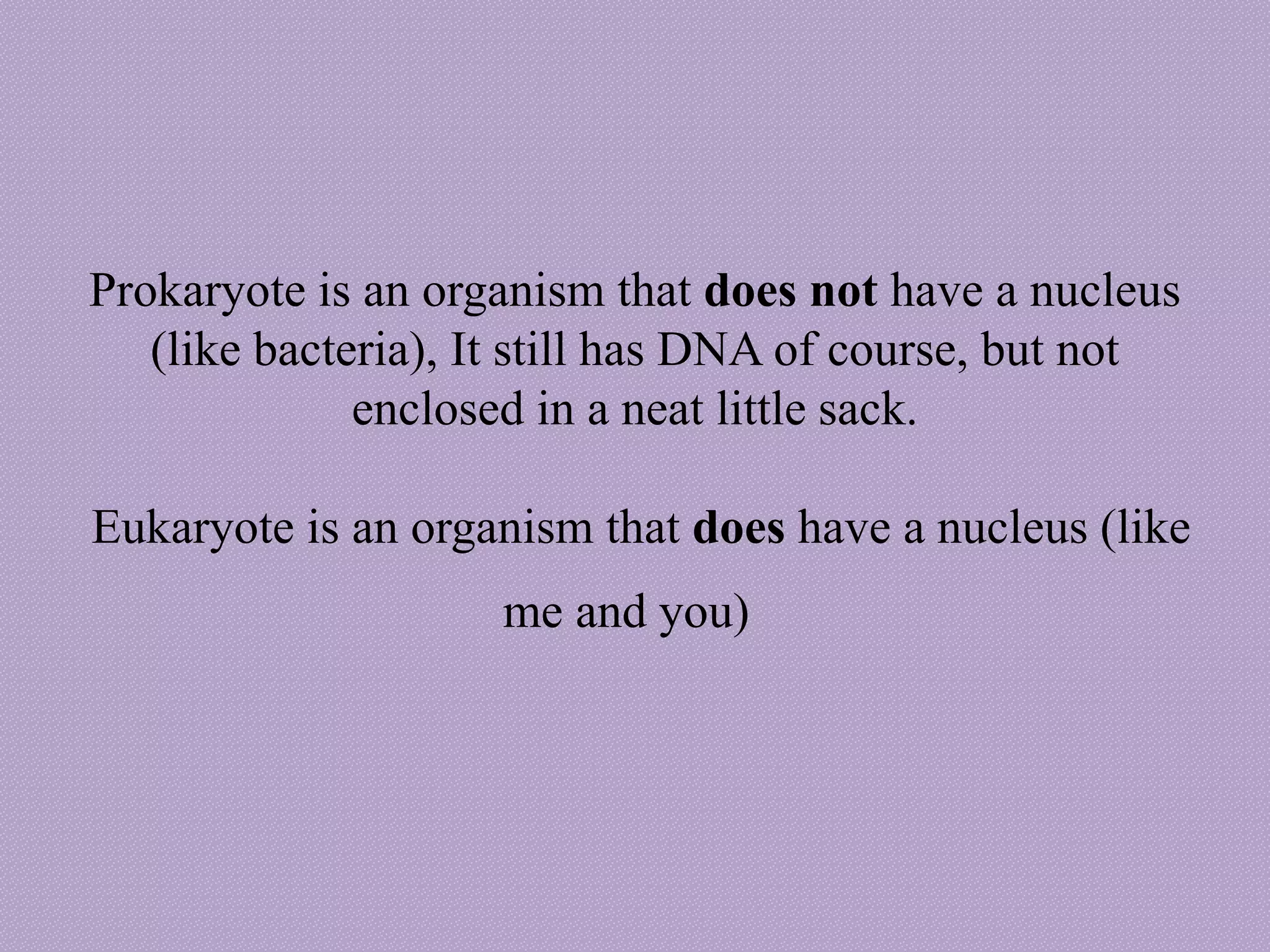
Prokaryote is an organism that does not have a nucleus
(like bacteria), It still has DNA of course, but not
enclosed in a neat little sack.
Eukaryote is an organism that does have a nucleus (like
me and you)
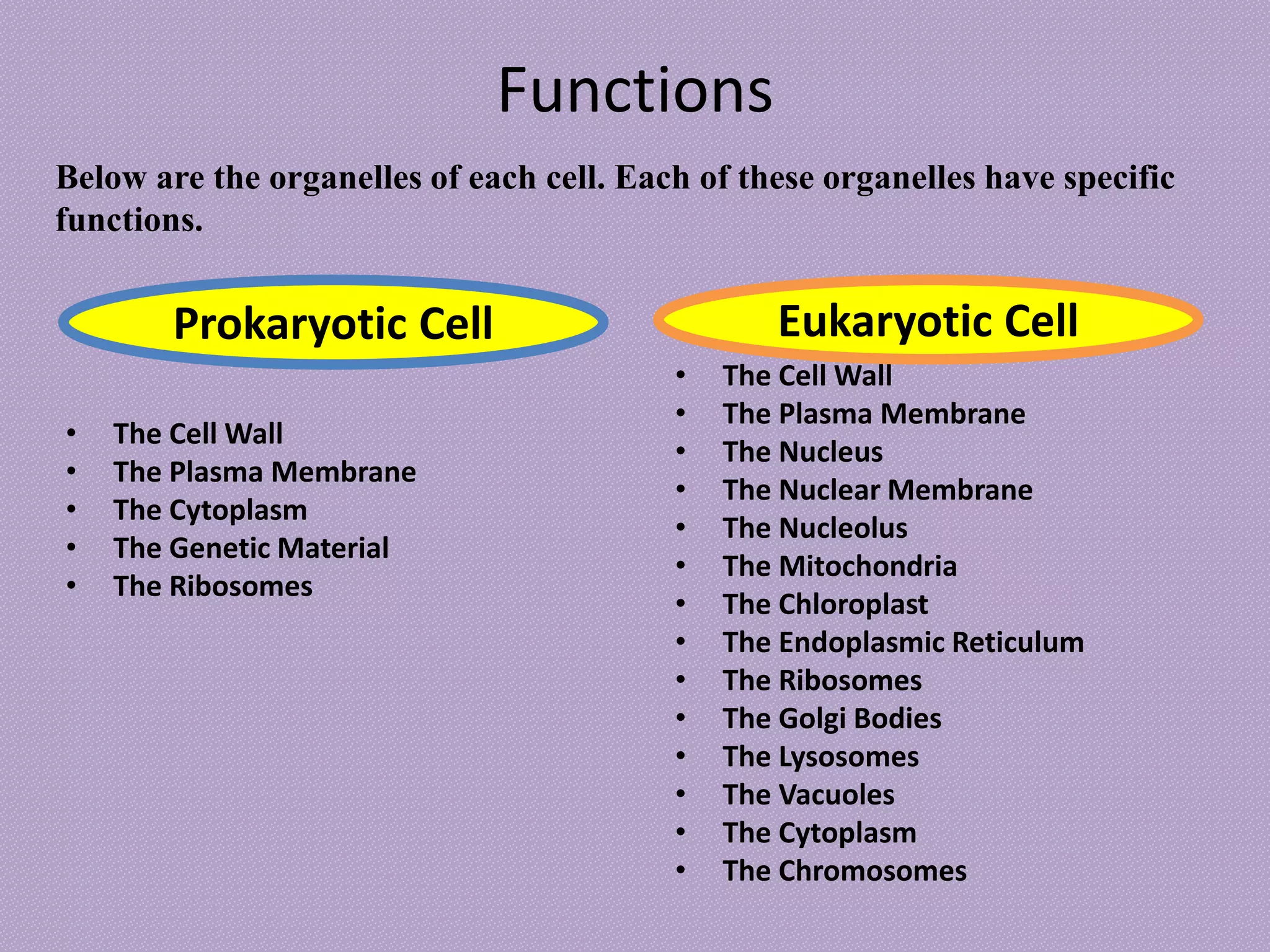
Functions
• The Cell Wall
• The Plasma Membrane
• The Cytoplasm
• The Genetic Material
• The Ribosomes
Prokaryotic Cell
• The Cell Wall
• The Plasma Membrane
• The Nucleus
• The Nuclear Membrane
• The Nucleolus
• The Mitochondria
• The Chloroplast
• The Endoplasmic Reticulum
• The Ribosomes
• The Golgi Bodies
• The Lysosomes
• The Vacuoles
• The Cytoplasm
• The Chromosomes
Eukaryotic Cell
Below are the organelles of each cell. Each of these organelles have specific
functions.
DNA, the genetic material is located in a non-membrane
bound nucleoid region in prokaryotes and a membrane-
bound nucleus in eukaryotes
2. Plasma membrane, a phospholipid bilayer with
proteins that separates the cell from the surrounding
environment and functions as a selective barrier for the
import and export of materials
3. Cytoplasm, the rest of the material of the cell within
the plasma membrane, excluding the nucleoid region or
nucleus, that consists of a fluid portion called the
cytosol and the organelles and other particulates
suspended in it
4. Ribosomes, the organelles on which protein synthesis
takes place
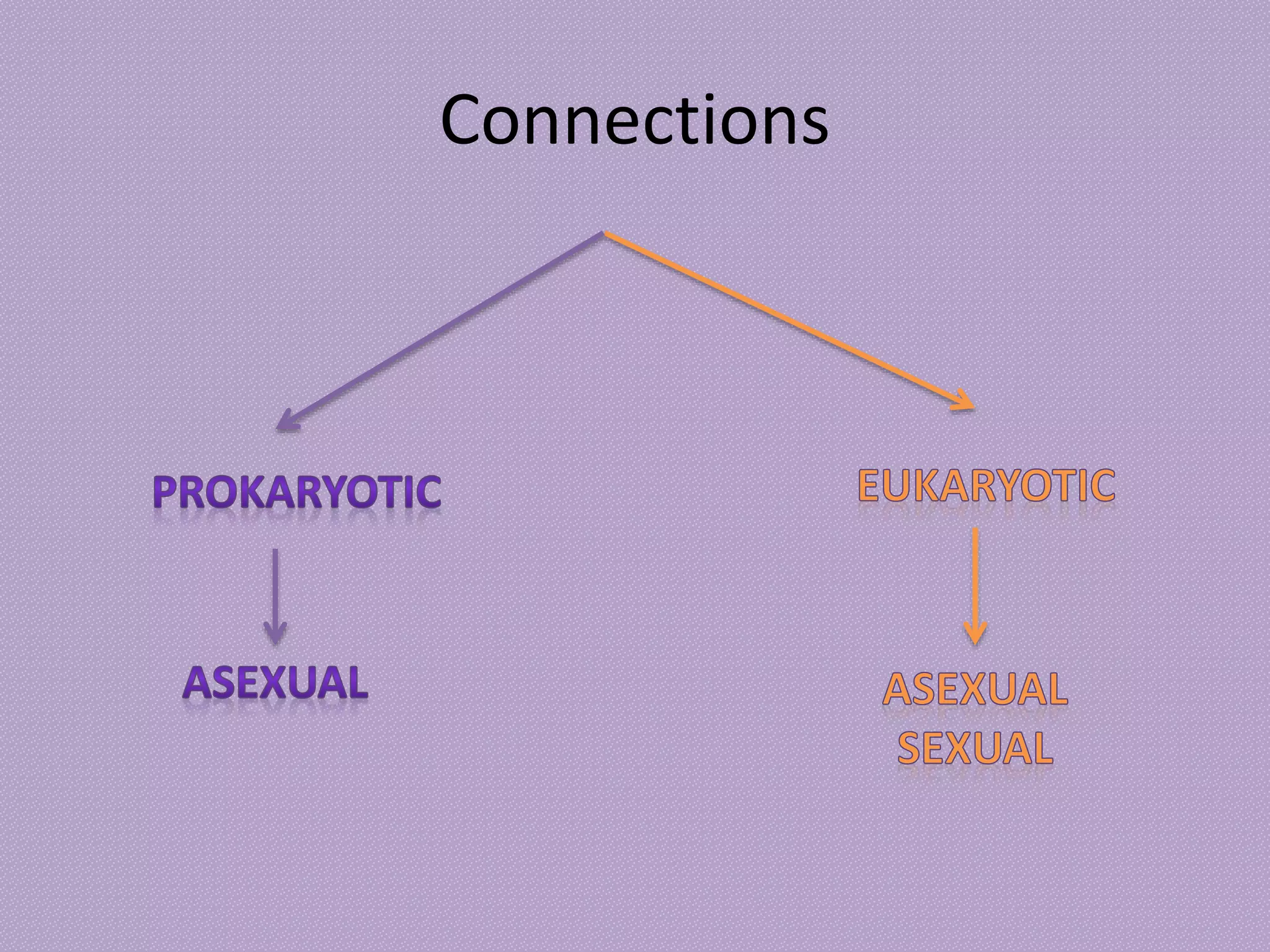
Connections
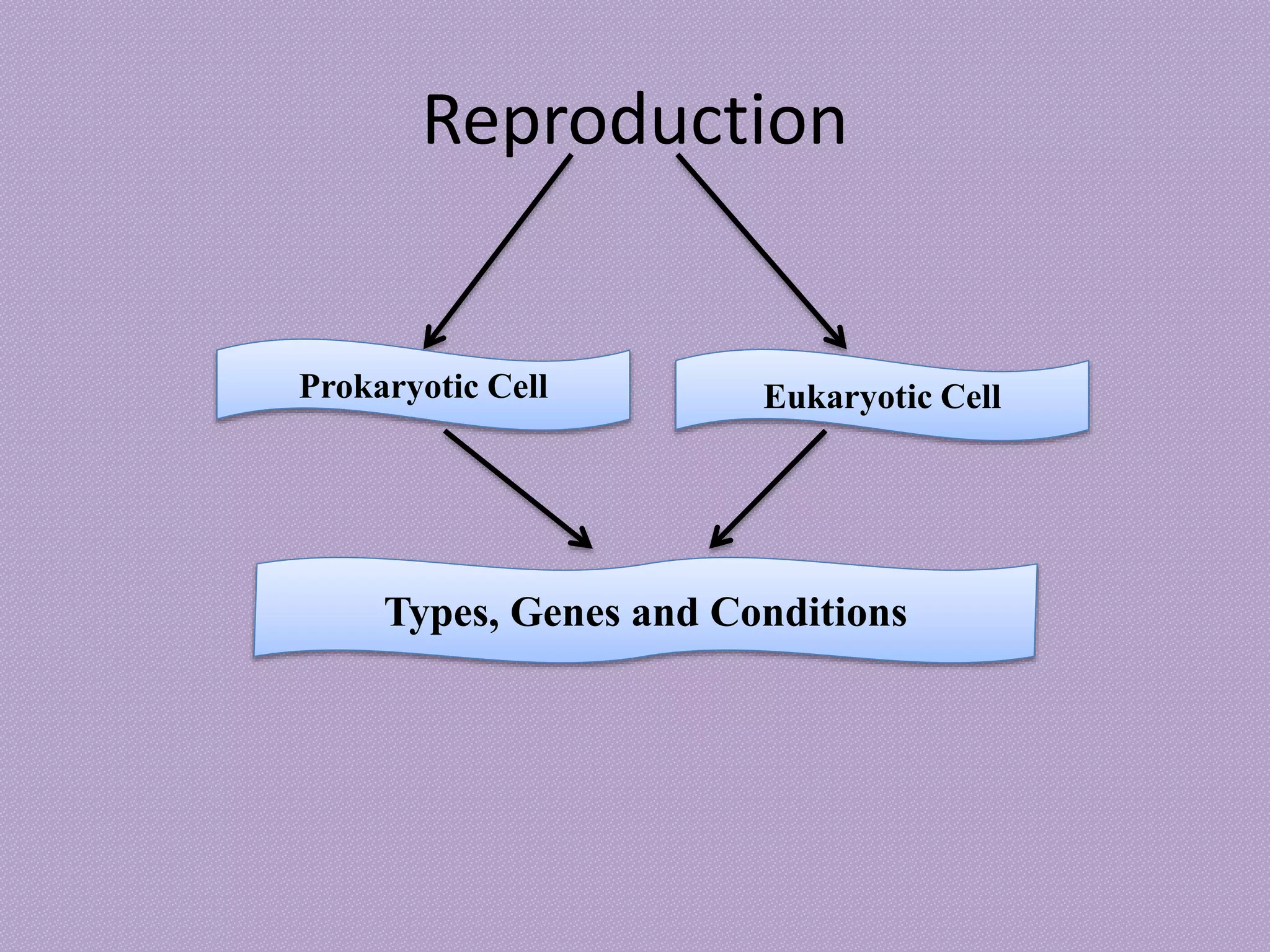
Reproduction
Prokaryotic Cell Eukaryotic Cell
Types, Genes and Conditions
Prokaryotic cells reproduce by a process that is called
binary fission.
The DNA in such cells is contained in a single circular
chromosome called a plasmid within the cytoplasm.
The reproductive process starts with the replication of
the chromosome.
Always asexual
Prokaryotic Cell Reproduction
The life of eukaryotic cells is characterized by a cell
cycle with two major phases: the interphase and cell
division.
The nucleus divides in a process called mitosis
Asexual or sexual
Eukaryotic Cell Reproduction
Application
• The Carbon Cycles affect possible survival.
• There are physical characteristics.
• The temperature varies.
• Environmental changes create problems.
Major Players
Biotic and Abiotic Factors
Biotic Factors are;
• Producers (autroph) plants
• Consumers (hetertrophs)
animals
• Decomposers (fungi and
bacteria)
Abiotic Factors are;
• Air
• Water
• Space
• Temperature
• Light
• Soil (nutrients
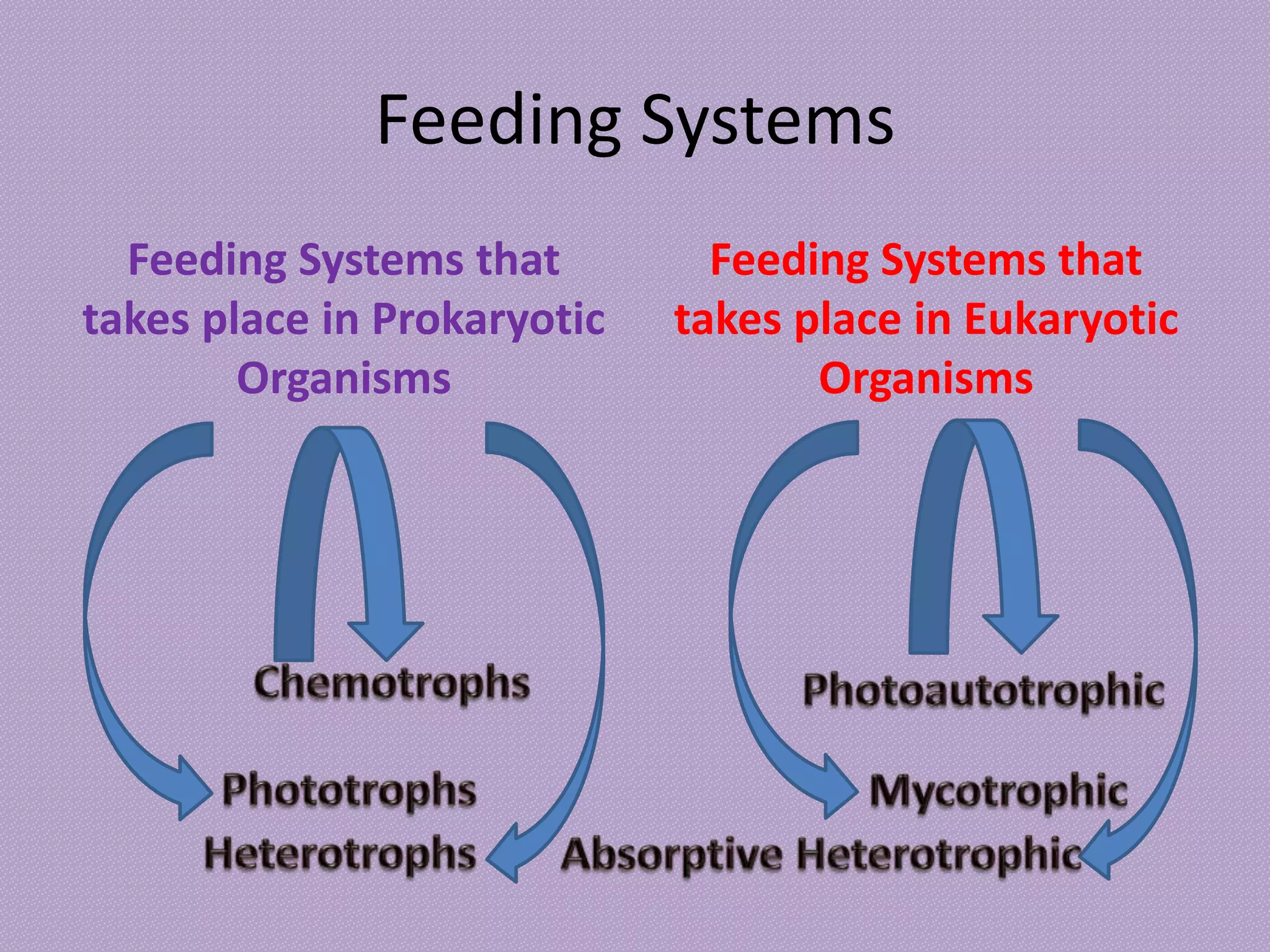
Feeding Systems
Feeding Systems that
takes place in Prokaryotic
Organisms
Feeding Systems that
takes place in Eukaryotic
Organisms
Organisms within the Kingdoms
• Prokaryotes includes several kinds of
microorganisms such as bacteria and
cyanobacteria.
• Eukaryotes includes such microorganisms as
fungi, protozoa and simple algue.
References
• Rader, A. (1997) Eukaryotes – Cells with Parts.
Biolgy4kids.com: Microorganisms: Eukaryotes Retrieved
from www.biology4kids.com/files/micro_eukaryote.html
• The Biology Project Department of Biochemistry and
Molecular Biophysics. (1997) Prokaryotes, Eukaryotes, &
Viruses Tutorial. Retrieved from http://
www.biology.arizona.edu.
www.biology4kids.com/files/micro_eukaryote.html
• Understanding Evolution. From prokaryotes to eukaryotes.
Retrieved from
evolution.berkeley.edu/evolibrary/article/_0/endosymbiosi
s_03. Pg 3

Prokaryotic and Eukaryotic Cells

  • 1.
  • 2.
    INTRODUCTION • All livingthings are made up of cells. Cells are the smallest units that can be alive. During the 1950’s scientists developed the concept that life on earth is classified into six kingdoms and each have their own characteristic kind of cell. However the biggest division is between the cells of the Prokaryote kingdom (Eubacteria and archaebacteria and those of the other four kingdoms (animals, plants, fungi and protoctista which are all eukaryotes cells.
  • 3.
  • 4.
    Prokaryote is anorganism that does not have a nucleus (like bacteria), It still has DNA of course, but not enclosed in a neat little sack. Eukaryote is an organism that does have a nucleus (like me and you)
  • 5.
    Functions • The CellWall • The Plasma Membrane • The Cytoplasm • The Genetic Material • The Ribosomes Prokaryotic Cell • The Cell Wall • The Plasma Membrane • The Nucleus • The Nuclear Membrane • The Nucleolus • The Mitochondria • The Chloroplast • The Endoplasmic Reticulum • The Ribosomes • The Golgi Bodies • The Lysosomes • The Vacuoles • The Cytoplasm • The Chromosomes Eukaryotic Cell Below are the organelles of each cell. Each of these organelles have specific functions.
  • 6.
    DNA, the geneticmaterial is located in a non-membrane bound nucleoid region in prokaryotes and a membrane- bound nucleus in eukaryotes 2. Plasma membrane, a phospholipid bilayer with proteins that separates the cell from the surrounding environment and functions as a selective barrier for the import and export of materials
  • 7.
    3. Cytoplasm, therest of the material of the cell within the plasma membrane, excluding the nucleoid region or nucleus, that consists of a fluid portion called the cytosol and the organelles and other particulates suspended in it 4. Ribosomes, the organelles on which protein synthesis takes place
  • 8.
  • 10.
    Reproduction Prokaryotic Cell EukaryoticCell Types, Genes and Conditions
  • 11.
    Prokaryotic cells reproduceby a process that is called binary fission. The DNA in such cells is contained in a single circular chromosome called a plasmid within the cytoplasm. The reproductive process starts with the replication of the chromosome. Always asexual Prokaryotic Cell Reproduction
  • 12.
    The life ofeukaryotic cells is characterized by a cell cycle with two major phases: the interphase and cell division. The nucleus divides in a process called mitosis Asexual or sexual Eukaryotic Cell Reproduction
  • 13.
    Application • The CarbonCycles affect possible survival. • There are physical characteristics. • The temperature varies. • Environmental changes create problems.
  • 14.
  • 15.
    Biotic and AbioticFactors Biotic Factors are; • Producers (autroph) plants • Consumers (hetertrophs) animals • Decomposers (fungi and bacteria) Abiotic Factors are; • Air • Water • Space • Temperature • Light • Soil (nutrients
  • 16.
    Feeding Systems Feeding Systemsthat takes place in Prokaryotic Organisms Feeding Systems that takes place in Eukaryotic Organisms
  • 17.
    Organisms within theKingdoms • Prokaryotes includes several kinds of microorganisms such as bacteria and cyanobacteria. • Eukaryotes includes such microorganisms as fungi, protozoa and simple algue.
  • 18.
    References • Rader, A.(1997) Eukaryotes – Cells with Parts. Biolgy4kids.com: Microorganisms: Eukaryotes Retrieved from www.biology4kids.com/files/micro_eukaryote.html • The Biology Project Department of Biochemistry and Molecular Biophysics. (1997) Prokaryotes, Eukaryotes, & Viruses Tutorial. Retrieved from http:// www.biology.arizona.edu. www.biology4kids.com/files/micro_eukaryote.html • Understanding Evolution. From prokaryotes to eukaryotes. Retrieved from evolution.berkeley.edu/evolibrary/article/_0/endosymbiosi s_03. Pg 3