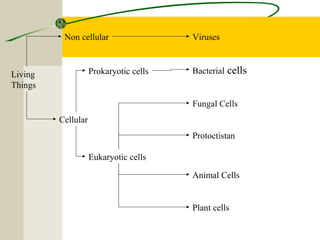
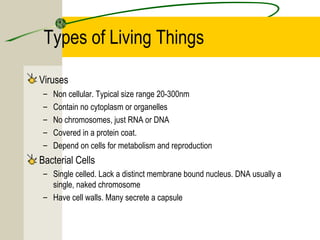
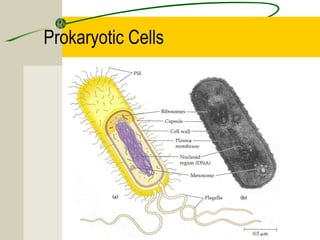
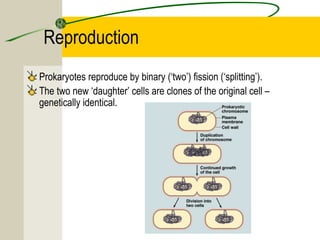
Prokaryotic cells like E. coli have a simple structure without membrane-bound organelles. They have a cell wall, plasma membrane, cytoplasm, pili, flagella, ribosomes, and a nucleoid region containing naked DNA. Each of these structures serves important functions - the cell wall provides structure, the plasma membrane controls substance transfer, pili allow adhesion, flagella provide locomotion, ribosomes synthesize proteins, and the nucleoid stores genetic information. Prokaryotes reproduce through binary fission, where one cell divides into two identical daughter cells.